

Executive Overview
In the rapidly evolving landscape of artificial intelligence-assisted software development, engineering milestones are frequently measured by efficiency gains, automated code refactoring, and complex backend integrations. However, the developer community has long held a tradition of testing the absolute limits of new technologies by executing one specific, time-honored rite of passage: running id Software’s iconic 1993 first-person shooter, DOOM.
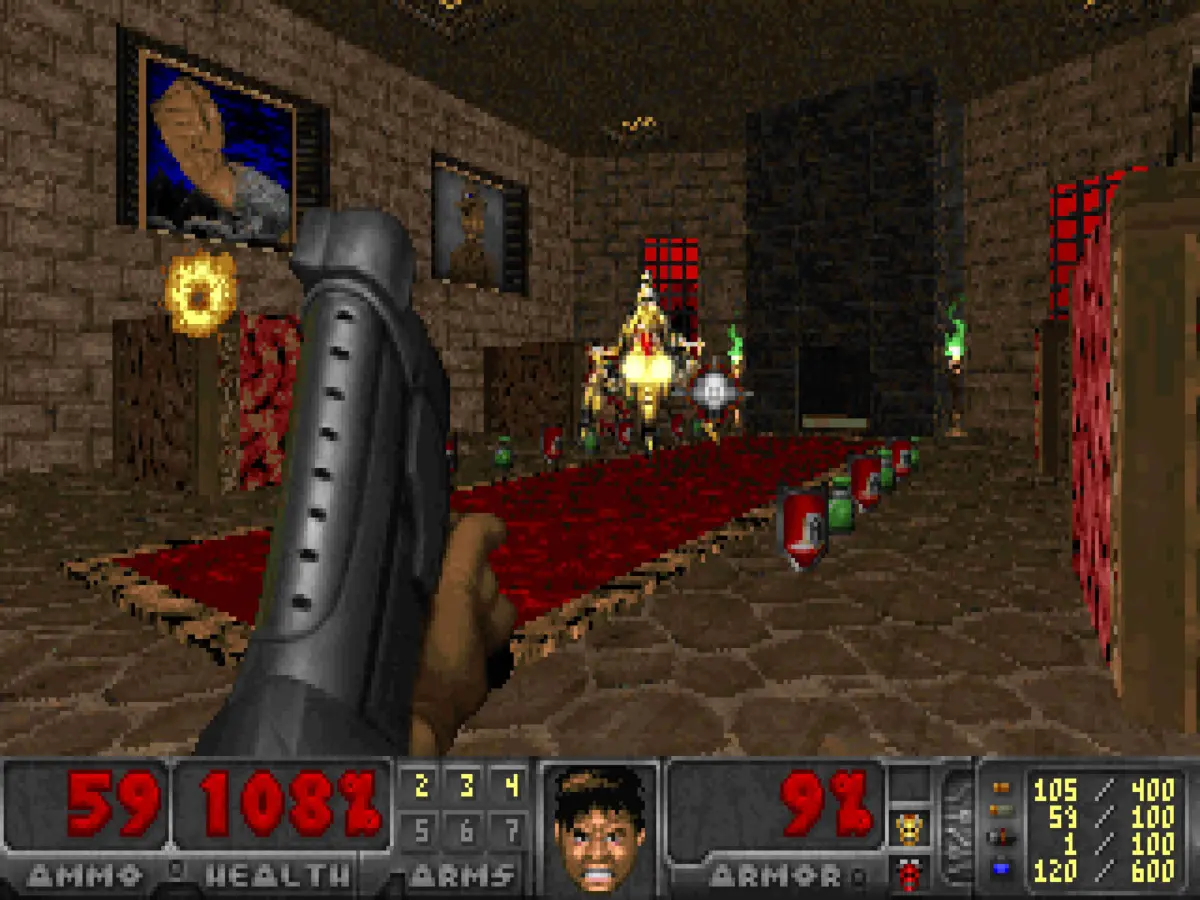
Recently, GitHub developer thimbleberrysystems achieved a viral triumph by deploying "kaboom.claude," an innovative script designed entirely within Anthropic’s cutting-edge AI development tool, Claude Code. By leveraging the open-source DOOM engine variant Freedoom Phase 1, the project successfully boots up a fully playable version of the legendary FPS directly inside a developer’s terminal environment with a single command.
This achievement highlights more than just a clever Easter egg; it serves as a fascinating stress test for terminal-based AI coding assistants. It demonstrates how far large language models (LLMs) have progressed in handling complex, multi-layered programming tasks—from parsing game assets and managing rendering pipelines to packaging the entire executable architecture inside a lightweight node package runner (npx).
As artificial intelligence continues to bleed into creative domains, transforming everything from text editors to retro gaming ports, projects like kaboom.claude offer a compelling look at the convergence of AI coding agents, retro computing preservation, and developer culture.
Detailed Chronology: From Concept to Terminal Gameplay
The genesis of kaboom.claude began as an exploratory venture into the capabilities and boundaries of Claude Code, Anthropic’s command-line interface (CLI) tool tailored for software engineering tasks. While developers typically use such agents to debug microservices, generate unit tests, or scaffold web applications, thimbleberrysystems decided to test the agent’s spatial reasoning, procedural generation comprehension, and legacy systems integration by targeting a cultural touchstone of computer science.
Phase 1: Architectural Prompting and Environment Setup
The development cycle commenced within the Claude Code environment using a straightforward terminal command: npx kaboom.claude. For the uninitiated, the npx utility allows developers to execute Node.js packages directly from the registry without undergoing a permanent local installation. This design choice ensured that the game launcher could be pulled, compiled, and executed dynamically with minimal friction.
Behind the scenes, Claude Code was tasked with far more than simply downloading a pre-compiled binary. The AI agent had to:
- Negotiate the retrieval of Freedoom Phase 1, an open-source, legally distinct IWAD file that serves as a drop-in replacement for the original DOOM shareware data, avoiding copyright complications while preserving exact engine compatibility.
- Structure a rendering pipeline capable of translating classic raycasting and sprite data into an interactive visual output within modern terminal emulators or web-based bridges.
- Configure dependencies, input mapping, and cross-platform execution handlers to ensure the script ran smoothly across varying host machine architectures.
Phase 2: Solving the Terminal Rendering Problem
One of the most remarkable technical hurdles overcome during the creation of kaboom.claude was bridging the gap between a high-framerate graphical first-person shooter and the text-centric environment of a standard command line.
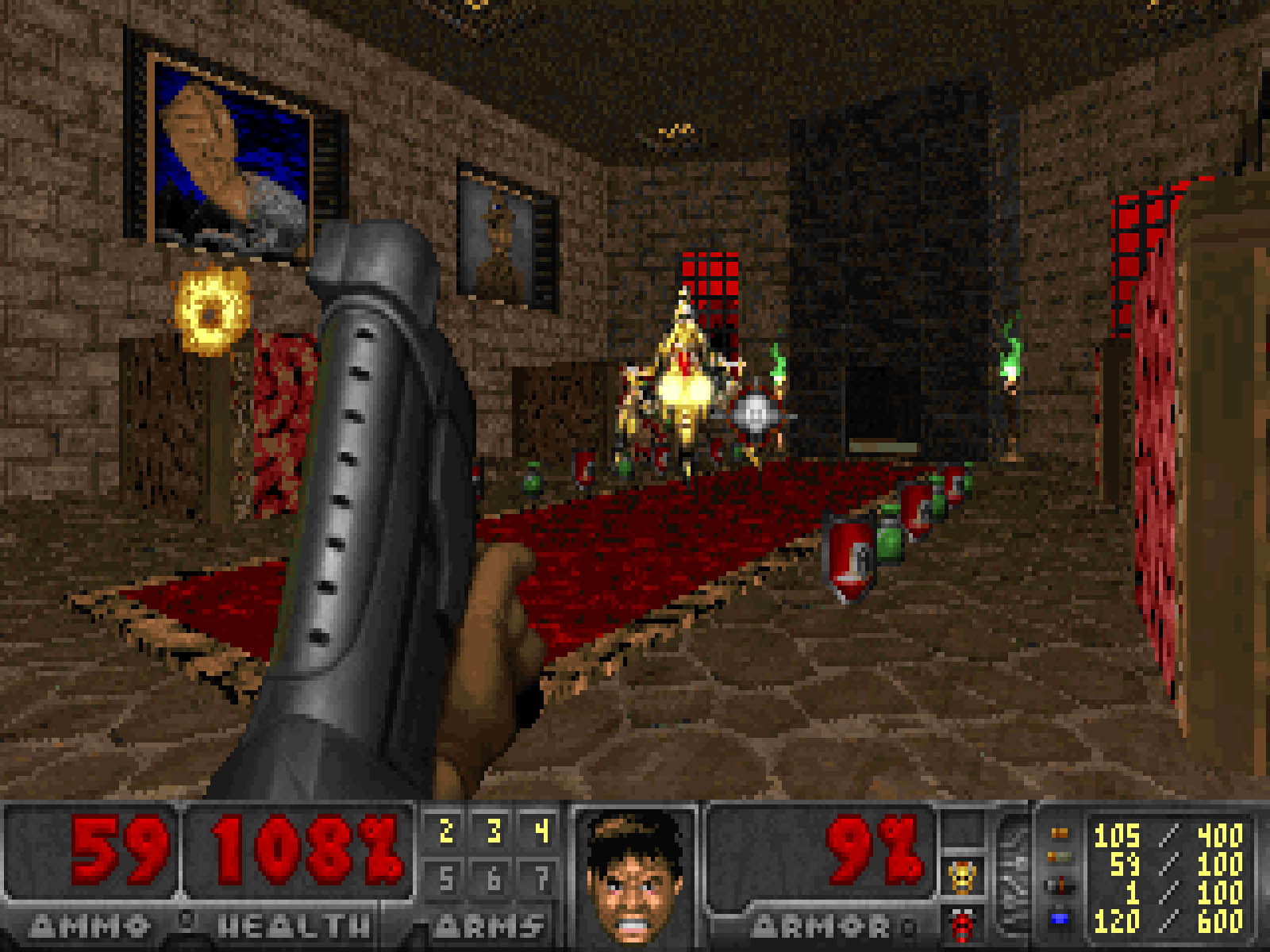
While historical hacker culture is replete with examples of DOOM running on unexpected hardware—ranging from digital cameras and pregnancy tests to smart refrigerators and oscilloscope screens—rendering a fluid 3D environment inside a terminal interface requires sophisticated asset management. Claude Code successfully orchestrated the integration of ASCII/ANSI graphic approximations or lightweight web view components, allowing the game’s classic monster sprites, weapons, and maze-like corridors to render in real time.
The execution loop was fine-tuned so that user inputs—traditionally handled via keyboard and mouse in 1993—were successfully mapped to terminal keypress events, enabling responsive movement, strafing, and combat mechanics without requiring a dedicated graphical user interface (GUI) framework.
Supporting Context & Metrics: The Cultural Phenomenon of Porting DOOM
To understand the significance of kaboom.claude, one must examine the enduring legacy of id Software’s masterpiece and the broader cultural phenomenon surrounding hardware and software ports.
The Immutable Law of Computing: "Can It Run DOOM?"
Released in December 1993, DOOM fundamentally revolutionized the video game industry. Its success was driven not only by its fast-paced, visceral gameplay and multiplayer "deathmatch" innovations, but also by id Software’s visionary decision to release the source code in 1997. This open-source pivot turned DOOM into the ultimate Rosetta Stone for computer scientists, hardware modders, and hobbyist developers.
Over the past three decades, the rule has remained absolute: if a device has a screen, a processor, and a method of input, someone will eventually get DOOM to run on it. Recent years have seen iterations running on everything from advanced neural networks to custom microcontroller setups. The tradition is so pervasive that it has even crossed over into modern board and card game culture; for instance, independent developer LocalThunk’s viral rogue-like deckbuilder Balatro has frequently inspired community discussions, fan art, and conceptual meme ports comparing its addictive mathematical engine loops to the universal adaptability of DOOM.
AI as the New Hardware Modder
In the past, porting DOOM to bizarre or unintended platforms required deep systems-level programming expertise, meticulous memory management, and extensive cross-compilation. Today, AI coding assistants like Claude Code are shifting that burden from human engineers to artificial intelligence models.
By interpreting high-level natural language prompts ("Write a script that boots Freedoom inside an interactive terminal via npx"), Claude Code acts as an autonomous software architect. It writes the boilerplate code, selects appropriate open-source assets, resolves dependency conflicts, and packages the result into a distributable format. Kaboom.claude demonstrates that AI can now participate meaningfully in geek culture, automating the execution of complex retro-tech projects that previously required hours of manual configuration.
Official Statements and Developer Insights
While kaboom.claude originated as an experimental community project rather than a corporate product launch from Anthropic, its viral reception has sparked widespread commentary across GitHub, Reddit, and X (formerly Twitter).
Developers tracking the project have emphasized the implications of AI agents managing end-to-end software lifecycles. A prominent software engineer noted in a community discussion board:
"We’ve reached a fascinating inflection point where you can give an AI assistant a culturally iconic prompt—like ‘make DOOM run in the terminal’—and watch it autonomously assemble the repositories, handle licensing-safe assets like Freedoom, and structure an executable package. It speaks volumes about the contextual reasoning capabilities of modern LLMs."
Furthermore, representatives from the open-source gaming community have praised the project for utilizing Freedoom Phase 1. By relying on freely redistributable game content rather than proprietary commercial assets, kaboom.claude respects intellectual property boundaries while maintaining the spirit of hacker ingenuity that has sustained the DOOM modding community for over 30 years.
Future Outlook: The Intersection of AI Coding Agents and Retro Preservation
The success of kaboom.claude opens up a compelling window into the future of software development, automated deployment, and digital preservation.
1. The Evolution of Natural Language Programming
As tools like Claude Code evolve, the barrier to entry for complex software creation continues to drop. Developers are no longer restricted to writing every line of code manually; instead, they act as directors and curators, guiding AI agents through intricate architectural challenges. Projects that combine retro computing with modern AI agents serve as excellent stress tests for these models, pushing them to handle legacy file formats, low-level graphics rendering, and cross-platform compatibility.
2. Automated Legacy Preservation
Retro gaming preservation faces continuous hurdles due to rotting codebases, incompatible dependencies, and shifting operating system architectures. Autonomous AI agents equipped with package-management capabilities could potentially automate the process of wrapping vintage software into modern, containerized environments (npx, Docker, webassembly containers), ensuring that classic titles and utilities remain accessible to future generations with zero installation friction.
Conclusion
Kaboom.claude is much more than a clever internet novelty or a nostalgic nod to 90s gaming history. It is a testament to the versatility of modern artificial intelligence development tools and the enduring, unbreakable law of the tech world: whenever a new platform emerges, someone will use it to play DOOM. Whether through human ingenuity or AI-assisted execution, the legions of Hell will continue to find their way onto every screen, terminal, and browser window imaginable.






Belum ada komentar. Jadilah yang pertama berkomentar!