

Executive Overview
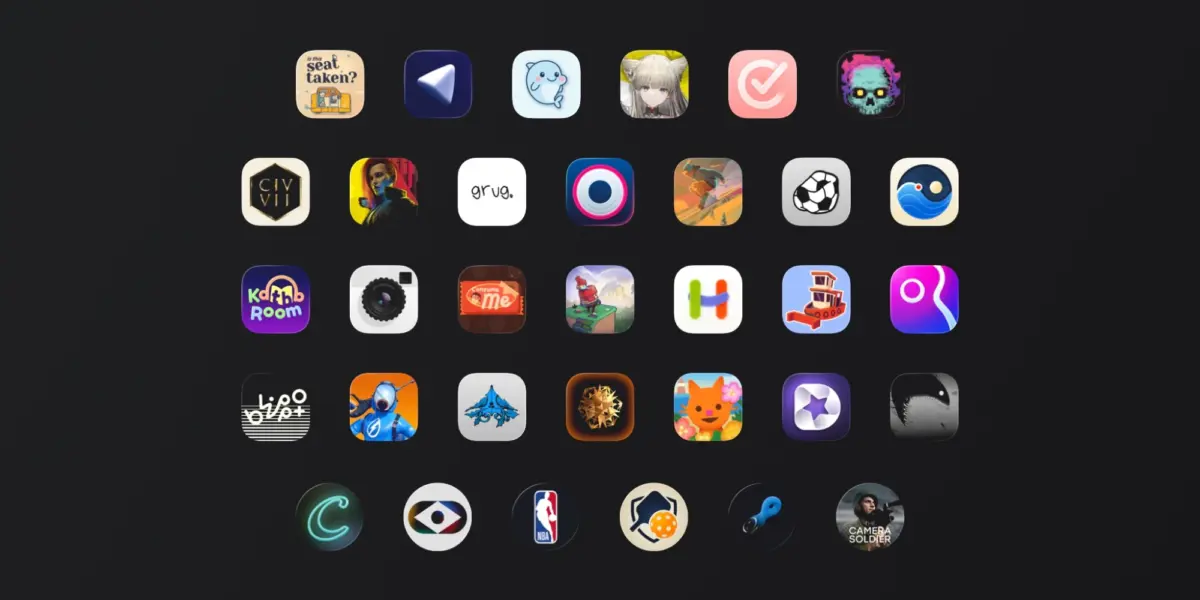
As the technology world turns its eyes toward Apple Park for the impending Worldwide Developers Conference (WWDC), Apple has officially lifted the curtain on a key staple of its developer ecosystem: the finalists for the Apple Design Awards (ADA) 2026. Following the recent distribution of press invitations for the flagship WWDC keynote, Cupertino has unveiled a meticulously curated list of over 30 applications and games vying for recognition across six distinct categories.
The Apple Design Awards represent the pinnacle of achievement within the App Store economy. They do not merely reward software functionality; they celebrate the bleeding edge of design philosophy, engineering prowess, visual artistry, and human-centric problem-solving. This year’s cohort of 36 finalist slots—distributed evenly across apps and games—highlights how independent developers and major studios alike are leveraging Apple’s advanced hardware and software stack, from VisionOS and Metal to SwiftUI and spatial audio.
As the countdown to WWDC 2026 accelerates, this year’s finalists offer an illuminating preview of where software design is heading. They showcase an industry increasingly focused on accessibility, immersive spatial computing, and deeply intuitive interfaces that blur the line between digital interaction and natural human behavior.
Detailed Chronology: The Road to the 2026 Apple Design Awards
The unveiling of the ADA finalists is the culmination of a rigorous, year-round evaluation process conducted by Apple’s internal design and engineering teams. Understanding the significance of these awards requires tracing the trajectory of how Apple honors software craftsmanship:
Phase 1: The App Store Ecosystem Evaluation (June 2025 – May 2026)
Throughout the preceding year, Apple’s editorial and technical review boards continuously monitor the App Store ecosystem. Every update, new release, and platform adoption—ranging from the latest iPadOS multitasking paradigms to spatial computing developments on Vision Pro—is scrutinized for technical excellence and creative execution. Developers do not traditionally "apply" in a traditional sense; rather, their work speaks for itself, capturing Apple’s attention through exceptional user adoption, innovative technology utilization, or profound community impact.
Phase 2: The Narrowing Field and Category Alignment
In the spring of 2026, the pool of potential candidates is systematically narrowed down to a select group of finalists. For this year’s cycle, Apple structured the competition around six core pillars: Delight and Fun, Inclusivity, Innovation, Interaction, Social Impact, and Visuals and Graphics.
Each category features a balanced representation of three applications and three games. However, a hallmark of exceptionally engineered software is its multidisciplinary excellence; consequently, several standout titles have secured finalist positions across multiple categories, bringing the total number of recognized unique products just shy of the 36-slot maximum.
Phase 3: The Public Reveal and Pre-WWDC Anticipation
In mid-May 2026, coinciding with the official dispatch of WWDC press invites, Apple published the complete roster of finalists on the Apple Developer portal. This public announcement serves a dual purpose: it generates immense industry buzz ahead of the developer conference and offers the broader tech community an opportunity to test, explore, and appreciate the software before the ultimate winners are crowned.

Phase 4: The Winner Announcement (Imminent)
The final chapter of the 2026 Apple Design Awards cycle unfolds in the coming weeks leading up to and during WWDC. Winners will receive the coveted physical ADA trophy—a beautifully crafted, aluminum-and-glass monolith that has become one of the most prestigious accolades a software creator can earn.
Supporting Context & Metrics: The Anatomy of a Finalist
To fully grasp the magnitude of being named an Apple Design Award finalist, one must examine the metrics, technical thresholds, and thematic criteria that define the modern App Store landscape.
The Six Pillars of Recognition
-
Delight and Fun
- Criteria: Finalists in this category provide memorable, engaging, and satisfying experiences enhanced by Apple technologies.
- Context: This category honors software that transforms routine digital tasks or leisure time into joyous interactions. Whether through masterclass haptic feedback, responsive animations, or witty narrative design, these apps and games utilize hardware capabilities to elicit genuine emotional resonance.
-
Inclusivity
- Criteria: Finalists provide a great experience for all by reflecting a variety of backgrounds, abilities, and languages.
- Context: Apple has long championed accessibility as a fundamental human right. Finalists in this space seamlessly integrate features like VoiceOver, Dynamic Type, custom motor controls, and localized design paradigms, ensuring that digital empowerment is universal rather than exclusive.
-
Innovation
- Criteria: Finalists provide a state-of-the-art experience through a novel use of Apple technologies that sets them apart in their genre.
- Context: This is the playground for technical pioneers. Whether utilizing machine learning models running locally via the Neural Engine, pushing the boundaries of spatial audio, or exploiting the raw graphical power of Metal APIs, these titles redefine what developers thought was possible on Apple silicon.
-
Interaction
- Criteria: Finalists deliver intuitive interfaces and effortless controls that are perfectly tailored to their platform.
- Context: Great design is often invisible. The apps and games in this category eliminate friction, offering gesture controls, keyboard shortcuts, and UI layouts that feel native to iOS, iPadOS, macOS, watchOS, or visionOS.
-
Social Impact
- Criteria: Finalists improve lives in a meaningful way and shine a light on crucial issues.
- Context: Software can be a powerful instrument for societal change. Finalists here tackle critical challenges—ranging from environmental sustainability and mental health support to educational equity and journalistic integrity—proving that technology can be a force for profound good.
-
Visuals and Graphics

- Criteria: Finalists feature stunning imagery, skillfully drawn interfaces, and high-quality animations with a distinctive and cohesive theme.
- Context: Acknowledging pure aesthetic mastery, these titles set a visual benchmark. From minimalist typography-driven interfaces to hyper-detailed, real-time 3D rendered worlds, they demonstrate an uncompromising commitment to visual storytelling.
The Technical Renaissance of 2026
The 2026 finalist pool reflects a maturing ecosystem. Developers are no longer just porting desktop or web experiences to mobile; they are building platform-native masterpieces from the ground up. The integration of spatial computing frameworks and advanced on-device intelligence capabilities highlights a shift toward ambient, context-aware computing. Furthermore, the cross-pollination of indie developers utilizing cross-platform frameworks like SwiftUI has democratized high-end UI/UX design, allowing small, two-person teams to compete toe-to-toe with global software conglomerates.
Official Statements & Industry Perspectives
While Apple maintains a disciplined communication strategy regarding the precise deliberation notes of the ADA judges, statements from past winners and Apple’s executive leadership shed light on the philosophy driving these awards.
"Great design is about more than just how an app looks—it’s about how it works, how it makes the user feel, and the problems it solves. Every year, our finalists push the envelope of what our hardware and software can achieve, inspiring not just us at Apple, but developers worldwide."
— Unnamed Apple Engineering Lead (Reflecting historical ADA sentiment)
Industry analysts view the 2026 Apple Design Awards as a barometer for the health of the independent developer ecosystem. In an era where app discoverability within the crowded App Store is a persistent challenge, securing a finalist spot—or better yet, an ADA trophy—acts as a powerful catalyst for growth. Past winners frequently report surges in user acquisition, venture capital interest, and global brand recognition following their ADA announcements.
Furthermore, design advocacy groups have praised Apple’s persistent emphasis on Inclusivity and Social Impact. By elevating apps that prioritize accessibility and societal welfare, Apple signals to the broader tech sector that ethical design and social responsibility are just as vital as commercial monetization.
Future Outlook: What the 2026 Finalists Mean for the Rest of the Year
The unveiling of the 2026 Apple Design Award finalists is more than a celebratory pre-game show for WWDC; it is a crystal ball pointing toward the future of software development. As we look ahead to the remainder of 2026 and into 2027, several key takeaways emerge from this year’s roster:
- The Normalization of Spatial and Ambient Interfaces: With spatial computing hardware continuing to mature, the design languages pioneered by this year’s finalists will soon transition from bleeding-edge experimentation to mainstream expectations. Expect future operating systems to adopt the frictionless interaction models highlighted in the Interaction and Innovation categories.
- Hyper-Personalization via On-Device AI: As processing units on Apple devices become increasingly capable of handling complex machine learning tasks locally, apps are becoming predictive and deeply adaptive. Finalists this year demonstrate that users expect software to anticipate their needs without sacrificing privacy.
- Elevated Standards for Accessibility: Inclusivity is no longer an afterthought or a compliance checklist item; it is a core driver of creative design. The techniques demonstrated by this year’s inclusivity finalists will likely become baseline requirements for mainstream app development in the years to come.
As WWDC 2026 approaches, the world waits to see which of these extraordinary finalists will ultimately take home the coveted Apple Design Award trophy. Regardless of who wins the physical hardware, every developer on this year’s list has already cemented their place at the forefront of modern digital craftsmanship.






Belum ada komentar. Jadilah yang pertama berkomentar!