

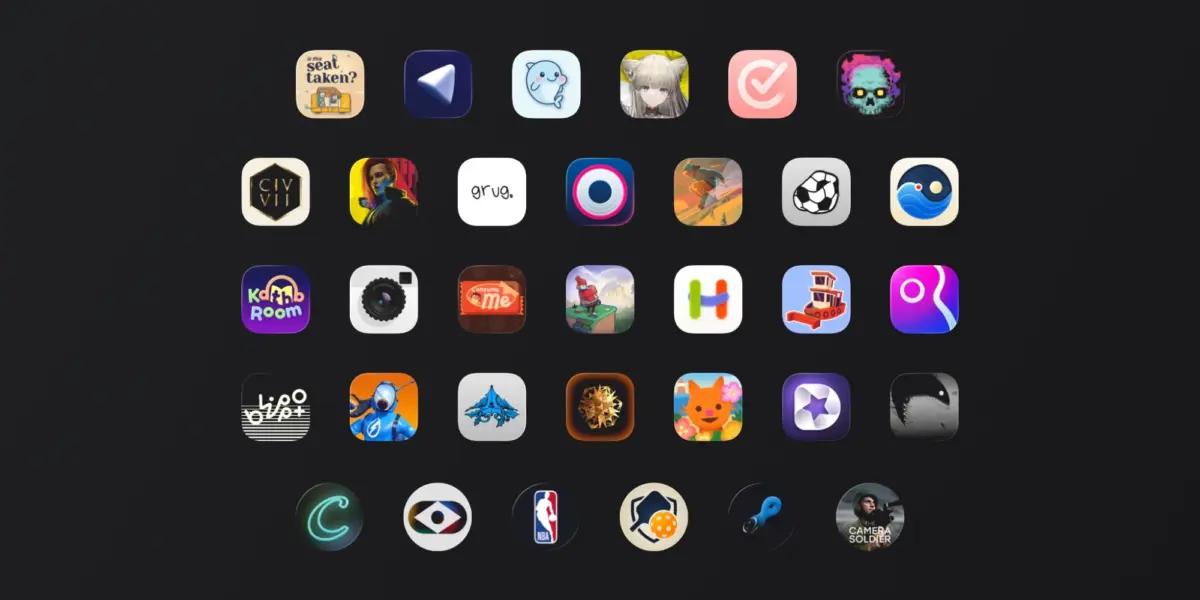
As the technology sector trains its collective gaze on Cupertino in anticipation of the Worldwide Developers Conference (WWDC), Apple has officially initiated the festivities by releasing one of its most anticipated pre-conference traditions. Fresh off the heels of sending out official press invitations for the WWDC 2026 keynote, the tech giant has lifted the curtain on the finalists for the 2026 Apple Design Awards (ADAs).
Recognizing the zenith of creativity, technical ingenuity, craftsmanship, and user-centric design within the App Store ecosystem, the ADAs are among
the most prestigious accolades a developer or studio can receive. This year’s cohort features a meticulously curated selection of 36 distinct finalist berths spread evenly across six fiercely contested categories.
Below is an exhaustive, authoritative breakdown of the 2026 Apple Design Award finalists, the philosophy underpinning the competition, and what this year’s selections reveal about the state of software development across Apple’s vast hardware and software ecosystem.
Executive Overview: The Architecture of Excellence
The Apple Design Awards are not merely a celebration of aesthetic beauty; they represent a rigorous evaluation of how software leverages Apple’s proprietary technologies, hardware capabilities, and operating system frameworks. Each year, Apple’s design evaluation committee looks for applications and games that push the envelope of what is possible on iPhone, iPad, Mac, Apple Watch, and Apple Vision Pro.
For 2026, the competition is structured around six core pillars:
- Delight and Fun
- Inclusivity
- Innovation
- Interaction
- Social Impact
- Visuals and Graphics
Across these six categories, a total of 36 finalist slots are up for grabs—comprising three applications and three games per category. However, because several standout titles and tools display multi-disciplinary excellence, they have earned nominations across multiple categories, bringing the actual count of unique finalists slightly below the theoretical maximum of 36.
As the developer community waits to see which contenders will ultimately walk away with the physical ADA trophy in the coming weeks, analyzing the finalists provides a fascinating macroscopic view of current industry trends, including spatial computing integration, advanced on-device machine learning, and uncompromising accessibility standards.

Detailed Chronology: The Road to WWDC 2026 and the ADA Selection Process
The path to the Apple Design Awards is a grueling, months-long evaluation process that operates largely behind closed doors. Understanding this timeline highlights the monumental achievement of securing a finalist spot.
Phase One: The App Store Lifecycle (Year-Round)
Apple’s editorial and design teams monitor the App Store continuously. Apps that adopt new framework APIs early—such as SwiftUI updates, Metal advancements, or spatial computing integration via visionOS—frequently capture the attention of Apple’s evangelism teams. However, submission to the App Store does not automatically guarantee consideration; developers must maintain immaculate performance metrics, stellar user-review histories, and high privacy compliance.
Phase Two: Internal Curation and Technical Audit (Spring)
As the academic and corporate spring progresses, Apple’s internal design committee compiles a longlist of potential candidates. These applications undergo rigorous technical audits. Engineers and designers test the apps across a multitude of devices to verify:
- Frame-rate consistency and thermal efficiency.
- Seamless responsiveness to input modalities (Touch, Apple Pencil, Mouse, Keyboard, and Eye/Hand tracking).
- True adherence to human interface guidelines (HIG).
- Genuine utilization of platform-specific features rather than relying purely on cross-platform ports.
Phase Three: Finalist Selection and Announcement (May)
Typically coinciding with or immediately following the distribution of WWDC media credentials—as was the case with the official rollout—Apple locks in its finalists. The announcement serves as a massive promotional springboard for independent developers and major studios alike, putting a global spotlight on their work just weeks before the developer conference kicks off.
Phase Four: The Winner Reveal (WWDC Week)
The final stage of the chronology occurs during WWDC week, where winners are formally announced and celebrated. Historically, winners are highlighted via dedicated developer sessions, featured spots on the App Store Today tab, and interviews detailing the engineering trials and creative triumphs behind their projects.
Supporting Context & Metrics: Decoding the 2026 Categories
To truly appreciate the 2026 finalists, one must examine the specific criteria established by Apple for each category. These definitions act as the rubric by which the absolute best software of the year is judged.
1. Delight and Fun
- The Criteria: "Finalists in this category provide memorable, engaging, and satisfying experiences enhanced by Apple technologies."
- Context: This category traditionally balances whimsical entertainment with masterclass engineering. Apps and games here do not just function well; they evoke emotional resonance. Whether through meticulous haptic feedback, fluid animations that respond naturally to user gestures, or audio design that elevates the atmosphere, finalists in this category demonstrate that software can be genuinely joyous to use.
2. Inclusivity
- The Criteria: "Finalists in this category provide a great experience for all by reflecting a variety of backgrounds, abilities, and languages."
- Context: Apple has long positioned accessibility as a core human right rather than an afterthought. Finalists in the Inclusivity category showcase deep integration with native accessibility frameworks—such as VoiceOver, Switch Control, Dynamic Type, and custom color-contrast ratios. Furthermore, these titles embrace diverse cultural narratives and multilingual audiences, ensuring that digital spaces are welcoming to every conceivable demographic.
3. Innovation
- The Criteria: "Finalists in this category provide a state-of-the-art experience through a novel use of Apple technologies that sets them apart in their genre."
- Context: True innovation is rare. This category singles out pioneers who look at Apple’s latest silicon capabilities (such as the Neural Engine or advanced GPU ray-tracing architectures) and find entirely new application paradigms. Whether it is a productivity tool redefining how we handle local data privacy or a game mechanics breakthrough built exclusively for spatial environments, innovators redefine the boundaries of what consumers expect from their devices.
4. Interaction
- The Criteria: "Finalists in this category deliver intuitive interfaces and effortless controls that are perfectly tailored to their platform."
- Context: Great design is invisible. Interaction finalists excel at removing friction between human intent and digital execution. These apps feature zero-learning-curve navigational patterns, clever gesture shortcuts, and UI layouts that feel native whether viewed on a compact iPhone screen, an expansive Studio Display, or an immersive virtual canvas.
5. Social Impact
- The Criteria: "Finalists in this category improve lives in a meaningful way and shine a light on crucial issues."
- Context: Technology possesses immense transformative power. The Social Impact finalists are applications designed to tackle real-world friction—ranging from mental health support and environmental sustainability tracking to educational empowerment and journalistic transparency. These apps prove that code can be a catalyst for profound societal betterment.
6. Visuals and Graphics
- The Criteria: "Finalists in this category feature stunning imagery, skillfully drawn interfaces, and high-quality animations with a distinctive and cohesive theme."
- Context: Visual fidelity in applications and games has reached console-level sophistication on mobile hardware and desktops alike. This category honors artistic directors, UI artists, and graphics programmers who deploy custom shaders, vector-based scalables, and bespoke typography to construct worlds and workspaces that are breathtaking to behold.
Official Perspectives: The Philosophy of Apple Design
While Apple keeps the identities of its judging panel relatively anonymous to protect them from external lobbying, the philosophy behind the Apple Design Awards has been articulated consistently over the years by company executives, including CEO Tim Cook and senior software engineering leaders.
At its core, the ADA program serves a dual purpose: honoring excellence and educating the broader developer community. By elevating these specific titles, Apple sets a benchmark for the entire ecosystem. The unspoken message to developers is clear: build with purpose, respect user privacy, embrace native platform capabilities, and never compromise on user experience.

Industry analysts note that securing an ADA nomination often results in a massive surge in organic App Store downloads, increased venture capital interest, and heightened media visibility. For indie developers working out of makeshift home offices, an ADA nomination can single-handedly secure the financial runway needed to fund future development cycles.
Future Outlook: What the 2026 Finalists Mean for the App Ecosystem
Looking ahead past WWDC 2026, the composition of this year’s Apple Design Award finalists offers a compelling forecast of where consumer software is heading over the next several years.
The Maturation of Spatial Computing
Following the commercial introduction of visionOS and Apple Vision Pro, developers have had sufficient runway to move past initial tech demos and build robust, deeply integrated spatial experiences. The presence of immersive applications among the 2026 finalists indicates that spatial computing is no longer an experimental niche; it is a mature platform attracting elite design talent.
On-Device Intelligence as a Baseline Utility
As hardware architectures continue to emphasize powerful on-device machine learning capabilities, applications are increasingly expected to perform complex computational tasks locally—prioritizing user privacy without sacrificing speed. The technical criteria for this year’s innovation and interaction finalists heavily favor apps that make intelligent, predictive adjustments to user workflows.
The Independent Studio Renaissance
Despite the dominance of major tech conglomerates, the ADA finalist pool consistently proves that small, independent teams retain a distinct competitive advantage when it comes to creative risk-taking. Unburdened by legacy corporate structures, indie developers are responsible for some of the most daring and emotionally resonant entries in the Delight, Social Impact, and Innovation categories.
Conclusion
As the countdown to WWDC 2026 continues, the release of the Apple Design Award finalists serves as a brilliant appetizer for what promises to be a landmark conference. These developers have demonstrated exceptional mastery, turning raw code and hardware silicon into tools of beauty, utility, and joy.
The official winners will be announced in the coming weeks leading up to and during the conference. Until then, exploring the finalist list via the official Apple Developer portal offers a masterclass in modern digital craftsmanship.
Which apps or games from this year’s finalist lineup stand out most to you? Do you have a favorite contending for the top spot? Sound off in the comments below.





Belum ada komentar. Jadilah yang pertama berkomentar!