

Executive Overview
The British Film Institute’s (BFI) London Film Festival (LFF) has carved out a unique and increasingly influential niche on the international film festival circuit. Eschewing the hyper-elitism of Cannes, the laid-back artistic sprawl of the Berlinale, the institutional pomp of Venice, or the industry-insulated focus of Toronto and Sundance, the London event has firmly established itself as one of the most accessible yet prestigious celebrations of cinema in Europe.
Running annually in mid-October—most recently from October 7 to October 18, 2026—the festival strategically positions itself on the calendar. Arriving too late to single-handedly ignite the initial publicity machines for early-season Academy Award hopefuls, it instead serves as a high-powered amplifier for major studio and independent distributor campaigns. By offering a final red-carpet launchpad before wide theatrical distribution and streaming rollouts, LFF bypasses the rigid necessity for world-premiere exclusivity. European and UK premieres carry equal weight here, pulling the year’s most provocative and critically lauded titles under one massive cultural umbrella.
Yet, this balancing act between populist mass entertainment and high-art curation brings inherent institutional tensions to the surface. As the festival scales new heights in attendance and global output, questions regarding its sociopolitical engagement, economic accessibility, and labor dynamics within the creative industries have intensified.
This comprehensive report examines the structural evolution of the 2026 London Film Festival, balancing its triumphs in audience engagement and curation against critical questions regarding political discourse, working-class representation, and the standout features defining the current cinematic landscape.
Detailed Chronology and Structural Evolution
The 2026 Festival Footprint
The 2026 edition of the London Film Festival shattered previous operational and attendance records. Spanning twelve days across various iconic London venues—anchored, as always, by the Southbank Centre—the festival showcased 251 feature films and major projects originating from 88 countries. Total public and delegate attendances surpassed the historic benchmark of 235,853 set in the previous year, confirming the event’s growing footprint in the global cultural economy.
Under the stewardship of Festival Director and BFI Artistic Director Kristy Matheson, who took the helm in 2023, the programming strategy has increasingly leaned toward eclectic, cross-cultural curation. Matheson’s administration has consistently secured major international festival winners for high-profile UK and European premieres, juxtaposing them boldly against daring breakouts from emerging global voices.
Public Access vs. Industry Realities
Unlike the exclusionary, high-cost entry barriers of festivals like Cannes—where strict black-tie dress codes and opaque invitation-only mandates govern access—LFF maintains a fiercely public-facing ethos. With ticket prices starting at an accessible £6 for patrons aged 25 and under, the festival successfully democratized access to world-class cinema.
Fans and cinephiles mingled freely around the Southbank Centre, participating in public "Screen Talks" and panel discussions with global A-listers. However, behind the scenes, operational friction remained a persistent talking point for industry delegates. Technical bottlenecks—specifically regarding the functionality of the festival’s mobile accreditation and ticket-booking applications—drew sharp critiques from accredited press and international buyers navigating the dense, multi-venue schedule.
Supporting Context & Metrics: Art, Commerce, and Politics
The interplay between mass entertainment and high art at LFF generated intense debate among critics and attendees alike. On one side of the ledger, the festival’s star power generated crucial media momentum. Visits from prominent global talent—including Scarlett Johansson, Robert Eggers, Florence Pugh, Sam Rockwell, Jesse Eisenberg, Andrew Scott, and Mahershala Ali—fueled paparazzi engagement and digital social media clout, elements deemed vital for drawing mainstream eyeballs to challenging or independent artistic works.
The Political Paradox of Curation
However, this populist embrace exists in sharp contrast to the festival’s curation of sociopolitical discourse. Critics noted a curious institutional avoidance of direct political engagement in a cultural climate where contemporary art is inextricably linked to global geopolitics.
While the festival proudly platformed Palestinian cinema—including Abdallah Al-Khatib’s feature Chronicles from the Siege, following previous years’ selections like Palestine 36 and The Voice of Hind Rajab—official festival rhetoric largely muted the ongoing humanitarian crises gripping the Middle East. This stood in stark contrast to the explicit political discourse championed at events like the Venice Biennale. Similarly, while retrospectives and non-narrative achievements—such as the top prize awarded to Sergei Loznitsa’s archival Soviet documentary Imperium (comprising footage shot between 1970 and 1973)—highlight historical introspection, contemporary geopolitical realities often received a muted, diplomatic nod rather than a robust platform.
Domestic Labor and Class Representation
Closer to home, the festival faced scrutiny regarding its engagement with the domestic labor crisis in the British creative sector. Statistics underscore a stark reality: the percentage of working-class individuals employed in the UK creative industries has plummeted to a mere 16%, a figure halved since Margaret Thatcher’s administration took office in 1979.
Despite operating in an environment where working-class filmmakers frequently lack the systemic institutional backing required to capture the attention of entities like the BBC or the BFI, the festival’s policy response has largely been restricted to networking mixers and free roundtable discussions. Critics argue that these measures fall woefully short of meaningful structural reform, failing to secure direct capital funding, educational pathways, and sustained socioeconomic mobility for historically underrepresented castes within the UK.
Official Statements and Industry Perspectives
Festival leadership has consistently defended its broad-tent approach, framing accessibility and diverse storytelling as the core tenets of modern cinematic curation. Kristy Matheson’s programming philosophy relies on the premise that sparking broad cultural conversations—held not merely over exclusive cocktails at industry soirées, but in public queues, theaters, and digital forums—serves a greater public good than insular prestige-chasing.
Industry observers, however, point out the inherent contradictions of a state-backed cultural institution operating within a neoliberal framework. Mainstream organizations are structurally disincentivized from adopting genuine anti-establishment postures, particularly in a political climate where the British establishment remains structurally detached from the daily realities of the working populace. Yet, as cultural critics note, because modern art functions fundamentally as a public enterprise, its primary objective should be systemic education and communal support rather than mere commercial diversion.
Future Outlook: Standout Films Lighting Up the Winter Season
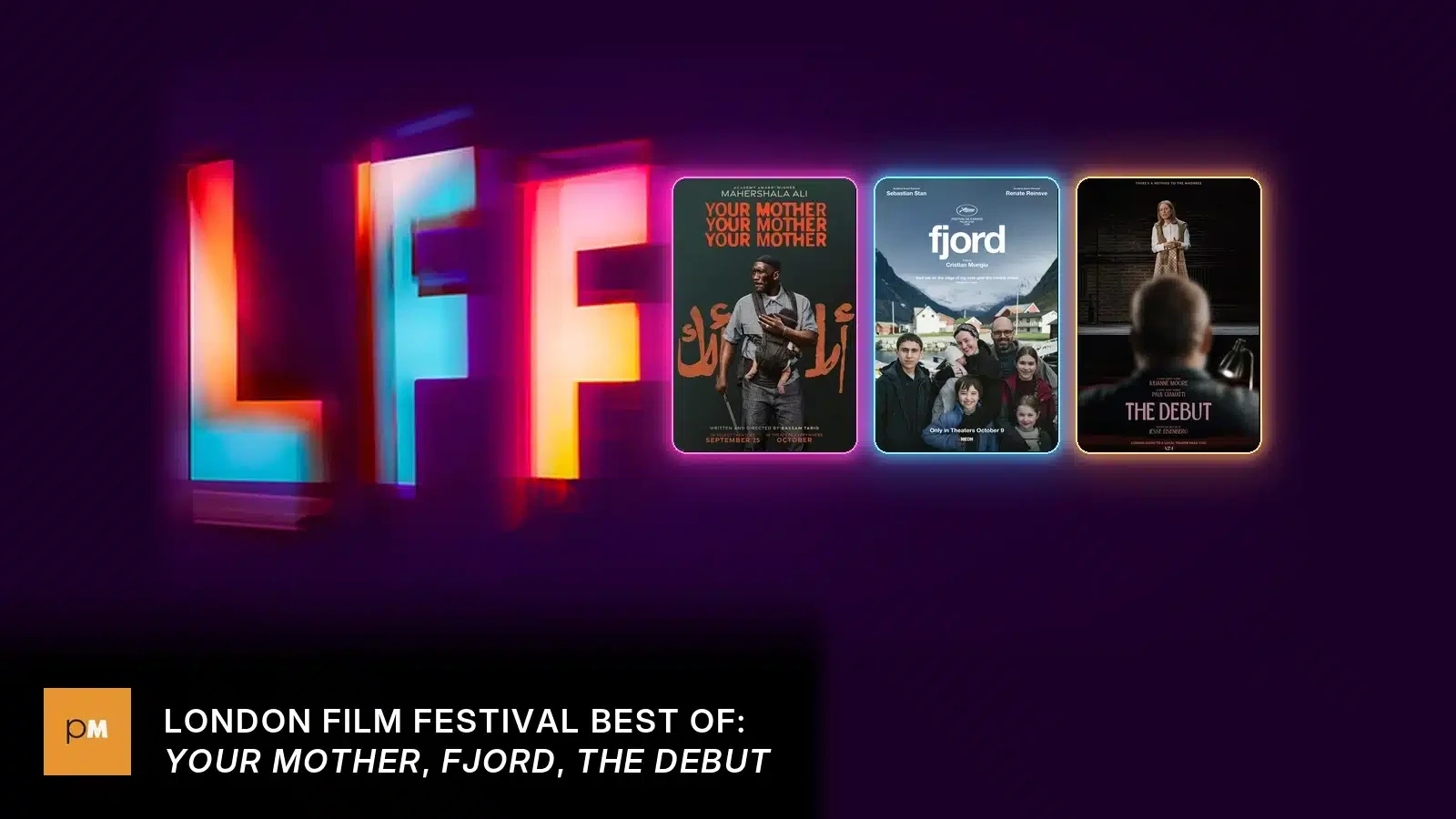
Despite institutional and political debates, the artistic caliber of the 2026 lineup reaffirmed the festival’s vital role in shaping the cinematic conversation heading into the winter awards season and holiday release window. Three major features dominated critical discourse and audience engagement at this year’s LFF.
1. Your Mother Your Mother Your Mother (Dir. Bassam Tariq)
Arising ironically as the creative byproduct of Marvel’s decision to stall its Blade reboot starring Mahershala Ali, Bassam Tariq’s Your Mother Your Mother Your Mother emerged as a towering cinematic achievement. Taking its title from a prominent Islamic hadith emphasizing the supreme sacrifice and unparalleled status of mothers, the film follows Latif (Ali), a devout Muslim who sustains his family in Houston by working as an assassin under strict moral codes—only killing men who "deserve" it and strictly utilizing edged weapons.
When his wife Khadijah suddenly passes away, Latif is forced to abandon his illicit trade to raise his three children: teenage Fatiha (making a stunning screen debut via newcomer Adia), eight-year-old Qadir (Jahleel Kamara), and an infant daughter requiring specialized care. The narrative expands into a complex tapestry of grief, family dynamics, and faith, further complicated by an unhinged Evangelical pastor, Hwan Yoon (played with chilling theatricality by John Cho), seeking to "cleanse" the local landscape. Anchored by phenomenal supporting turns from Giancarlo Esposito as Imam Abdul Malik and Tramell Tillman, Tariq’s direction successfully welds pulpy genre thrills with profound emotional resonance.
2. Fjord (Dir. Cristian Mungiu)
Reigning as the Palme d’Or winner following its electric UK premiere at the Royal Festival Hall, Cristian Mungiu’s Fjord tackles the agonizing realities of cultural assimilation and state overreach in Western Europe. Loosely inspired by the real-life trials of the Bodnariu family, the film stars Sebastian Stan (unrecognizable in a bald, bespectacled transformation) and Renate Reinsve as Mihai and Lisbet Gheorghiu, a traditional Romanian-Norwegian couple raising five children in a rural Norwegian village.
What begins as an immigrant narrative of eager adaptation quickly metastasizes into a harrowing psychological horror. When the children’s conservative upbringing—free of modern digital distractions and anchored in traditional values—collides with the rigid progressivism of local institutions, a minor school injury involving their eldest daughter (Vanessa Ceban) triggers a devastating child-services intervention. Mungiu surgically dissects the subtle mechanisms by which "civilized" bureaucratic states discipline foreign bodies, questioning the absolute boundaries of state control over the familial unit without resorting to simplistic didacticism.
3. The Debut (Dir. Jesse Eisenberg)
Transitioning seamlessly from his solemn sophomore directorial feature A Real Pain, Jesse Eisenberg delivered an uproarious, deeply empathetic masterclass in character-driven comedy with The Debut. Centered around Mona (Julianne Moore), a resolute New Jersey housewife seeking a profound second act, the film follows her relentless pursuit of a community theater role in the fictional musical Noisy Neighbors.
Initially rebuffed by the pompous, self-serious director Jerry Blankenbuehler (Paul Giamatti in peak form) in favor of local theater legend Serena Cherry (Bernadette Peters in a brilliant cameo), Mona’s unyielding persistence lands her a third-tier supporting part. Eisenberg’s screenplay elevates what could have been a facile cinematic spoof into an exuberant, life-affirming ode to personal agency and artistic community. The sublime comic and emotional interplay between Moore and Giamatti forms the beating heart of the film, reminding audiences that small, localized ambitions and mutual solidarity remain the true currency of a fully realized life.
Conclusion
The 2026 BFI London Film Festival ultimately reaffirmed its status as an indispensable pillar of the international cinematic ecosystem. By successfully merging populist accessibility with high-caliber international curation, the festival continues to set a benchmark for public engagement.
However, as LFF looks toward future editions, its long-term cultural legitimacy will increasingly hinge on its willingness to confront the structural contradictions of contemporary art: addressing working-class exclusion, embracing transparent political discourse, and ensuring that the festival serves not merely as a commercial runway for international entertainment, but as an equitable, fearless forum for global human expression.





Belum ada komentar. Jadilah yang pertama berkomentar!