

Executive Overview
In a dramatic departure from decades of rigid corporate tradition, Japanese convenience store giant FamilyMart has announced a sweeping overhaul of its dress code and staff appearance guidelines. Set to roll out across its staggering network of approximately 16,500 stores nationwide, the initiative introduces the country’s first-ever T-shirt-style employee uniform in the convenience sector, alongside a progressive grooming policy that eliminates historical restrictions on staff hair color.
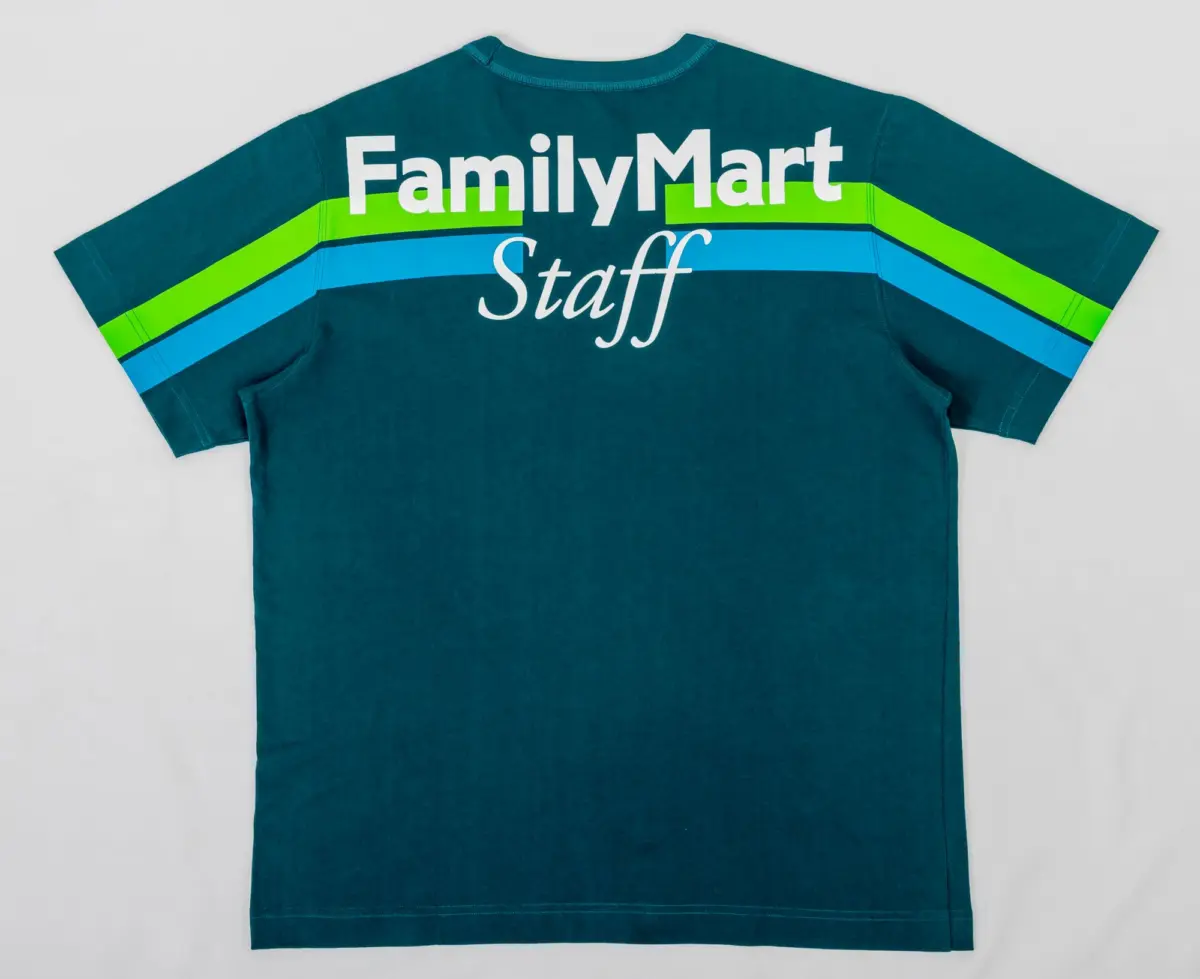
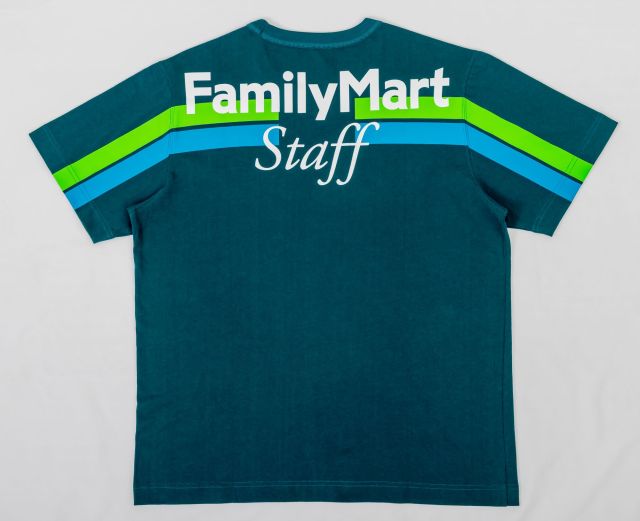
Brought together under the banner of the “FamilyMart Coordinate,” this modernizing effort marks the brand’s first major uniform redesign in a decade. Designed by Hiromasa Ochiai, the creative director behind FamilyMart’s wildly successful “Convenience Wear” apparel line, the new aesthetic aims to strike a delicate balance between ergonomic practicality, contemporary streetwear sensibility, and corporate professionalism.
At its core, this policy shift is much more than a superficial stylistic choice. Driven by Japan’s mounting labor shortages and a generational shift in workplace values, the corporate pivot is an aggressive play to position FamilyMart as "the most desirable place to work" within the hyper-competitive Japanese retail landscape. By granting employees greater autonomy over their personal expression—including customized layering options, flexible name badge designations, and relaxed styling rules—FamilyMart is challenging deeply ingrained cultural norms regarding customer service presentation.
While the announcement has ignited vibrant public discourse across social media and mainstream news outlets, reflecting a society caught between traditional expectations of uniformity and modern demands for individuality, the brand’s leadership remains steadfast. Slated for implementation on September 1, the rollout represents a bold gamble: that prioritizing worker comfort and authentic self-expression will ultimately cultivate a more engaged, energized, and accessible workforce.
Detailed Chronology: The Evolution of the "FamilyMart Coordinate"
The genesis of FamilyMart’s historic uniform and grooming revolution did not happen overnight; it is the culmination of years of iterative product development, changing internal feedback, and strategic market positioning.
The Foundation: Convenience Wear Success
The groundwork for the new uniforms was inadvertently laid by the runaway success of FamilyMart’s in-house apparel brand, Convenience Wear. Spearheaded by designer Hiromasa Ochiai, the line captured the public imagination—most notably through items like the "Outer T-shirt," which has surpassed seven million units sold, and its cult-favorite Line Socks. Consumers grew accustomed to viewing the convenience store not merely as a pit stop for bento boxes and utility bills, but as a surprisingly trendy lifestyle brand.
Internal Pressure and Staff Feedback
Behind the scenes, store managers and corporate executives were increasingly confronted with feedback from frontline workers. Traditional jacket-style uniforms, while neat and formal, were routinely criticized by staff members for being restrictive, poorly ventilated, and difficult to move in during high-intensity tasks like stock management, heavy lifting, and store cleaning. With younger generations entering the workforce, the demand for ergonomic, comfortable work attire grew deafening.
The Unveiling: August 26
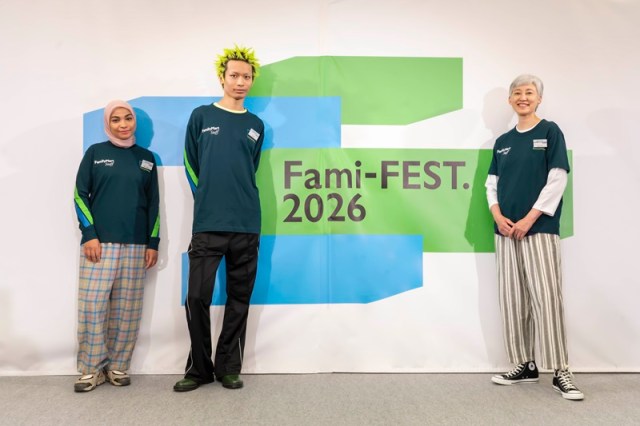
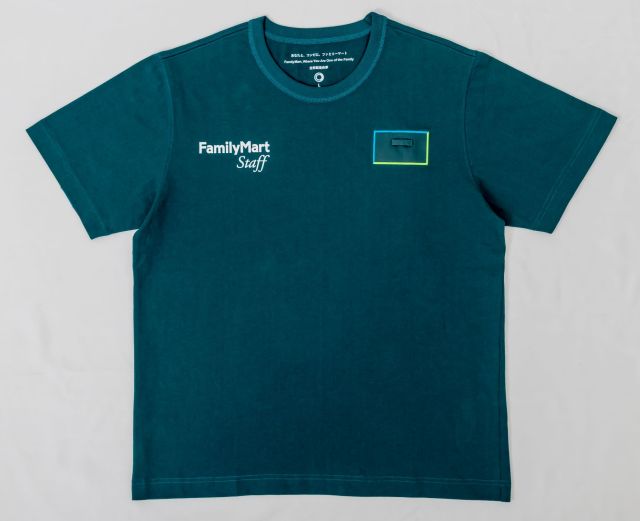
On August 26, FamilyMart officially pulled back the curtain on the new attire. Three models showcased the looks during a press presentation, introducing the public to the “FamilyMart Coordinate.” Industry analysts quickly recognized the significance of the event: FamilyMart was breaking a decade-long status quo by replacing traditional synthetic jackets with a 100% heavy-cotton T-shirt design—a pioneering move for the Japanese konbini (convenience store) industry.
The September 1 Rollout
Following the late-August unveiling, preparations were made to distribute the new garments across roughly 16,500 franchise and corporate-owned locations throughout Japan. Scheduled for full implementation on September 1, the transition gives local franchise owners and their teams a practical, modernized toolkit to revamp their daily operations and combat local hiring bottlenecks.
Supporting Context & Metrics: Navigating Japan’s Labor Crunch and Changing Norms
To fully appreciate the weight of FamilyMart’s decision, one must examine the macroeconomic and cultural landscape of modern Japan.
The Demographic Imperative
Japan is currently navigating a severe, well-documented demographic crisis. A rapidly aging population coupled with a declining birthrate has led to chronic labor shortages across nearly every economic sector, with retail and hospitality hit particularly hard. Historically, convenience stores relied heavily on student part-timers and homemakers. Today, however, these pools are shrinking, forcing employers to cast a wider net.
To attract applicants in a tight labor market, companies can no longer rely solely on baseline hourly wages. They must offer value propositions centered on workplace flexibility, reduced stress, and inclusive environments. By dropping strict grooming rules—such as mandatory natural hair colors—FamilyMart instantly broadens its appeal to demographic segments that may have previously felt alienated or restricted by traditional corporate dress codes, including university students, creative professionals, and foreign nationals.
Breaking the Stigma of "Salaryman" Uniformity
Japanese corporate culture has long prioritized the collective over the individual. In customer-facing roles, this has traditionally manifested as an emphasis on hyper-conservative appearances: dark suits, subdued ties, neatly trimmed black or dark-brown hair, and an absence of visible tattoos or piercings. The psychological rationale was rooted in reassurance—a uniform, unthreatening appearance signaled absolute reliability to the consumer.
However, consumer expectations are evolving. As younger generations—who value individuality and self-expression—become the primary consumer base, their tolerance for rigid corporate conformity is waning. FamilyMart’s calculated gamble recognizes that a smiling, efficient worker with pink or green hair delivers a better customer experience than an understaffed store struggling to keep its doors open due to draconian hiring criteria.
Design and Specifications of the New Uniform
The technical specifications of the new uniform reflect a deep understanding of worker ergonomics:
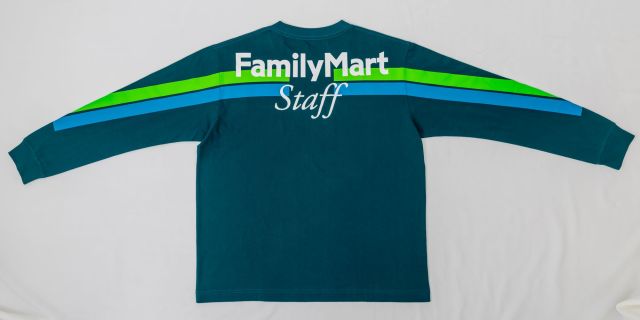
- Material Composition: Crafted from thick, high-grade 100-percent cotton, providing a sturdy yet soft feel.
- Functional Hygiene: Integrated antibacterial and deodorizing properties engineered to combat sweat and unpleasant odors during long shifts.
- Aesthetic Branding: The iconic FamilyMart colors (green, white, and blue) are prominently featured, while the word “Staff” is rendered in a newly refined, sophisticated font to maintain a baseline of professional credibility.
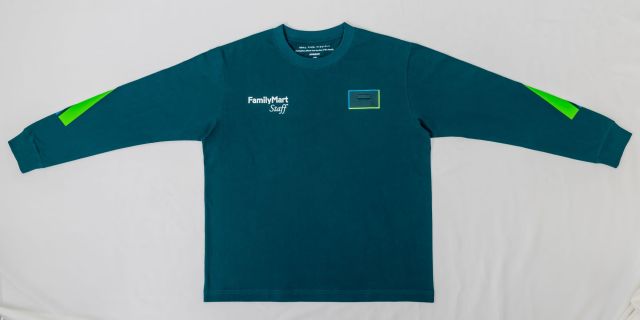
- Inclusive Sizing: Available in an unprecedented 14 sizes ranging from XS to 11L, with long-sleeved variants scaling up to 7L, ensuring that staff of all body types are comfortably accommodated.
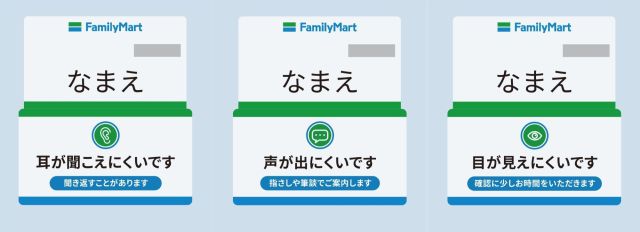
- Customization and Layering: Workers are permitted to mix and match elements, utilizing layering options and wearing a staff-exclusive colorway of FamilyMart’s famous Line Socks. Additionally, name badges can feature working names written in approachable hiragana or katakana scripts rather than formal family kanji.
Official Statements and Industry Reactions
As news of the "FamilyMart Coordinate" spread, it sent shockwaves through traditionalist business circles while winning praise from progressive workplace advocates.
Corporate Intentions
FamilyMart executives have been clear about their primary objective: establishing the brand as the undisputed employer of choice in the convenience sector. In corporate press releases and launch materials, leadership emphasized that empowering staff to retain their personal identities while on the clock fosters higher morale, greater job satisfaction, and ultimately, a more welcoming environment for shoppers. The company pointed to the resounding success of its experimental lifestyle flagship stores in Tokyo—which embrace streetwear aesthetics and urban cool—as proof that the brand’s core customer base is eager for innovation.
The Digital Public Square: A Divided Public
Unsurprisingly, the relaxation of hair color rules and casual dress codes provoked intense debate across Japanese social media platforms like X (formerly Twitter) and local news comment sections. Public sentiment is sharply polarized:
- The Traditionalist Critique: Many older consumers and conservative commentators voiced skepticism. Representative critiques included:
- "The green punk look is a bit too much for a local grocery run."
- "The chain will be flooded with complaints from customers who expect traditional Japanese politeness and neatness."
- "Isn’t it all a bit too casual? It crosses the line from work uniform to lounge wear, especially if paired with easy pants."
- The Pragmatic and Progressive Defense: Conversely, a significant portion of the public—including many working-age consumers—welcomed the change, arguing that competence supersedes cosmetics:
- "I don’t care about hair colour. I care more about their attitude toward customers and how fast they scan my bento."
- "There’s an employee with pink hair at the FamilyMart near my house, and they’ve always provided stellar service. I thought it was already a free-spirited place."
- "As long as they do their job and provide good customer service, I don’t mind at all. Let people express themselves."
Future Outlook: Will Other Retailers Follow Suit?
FamilyMart’s strategic pivot represents a watershed moment for Japanese retail. By tearing up the old playbook, the company is forcing its primary competitors—such as 7-Eleven Japan and Lawson—to reevaluate their own operational standards.
In the immediate term, all eyes will be on the September 1 nationwide rollout. Industry analysts will be closely monitoring metrics related to employee retention rates, recruitment application volumes, and customer satisfaction scores across the 16,500 participating stores. If FamilyMart successfully navigates the transition without suffering severe customer backlash or brand degradation, competitors will likely feel immense pressure to adopt similar measures to stem their own labor deficits.
Furthermore, this initiative signals a broader cultural evolution within Japan’s service economy. As globalization and demographic shifts continue to dismantle old taboos, the traditional corporate uniform may soon become a relic of the past, replaced by agile, human-centric policies that honor both the worker and the bottom line. For now, FamilyMart stands proudly at the vanguard of this quiet revolution—proving that even the most ubiquitous neighborhood convenience store can find new ways to stay fresh, fashionable, and remarkably human.





Belum ada komentar. Jadilah yang pertama berkomentar!