

Executive Overview
The landscape of first-person dungeon crawlers and retro-inspired role-playing games has grown increasingly crowded over the last few years. Following the resurgence of "King’s Field-likes"—named after FromSoftware’s esoteric, pre-Souls dark fantasy lineage—players have been inundated with a wave of grid-based, low-poly, atmospheric titles. Many of these games successfully capture the bleak atmosphere, cryptic lore, and tactile menu systems of 1990s console role-playing, but few manage to fundamentally evolve the mechanical formula of the subgenre.
Enter Queen’s Domain, developed by Freshly Baked Games and released on Steam on October 30. Initially flying under the radar for many players who sampled its early demo, the full release has quickly cemented itself as a critical darling and a standout contender for indie game of the year.
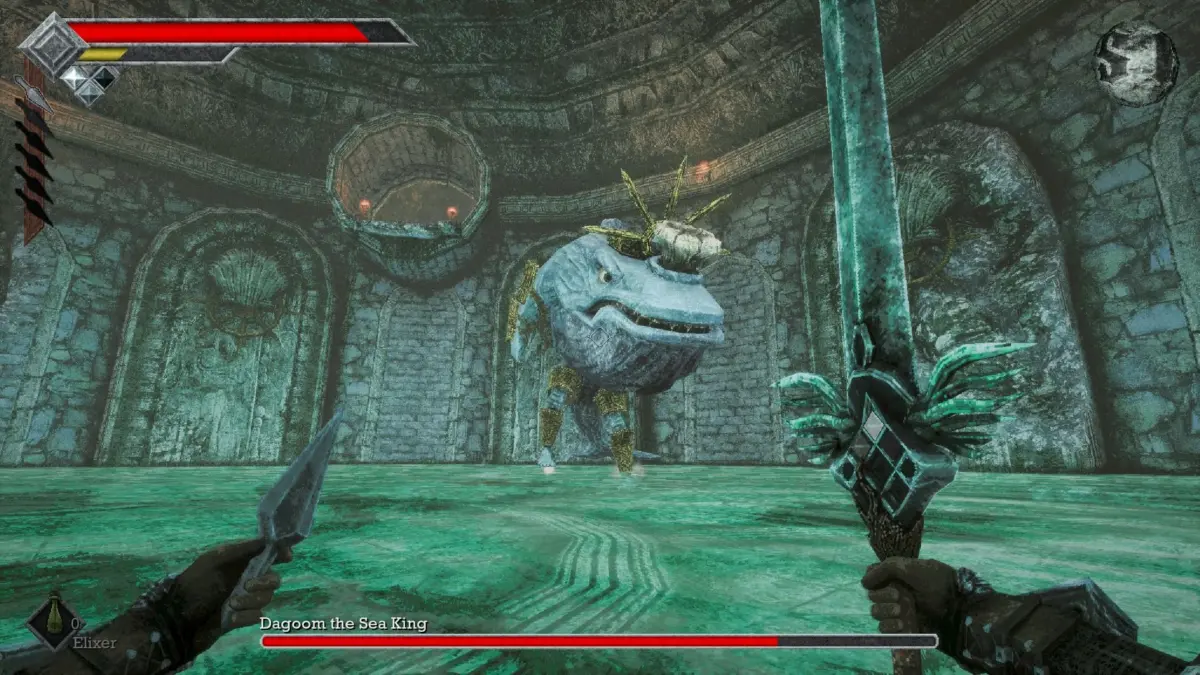
Clocking in at an estimated 30-plus hours, Queen’s Domain begins as a relatively grounded, slow-paced medieval dark fantasy. However, after a pivotal first-boss encounter, the game dramatically pivots, handing the player a magical, air-dashing sword that completely recontextualizes its world. Blending the deliberate, melancholic atmosphere of classic dungeon crawlers with the kinetic, physics-bending traversal of Metroid Prime and Hollow Knight, Queen’s Domain has emerged not just as another indie throwback, but as a masterclass in first-person metroidvania design.
Detailed Chronology: From Humble Demo to Breakneck Flight
The journey of Queen’s Domain to store shelves is a testament to the power of pacing and delayed gratification in game design. When the initial demo dropped last year, it garnered positive notices for its immaculate art direction, haunting musical score, and pitch-perfect nostalgic UI cues. Yet, it also left some players hesitant. The opening half-hour to hour of the game presents itself as a thoroughly traditional, boots-on-the-ground experience. Your character moves with a deliberate, heavy cadence, navigating claustrophobic corridors, battling slashing-resistant skeletons, and managing tight inventories.
For players who bounced off this initial demo-equivalent phase, the hesitation was understandable. The game demands patience, requiring newcomers to slog through a deliberately restricted movement set before the true depth of the experience unlocks.

However, everything shifts the moment you defeat the game’s first major boss. Defeating this sentinel rewards the player with Endu, a holy sword equipped with a magic air-dash capability. What follows is a radical metamorphosis of the gameplay loop. The first area, previously felt as a tight, labyrinthine cage, suddenly opens up like a complex clockwork contraption. Verticality that was once entirely out of reach becomes the primary playground. Secret paths, hidden ledges, and architectural marvels reveal themselves, transforming standard traversal into a high-speed exercise in sequence-breaking and spatial puzzle-solving.
As players progress further, Endu can be upgraded with specialized gems found hidden throughout the world. Each gem grants an additional mid-air dash. Players who have reached the mid-game report stacking up to three or four dashes, allowing them to zip effortlessly across chasms and bypass entire chunks of geometry without ever touching the ground. This deliberate evolution—from heavy, earthbound crawler to lightning-fast aerial acrobat—creates a profound psychological contrast that makes every movement upgrade feel profoundly earned.
Supporting Context & Metrics: Mechanics, Builds, and World Design
What sets Queen’s Domain apart from its peers isn’t just its movement mechanics, but its refusal to rely on traditional RPG tropes. Eschewing the standard level-up stat allocation systems seen in Dark Souls or fellow genre standout Lunacid, Queen’s Domain ties character progression directly to weapon usage.
Weapons grow stronger organically simply by being used in combat. Furthermore, the arsenal of the game is deeply expansive, featuring weapons that physically transform and unlock new properties as they are upgraded. Rather than locking players into a rigid class or singular build path early on, the game encourages constant experimentation. Players can hotkey up to three weapons at a time, creating synergistic combat loops that feel closer to immersive sims like BioShock or the System Shock Remake than traditional dungeon crawlers.
Take, for instance, the Caestus—a medieval knuckle-duster well known to fans of soulslike action. In Queen’s Domain, it serves a dual purpose. Beyond acting as a rapid-attacking blunt instrument capable of shattering skeletons that resist traditional swords, its special attack delivers a devastating uppercut that launches the player character vertically into the air. Clever players quickly realize this move can double as an improvised double-jump, opening up access to hidden loot and secret areas well before the game officially guides them there.

Key Metrics and Design Pillars:
- Launch Pricing: Released at a discounted launch price of $17 (down from an MSRP of $20) on Steam.
- Campaign Length: An estimated 30+ hours of core gameplay.
- Arsenal Freedom: Weapons upgrade through active use, allowing players to max out upwards of 20 distinct instruments of destruction across a single playthrough.
- Traversal Scaling: Incremental air-dash upgrades scale from zero to multiple charges, heavily redefining map legibility over time.
Official Statements and Critical Reception
The industry reception surrounding Queen’s Domain highlights a rare consensus among critics and early adopters: patience is not only rewarded; it is essential to the game’s core philosophy.
Industry critics and staff writers who initially struggled with the restrictive early-game pacing have emerged as vocal champions of the title. As noted by early reviewers, the stark contrast between the pre-dash and post-dash eras is vital to the game’s emotional resonance. By forcing the player to experience vulnerability and restricted mobility early on, the developers ensure that the acquisition of Endu feels transcendent rather than routine.
"You know what it’s like to be stuck on the ground, and you won’t take it for granted," notes industry coverage of the game’s pacing. "It’s the sort of contrast metroidvanias thrive on… Queen’s Domain’s brilliant level design might leave it the best first-person metroidvania anyone’s made since the first Metroid Prime."
Comparisons to Nintendo’s legendary Metroid Prime are not thrown around lightly, yet critics argue Queen’s Domain earns the comparison through its cryptic atmosphere, breathtaking vistas, and revolutionary approach to first-person spatial design. While games in the metroidvania space often falter during the late-game backtracking phase—frequently criticized for feeling obtuse or tedious—early impressions suggest that Queen’s Domain manages its interconnected world map with surgical precision, minimizing friction while maximizing the joy of rediscovery.
Future Outlook: A New Standard for Indie Dungeon Crawlers
As Queen’s Domain finds its footing on Steam, its trajectory points toward long-term cultural relevance within the indie sphere. It arrives at a time when the "boomer shooter" and retro-RPG booms are beginning to saturate the market, proving that stylistic nostalgia alone is no longer enough to carry a game. Freshly Baked Games has demonstrated that mechanical innovation—specifically the marrying of first-person dungeon-crawling atmosphere with fluid, metroidvania-style platforming—is the secret ingredient needed to elevate the genre.
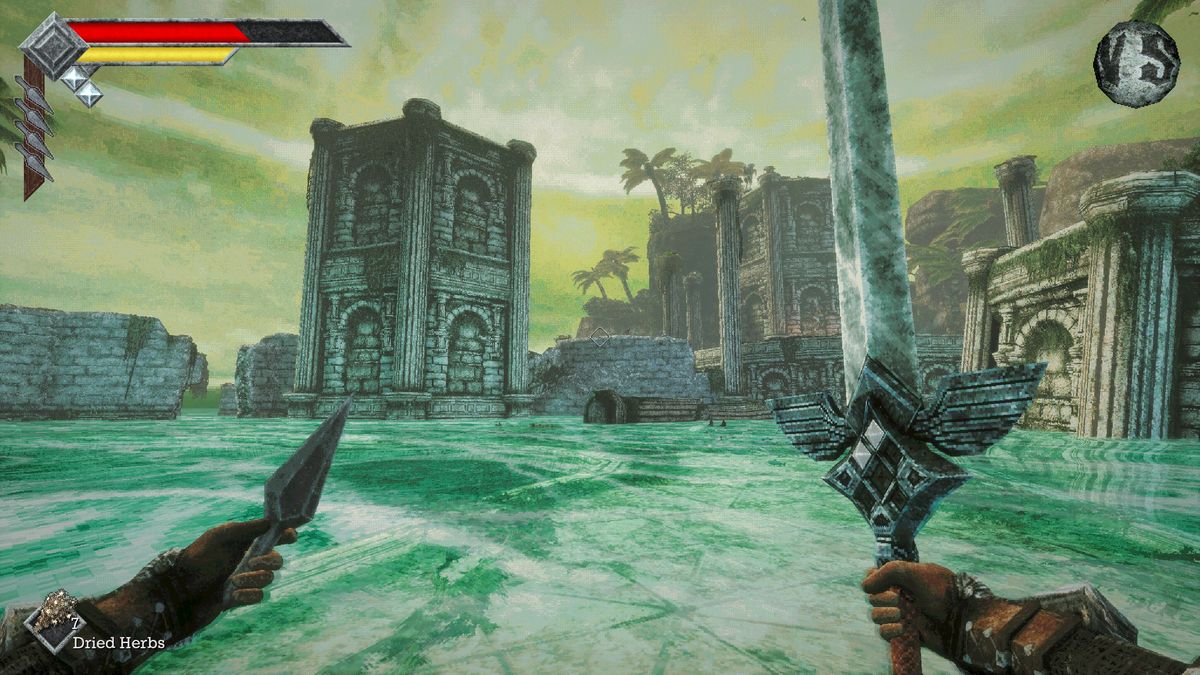
For players willing to brave the deliberate, grounded opening half-hour, the payoff is nothing short of breathtaking. With a robust 30-hour campaign, deep weapon transformation systems, and world design that encourages creative sequence-breaking, Queen’s Domain has set a towering new benchmark.
As players dive deeper into the mysteries of the realm over the coming weeks, anticipation builds for the definitive verdict in upcoming full-length reviews. For now, one thing is abundantly clear: Queen’s Domain is not just a game to be played; it is an adventure to be mastered, and a vital milestone for the evolution of indie first-person RPGs.





Belum ada komentar. Jadilah yang pertama berkomentar!