

By Global Affairs & Technology Desk
Published: October 29, 2026
Executive Overview
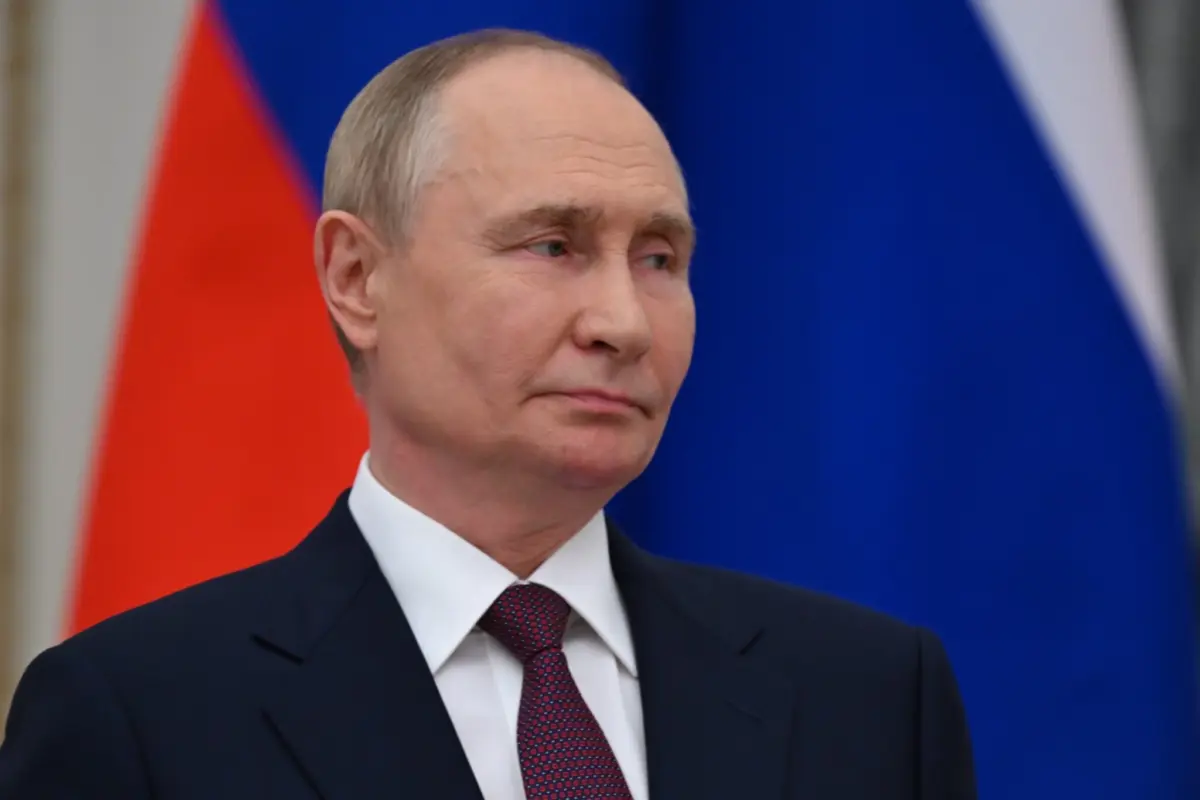
In a development that has sent immediate shockwaves through diplomatic channels in Washington, Brussels, and Kyiv, Russian President Vladimir Putin revealed that he is in "close contact" with SpaceX Chief Executive Officer Elon Musk. Speaking publicly at the Russia-Africa Summit on Wednesday, the Russian leader lauded the billionaire entrepreneur as a "genius," specifically highlighting SpaceX’s dominance in low-Earth orbit (LEO) satellite constellations.
The revelation centers around Rassvet—Moscow’s heavily funded, nascent answer to Starlink—and underscores a rapidly shifting geopolitical landscape where private technology monopolies hold unprecedented sway over sovereign conflicts. This newly acknowledged dialogue between the Kremlin and the world’s most prominent aerospace titan arrives at a precarious juncture. Just weeks after the United States eased a raft of economic sanctions against Russia, Ukrainian forces have found themselves thrust into a terrifying vulnerability regarding their communications infrastructure.
Starlink—and its military-grade counterpart, Starshield—has served as the invisible backbone of Ukraine’s defense since the full-scale Russian invasion commenced in February 2022. However, recent friction between Musk and Ukrainian leadership, combined with reported disruptions to drone connectivity on the front lines, has transformed satellite internet from a humanitarian and tactical tool into a major geopolitical flashpoint. With Putin openly admiring Musk’s orbital architecture and confirming direct communications, international observers are left questioning the security of global supply chains, the autonomy of private space enterprises, and the fragile balance of power in Eastern Europe.
Detailed Chronology: From Battlefield Lifeline to Orbital Diplomacy
To understand the gravity of Putin’s recent statements, one must trace the timeline of escalating tensions that have defined the intersection of SpaceX technology and the Russo-Ukrainian war through late 2026.
The Foundation of Digital Warfare (2022–2025)
In the opening weeks of the 2022 invasion, when Russian cyberattacks and kinetic strikes systematically dismantled Ukraine’s traditional telecommunications grids, Elon Musk’s SpaceX rushed thousands of Starlink terminals into the war-torn country. Funded partially by foreign aid packages, private grants, and SpaceX itself, the network became the undisputed nervous system of the Ukrainian Armed Forces. Artillery units, reconnaissance squads, and command-and-control centers relied entirely on Starlink’s low-latency broadband to coordinate defense and counter-offensives.
By 2024 and 2025, as asymmetrical drone warfare took center stage, SpaceX deployed Starshield—a dedicated military iteration of the satellite architecture. Ukrainian drone operators utilized Starshield links to guide long-range unmanned aerial vehicles deep into Russian-held territory and across the border. For years, Musk maintained a delicate, albeit volatile, balancing act, frequently decrying the horrors of war while keeping the terminals active.
The October 2026 Flashpoint
The situation deteriorated rapidly in October 2026. Following a decision by the United States government to ease select economic sanctions on Russia, anxieties spiked within the Ukrainian government. Kyiv’s defense ministry feared that diplomatic thaws between Washington and Moscow might bleed into concessions regarding critical dual-use technologies.
These anxieties proved founded. For approximately ten days in mid-October 2026, Ukrainian frontline units experienced catastrophic, recurring losses of connectivity. Drones lost their video feeds mid-flight, and tactical communications stalled.
Conflicting reports immediately emerged regarding the origin of the blackout. According to an investigation by The Wall Street Journal, Musk personally ordered SpaceX engineers to throttle or limit Ukraine’s access to the network. Conversely, competing reports citing intelligence sources suggested that the order to restrict Starshield capabilities originated from inside the White House as part of a calibrated diplomatic signal.
Amid the chaos, Musk took to X (formerly Twitter) to publicly air his grievances, claiming that Ukraine had violated Starlink’s established terms of service. Specifically, Musk asserted that the technology was being repurposed for "offensive drone strikes to kill people," violating the platform’s intended civilian and humanitarian scope.

The Ultimatum and the Putin Disclosure
By late October, service across Ukraine appeared to normalize, with Starlink terminals resuming standard operations. However, the psychological damage was done, and the strategic vulnerability had been exposed for the world to see.
Amplifying these fears, Musk published a stark warning on X that resonated globally:
"Were Starlink to be turned off, the Ukrainian front line would collapse immediately. This is NOT a threat, it is simply a statement of fact."
Just days after this public reminder of his absolute monopoly over front-line communications, Vladimir Putin seized the narrative at the Russia-Africa Summit. Praising Musk as "truly a genius," Putin confirmed that bilateral talks regarding Russia’s domestic Rassvet satellite project had fostered "close contact" between the Kremlin and the American billionaire.
Supporting Context & Metrics: The Race for Orbital Supremacy
Putin’s public admiration for Musk is rooted in stark numerical realities that highlight Russia’s lag in modern space infrastructure.
- The Constellation Gap: SpaceX operates an unprecedented armada exceeding 5,000 active Starlink satellites in low-Earth orbit, providing high-speed, resilient internet coverage to virtually every corner of the globe. In contrast, Russia’s Rassvet (meaning "Dawn") initiative is still in its infancy, struggling with manufacturing bottlenecks, launch vehicle constraints, and the crippling impact of international aerospace sanctions.
- The Dual-Use Dilemma: Starlink’s architecture blurs the lines between commercial utility and military application like no technology before it. While commercial airlines, cruise ships, and rural households utilize the service, it has simultaneously become the quintessential tool of modern net-centric warfare.
- The Sovereign Risk Factor: The October 2026 connectivity crisis highlighted a terrifying precedent for global security: a single private citizen, unbound by traditional legislative oversight or multilateral treaties, holds the power to sway the outcome of an active military conflict through software updates and bandwidth throttling.
Official Statements and International Repercussions
The fallout from Putin’s remarks and the October service disruptions has triggered emergency briefings in capitals across the West.
- Kyiv’s Response: Ukrainian officials have expressed profound alarm. While declining to comment directly on the Putin-Musk dialogue, Ministry of Defense insiders emphasized that relying on a commercial provider whose leadership maintains direct communication with the aggressor nation represents an existential threat to national security.
- Washington’s Silence and Scrutiny: While the White House has remained tight-lipped regarding the alleged orders to limit Starshield access, members of the U.S. Congress from both sides of the aisle have renewed calls for legislative frameworks governing the geopolitical actions of private defense contractors. Lawmakers are increasingly questioning whether a private corporation should be allowed to act as an independent actor in international diplomacy.
- The Kremlin’s Strategic Messaging: By publicly validating his channels to Musk, Putin aims to achieve two primary objectives: demoralize Ukraine’s western backers by signaling potential vulnerabilities in Kyiv’s supply chain, and project an image of technological adaptability as Russia works to bypass sanctions through alternative partnerships and domestic innovations like Rassvet.
Future Outlook: A New Era of Private-Sector Geopolitics
As the war in Ukraine grinds forward, the intersection of commercial space enterprise and statecraft has entered uncharted and perilous waters.
The immediate future hinges on several critical variables. First, can Ukraine successfully diversify its tactical communications network to insulate itself from the whims of a single billionaire or future diplomatic shifts in Washington? European defense agencies are actively exploring sovereign alternatives, but developing a competitor to Starlink’s scale will take years.
Second, the relationship between Musk and the Kremlin will face intense scrutiny from international regulators and intelligence agencies. If Rassvet successfully integrates technological insights or hardware pathways via private channels, Western export controls could face unprecedented evasion tactics.
Ultimately, the events of October 2026 mark a permanent turning point in modern history. The traditional Westphalian model—where international relations were conducted exclusively by sovereign nation-states—has been irrevocably disrupted. We now live in an era where modern warfare, global diplomacy, and the fate of nations can be profoundly altered by a satellite constellation owned by a private entity, whose CEO navigates complex personal relationships with both democratic leaders and authoritarian adversaries.






Belum ada komentar. Jadilah yang pertama berkomentar!