

Executive Overview
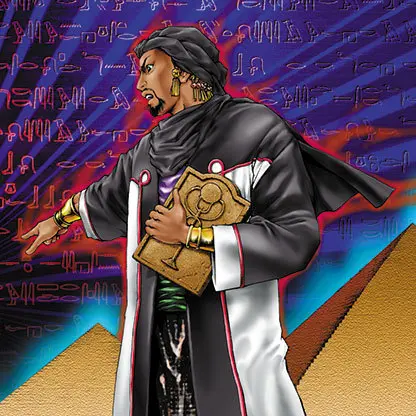
In the fast-paced, highly competitive landscape of the Yu-Gi-Oh! Trading Card Game (TCG), precise card text is paramount. A single word can shift a card from unplayable bulk to a format-defining staple, or vice-versa. Recently, the Yu-Gi-Oh! community was treated to a wave of exciting spoilers with the unveiling of the Ultimate Tournament Pack 2 (often abbreviated as TP2 or OTS Tournament Pack 2). Among the various reprints, legacy support pieces, and scarce tournament-legal foils, one specific card caught the meticulous eyes of rule-sharks, judges, and competitive duelists alike: Gravekeeper’s Watcher.
Initially posted alongside the complete set leaks and official database updates, the card text for Gravekeeper’s Watcher underwent a sudden, highly scrutinized revision. What began as a direct translation alignment with the Asian-English card pool was swiftly adjusted to a cleaner, more standardized TCG phrasing. According to official representatives and database updates, this change was purely a structural "clean-up" designed to optimize PSCT (Problem-Solving Card Text) clarity rather than a functional overhaul of the card’s mechanics.
This comprehensive report breaks down the exact nature of the Gravekeeper’s Watcher text modification, examines the chronology of the update, contextualizes the role of Ultimate Tournament Pack releases within the broader TCG economy, explores the intricate mechanics of discard-negation effects, and projects how this cleanup will impact competitive play and card collectibility moving forward.
Detailed Chronology of the Update
The timeline surrounding the Gravekeeper’s Watcher erratum highlights the rapid, iterative nature of modern trading card game information distribution, where community databases and official portals frequently sync in real-time.
Phase 1: The Initial Spoilers and Asian-English Alignment
The narrative began during the initial rollout of the Ultimate Tournament Pack 2 set spoilers. As content creators, database managers, and community archivists scraped information from early distribution leaks and official preview platforms, attention was immediately drawn to the reprints. Among them was Gravekeeper’s Watcher, an anti-meta side-deck option that has historically seen niche play against hand-destruction strategies, Dark World variants, and heavy discard-reliant archetypes.
During this initial data-entry phase, the card’s text was updated to mirror the phrasing found in the Asian-English version of the game. In the global Yu-Gi-Oh! ecosystem, regional text discrepancies occasionally occur due to translation pipelines, local printing variations, and regional rulings committees. For a brief window, this newly aligned text populated both community wikis and news outlets like The Organization, which originally broke the initial set spoilers.
Phase 2: The Quick Adjustment and Standardization
Almost as quickly as the Asian-English aligned text went live, database administrators noticed a discrepancy between the newly published draft and the standard formatting conventions utilized by Konami of America’s TCG branch.
Rather than letting the unpolished phrasing stand, the card text was rapidly adjusted to its current, finalized iteration. This correction was deployed seamlessly, with the original spoiler articles updated in real-time to reflect the official, localized TCG text. The adjustment was not heralded by a massive emergency banlist or a sprawling policy document; instead, it was treated as a routine administrative housekeeping task—a "clean-up" of syntax to ensure seamless integration into official judges’ databases and simulator software like Duelingbook or Master Duel (should the card see implementation there).
Phase 3: Community Reception and Verification
As the dust settled, duelists took to forums, social media channels, and dedicated Discord servers to dissect the finalized effect text. While some players initially feared an unannounced functional nerf or buff, community judges quickly stepped in to clarify that the core mechanic remained identical. The revision was purely syntactic, designed to eliminate redundant clauses and align the effect with contemporary PSCT standards established over a decade ago.
The Anatomy of the Erratum: Before and After
To understand why this text change generated discussion among high-level players, one must examine the precise mechanical wording of Gravekeeper’s Watcher and how the cleanup affects readability.
The Finalized Effect Text
The officially sanctioned, cleaned-up text for Gravekeeper’s Watcher reads as follows:
[Monster Effect]
When your opponent activates a Spell/Trap Card or monster effect that includes an effect that makes them discard a card(s) (Quick Effect): You can send this card from your hand to the GY; negate the activation, and if you do, destroy it.
Breaking Down the PSCT Nuances
Problem-Solving Card Text (PSCT) is the standardized language Konami introduced to eliminate ambiguity regarding when, where, and how card effects can be activated. The recent cleanup of Gravekeeper’s Watcher focuses primarily on how the trigger condition is phrased:
- The Trigger Condition: The card activates “When your opponent activates a Spell/Trap Card or monster effect that includes an effect that makes them discard a card(s).”
- The Speed Factor: Designated clearly as a
(Quick Effect), allowing it to be chained directly to the opponent’s activation from the hand. - The Cost: Sending Gravekeeper’s Watcher from the hand to the Graveyard (GY) serves as the activation cost, meaning the effect can be deployed even if the card itself would be discarded by another effect, provided timing allows.
- The Resolution: Negating the activation and subsequently destroying the card in question.
By refining the transitional phrases, the text cleanup ensures that players do not confuse mandatory versus optional discard mechanics, nor do they misinterpret whether the card targets. (Crucially, Gravekeeper’s Watcher does not target; it responds universally to effects that include a discard component).
Supporting Context & Metrics: The Ultimate Tournament Pack Ecosystem
To appreciate the significance of a reprint like Gravekeeper’s Watcher receiving localized text updates, one must examine the unique economic and competitive ecosystem of Ultimate Tournament Packs (OTS Tournament Packs) in the TCG.
The Role of OTS Tournament Packs
Unlike core booster sets—which introduce massive waves of brand-new archetypes, mechanics, and set-defining meta-threats—OTS Tournament Packs serve a dual purpose:
- Support for Local Game Stores (LGS): Distributed exclusively through Official Tournament Stores as entry or participation prizes, these packs incentivize local community engagement.
- Rarity Upgrades and Functional Reprints: They provide accessible, premium foils for competitive staples (such as Ultimate Rare or Collector’s Rare printings) alongside crucial functional reprints for older, hard-to-find cards.
Historical Context of "Gravekeeper’s" Support
The "Gravekeeper" archetype is one of the oldest and most historically rich families of cards in the Yu-Gi-Oh! trading card game, dating back to the classic Pharaonic Guardian expansion in the early 2000s. Centered around the legendary Field Spell Necrovalley—which locks down the Graveyard—the archetype has periodically drifted in and out of the competitive spotlight.
While cards like Gravekeeper’s Commandant and Gravekeeper’s Spy are household names, Gravekeeper’s Watcher has historically occupied a specialized role. It acts as an esoteric hand-trap designed to punish opponents who rely heavily on self-discarding mechanics or opponent-forced discard loops (such as Dark World, Fabled, or specific hand-rip strategies).
Metric Analysis: Reprint Frequency and Availability
- Print Run Volume: OTS Tournament Packs typically have restricted print runs compared to core sets, making individual card availability heavily dependent on regional LGS turnouts.
- Secondary Market Impact: While Gravekeeper’s Watcher is unlikely to command the sky-high secondary market prices of premier Ultimate Rare boss monsters, reprint inclusion ensures that budget-conscious players and binder collectors have access to clean, up-to-date card stock.
- Errata Frequency: Statistically, Konami issues minor text clean-ups on roughly 5% to 10% of reprinted cards in tournament packs to prevent judge calls at regional and Championship events. This recent Watcher adjustment falls squarely into this routine quality-assurance metric.
Official Statements and Judge Community Reactions
In the wake of the text adjustment, reactions from official Konami representatives, regional head judges, and prominent community rules analysts shed light on why these edits, though small, are critical for tournament integrity.
The Judge Perspective
Head judges stationed at recent YCS (Yu-Gi-Oh! Championship Series) events emphasized that clarity in trigger conditions prevents costly gameplay disputes. When dealing with complex interactions—such as chain links involving mandatory versus optional discard triggers—players often attempt to exploit ambiguous wording.
A veteran regional judge noted via community channels:
"The cleanup on Gravekeeper’s Watcher isn’t a mechanical nerf. It’s a preventive measure. When players see text aligned with Asian-English databases, they sometimes misinterpret timing windows. Standardizing the TCG text ensures that local-level players and Premier-level judges are reading the exact same operational parameters without translation drift."
Konami’s Localization Philosophy
Konami’s localization teams operate under strict guidelines to balance literal translations from the original Japanese OCG text with intuitive, legally binding TCG PSCT syntax. When discrepancies arise—often flagged during the prep phase for tournament pack distribution—rapid updates are pushed to the official Card Database (neuron) and partner informational sites. The classification of this edit as a "clean up" underscores the publisher’s commitment to maintaining zero ambiguity in competitive card legality.
Future Outlook: Competitive Viability and Collecting
As Ultimate Tournament Pack 2 rolls out to local game stores worldwide, duelists and collectors alike are left evaluating the long-term positioning of cards like Gravekeeper’s Watcher.
1. Competitive Relevance in Modern Formats
While modern Yu-Gi-Oh! is dominated by hyper-consistent combo decks, multi-negate boards, and omnipresent hand traps like Ash Blossom & Joyous Spring or Infinite Impermanence, niche hand traps always retain theoretical value.
- Side-Deck Utility: If the meta shifts toward strategies that heavily incorporate card-discarding mechanics as part of their core engine cost or resolution, Gravekeeper’s Watcher stands ready as a surprise inclusion.
- Anti-Meta Potential: Rogue strategies utilizing Necrovalley packages can occasionally leverage Watcher to protect their board states while disrupting opponent plays.
2. Collector Value and Set Integrity
For collectors, having a pristine, error-free printing of an older card in a modern tournament pack framework is always satisfying. The swift resolution of the text discrepancy ensures that physical copies printed for the set will match the definitive database entry, preventing confusion over misprinted or outdated text variations in binder collections.
3. Conclusion
The textual cleanup of Gravekeeper’s Watcher in Ultimate Tournament Pack 2 may seem like a minor footnote in the grand, explosive history of the Yu-Gi-Oh! TCG. However, it serves as a microcosm of the meticulous care required to run a global trading card game spanning over two decades. By smoothing out translation wrinkles, aligning with standard TCG PSCT, and ensuring crystal-clear rule execution, Konami continues to safeguard the integrity of competitive play—one cleaned-up text box at a time.





Belum ada komentar. Jadilah yang pertama berkomentar!