

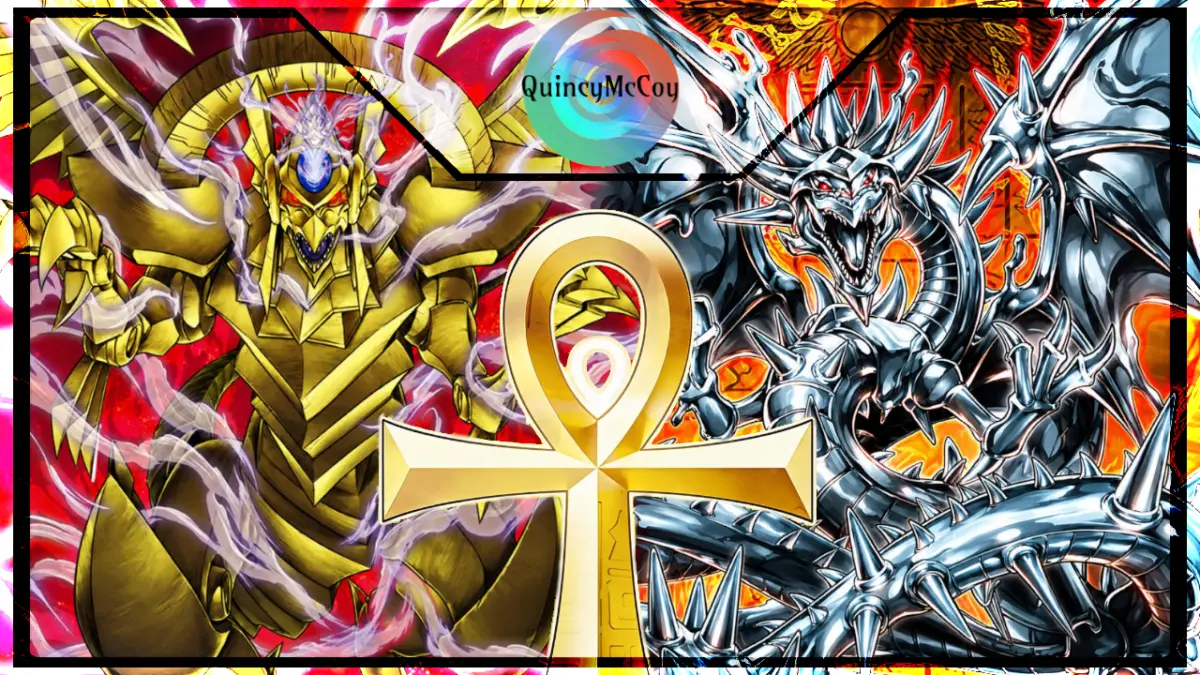
For decades, The Winged Dragon of Ra occupied a paradoxical space within the competitive Yu-Gi-Oh! trading card game ecosystem. Revered as one of the legendary Egyptian God Cards central to the franchise’s lore, its physical counterpart in the card game was notoriously hampered by a lack of flexibility, self-contained protection, and reliable consistency tools. Despite occasional legacy support waves—such as The True Sun God or Guardian Slime—Marik’s signature deity routinely fell short of the explosive power required by modern, high-tier tournament formats.
That narrative is poised for a dramatic rewriting.
With the upcoming debut of the core booster set Immortal Phoenix, Konami has introduced a dedicated cover theme explicitly engineered to elevate The Winged Dragon of Ra into a legitimate, formidable competitive strategy. Spearheaded by the quick-play spell The Immortal Sun God and a terrifying new Divine-Beast Fusion boss, The Sun God of Darkness — The Winged Dragon of Ra, this new wave of support addresses every historical flaw plaguing the archetype. It injects modern swarming capabilities, robust disruption, and recursive resource loops into the classic Egyptian God framework.
This report provides a comprehensive breakdown of the newly unveiled Immortal Phoenix support cards, analyzes an innovative hybrid Creative Deck Profile (CDP) combining the Ra engine with a Fiendsmith and Argostars framework, evaluates the statistical and tactical viability of the build, and outlines the broader competitive implications for the future of the game.
Detailed Chronology: The Evolution of Ra Support
To fully appreciate the paradigm shift represented by Immortal Phoenix, one must first examine the historical timeline of The Winged Dragon of Ra. Introduced early in the game’s lifespan, the original card suffered from distinct mechanical disadvantages: it required three tributes to summon, completely forfeited its attack and defense values to the sum of the tributed monsters unless summoned via specific effects, and lacked innate protection against modern removal staples.
While historical expansions introduced variants like The Winged Dragon of Ra – Sphere Mode and The Winged Dragon of Ra – Immortal Phoenix, the archetype lacked a cohesive, self-contained engine capable of playing through modern interruption boards. The release of Immortal Phoenix represents a structural turning point, bridging classic anime nostalgia with modern card design paradigms.
Phase 1: The Core Engine and Revival Mechanics
At the heart of the new strategy is The Immortal Sun God (YGOrg Translation), a high-impact Quick-Play Spell designed to bridge the gap between the graveyard, banishment, and the field.
- Special Summoning Protocol: The card allows players to target and Special Summon any "Ra" monster from the graveyard or banishment zone.
- The Fusion Transition: If the player uses this effect to summon the original The Winged Dragon of Ra, they can immediately send it to the graveyard to deploy the terrifying new Fusion Boss: The Sun God of Darkness — The Winged Dragon of Ra.
This Divine-Beast Fusion card possesses traits that instantly command competitive respect. It is entirely unaffected by card effects, boasting absolute field presence. Furthermore, it incorporates a devastating offensive multiplier: during attacks, players can pay Life Points down to just 1 to drastically elevate its Attack Power to astronomical levels. To ensure it dictates the pace of the game, it also features a Quick Effect allowing players to discard any number of "Sun God" cards to force the opponent to send an equal number of monsters from occupied Monster Zones directly to the graveyard—bypassing traditional destruction protections entirely.
Phase 2: The Sun God "Peons" and Recursive Advantage
To reliably access these game-ending conditions, the archetype introduces a supporting cast of low-level monsters that operate with ruthless efficiency:
![YGOrganization | Sun God Fiendsmith Argostars, Servants of Ra, ft. IMPH Support [CDP]](https://cdn.ygorganization.com/2026/08/CDBanner_SunGodV1_Site.png)
- The Sun God’s Poet — Helpoemer: Acting as the primary starter, this DARK Fiend can discard another card from the hand to Special Summon itself. Upon summon, it tutors any "Sun God" card while threatening to strip a resource directly from the opponent’s hand.
- The Sun God’s Destructor — Makyura: Designed for resource generation, Makyura automatically sets a "Sun God" Spell or Trap card whenever it is summoned or sent from the hand or field to the graveyard.
- The Sun God’s Torture Device — Viser Des Shock: Providing crucial field interaction, this monster can Special Summon itself from the hand and bounce an opposing card back to the hand whenever a monster is sent to the opponent’s graveyard.
- The Sun God’s Terror Machine — Gil Garth: A utility piece that can be tributed to recycle a card from either graveyard and place it on the bottom of the deck, disrupting opponent graveyard setups.
The Recursive Loop: All four of these monsters share a unifying clause. During the End Phase of any turn in which The Immortal Sun God was sent to the graveyard, they all automatically return from the graveyard to the hand. This grants the player up to four free resources every single turn, generating an insurmountable economic advantage in longer duels.
Supporting Context & Metrics: Building the Ultimate Hybrid Strategy
Constructing a competitive deck around a high-level Egyptian God strategy requires mitigating the inherent risks of bricking (drawing high-level monsters without the means to summon them). To solve this, master builders have turned to innovative engine cross-pollination.
[Fiendsmith Engine] ---> Tutors Helpoemer / Sets Up Endboard (Utopia, Caesar, Rage)
        |
        v
[Argostars Engine]  --> Utilizes Normal Summon / Provides Discard Outlets
        |
        v
[Ra & Sun God Engine] -> Delivers Absolute Win Condition & Recursive Loops
1. The Fiendsmith Engine Integration
The inclusion of the Fiendsmith engine provides a robust combo framework. Utilizing cards like Fiendsmith’s Tract and Fiendsmith Engraver, players establish reliable pathways to tutor Helpoemer, ensuring that even non-ideal opening hands can kick off the Sun God combo sequence. Furthermore, the Fiendsmith engine naturally extends the extra deck’s capability, granting access to disruptive monsters such as Unchained Soul of Rage and D/D/D Wave High King Caesar to solidify the endboard.
2. The Argostars Framework
Because the primary "Sun God" monsters do not rely heavily on Normal Summons to initiate their core utility, the build incorporates Argostars — Glorious Adra alongside her accompanying Continuous Traps.
- Synergy with Egyptian God Slime: The Argostars engine harmonizes smoothly with The Sun God’s Protector — Egyptian God Slime, an in-theme Continuous Trap monster.
- Discard Management: Cards like Argostars — Lightning Tydeu offer vital discard outlets for unneeded cards while triggering Makyura on command during the opponent’s turn.
The Provided Decklist Architecture
=== MONSTERS (20 Cards) ===
1 The Winged Dragon of Ra — Immortal Phoenix
1 Guardian Slime
1 The Winged Dragon of Ra
1 The Winged Dragon of Ra — Sphere Mode
1 Unchained Soul of Sharvara
3 Fiendsmith Engraver
3 The Sun God’s Poet — Helpoemer
3 Argostars — Glorious Adra
1 The Sun God’s Terror Machine — Gil Garth
3 The Sun God’s Destructor — Makyura
1 Lacrima the Crimson Tears
1 The Sun God’s Torture Device — Viser Des Shock
1 Fabled Lurrie

=== SPELLS (11 Cards) ===
2 Fiendsmith’s Tract
1 Dangers of the Divine
1 Called by the Grave
1 Argostars — Giantslaying
1 The Immortal Sun God
3 The True Sun God
3 The Sun God Leading Down into Darkness
1 Argostars — Home Stadium

=== TRAPS (8 Cards) ===
1 Abominable Chamber of the Unchained
1 Sun God Domination
1 Argostars — Slayer Eteo
2 Argostars — Lightning Tydeu
1 Argostars — Swift Capane
1 The Sun God’s Protector — Egyptian God Slime

=== EXTRA DECK (15 Cards) ===
1 The Sun God of Darkness — The Winged Dragon of Ra
1 The Sun God’s Steelcage — Lava Golem
1 Fiendsmith’s Lacrima
1 Aerial Eater
1 D/D/D Wave High King Caesar
1 Argostars — Adventurous Arion
1 Evilswarm Exciton Knight
1 A Bao A Qu, the Lightless Shadow
1 UnchainedSoul Lord of Yama
1 Unchained Soul of Rage
1 S:P Little Knight
1 Silhouhatte Rabbit
1 Fiendsmith’s Sequence
1 I:P Masquerena
1 Fiendsmith’s Requiem
Official Statements and Developer Insights
While direct public commentary from Konami’s R&D department on individual archetypes is traditionally limited, game design patterns in recent booster sets indicate a conscious effort to revitalize classic, iconic anime strategies. By updating vintage archetypes with modern resource-generation mechanics—such as graveyard-to-hand recycling and quick-play fusion deployment—designers are actively bridging the gap between casual nostalgia and competitive viability.
Community feedback from early regional testing and online deployment has been overwhelmingly positive. Players have praised the archetype’s ability to transition from heavy disruption management into an unstoppable offensive push led by The Sun God of Darkness. The elimination of the traditional "brick" factor—long the Achilles’ heel of God Card variants—has been heralded as a masterclass in modern retro-archetype design.
Future Outlook & Community Engagement
The unveiling of Immortal Phoenix and its accompanying support structure signals a vibrant future for creative deck-building within the Yu-Gi-Oh! community. As competitive lists are refined and regional tournaments approach, strategies utilizing the Sun God engine are expected to make notable appearances in meta-surveillance reports.
Community Submissions & Next Steps
Content creators and deck-building specialists continue to drive the evolution of these strategies through platforms such as the YGOrg Discord server and dedicated video channels. Players seeking customized builds for their favorite legacy archetypes—ranging from Suship and Amazoness to Lunalight, Speedroid, and Dragon Ruler—are encouraged to submit their proposals via community channels using the standard creator handles.
Coming Soon: Keep an eye out for upcoming tactical breakdowns, including deep-dive coverage on upcoming legacy support waves and comprehensive video guides analyzing optimal combo routes for emerging tournament formats.
![[Chronicles] Sinful Spoils ep 3 Teaser](https://youganba.com/wp-content/uploads/2026/10/chronicles-sinful-spoils-ep-3-teaser-420x260.webp)







Belum ada komentar. Jadilah yang pertama berkomentar!