


The 2026 Tokyo International Film Festival has played host to a myriad of compelling international features, yet few have captured the critical imagination quite as effortlessly as Miracle Summer. Directed by emerging filmmaker Cai Ronglin, this deceptively compact 65-minute feature serves as a poignant cinematic meditation on the erosion of adult imagination and the persistent, unyielding echoes of youth.
At its narrative core, Miracle Summer follows Mahiro—brilliantly portrayed by lead actress Yamamoto Nairu—as she returns to her provincial hometown after a protracted absence. Burdened by the unrelenting demands of urban, corporate reality, Mahiro has long since traded her capacity for wonder for the gray monotony of everyday adulthood. However, her homecoming is swiftly complicated by an unexpected intrusion: three local children, played with remarkable earnestness by Tanioka Mao, Banka Ichiro, and Ueyama Nariaki, who have commandeered her former childhood bedroom as a command center for an ambitious, highly eccentric UFO investigation.
What follows is a visually arresting, emotionally resonant chronicle of cross-generational bonding. Beneath its whimsical premise of extraterrestrial hunting lies a sophisticated exploration of repressed memory, emotional liberation, and the psychological architecture of nostalgia. Supported by Peiyuan Li’s breathtaking cinematography and Ronglin’s remarkably assured editorial pacing, Miracle Summer transcends the traditional trappings of a standard coming-of-age drama. Instead, it establishes itself as a masterclass in economic storytelling, proving that profound emotional resonance requires neither bloated runtimes nor convoluted plotting—only an authentic pulse and a steadfast commitment to the human spirit.
Detailed Chronology: The Making and Unveiling of Miracle Summer
The developmental trajectory of Miracle Summer is as unconventional as the narrative it brings to the screen. Conceived initially as a low-budget independent short, the project gradually expanded under Ronglin’s vision into a fully realized feature film. The principal photography phase took place over a brisk, sweltering summer in regional Japan, mirroring the seasonal setting of the script itself.
Pre-Production and Artistic Conception
Director Cai Ronglin approached the project with a distinct aesthetic philosophy: to strip away the cynical detachment often found in contemporary cinema and replace it with unironic wonder. Collaborating closely with cinematographer Peiyuan Li, the production team scouted locations that evoked a sense of timelessness—sleepy train stations, sun-drenched suburban alleys, and houses brimming with the accumulated debris of decades past.
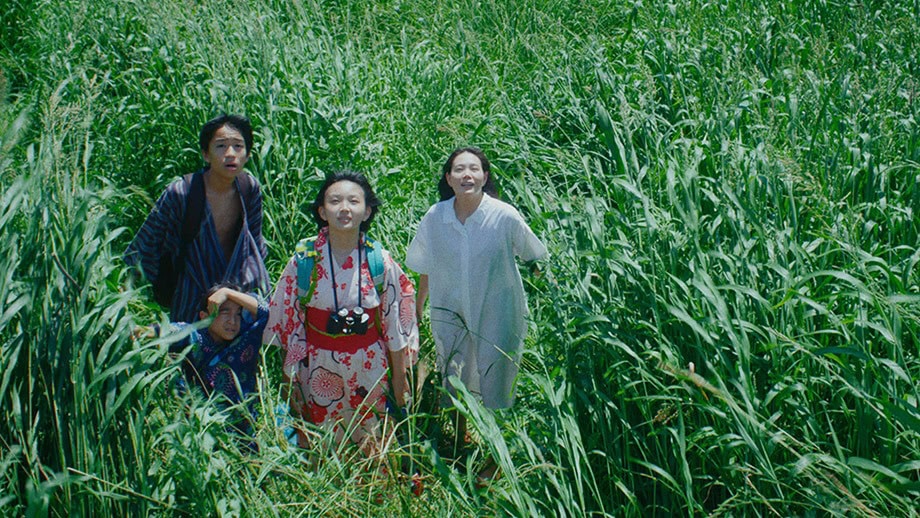
Casting was a pivotal hurdle for the production, particularly given the reliance on the delicate chemistry between an emotionally walled-off adult protagonist and an energetic trio of children. The exhaustive audition process ultimately secured Yamamoto Nairu to anchor the film as Mahiro. Nairu’s background in nuanced, internal acting proved crucial for conveying a character whose primary arc involves shedding psychological armor. Meanwhile, the youthful trio of Tanioka Mao, Ichiro Banka, and Nariaki Ueyama were cast not merely for their raw charm, but for their improvisational agility, which injected a vital, organic chaos into the scripted interactions.
Festival Circuit and Tokyo Premiere
The world premiere at the 2026 Tokyo International Film Festival marked a critical turning point for the film. Positioned amongst a competitive slate of anticipated international releases, Miracle Summer initially caught festival programmers off guard due to its unconventional 65-minute runtime. However, skepticism rapidly dissolved into critical acclaim upon screening.
The film’s progression from an overlooked dark horse to a critical darling highlights the shifting appetites of contemporary festival audiences. Viewers and critics alike found themselves disarmed by the picture’s unpretentious emotional honesty. The premiere screening generated immediate word-of-mouth momentum, culminating in enthusiastic panel discussions regarding the film’s unique approach to independent financing and editorial discipline. By the close of the festival’s opening week, Miracle Summer had secured distribution inquiries from across Asia and North America, cementing Ronglin’s arrival as a major new voice in transnational cinema.
Supporting Context & Metrics: Analyzing the Film’s Technical and Thematic Architecture
To fully appreciate the cultural and artistic footprint of Miracle Summer, one must examine the specific technical metrics and thematic frameworks that elevate the film above standard nostalgic pastiche.
Cinematic Composition and Visual Motifs
Cinematographer Peiyuan Li utilizes natural lighting as an active narrative participant throughout the runtime. The film’s visual language relies heavily on golden-hour aesthetics, notably during Mahiro’s arrival at her parents’ residence. Bathed in a vibrant, melancholic orange sunset, the frame acts as a physical manifestation of the passage of time—highlighting the chasm between Mahiro’s urban present and her rural past.
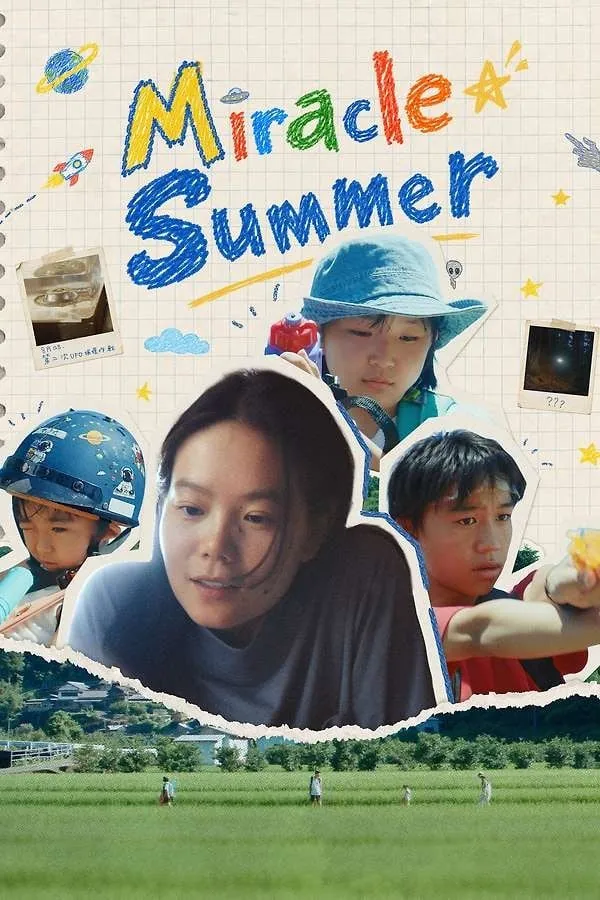
As the narrative shifts focus toward the children’s UFO investigation, Li’s camera work undergoes a subtle evolution. The framing adopts a kinetic, ground-level perspective that mirrors youthful curiosity. Familiar, mundane locations—abandoned sheds, local convenience stores, and overgrown embankments—are suddenly rendered as sites of infinite possibility. This visual transformation reinforces the film’s central thesis: that wonder is not a rare commodity found exclusively in exotic locales, but rather a perspective waiting to be reactivated within our immediate environment.
Editorial Precision and Runtime Efficiency
In an era dominated by sprawling, three-hour cinematic events, Miracle Summer stands as a radical exercise in brevity. Clocking in at precisely 65 minutes, the film rejects filler in favor of distilled narrative potency. Notably, director Cai Ronglin also undertook the editorial duties—a dual role that often introduces blind spots, but in this instance yields exceptional cohesion.
| Metric / Parameter | Production Detail | Artistic Impact |
|---|---|---|
| Total Runtime | 65 Minutes | Eliminates narrative bloat; maintains high engagement and emotional velocity. |
| Cinematography | Peiyuan Li (Naturalistic / Golden-Hour Focus) | Enhances emotional resonance through evocative environmental framing. |
| Editing | Cai Ronglin (Self-Edited) | Ensures seamless transition between adult cynicism and youthful whimsy. |
| Primary Conflict | Urban Alienation vs. Rural Wonder | Drives Mahiro’s psychological transformation and character arc. |
The editing style is characterized by rhythmic breathing room. Rather than rushing from one plot beat to the next, Ronglin allows silent moments to linger—the hum of a cicada, the fading jingle of a regional train station, or the meticulous, hand-drawn diagrams scrawled in a child’s notebook. These notebook graphics, rendered with authentic childlike handwriting, serve as structural chapter markers that chart the progression of the UFO mission while anchoring the audience firmly in a state of imaginative play.
Official Statements and Critical Reception
The critical response to Miracle Summer has been overwhelmingly positive, characterized by universal praise for its understated performances and directorial control. Industry insiders and festival critics have frequently highlighted the film as a refreshing antidote to cynical contemporary storytelling.
In an official statement released following the film’s premiere, director Cai Ronglin articulated his primary artistic motivations:
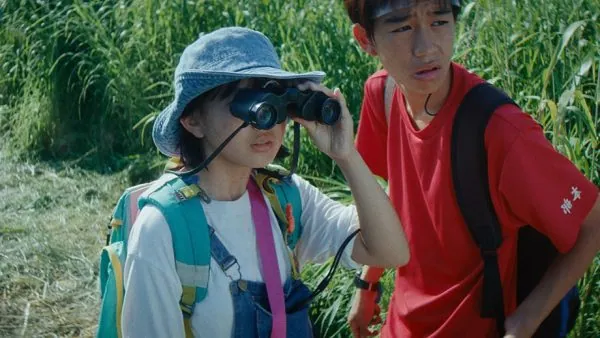
"When we step into adulthood, society demands a trade-off. We exchange our capacity for unbridled joy for the comforting armor of practicality and routine. With Miracle Summer, I did not want to lecture audiences about losing their inner child; instead, I wanted to create a safe cinematic space where that dormant joy could gently coaxed back to the surface. The children in the film are not just characters—they are the living proof that our past selves never truly vanish; they simply wait patiently for us to remember how to listen."
Lead actress Yamamoto Nairu also reflected on the unique challenges of portraying a character defined by emotional numbness:
"Mahiro is a woman weighed down by invisible anchors. Playing her required me to suppress my natural inclinations toward warmth and reactivity. Working alongside the younger cast members—Mao, Ichiro, and Nariaki—was genuinely transformative, not just for the character, but for me as an actor. Their boundless energy on set was infectious; you cannot fake the kind of authentic, disarming joy they brought to every single take. By the time we reached the film’s emotional climax, the smile on Mahiro’s face wasn’t just acting—it was a genuine reflection of the liberation we all felt making this picture."
Reviewers have echoed these sentiments, with particular emphasis placed on the film’s emotional accessibility. Critics have noted that while the central question—whether the UFOs and aliens sought by the children are genuinely real—drives the narrative mechanics, the answer is rendered entirely irrelevant by design. To the children, the quest is absolute reality, and their unwavering conviction ultimately shatters Mahiro’s adult cynicism. This dynamic has been praised as a brilliant framing device for exploring themes of grief, alienation, and generational reconciliation.
Future Outlook: The Legacy and Trajectory of Miracle Summer
As 8Miracle Summer concludes its initial festival circuit run at the Tokyo International Film Festival—where it secured a stellar four-star rating across multiple critical panels—industry analysts are turning their attention toward its commercial future and the long-term prospects of its creator.
Market Viability and International Distribution
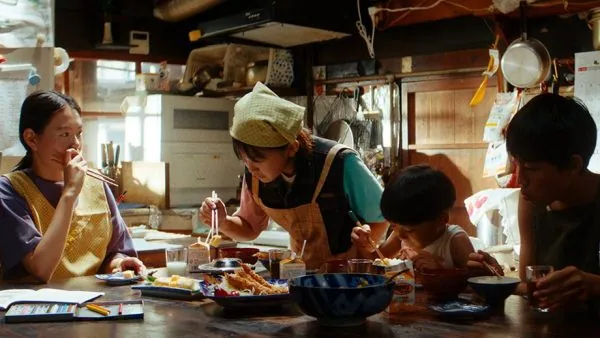
The film’s compact 65-minute runtime, once viewed by nervous studio executives as a potential commercial hurdle, is now being evaluated as a distinct marketplace advantage. In an increasingly fragmented media ecosystem where audience attention spans are stretched thin, Miracle Summer offers a complete, emotionally satisfying narrative arc that defies conventional streaming bloat. Specialty distributors specializing in thoughtful international cinema have expressed strong interest, positioning the film for targeted theatrical runs in key global markets ahead of a broader digital release.
Furthermore, the film’s universal themes ensure that its appeal is not geographically bound. While deeply rooted in the specific textures of Japanese suburban life—complete with regional railway jingles and sun-baked asphalt—the emotional mechanics of recovering lost youth resonate across cultural boundaries.
The Horizon for Cai Ronglin
For Cai Ronglin, the breakout success of Miracle Summer marks an auspicious transition from short-form storytelling to feature filmmaking. By proving his ability to manage tonal balance, extract profound performances from both adult and child actors, and exercise rigorous editorial discipline, Ronglin has established a formidable calling card.
As conversations surrounding the future of independent cinema increasingly prioritize authenticity and economic efficiency, works like Miracle Summer point the way forward. It demonstrates that scale is no substitute for soul, and that the most resonant cinematic journeys are often those that look inward. For audiences weary of cinematic excess, Ronglin’s debut offers a welcome reminder: joy is never truly lost to time; it simply waits for us to follow our hearts back home.









Belum ada komentar. Jadilah yang pertama berkomentar!