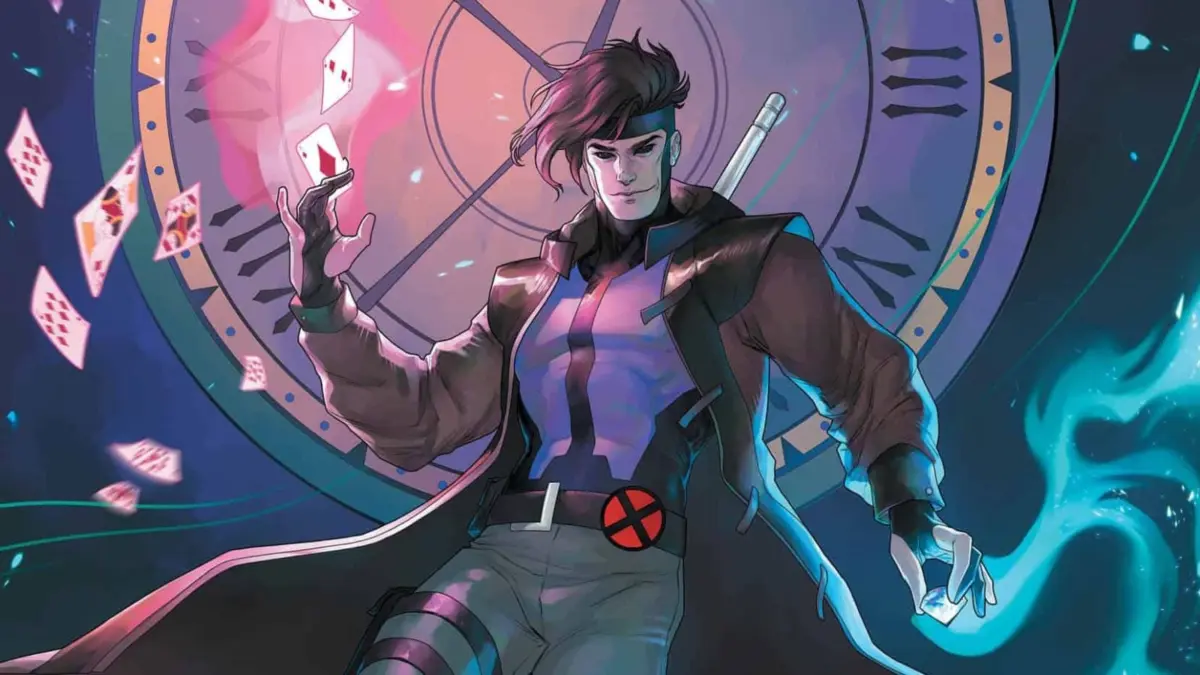
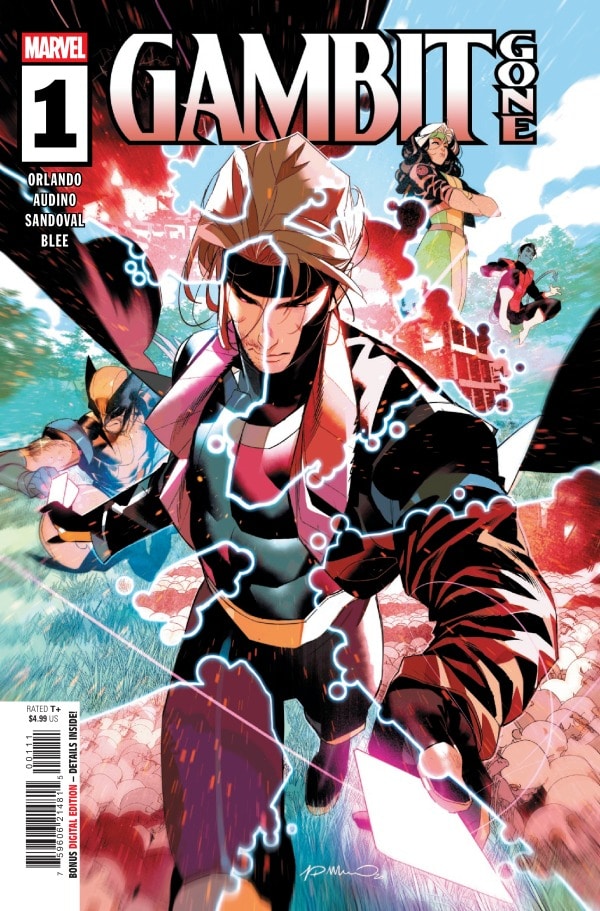
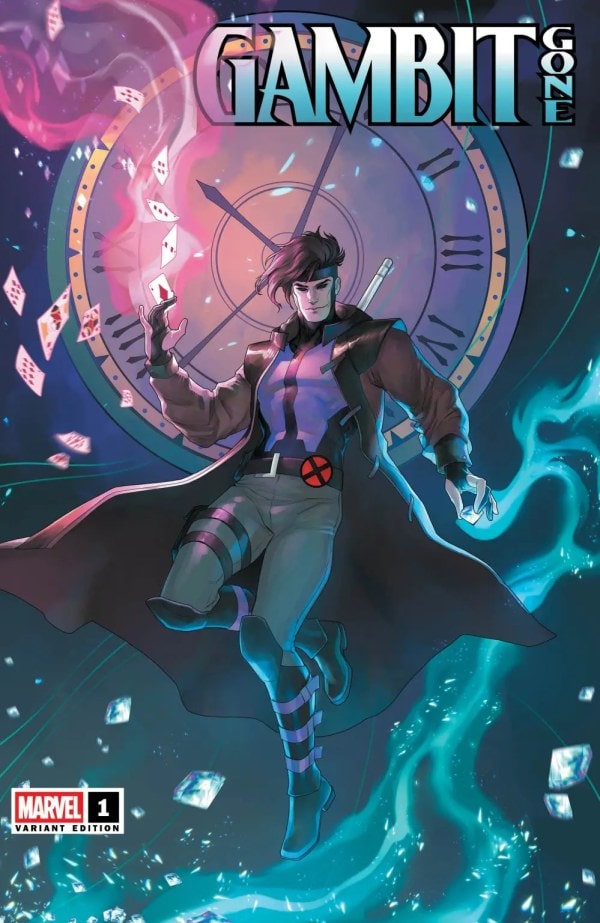
Marvel Comics has once again turned the spotlight toward one of its most charismatic, enigmatic, and enduring mutants. This week marks the official launch of Gambit Gone, an ambitious five-issue miniseries that places Remy LeBeau—the Ragin’ Cajun himself—at the absolute center of the Marvel Universe’s shifting tectonic plates. Spinning directly out of the pulse-pounding, status-quo-shattering conclusion of X-Men of Apocalypse: Omega, this new narrative arc promises to dive deep into the psyche of a character who has long walked the fine, perilous line between hero, thief, and reformed sinner.
For decades, Gambit has been defined by his kinetic-charging mutant ability, his trademark trench coat, his signature red-on-black eyes, and, above all, his complicated, sweeping romance with Anna Marie—better known as Rogue. However, Gambit Gone strips away the comfortable tropes of the past. It forces Remy into an unforgiving crucible, demanding more of him than any prior solo run or team-up event in publishing history.
Published by Marvel Comics and hitting shelves on September 23rd, at a retail price of $4.99, the debut issue serves up a masterclass in modern comic book storytelling. Blending high-stakes superhero action with introspective character study, the series is designed to push the limits of a reformed Gambit to their absolute breaking point. This comprehensive report explores the origins of the series, the narrative weight of the X-Men of Apocalypse fallout, a detailed chronological look at Remy’s publishing history, and what this pivotal miniseries means for the future of the X-Men franchise.
Detailed Chronology: From the Thieves’ Guild to Gambit Gone
To truly understand the gravity of Gambit Gone, one must examine the winding, often tragic trajectory of Remy LeBeau’s publication history. Created by writer Chris Claremont and artist Jim Lee, Gambit made his first full appearance in Uncanny X-Men #266 in August 1990. Initially introduced as a smooth-talking, card-throwing outsider with a mysterious past and a heavy New Orleans drawl, Remy quickly captured the imaginations of readers worldwide, becoming a breakout star of the 1990s animated series and comic boom alike.
[1990: Uncanny X-Men #266] ──> [1999-2000s: Solo Runs & Guild Drama] ──> [2020s: Kraven Era & Marriage to Rogue] ──> [2026: Gambit Gone]
The Early Years and Secret Sins
Throughout the 1990s, Gambit’s narrative arc was heavily dictated by his ties to the New Orleans Thieves’ Guild and his dark complicity in the infamous Mutant Massacre orchestrated by Mister Sinister. The revelation of his past—specifically his role in gathering the Marauders who slaughtered the Morlocks—alienated him from the X-Men, most notably Rogue, whose touch-based power made their explosive romance a masterclass in tragic longing.
Despite numerous temporary deaths, alternate timeline variations, and temporary shifts in alignment (such as his stint as the Horseman of Death, "Death," under Apocalypse), Remy consistently sought redemption.
The advent of the Krakoan Age brought monumental shifts for mutantkind, and none were more heartwarming for long-term fans than the official marriage of Remy LeBeau and Rogue. Their wedding cemented Remy not just as a swashbuckling adventurer, but as a devoted husband, partner, and foundational pillar of the X-Men family.
Yet, peace is never permanent in the Marvel Universe. The events of X-Men of Apocalypse: Omega pushed the mutant nation and its champions into unimaginable turmoil. The fallout from that epic saga has left wounds that refuse to heal, directly setting the stage for the psychological and physical trials featured in Gambit Gone.
Narrative Architecture: What Lies Ahead in Gambit Gone #1
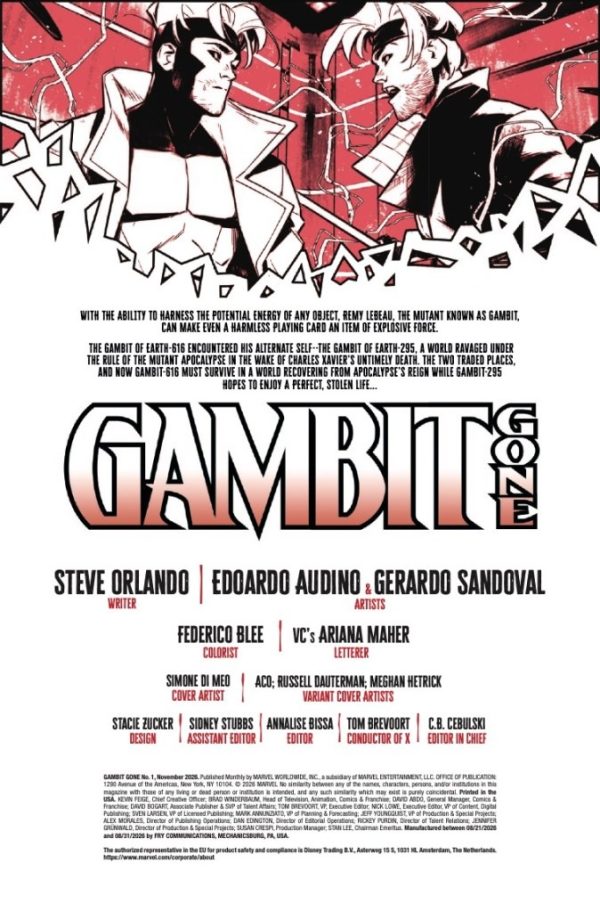
According to official editorial descriptions, Gambit Gone utilizes an innovative narrative structure, unfolding across "two intertwined tales." This dual-track storytelling method allows creators to tackle contrasting facets of Remy’s identity simultaneously.
Confronting Demons Internal and External
In the opening chapter, Remy must confront not only his own personal demons—the lingering guilt of his past as a thief and a pawn of dark forces—but also the collective demons of all mutantkind. As the X-Men universe navigates post-apocalyptic fallout, the weight of survival falls heavily on those who have sworn to protect a world that often hates and fears them.
The central thematic question posed by the series is heavy and probing:
“What kind of man—what kind of husband—what kind of hero—will emerge?!”
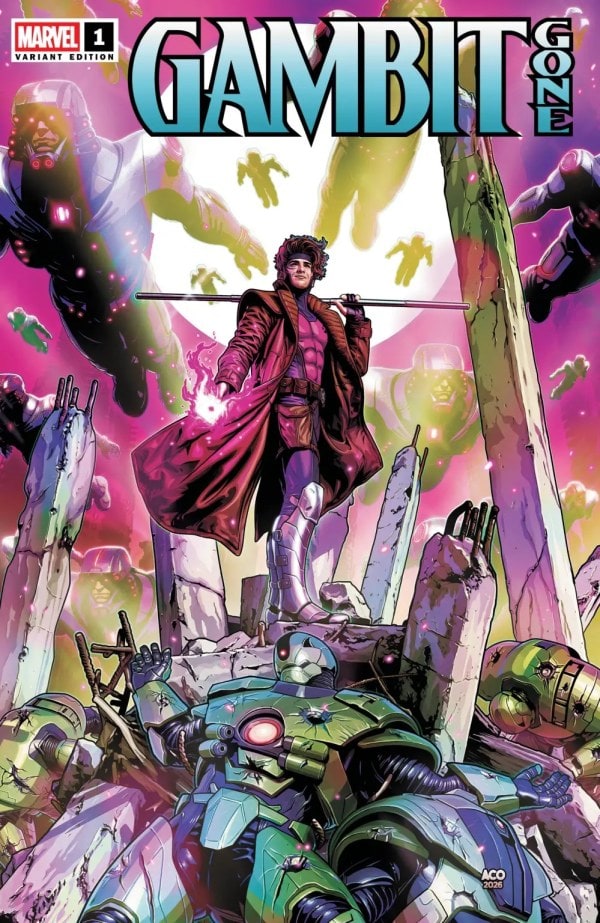
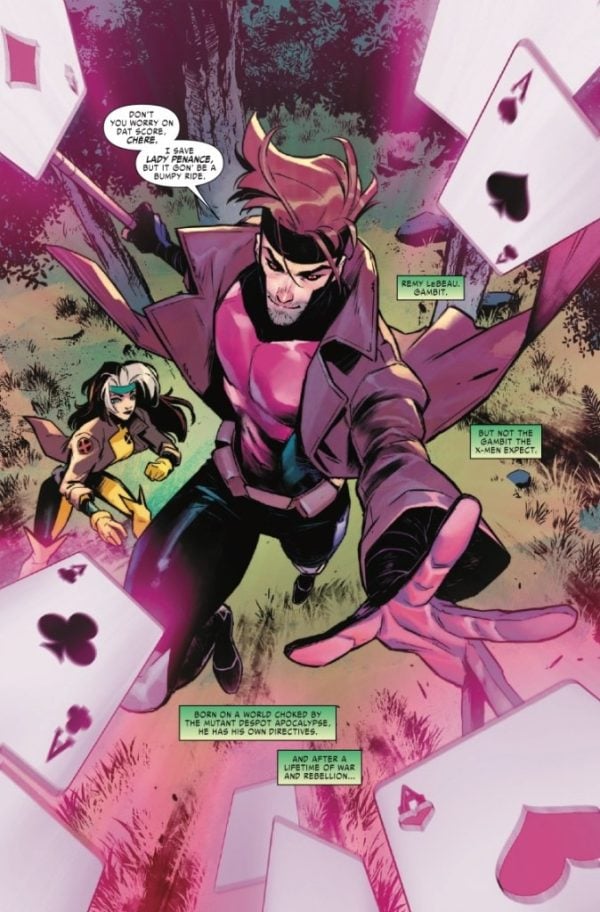
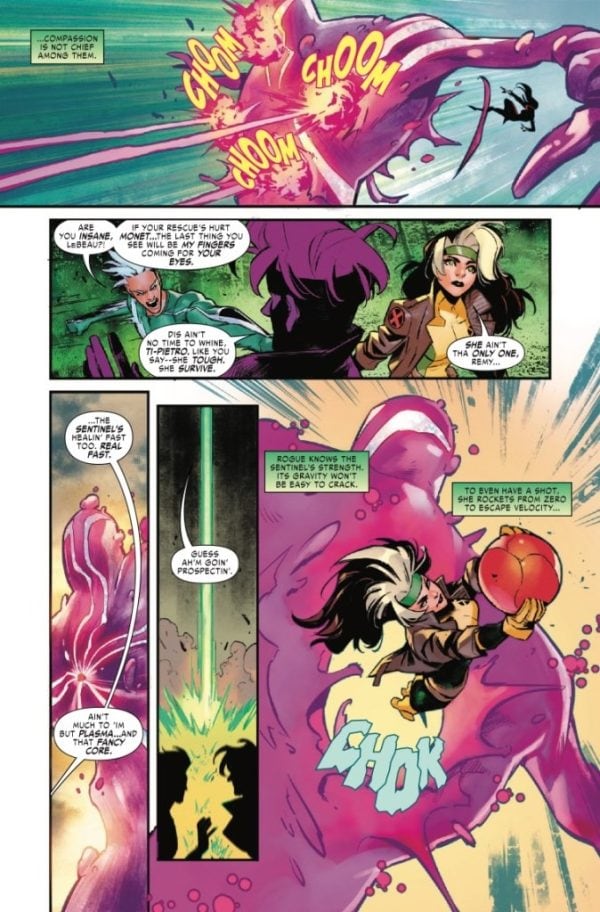
Preview pages released by Marvel Comics showcase a moody, atmospheric visual style. The artwork captures the stark contrasts of Remy’s world: the shadowed alleyways of his underworld past colliding with the blinding flash of kinetic energy. The dynamic framing emphasizes isolation, forcing readers to view a character usually defined by his charm and bravado as vulnerable, hunted, and stripped to his core.
Supporting Context & Publishing Metrics
When examining a high-profile release like Gambit Gone, it is essential to look at the broader economic and digital landscape of the comic book industry in 2026. Solo titles for characters of Gambit’s stature represent a strategic cornerstone for Marvel’s publishing lineup.
Pricing and Accessibility
Cover Price: $4.99 per physical issue.
Format: Five-issue monthly miniseries.
Release Date for Issue #1: September 23rd.
Digital Distribution: Available via platforms such as Amazon Kindle and ComiXology, allowing instantaneous global access for digital-first readers.
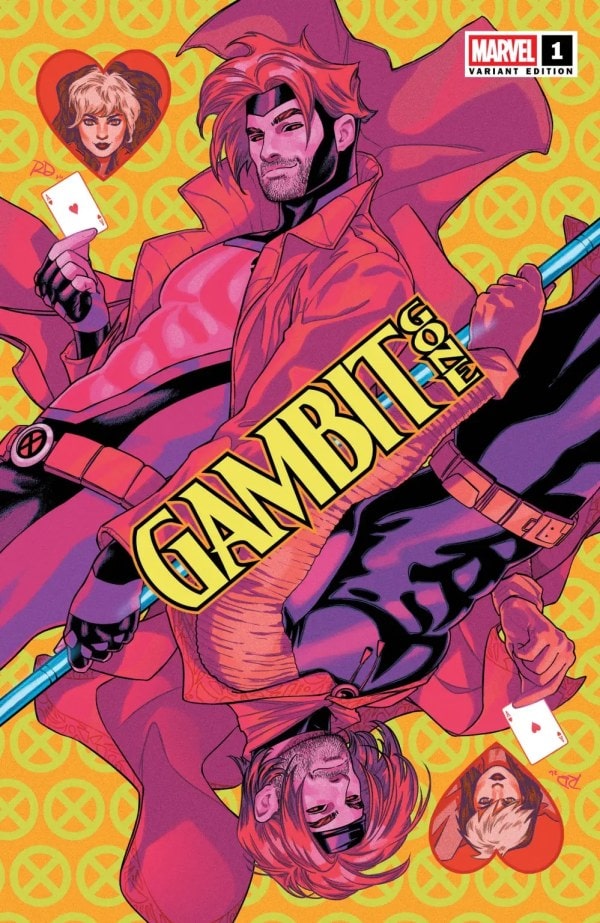
The Collector’s Market and Variant Culture
With five issues slated for the primary arc, Gambit Gone is positioned as a self-contained, high-impact narrative rather than an open-ended ongoing series. This limited structure traditionally drives strong collector interest, as fans look for definitive story arcs that permanently alter a character’s status quo. Furthermore, the integration of digital storefront options highlights the publishing industry’s ongoing adaptation to hybrid reading habits, ensuring that physical supply chain constraints do not limit audience engagement.
Official Statements & Editorial Vision
While comic book creators often keep precise plot twists closely guarded until the issues hit shelves, the overarching editorial direction for the character has been clear. The editorial team at Marvel, alongside executive oversight from figures like Flickering Myth’s executive team tracking pop culture developments, recognizes that fans demand emotional authenticity from legacy characters.
Remy LeBeau is no longer just the mysterious rogue archetype of 1990s comics. He is a husband, a veteran of mutant conflicts, and a survivor of cosmic-scale warfare. The decision to spin Gambit Gone directly out of X-Men of Apocalypse: Omega reflects a broader editorial strategy: ensuring that major event fallout trickles down into character-driven solo explorations rather than being instantly swept under the rug.
Future Outlook: The Impact on the X-Men Franchise
As Gambit Gone #1 arrives in comic shops and digital storefronts this week, the broader implications for the X-Men line are significant. Miniseries of this caliber often serve as narrative pressure cookers. By pushing a character like Remy LeBeau to his absolute breaking point, writers can shed dead weight from continuity, test interpersonal relationships (particularly his dynamic with Rogue), and establish a fresh baseline for future team-wide crossovers.
Will Remy emerge from this five-issue gauntlet as a broken man, or will he forge a stronger, more resilient identity? The answers will unfold issue by issue over the coming months. For collectors, long-time fans of the Ragin’ Cajun, and newcomers drawn in by his enduring pop culture footprint, Gambit Gone promises to be one of the most compelling mutant-centric reads of the year.
Gambit Gone #1 goes on sale on September 23rd, priced at $4.99.









Belum ada komentar. Jadilah yang pertama berkomentar!