The Japanese literary and cinematic landscapes have undergone a profound transformation following the nationwide release of the live-action film adaptation of The Swan and the Bat (Hakucho to Komori), originally penned by master mystery author Keigo Higashino. Released on September 4, 2026, the film brings to life one of Higashino’s most complex and emotionally resonant narratives. This cinematic milestone arrives alongside a bittersweet chapter for the mystery genre: the passing of Keigo Higashino on July 23, 2026. Before his death, the prolific author noted of this specific masterpiece, which has sold over 1.95 million copies across the series, “My goal for the future is to surpass this work.”
As a tribute to the literary giant and the unforgettable universe he left behind, fans, cinephiles, and literary tourists are flocking to Aichi Prefecture—specifically Tokoname City and Anjo City. These municipalities served not merely as backdrops, but as fundamental narrative catalysts that breathe raw life into the story. From the labyrinthine alleys of Tokoname’s ancient pottery pathways to the windswept docks of Onizaki Fishing Port, this feature article explores how the real-world geography of Aichi mirrors the psychological depths of Higashino’s gripping mystery.
Detailed Chronology & Narrative Premise: Unraveling the Truth
The Crime and the Confession
The plot of The Swan and the Bat sets an immediate, high-stakes psychological trap. The narrative unfurls following the brutal stabbing death of Shiroishi Shiraishi, a universally respected lawyer renowned for his kindness and unwavering honesty. The investigation appears to reach a swift, startling conclusion when a man named Tatsuro Kuraki steps forward with a chilling declaration:
"I did it. I am the culprit in ‘all the incidents’."
For ordinary investigative procedures, a definitive confession from a suspect should close the case file. However, the confession instead shatters the fragile reality of two young lives, setting off a chain reaction that destabilizes everything they thought they knew.
The Unlikely Alliance
The suspect’s son, Kazuma Kuraki, and the victim’s daughter, Shiroishi Mirei, find themselves thrust into an agonizing state of psychological unrest. Bound by a shared, gnawing skepticism toward their fathers’ words and actions, they are forced to confront impossible questions:
By all accounts of societal convention, Kazuma and Mirei should never have crossed paths. Yet, driven by an urgent need to reconcile their grief with the glaring inconsistencies of the official narrative, the two join hands. As they pool their resources and begin digging into the shadows of the past, the absolute "truth" of the incident begins to waver, paving the way for a labyrinth of moral ambiguity, buried secrets, and devastating revelations.
Supporting Context & Metrics: The Cultural and Cinematic Footprint
To fully understand the cultural gravity of The Swan and the Bat, one must examine the metrics of its success and the profound legacy of its creator.
Literary Dominance: Keigo Higashino’s original novel and its associated series have surpassed 1.95 million total copies sold, cementing his status as an undisputed titan of the modern Japanese mystery genre.
A Final Benchmark: Higashino’s own assertion that his future goal was to "surpass this work" highlights the sheer structural and emotional zenith The Swan and the Bat represents within his extensive bibliography.
The Cinematic Rollout: Following its nationwide theatrical debut on September 4, 2026, distributed by Shochiku, the film has driven unprecedented tourism to regional Aichi Prefecture.
On-Site Engagement: Local authorities and tourism bureaus, capitalizing on the film’s release, have rolled out specialized campaigns—including a limited-run promotional giveaway of 300 exclusive Beckoning Cat postcards at the Tokoname Tourist Information Center for viewers who present their movie tickets or e-ticket screens.
Exploring the Locations: A Step-by-Step Cinematic Pilgrimage
For fans looking to immerse themselves directly in the world of Kazuma and Mirei, Tokoname City offers a brilliantly preserved architectural and cultural landscape that doubles as an open-air cinematic set.
1. Tokoname Station: The Gateway to Discovery
Serving as the primary portal for travelers, Tokoname Station is ideally positioned just 30 minutes from Nagoya Station and roughly 10 minutes from Chubu Centrair International Airport. In the film, this is the vital starting point where Kazuma and Mirei arrive to trace their fathers’ footsteps.
Cinematic Composition: A particularly striking filming angle captures the station sign from behind a local bus stop. Visitors standing mindful of this exact camera angle can instantly recapture the raw tension felt by the characters.
Historical Context: This gateway leads directly into a pottery town boasting a remarkable 1,000-year history as one of Japan’s Six Ancient Kilns.
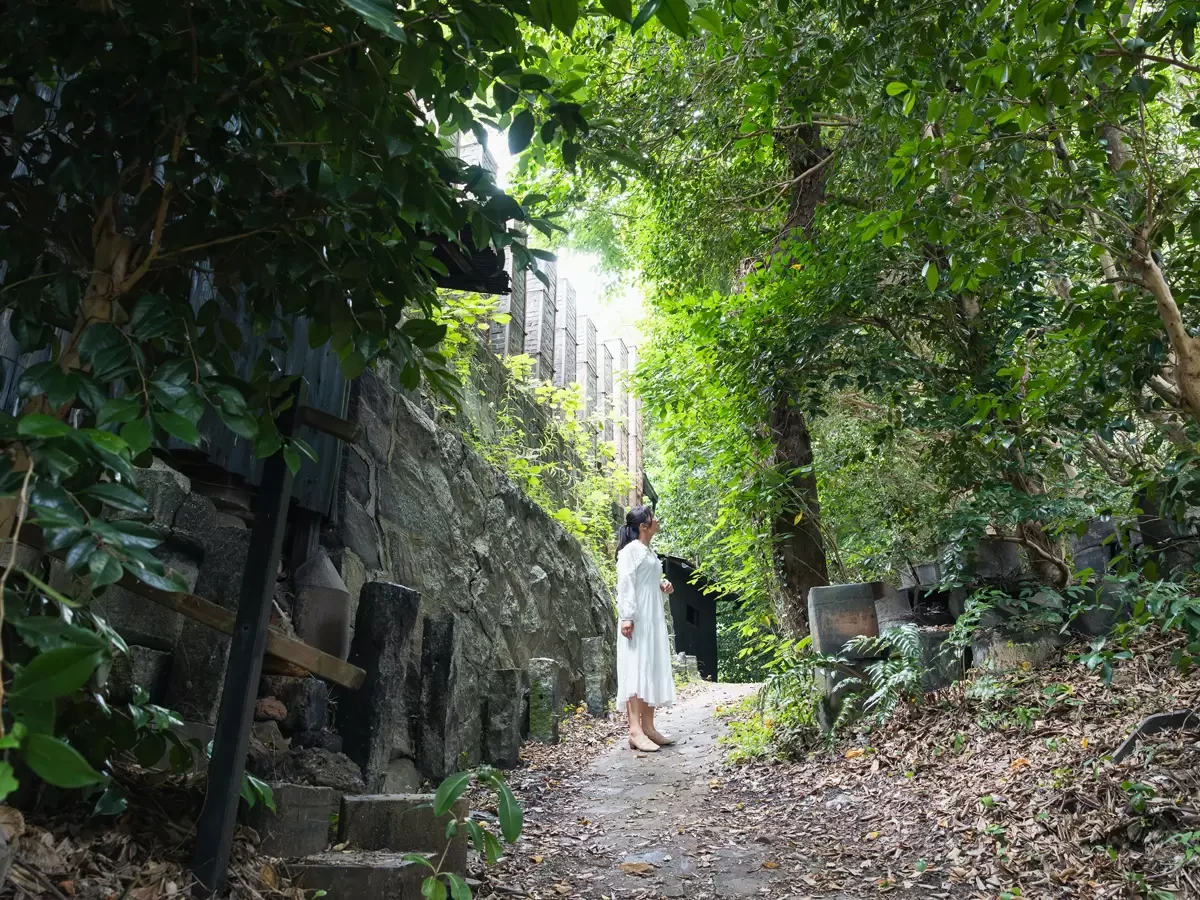
2. Denden-zaka (Clay Pipe Hill) and the Pottery Footpath
As the protagonists push deeper into the town, they traverse the iconic Denden-zaka. This nostalgic, highly atmospheric slope features walls tightly lined with traditional shochu bottles and ground embedded with kesawa—discarded ring-shaped kiln tools utilized during the historical firing of clay pipes.
Visual Iconography: The stark aesthetic of the Clay Pipe Hill, alongside the sprawling Noborigama (a nationally designated Important Tangible Folk Cultural Property boasting ten massive climbing chimneys), was heavily featured in the film’s official trailers.
Immersive Engagement: Fans can replicate a famous paperback cover shot—featuring a rural, weed-overgrown townscape with pots and pipes placed haphazardly—by positioning their copies of the novel directly in front of the workshop and gallery shop Touhei Hachi.
3. Tokoname Tourist Information Center & Shared Bicycles
Acting as the operational hub for visiting cinephiles, the Tokoname Tourist Information Center provides comprehensive maps detailing every local shooting location.
Amenities: Visitors can take commemorative photographs alongside the exact raccoon dog (tanuki) statue used during production, pick up official merchandise, and rent electric-assist shared bicycles.
Local Flavor: The center also serves as the distribution point for the limited-edition Beckoning Cat postcards for early-bird moviegoers, while stocking regional delicacies such as Onizaki Nori (seaweed).
4. Expanding the Journey: Tokoname Ceramic Forest & Historic Dining
Using the tourist center’s shared bicycles, travelers can easily extend their investigation across the city:
Tokoname Ceramic Forest: Located a convenient 5-minute bike ride away, this cultural park features striking photography spots, including the iconic "Moon Chair" utilized during the 1970 Osaka World Expo.
Udon no Sankakuan: A 10-minute cycle brings visitors to this century-old, long-established noodle house, allowing travelers to sample regional culinary heritage. (Note: Shared bicycles must be rented and returned exclusively at the Tokoname Tourist Information Center).
5. Onizaki Fishing Port and Kamachi Station Area
Transitioning from the dense, historic pottery pathways to the open, salt-sprayed coast, the atmosphere shifts dramatically. The seaside port scenes, heavily laden with quiet tension and psychological gravity, were shot around Onizaki Fishing Port near Kamachi Station.
Local Landmarks: Just a short walk from Kamachi Station lies a small post office heavily reminiscent of the real-life Tokoname Onizaki Post Office visited by Kazuma and Mirei during their inquiries.
Culinary Tributes: During exclusive interviews on CBC TV’s Chant!, the two lead actors expressed their admiration for Onizaki Nori, which was supplied to the cast in large quantities by the mayor of Tokoname. Available in roasted, seasoned, butter, and mentaiko flavors, this seaweed—sold at the Onizaki Fisheries Cooperative and Tourist Information Center—stands as the ultimate souvenir.
Nishinokuchi Area: Further investigative scenes were shot in the historic Nishinokuchi district, mere minutes from Nishinokuchi Station, putting visitors within walking distance of 80-year-old handmade shrimp cracker shops like Yoshino and traditional local grocers.
6. Anjo City: The Secondary Stage
While Tokoname provides the textured, earthy aesthetic of the characters’ frontline investigations, Anjo City—specifically areas like Shinome-cho—serves as the critical secondary setting woven into Higashino’s original blueprint. Following their tour of Tokoname’s coastal cliffs and pottery slopes, literary pilgrims are increasingly heading inland to Anjo to complete the full geographical sweep of the narrative.
Future Outlook: Preserving a Literary Legacy
The runaway success of The Swan and the Bat film adaptation—and the subsequent cultural tourism boom in Tokoname and Anjo—cements a vital reality for regional Japan: storytelling is a powerful engine for community revitalization and cultural preservation.
As fans continue to retrace the steps of Kazuma and Mirei, local municipalities are actively developing sustainable tourism frameworks to guide visitors through these cinematic landscapes without disrupting the peaceful daily lives of residents. Furthermore, literary analysts anticipate that Higashino’s passing in mid-2026 will spark a global retrospective on his entire body of work, with The Swan and the Bat standing proudly as the emotional and structural pinnacle of his late-career output.
For those standing along the harbor of Onizaki Fishing Port as the sun dips below the horizon, the experience transcends a standard sightseeing trip. It is a quiet, contemplative communion with a master storyteller’s imagination—a chance to look out over the same waters that mirrored a father’s secrets, a son’s resolve, and a daughter’s search for the unvarnished truth.


![[Aichi, Tokoname] Feature Articles on the film "Swans and Bats"](https://resources.matcha-jp.com/resize/720x2000/2026/09/08-270391.webp)
![[Aichi, Tokoname] Feature Articles on the film "Swans and Bats"](https://resources.matcha-jp.com/resize/720x2000/2026/09/08-270392.webp)
![[Aichi, Tokoname] Feature Articles on the film "Swans and Bats"](https://resources.matcha-jp.com/resize/720x2000/2026/09/08-270393.webp)
![[Aichi, Tokoname] Feature Articles on the film "Swans and Bats"](https://resources.matcha-jp.com/resize/720x2000/2026/09/08-270394.webp)
![[Aichi, Tokoname] Feature Articles on the film "Swans and Bats"](https://resources.matcha-jp.com/resize/720x2000/2026/09/08-270398.webp)
![[Aichi, Tokoname] Feature Articles on the film "Swans and Bats"](https://resources.matcha-jp.com/resize/720x2000/2026/09/08-270399.webp)
![[Aichi, Tokoname] Feature Articles on the film "Swans and Bats"](https://resources.matcha-jp.com/resize/720x2000/2026/09/08-270401.webp)
![[Aichi, Tokoname] Feature Articles on the film "Swans and Bats"](https://resources.matcha-jp.com/resize/720x2000/2026/09/08-270402.webp)
![[Aichi, Tokoname] Feature Articles on the film "Swans and Bats"](https://resources.matcha-jp.com/resize/720x2000/2026/09/08-270403.webp)
![[Aichi, Tokoname] Feature Articles on the film "Swans and Bats"](https://resources.matcha-jp.com/resize/720x2000/2026/09/08-270404.webp)
![[Aichi, Tokoname] Feature Articles on the film "Swans and Bats"](https://resources.matcha-jp.com/resize/720x2000/2026/09/08-270406.webp)
![[Aichi, Tokoname] Feature Articles on the film "Swans and Bats"](https://resources.matcha-jp.com/resize/720x2000/2026/09/08-270407.webp)
![[Aichi, Tokoname] Feature Articles on the film "Swans and Bats"](https://resources.matcha-jp.com/resize/720x2000/2026/09/08-270408.webp)
![[Aichi, Tokoname] Feature Articles on the film "Swans and Bats"](https://resources.matcha-jp.com/resize/720x2000/2026/09/08-270409.webp)
![[Aichi, Tokoname] Feature Articles on the film "Swans and Bats"](https://resources.matcha-jp.com/resize/720x2000/2026/09/08-270410.webp)
![[Aichi, Tokoname] Feature Articles on the film "Swans and Bats"](https://resources.matcha-jp.com/resize/720x2000/2026/09/08-270412.webp)
![[Aichi, Tokoname] Feature Articles on the film "Swans and Bats"](https://resources.matcha-jp.com/resize/720x2000/2026/09/08-270411.webp)


Belum ada komentar. Jadilah yang pertama berkomentar!