


Executive Overview
The evolution of Apple’s AirPods has long been defined by incremental refinements in audio fidelity, active noise cancellation, and seamless ecosystem integration. However, a novel application recently launched on the iOS App Store threatens to rewrite the playbook on how we interact with personal listening devices. Titled RidePods, this unique racing title bypasses traditional touchscreen inputs and clumsy physical buttons entirely, repurposing the internal motion-tracking hardware nestled inside your ears to act as a precision game controller.
By leveraging the sophisticated gyroscope and accelerometer arrays originally designed to deliver immersive Spatial Audio and dynamic head tracking, RidePods allows players to steer a virtual motorcycle simply by tilting and turning their heads. While mobile gaming has experimented with device-tilt controls since the inception of the iPhone’s accelerometer, translating those dynamics to head-based movements creates a surreal, deeply engaging, and physically intuitive gameplay loop.
This development marks a fascinating intersection between wearable audio technology and casual gaming, shedding light on the untapped potential hiding inside everyday consumer electronics. As developers look for fresh ways to capture user attention in an oversaturated App Store marketplace, peripheral-free motion controls powered by existing wearable tech could represent a burgeoning frontier in human-computer interaction.
Detailed Chronology: From Spatial Audio to Spatial Gaming
The Hardware Foundation
To understand how RidePods functions, one must first examine the technological leap Apple initiated years ago with the introduction of dynamic head tracking. When Apple rolled out Spatial Audio with dynamic head tracking across its AirPods lineup—beginning with the AirPods Pro and subsequently trickling down to standard variants and the high-end AirPods Max—the primary use case was media consumption. The feature was engineered to anchor multi-channel audio tracks to a user’s iOS device or Mac, ensuring that if you turned your head to look away from your screen, the dialogue and sound effects appeared to originate from the physical location of the device.
Achieving this illusion required the integration of ultra-low-latency, high-precision inertial measurement units (IMUs) containing micro-electro-mechanical systems (MEMS) gyroscopes and accelerometers. These tiny sensors continuously calculate the user’s head orientation relative to the audio source dozens of times per second. For years, this robust tracking hardware remained siloed within Apple’s ecosystem primarily for entertainment, accessibility features, and wellness tracking applications.

The App Store Disruption
The status quo shifted dramatically when independent developers began exploring APIs that expose motion data to third-party applications. Spotted initially by tech publication The Verge, the release of RidePods on the iOS App Store represents one of the first consumer-facing entertainment applications to weaponize this data stream for active gameplay.
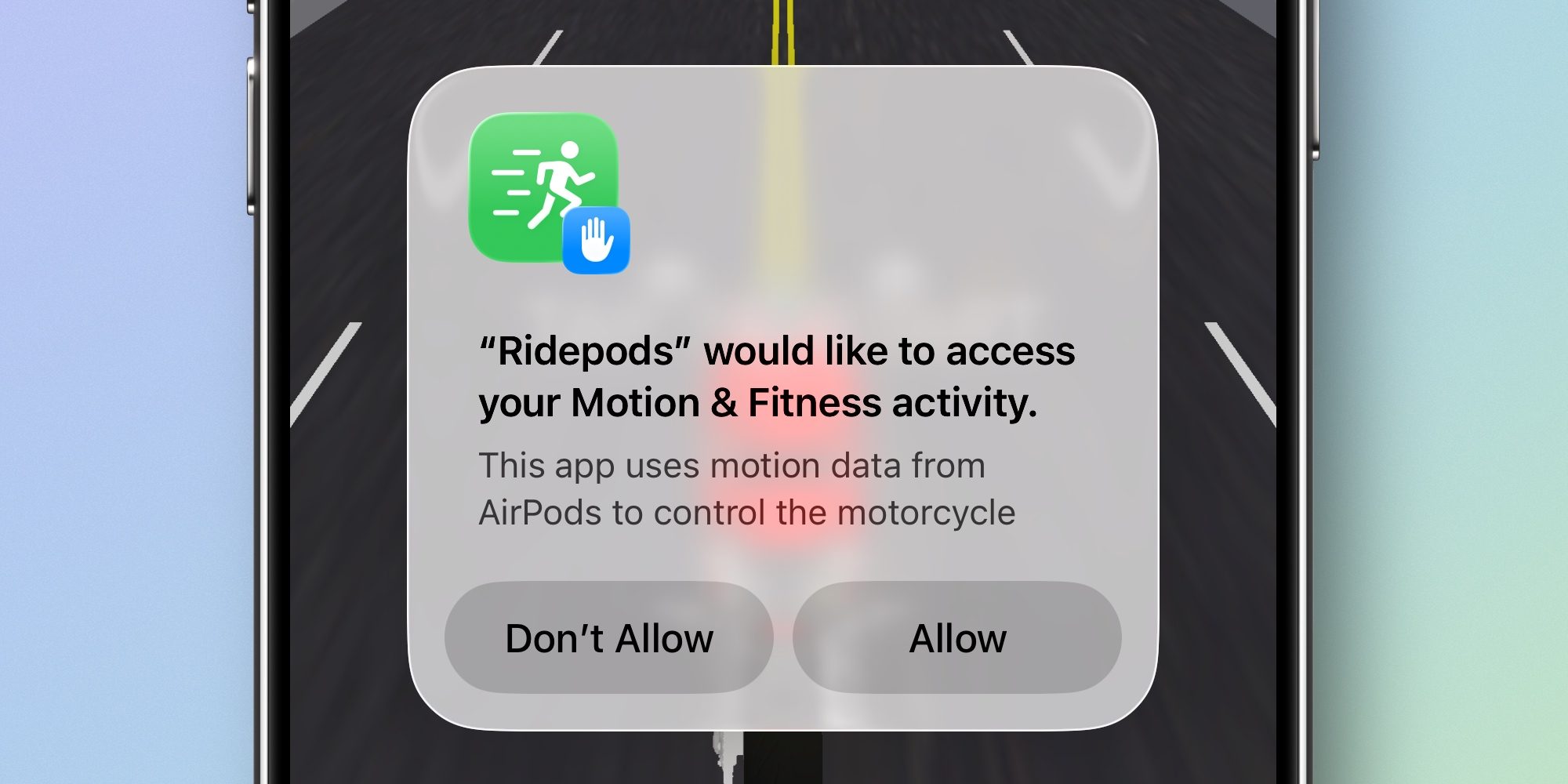
Instead of requiring external hardware, specialized VR headsets, or cumbersome controllers, RidePods establishes a direct software bridge between the player’s AirPods and the game engine running on their iPhone. Upon launching the application and syncing compatible AirPods, the game calibrates the user’s neutral head position. From that moment onward, leaning left or right translates directly into steering inputs for an on-screen motorcycle navigating a winding track.
This clever mechanic circumvents a major ergonomic hurdle inherent in mobile gaming: screen occlusion. Traditional touchscreen racing games often force players to obscure portions of the display with their thumbs to access virtual steering wheels or tilt buttons. By offloading steering controls to head movements, the screen remains entirely visible, offering an unobstructed view of the action while introducing a delightfully kinetic physical element to the session.
Supporting Context & Metrics: The Ergonomics and Mechanics of Wearable Gaming
Evaluating the Wearable Input Paradigm
To assess the viability of RidePods, early adopters and tech reviewers have closely analyzed the game’s physical ergonomics and input latency. Because the game relies entirely on minor lateral head movements, players do not need to execute exaggerated, neck-straining motions to navigate sharp turns. A subtle tilt of a few degrees is typically sufficient to register a turn, minimizing physical fatigue during short bursts of play.
| Feature / Metric | Description / Specification |
|---|---|
| Primary Input Method | AirPods Built-in Gyroscopes & Accelerometers (Dynamic Head Tracking) |
| Control Scheme | Hands-free physical head tilting (Left/Right steering) |
| Target Genre | Casual Arcade Racing (Motorcycle navigation) |
| Compatibility | AirPods models supporting spatial audio and head tracking features |
| Monetization Model | Free download via the iOS App Store |
| Primary Advantage | Unobstructed screen view, zero auxiliary hardware required |
However, usability experts note that while the mechanic is exceptionally novel, it belongs to a specific category of casual novelty experiences rather than marathon gaming sessions. The human neck is not inherently optimized for prolonged, repetitive micro-movements used in lieu of joysticks. Consequently, while RidePods serves as an incredible showcase of technical ingenuity, extended multi-hour play sessions remain impractical and potentially fatiguing.
Device Compatibility and Ecosystem Reach
The architecture underpinning RidePods relies strictly on Apple’s CoreMotion and spatial audio frameworks, meaning its success is tethered to hardware adoption rates. The game natively supports the broad ecosystem of AirPods hardware equipped with onboard motion sensors. This includes:
- AirPods Pro (1st and 2nd generations)
- AirPods 3rd generation and newer models featuring spatial audio support
- AirPods Max
By capitalizing on this massive installed base, the developers of RidePods sidestep the single greatest barrier facing specialized gaming peripherals: the cost of entry. Millions of consumers already own the necessary hardware, transforming an everyday commute accessory into an impromptu gaming controller with a simple software download.
Official Developer Insights and Industry Reception
Reactions across the developer community and tech journalism landscape have underscored the cleverness of this unorthodox integration. Industry analysts point out that RidePods exemplifies the philosophy of designing for constraints. Instead of attempting to force complex console-style inputs onto a pair of earbuds—which would be fundamentally limited by the lack of buttons or directional pads—the developers selected a genre (arcade racing) where a single continuous analog axis (left/right steering) maps perfectly to a physical user action (head rotation).
Early feedback from users highlights the unexpected level of immersion the setup provides. When visual feedback on the iPhone screen matches vestibular feedback from inner-ear motion tracking, the brain quickly bridges the gap, making the act of leaning into a digital turn feel surprisingly visceral.
Furthermore, the game’s accessibility implications have sparked conversations within the tech sphere. While RidePods is explicitly designed as an entertaining arcade title, the underlying mechanism—utilizing head tracking for hands-free interaction—demonstrates the vast potential for assistive technologies on mobile platforms. Similar motion-mapping principles could eventually be adapted to help users with limited upper-extremity mobility navigate device interfaces or interact with specialized software.

Future Outlook: What’s Next for Motion-Tracked Wearables?
The debut of RidePods raises a tantalizing question for the future of mobile entertainment and personal technology: Will other developers follow suit, and how might Apple evolve its wearable ecosystem to accommodate motion-based software?
The Path Forward for App Developers
As the barrier to entry for innovative software drops, independent studios are continually searching for unique hooks to stand out within the crowded App Store ecosystem. Gimmick-driven mechanics often face short lifespans, but titles that execute a clever idea with high polish can establish lasting trends.
If RidePods achieves commercial traction, it could inspire a wave of micro-genres tailored specifically for earbud and headphone motion tracking. Imagine rhythm games where dodging obstacles requires ducking or weaving your head, fitness tracking applications that monitor postural stability during workouts, or interactive audio-dramas where looking toward specific environmental sound cues triggers narrative branching.
Ecosystem Evolution and Hardware Potential
Looking ahead, future iterations of AirPods and competing hearables are virtually guaranteed to feature increasingly sophisticated sensor suites. As manufacturers incorporate biometric health monitors, advanced spatial computing sensors, and even lower-latency wireless communication protocols, the fidelity of head-tracking data will only improve.
While it remains unlikely that traditional hardcore gamers will trade their physical gamepads for head-tilting earbuds, the casual gaming market thrives on accessibility, novelty, and brief bursts of fun. RidePods proves that innovation does not always require entirely new hardware categories; sometimes, it simply requires looking at the tools already in our pockets—and ears—through an entirely different lens.

RidePods is currently available as a free download on the iOS App Store.








Belum ada komentar. Jadilah yang pertama berkomentar!