

Executive Overview
In the hyper-vocal ecosystem of modern venture capital—where firms seemingly measure their worth by post frequency on social media and the ubiquity of their partners on proprietary podcasts—Insight Partners has carved out a distinctly contrarian path. For 26 years, Devin Parekh has co-run the heavyweight investment firm, quietly steering it into a $90 billion global powerhouse without succumbing to the superficial theater of the asset class.
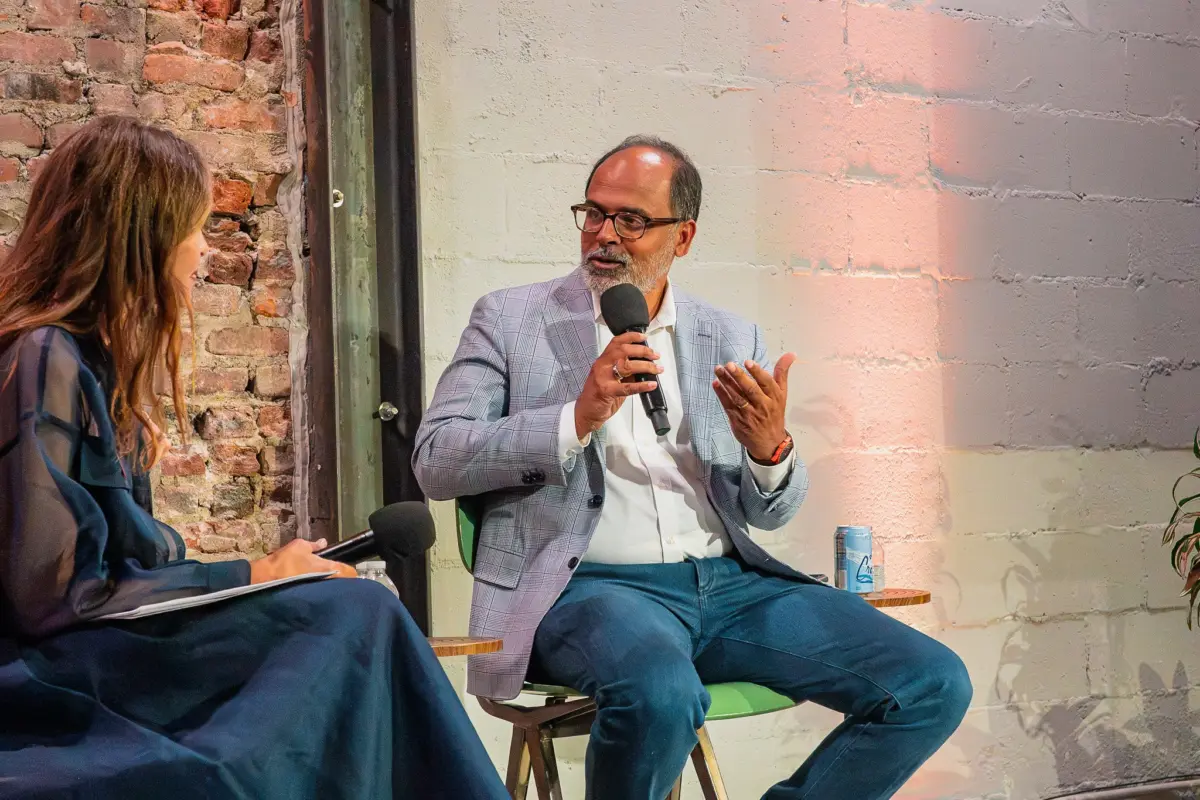
During a rare, candid sit-down with TechCrunch at the StrictlyVC event in New York City, Parekh pulled back the curtain on how a top-tier institution navigates the modern tech landscape. Far from the echo chamber of consensus thinking, his insights offered a sobering, data-driven look at the venture ecosystem.
From managing ideological fractures over backing direct competitors like OpenAI and Anthropic to dissecting the macroeconomics of runaway AI valuations, Parekh’s perspective is anchored in a fundamental truth of institutional investing: performance must ultimately be driven by long-term portfolio execution rather than short-term market noise. As the tech industry braces for a potential wave of mega-IPOs and wrestles with the stark realities of liquidity, Insight Partners stands as a blueprint for navigating cyclical euphoria without losing sight of foundational financial discipline.
Detailed Chronology: Evolution of a $90 Billion Strategy
To understand how Insight Partners operates today, one must trace its evolution from a traditional software-focused investor into a multifaceted global machine spanning early-stage venture, late-stage growth, buyouts, and secondary markets.
The Shift Toward Early-Stage Agility
Historically, large-scale funds built their reputations on mega-growth rounds and late-stage check-writing. However, the current macroeconomic climate has forced a strategic reckoning. According to Parekh, modern venture valuations are accelerating at a pace reminiscent of the frothy peak of 2021—a cycle that ultimately ended in painful market corrections.
In a rational market, a follow-on funding round should be justified by an influx of operational data, allowing investors to pay a higher price for substantially lower risk. In today’s hyper-competitive AI landscape, however, rounds are moving so fast that incremental data is virtually non-existent. Consequently, investors are paying record-high prices without mitigating their risk profile.
Insight’s logical response to this phenomenon has been a pivot toward earlier-stage investing. By deploying a scale fund strategy, Insight can write smaller checks—in the $20 million to $25 million range rather than $500 million bets—and systematically double down on proven winners. Parekh pointed to the firm’s early entry into cybersecurity unicorn Wiz as a textbook example: Insight led the Series A and continuously wrote follow-on checks, compounding their financial gains far beyond what a single-check strategy would have allowed. Crucially, if Wiz had faltered, the initial capital outlays would have barely dented a fund of Insight’s magnitude.
Navigating Global Talent and Missed Deals
While Silicon Valley remains the epicenter of AI infrastructure talent—prompting even younger generations of investors, like Parekh’s 23-year-old son, to relocate to San Francisco—Insight operates on the thesis that top-tier technical and commercial talent is increasingly distributed globally.
This global mindset was evident when Insight aggressively competed for Legora, a buzzy European AI legal-tech company. Insight’s partner Jeff Horing flew directly to Stockholm to pitch the founder, though the firm ultimately lost the deal to General Catalyst. Parekh was refreshingly pragmatic about the loss:
"There are plenty of examples where it went the other way. It’s a big world; we don’t need to win every deal."
The firm’s geographic flexibility also highlights the nuanced differences across vertical software markets. While infrastructure talent is deeply clustered in the Bay Area, vertical applications—such as financial technology hub Ramp in New York—demonstrate that industry-specific AI solutions can thrive across diverse geographic footprints.
Supporting Context & Metrics: The Mechanics of Modern AI Investing
As the venture ecosystem funnels unprecedented amounts of capital into foundational artificial intelligence, the structural integrity of portfolios is being severely tested. Insight’s $90 billion asset base provides a unique vantage point from which to evaluate structural risks, market concentration, and capital allocation.
The Co-Investment Paradox: OpenAI and Anthropic
Perhaps one of the most historically taboo practices in venture capital was investing in direct competitors. Yet, Insight holds stakes in both OpenAI and Anthropic, a dual-exposure strategy that once would have sparked internal revolts and founder alienation.
Parekh noted that the primary internal debate at Insight wasn’t about competitive conflicts, but rather whether the firm could have secured entry into even earlier rounds. The feasibility of such investments is entirely stage-dependent:
- Early-Stage Restrictions: At the Series A or B stage, venture firms maintain strict information-sharing barriers, sit on boards, and typically avoid investing in direct competitors—even guarding against minor revenue overlaps, given founders’ sensitivities.
- Late-Stage Portfolio Management: Once a company scales to the point where institutional investors are off the board and no longer driving governance, holding shares becomes functionally equivalent to buying a blue-chip public stock.
Insight viewed OpenAI as the dominant consumer-facing play, while Anthropic was recognized early on for its robust enterprise strategy—though those strategic boundaries continue to blur in real time. As these foundational AI labs command funding rounds scaling anywhere from $30 billion to $100 billion, they have largely outgrown the ability of single venture firms to dictate exclusivity.
Physical AI and the Robotics Horizon
While software and large language models command the lion’s share of headlines, physical AI and robotics represent the next frontier. However, Insight remains deliberately patient on this front.
Parekh describes physical intelligence companies as largely "science projects" in their current iterations. While these technologies will undoubtedly mature into viable commercial enterprises, investing in robotics requires making a speculative bet on when mass adoption will occur, stacked on top of the fundamental risk of whether it will happen at all. While younger tech investors—including Parekh’s son—view physical AI as the most exciting arena in tech, Insight prefers to watch from the sidelines until the unit economics and market readiness materialize.
Concentration Risk and LP Dynamics
Recent data shows that foundational giants like OpenAI and Anthropic consumed roughly half of all venture capital dollars deployed in the first half of the year. This extreme capital concentration has sparked legitimate anxiety among Limited Partners (LPs).
While Insight’s diversified strategy insulates it from systemic shock, Parekh highlighted emerging funds whose entire pitch relies on channeling 35% to 40% of their total dry powder into just one or two mega-labs. While outlier funds like Founders Fund and Thrive Capital have executed concentrated strategies with staggering success, historical market data overwhelmingly favors long-term diversification across multiple fund vintages.
Official Statements & Industry Insights
Parekh’s commentary during the TechCrunch session offered blunt assessments of venture capital governance, valuation sanity, and the ultimate measure of fund success: liquidity.
The Gospel of DPI (Distributed to Paid-In Capital)
A recurring theme in Parekh’s critique of the current venture landscape is the dangerous obsession with paper valuations at the expense of realized liquidity. A vast number of emerging funds raised astronomical sums between 2021 and 2023 without returning meaningful capital to their LPs. Many first- and second-time fund managers will face an insurmountable wall when attempting to raise subsequent vehicles because they failed to prioritize cash realizations.
"If Anthropic’s going to triple from here, fine—take your basis out anyway. LPs want to know you can turn positions into cash; that’s the job."
Insight itself learned this lesson over decades. While the firm was once guilty of holding onto winning positions indefinitely under the assumption that they could always double again, Parekh emphasizes that institutional LPs do not get paid on unrealized markups. Over the preceding two years alone, Insight successfully returned over $20 billion to its LPs via strategic sales and initial public offerings, proving that DPI remains the ultimate scorecard in institutional venture capital.
Valuations and the 12-Month Window
Echoing warnings from prominent investors like Elad Gill regarding the narrow window for peak valuations, Parekh regularly urges his portfolio founders to de-risk when frothy market offers emerge.
The mathematical reality of compounding private valuations makes current trends unsustainable. As Parekh bluntly notes:
"You can’t compound $40 billion at 50% every two months for two years without becoming the world economy. That math doesn’t work."
Founders are encouraged to take 10% to 20% off the table during market peaks to safeguard against inevitable macro corrections.
Future Outlook: The Mega-IPO Wave and Beyond
As the venture industry looks toward the horizon, the macroeconomic calendar is poised for a seismic shift driven by public market debuts.
The Coming Trillion-Dollar Class
The anticipated upcoming IPO filings for foundational labs like Anthropic and OpenAI—alongside private market titans like SpaceX—will fundamentally alter the public market landscape. Companies that achieve multi-billion-dollar valuations within four years of inception challenge traditional public market paradigms.
However, Parekh cautions that the true test for the broader technology ecosystem is not how public markets absorb these generational outliers, but rather what bar is set for the next tier of enterprise software companies. When public investors witness firms scale from zero to $65 billion in record time, traditional public-market growth metrics can feel comparatively muted. Nevertheless, as even these hyper-growth AI labs eventually transition into mature, steady-state enterprises, public market liquidity will become an absolute necessity.
Portfolio Review and Long-Term Discipline
Insight’s enduring success across 13 fund cycles underscores the importance of rigorous operational hygiene. The firm recently conducted an intensive portfolio review, systematically evaluating 300 portfolio companies over three days to identify inflection points—determining precisely when to double down with growth capital, execute secondary buyouts, or prune stagnant assets.
A prime illustration of this disciplined opportunism is Insight’s journey with Armis. Though Insight initially lost the deal to Sequoia Capital, the firm maintained a relationship with a modest $5 million check. Eighteen months later, Insight capitalized on a market pivot to execute a nine-figure buyout of the entire cap table—including Sequoia—ultimately culminating in a massive $7 billion trade sale to ServiceNow.
Ultimately, Devin Parekh’s philosophy serves as an anchor in a sea of industry hype. Whether navigating the complexities of artificial intelligence, managing multi-billion-dollar portfolios, or prioritizing liquidity for institutional backers, Insight Partners proves that enduring success in venture capital belongs to those who balance adaptability with unwavering financial discipline.








Belum ada komentar. Jadilah yang pertama berkomentar!