As Nintendo celebrates the illustrious 40th anniversary of The Legend of Zelda franchise, the company is diving deep into its rich history to honor the milestone. Rather than focusing exclusively on contemporary entries, Nintendo has turned its gaze back 28 years to a defining moment in gaming history: the franchise’s monumental transition into 3D polygonal graphics.
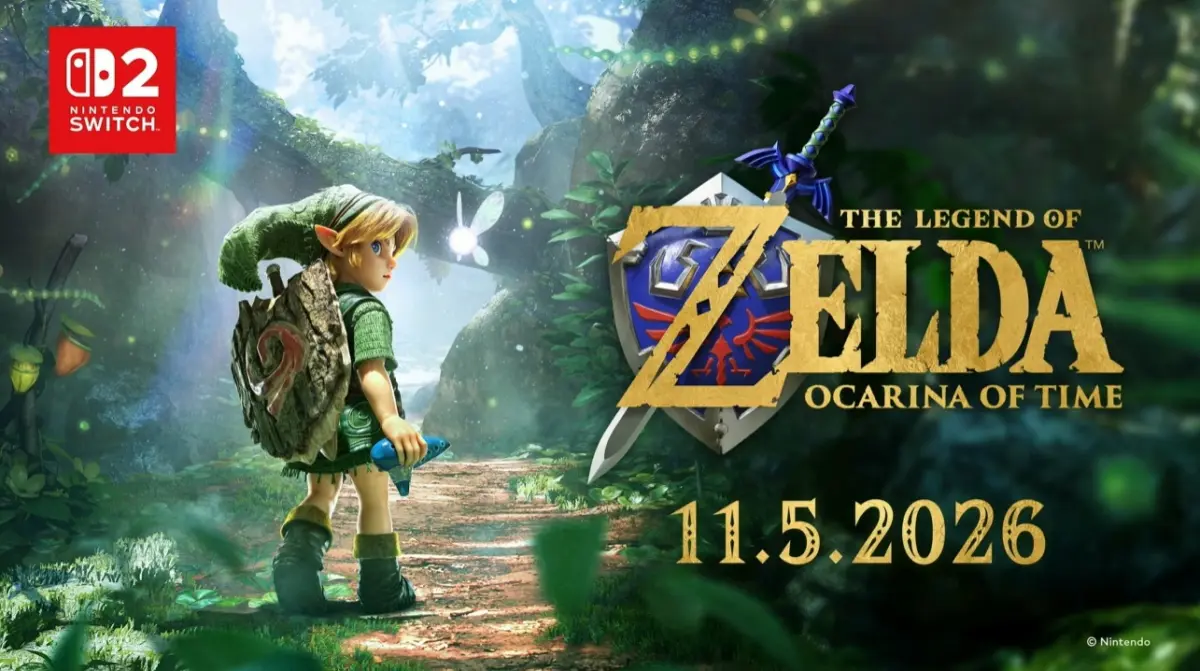
During a dedicated Zelda Nintendo Direct broadcast late Tuesday night (Japan time), long-time series producer Eiji Aonuma officially announced a full remake of 1998’s iconic masterpiece, The Legend of Zelda: Ocarina of Time, slated for release on the Nintendo Switch 2 on November 5.
The announcement detailed comprehensive modernizations to the classic title, including overhauled controls, free camera movement, and a striking shift toward photorealism reminiscent of Nintendo’s earlier Star Fox 64 remake for the Switch 2 platform. However, the crown jewel of the presentation was the revelation of an unprecedented interactive mechanic: the ocarina can now be played in three distinct ways, leveraging the Switch 2 controller’s built-in microphone to support human humming and real-world instrument integration.
This deep-dive analysis examines the technical upgrades, aesthetic shifts, innovative audio features, and broader implications of Nintendo’s latest high-profile revival.
Detailed Chronology & Presentation Breakdown
The journey toward this monumental remake began earlier this year in June, when Nintendo briefly teased the project with a single, tantalizing preview still that sent shockwaves through the gaming community. Speculation ran rampant regarding whether the project would be a straightforward port, a graphical remaster akin to the 3DS version, or a ground-up reimagining for Nintendo’s next-generation hardware.
The mystery was finally put to rest during Tuesday’s comprehensive Nintendo Direct presentation. Eiji Aonuma took center stage, guiding viewers through an extended gameplay demo that highlighted the meticulous care—and daring innovation—being poured into the project.
For players returning to the fields of Hyrule after nearly three decades, the gameplay mechanics of the original Nintendo 64 release can feel dated. The remake addresses these legacy constraints directly:
Dynamic Movement: Protagonist Link is no longer bound by strict, contextual jumping paths. Players can now execute jumps anywhere and at any time via a dedicated button input, vastly improving traversal fluidity across the expansive overworld.
Full Camera Control: The original game’s notoriously restrictive, fixed camera angles have been entirely discarded. The remake introduces a fully modern, player-controlled virtual lens managed smoothly via the Switch 2 controller’s right analog stick.
The Art Direction Dilemma: Stepping into Photorealism
Perhaps the most heavily debated aspect of the announcement is the game’s visual aesthetic. Moving away from the stylized, cel-shaded approaches seen in recent mainline masterpieces like The Legend of Zelda: Breath of the Wild and Tears of the Kingdom, Ocarina of Time on the Switch 2 adopts a much sharper, highly detailed, and photorealistic art direction.
This stylistic choice follows the precedent set by Nintendo’s Switch 2 remake of Star Fox 64 earlier this year. Environments feature intricate textures, dynamic lighting, and complex geometry, while character models swap out abstract, cartoonish features for high-fidelity detailing. Industry analysts predict this aesthetic pivot will be deeply divisive among the fanbase—potentially sparking debates not seen since the dramatic reveal of the cel-shaded The Legend of Zelda: The Wind Waker back in 2002.
The Ocarina Revolution: Playing Music Three Different Ways
While visual fidelity and camera mechanics provide a modern foundation, it was the reimagining of the game’s core musical mechanic that completely stole the show.
In Ocarina of Time, the titular magical instrument is central to both the narrative puzzle-solving and traversal mechanics. In the 1998 original, players performed songs by executing precise button sequences on the controller. While this button-input method remains intact for purists, Aonuma revealed two groundbreaking alternatives made possible by the Switch 2 hardware architecture.
1. The Traditional Button Method
For nostalgic players who prefer the classic muscle memory of the Nintendo 64 era, the standard button-input system returns, optimized for the ergonomic layout of the Switch 2 controller.
2. Vocal Input via Built-in Microphone
Capitalizing on modern hardware capabilities, the Switch 2 controller features a highly sensitive built-in microphone. Players can now completely bypass button inputs by simply humming the notes of the desired song. An on-screen "inputting audio" indicator tracks the player’s pitch in real-time, translating vocal vibrations directly into in-game notes that Link mimics on his magical instrument.
3. Real-World Instrument Integration
For the ultimate immersive experience, Nintendo is taking peripheral integration to the next level: players can pick up an actual, physical ocarina and play along in real life.
While the controller’s microphone is theoretically capable of tracking acoustic wind instruments of various makes, Nintendo is offering an official hardware solution. Partnering with prominent video game peripheral manufacturer Hori, Nintendo will release an authentic replica of the Ocarina of Time through the official Nintendo Online Store. Although a standalone release date for the Hori ocarina has not yet been finalized, its tie-in with the game promises to be a major collector’s item when it launches alongside the software this autumn.
Supporting Context & Industry Metrics
To fully understand the gravity of this announcement, one must contextualize the enduring legacy of the original 1998 title alongside Nintendo’s ongoing hardware and software strategies.
Critical Legacy:The Legend of Zelda: Ocarina of Time remains one of the most critically acclaimed video games in history. Holding a legendary aggregate score of 99 on Metacritic for over two decades, it laid the foundational design principles for 3D action-adventure games that developers still draw upon today.
The Switch 2 Ecosystem: This remake serves as a major software pillar for the Nintendo Switch 2, demonstrating how legacy intellectual property can be elevated using next-generation features such as advanced audio processing, internal microphones, and high-fidelity rendering engines.
Anniversary Milestones: The 40th anniversary of the Zelda franchise (which began with the original Famicom/NES release in 1986) has seen Nintendo pull out all the stops. While modern entries have expanded the series into open-world physics sandboxes, revisiting Ocarina of Time bridges the gap between older demographics of veteran gamers and younger audiences experiencing the classic narrative for the first time.
Official Statements & Insights
During his segment of the Nintendo Direct, producer Eiji Aonuma emphasized the delicate balance between honoring a beloved classic and adapting it for contemporary players.
"Ocarina of Time holds a profoundly special place in the hearts of our development team and millions of fans around the world," Aonuma stated during the broadcast. "When approaching a project of this magnitude for the Switch 2, our goal wasn’t just to repaint the past, but to let you experience Hyrule with the freedom and wonder you imagined in your mind’s eye back in 1998. Whether you are humming the notes of Zelda’s Lullaby into your controller or picking up a physical ocarina for the first time, we wanted the music to feel truly alive."
Future Outlook
As the countdown to November 5 begins, anticipation for The Legend of Zelda: Ocarina of Time on the Nintendo Switch 2 is reaching a fever pitch.
The successful implementation of microphone-based audio tracking and real-world instrument connectivity signals a bold, experiential direction for Nintendo’s classic franchises. If the photorealistic aesthetic proves successful in motion, it could pave the way for additional historical remakes within the Nintendo catalog.
For now, fans can look forward to further operational breakdowns, peripheral pricing details from Hori, and deeper dives into how dungeons, boss fights, and Hyrule Field have been reimagined for a new era of gaming. Mark your calendars: the legendary journey through time returns this November.


![The Legend of Zelda: Ocarina of Time’s remake can be played with an actual ocarina [Video]](https://soranews24.com/wp-content/uploads/sites/3/2026/09/8_55efba.jpg?w=1200&h=630&crop=1)
![The Legend of Zelda: Ocarina of Time’s remake can be played with an actual ocarina [Video]](https://soranews24.com/wp-content/uploads/sites/3/2026/09/0_86b087.jpg?w=640)
![The Legend of Zelda: Ocarina of Time’s remake can be played with an actual ocarina [Video]](https://soranews24.com/wp-content/uploads/sites/3/2026/09/2_406371.jpg?w=640)
![The Legend of Zelda: Ocarina of Time’s remake can be played with an actual ocarina [Video]](https://soranews24.com/wp-content/uploads/sites/3/2026/09/3_613b8e.jpg?w=640)
![The Legend of Zelda: Ocarina of Time’s remake can be played with an actual ocarina [Video]](https://soranews24.com/wp-content/uploads/sites/3/2026/09/4_50155a.jpg?w=640)
![The Legend of Zelda: Ocarina of Time’s remake can be played with an actual ocarina [Video]](https://soranews24.com/wp-content/uploads/sites/3/2026/09/5_c2c330.jpg?w=640)








Belum ada komentar. Jadilah yang pertama berkomentar!