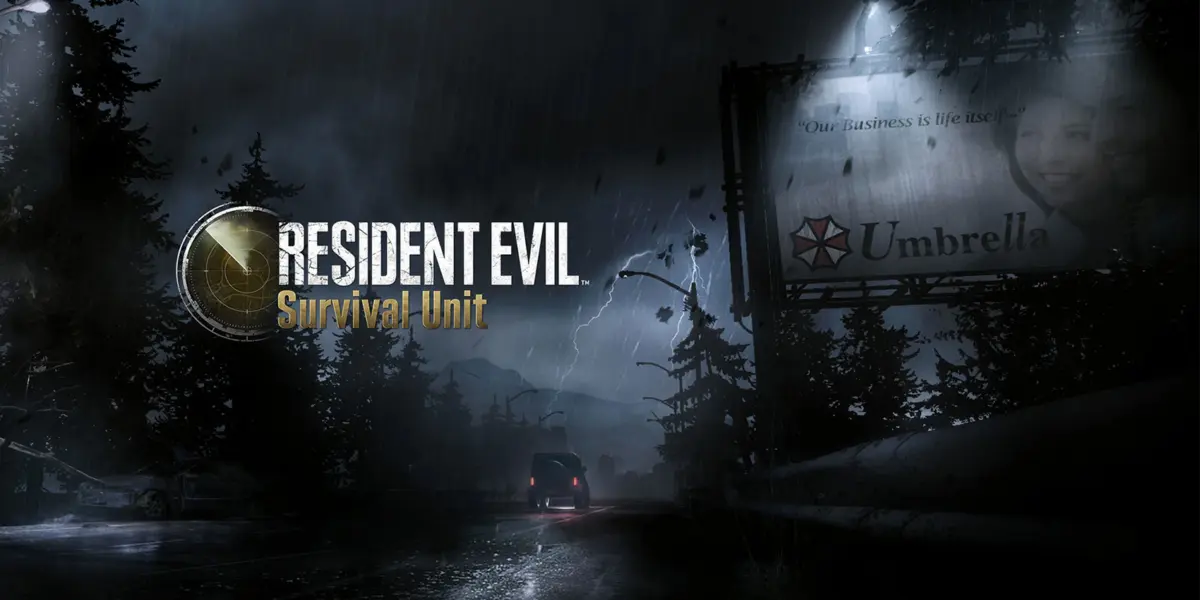
The iconic survival-horror ecosystem that has defined interactive terror for nearly three decades is officially expanding into uncharted territory. Sony subsidiary Aniplex Inc., in collaboration with developer JOYCITY and under the watchful eye of veteran Capcom franchise producer Masachika Kawata, has officially launched Resident Evil: Survival Unit on the iOS App Store and Google Play. Following an initial pre-order phase that initially pointed toward a late-December placeholder, mobile gamers can now download the title directly.
This release marks a watershed moment for the intellectual property. While Resident Evil has historically anchored itself in first-person and third-person action-horror, cinematic remakes, and terrifying encounters designed to induce heart palpitations, Survival Unit pivots the franchise into the realm of tactical strategy. Set against a parallel narrative woven directly into the fabric of the fan-favorite events of Resident Evil 2 and Resident Evil 3, the game tasks players not merely with running from the undead, but with commanding them, organizing resources, establishing outposts, and managing legendary protagonists—including Leon S. Kennedy, Jill Valentine, Claire Redfield, and Carlos Oliveira—through a lens of high-stakes logistical survival.
As mobile hardware continues to blur the line between handheld devices and dedicated consoles, this strategic adaptation aims to capture both die-hard series veterans and a global audience of tactical strategy enthusiasts. This comprehensive report explores the genesis of the project, the creative philosophies driving its unique genre shift, its narrative framework, and what this means for the future of the Resident Evil franchise on mobile platforms.
Detailed Chronology: From Concept to Global App Store Launch
The trajectory of Resident Evil: Survival Unit has moved with surprising velocity, transitioning from industry rumor to playable reality in a matter of weeks.
Early November 2025: The Initial Reveal
Earlier in the month, Aniplex—a prominent subsidiary of Sony Music Entertainment Japan known for managing major anime and gaming properties—surprised the gaming world by announcing the development of Resident Evil: Survival Unit. Targeted explicitly at iOS and Android platforms, the initial announcement was lean on gameplay mechanics. Developers confirmed only that the game would inhabit the expansive, zombie-riddled universe created by Capcom and that a late 2025 release window was being targeted.
The YouTube Broadcast Event & Narrative Unveiling
The veil of secrecy was partially lifted during a dedicated global YouTube broadcast event hosted by Aniplex and JOYCITY. The digital showcase provided fans with their first substantial look at the title, showcasing its art direction, user interface, and tactical loops. Most importantly, the broadcast clarified the game’s placement within the broader Resident Evil canon. Rather than serving as a direct retelling or a simple spin-off, Survival Unit unfolds as a parallel storyline running concurrently with the horrific outbreaks in Raccoon City depicted in Resident Evil 2 and Resident Evil 3.
During this same presentation, pre-orders went live across major digital storefronts, accompanied by an initial launch date listing of December 31. Industry analysts and community members immediately recognized this date as a placeholder, anticipating a much sooner rollout given the momentum of the marketing campaign.
November 18, 2025: Surprise App Store Drop
Confirming suspicions that the late-December date was indeed a placeholder, Aniplex and the development teams moved up the timeline drastically. On November 18, at approximately 4:11 p.m. ET, the application officially went live on the Apple App Store and Google Play Store, ending the pre-order phase and inviting players worldwide to step directly into the strategy-driven nightmare. Alongside the app launch, official pre-registration portals on the game’s dedicated website remained active for community rewards and updates.
To understand the strategic pivot of Resident Evil: Survival Unit, one must examine the intersection of mobile gaming economics, hardware evolution, and the inherent thematic nature of survival horror.
The Evolution of Mobile Hardware and Franchise Expansion
Capcom and its corporate partners have increasingly recognized mobile devices as viable, high-performance platforms for prestige gaming. In recent years, Apple’s powerful M-series chips and the A-series silicon in iPhones have hosted native, console-quality ports of modern Resident Evil titles, including Resident Evil 4 Remake, Resident Evil Village, and Resident Evil 2.
However, porting a heavy console action-horror game to touchscreens presents well-documented control challenges. Resident Evil: Survival Unit bypasses this hurdle entirely by choosing a genre native to the platform. By leveraging tactical strategy and resource-management mechanics, JOYCITY has tailored the core fantasy of Resident Evil specifically to the touch-and-drag ergonomics of smartphones and tablets.
Genre Convergence: Horror Meets Logistics
At its heart, classic Resident Evil has always been a game of resource management. Whether staring down an inventory box with only two pistol bullets and a green herb, or deciding whether to fight or flee from a relentless pursuer, players are constantly making tactical choices under pressure.
Executive producer Shinji Hashimoto articulated this philosophical bridge during the promotional broadcast, noting that the fundamental anxiety of scarcity translates remarkably well to strategy games. By scaling the scope from a single terrified protagonist to overarching faction survival, base-building, and squad tactics, Survival Unit reframes the horror not as an isolated jump-scare, but as a systemic crisis requiring calculated macro-management.
Official Statements and Creative Visionaries
The development of Resident Evil: Survival Unit is backed by heavy-hitting industry veterans who bridge the gap between traditional Japanese game development and modern global mobile design.
Bridging Two Worlds: Insights from Shinji Hashimoto
Shinji Hashimoto, executive producer and industry luminary renowned for his decades of foundational work at Square Enix (including stewardship over major pillars of the Final Fantasy and Kingdom Hearts franchises), offered profound insights into why the strategy genre was chosen for this iteration of Resident Evil:
"We felt that the game’s unique ‘survival element’ of surviving with only limited resources fits very well with strategy games. Because of that, we chose the strategy genre that allows players worldwide to enjoy the world of Resident Evil from a different perspective."
Hashimoto’s perspective underscores a crucial design goal: broadening the narrative horizons of the franchise. For nearly thirty years, fans have experienced Raccoon City and subsequent bio-organic disaster zones through a worm’s-eye view—sweaty palms, narrow corridors, and tight over-the-shoulder camera angles. Survival Unit invites players to pull back the camera, assessing the macro-scale devastation while maintaining the localized tension of dwindling rations and encroaching hordes.
Oversight and Canon Integrity: Masachika Kawata
To ensure that Survival Unit maintains the narrative and atmospheric integrity expected by a passionate global fanbase, Capcom has positioned longtime series producer Masachika Kawata at the helm of creative oversight. Kawata, whose fingerprints are on almost every major modern Resident Evil release and remake, ensures that the parallel storyline running alongside Resident Evil 2 and Resident Evil 3 respects established lore while carving out fresh tactical scenarios for legendary characters like Leon S. Kennedy, Jill Valentine, Claire Redfield, and Carlos Oliveira.
Future Outlook: What Survival Unit Means for the Franchise
The sudden and unexpected launch of Resident Evil: Survival Unit raises compelling questions about the trajectory of Capcom’s monetization and multimedia strategies in the years ahead.
Community Engagement and Live-Service Longevity
As a mobile strategy game, Survival Unit is inherently designed as a live-service ecosystem. Unlike traditional console entries that offer a definitive narrative conclusion, a strategy-based mobile title relies on continuous updates, seasonal events, guild or alliance mechanics, and expanding character rosters to retain its player base.
The inclusion of iconic heroes and villains from across the series’ timeline opens the door for expansive content updates. Will players see characters from later entries, such as Chris Redfield, Ada Wong, or Ethan Winters, integrated into future strategic campaigns? The modular nature of mobile strategy games makes such expansions entirely feasible.
Setting a Precedent for Cross-Media Collaboration
The involvement of Aniplex—a company deeply embedded in anime production, music publishing, and global digital entertainment—highlights a broader industry trend where major intellectual properties are treated as borderless multimedia experiences. By partnering with experienced mobile developers like JOYCITY, traditional console titans can experiment with genre diversification without risking the core brand equity of their flagship single-player franchises.
Final Thoughts
With Resident Evil: Survival Unit now live on the App Store and Google Play, fans no longer have to wait until late December to test their tactical mettle against the T-virus. Whether the game will successfully redefine how mobile audiences experience survival horror remains to be seen in the crucible of player reviews and long-term engagement metrics. However, one thing is certain: the nightmare in Raccoon City has just found a brand-new battlefield.


![Resident Evil Survival Unit for iOS now up for pre-order, if you don’t mind waiting [U: Launched]](https://9to5mac.com/wp-content/uploads/sites/6/2025/07/resident-evil-survival-unit.jpg?quality=82&strip=all&w=1600)
![Resident Evil Survival Unit for iOS now up for pre-order, if you don’t mind waiting [U: Launched]](https://9to5mac.com/wp-content/themes/ninetofive/dist/images/google-preferred-source-badge-dark.png)





Belum ada komentar. Jadilah yang pertama berkomentar!