

Executive Overview
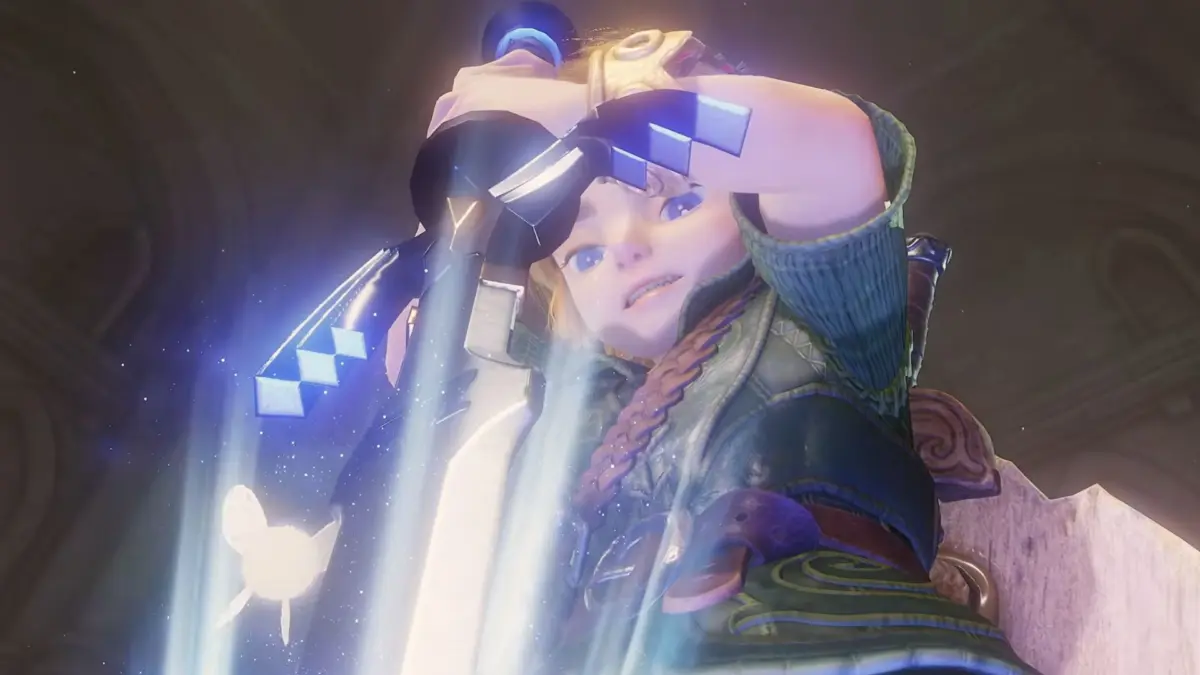
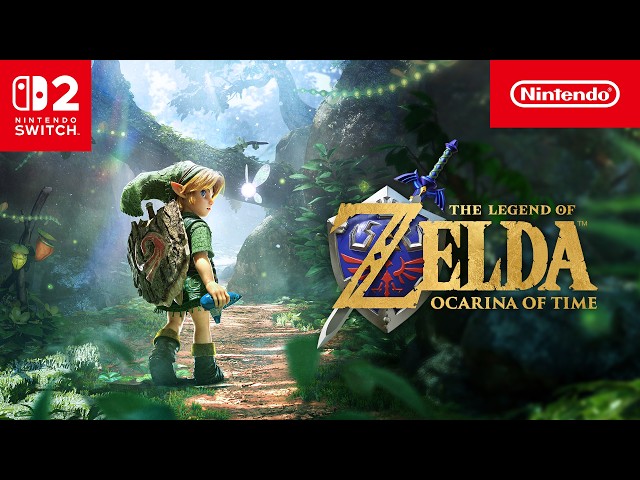
In what represents one of the most momentous software announcements in modern interactive entertainment, Nintendo has officially confirmed the full development and impending release of a ground-up remake of The Legend of Zelda: Ocarina of Time. Following years of industry speculation, supply-chain leaks, and fervent fanbase anticipation, the publisher formally showcased the title during its June 2026 Nintendo Direct presentation, subsequently locking in an official global release date of November 5, 2026, during the Legend of Zelda 40th Anniversary broadcast on September 8.
Designed specifically as a flagship showcase for Nintendo’s next-generation hardware platform—the Nintendo Switch 2—the remake moves beyond simple high-definition remastering. Instead, it re-architects the 1998 masterpiece using modern visual rendering pipelines, overhauled environmental geometry, expanded mobility mechanics, and integrated companion application support. The title serves a dual strategic purpose for Nintendo: celebrating four decades of its premier adventure franchise while providing a foundational, system-selling tentpole for its newest hardware ecosystem during the critical 2026 holiday retail quarter.
+-----------------------------------------------------------------------------------+
|                        OCARINA OF TIME REMAKE: AT A GLANCE                        |
+----------------------+------------------------------------------------------------+
| Target Platform      | Nintendo Switch 2                                          |
+----------------------+------------------------------------------------------------+
| Initial Reveal       | June 2026 Nintendo Direct                                  |
+----------------------+------------------------------------------------------------+
| Release Date Lock    | September 8, 2026 (Zelda 40th Anniversary Stream)          |
+----------------------+------------------------------------------------------------+
| Launch Date          | November 5, 2026                                           |
+----------------------+------------------------------------------------------------+
| Key Enhancements     | Ground-up HD visuals, manual jump/swim, audio-input        |
|                      | Ocarina playback, companion app integration                |
+----------------------+------------------------------------------------------------+
| Physical Editions    | Standard & Limited Edition featuring tactile foil art cover|
+----------------------+------------------------------------------------------------+
Detailed Chronology
The 1998 Paradigm Shift and Historical Legacy
To understand the magnitude of the 2026 remake, one must examine the legacy of the original release. Launched in November 1998 for the Nintendo 64, The Legend of Zelda: Ocarina of Time marked the franchise’s inaugural transition into three-dimensional space. Directed by a core team led by Shigeru Miyamoto, Eiji Aonuma, and Toru Osawa, the game pioneered fundamental mechanics that established the blueprint for third-person action-adventure game design across the entire industry.
Most notably, Ocarina of Time introduced "Z-targeting" (context-sensitive target locking), a revolutionary camera control and combat system that solved the prevalent mechanical frustration of spatial navigation in early 3D gaming environments. Combined with a dynamic day-night cycle, context-sensitive button mapping, and an emotionally resonant narrative spanning two distinct timelines, the title achieved unprecedented critical acclaim. Holding a aggregate score of 99/100 on Metacritic, it remains the highest-rated video game in historical aggregate analysis.
          [1998] Original N64 Release
            │    • Pioneered Z-Targeting & 3D Spatial Navigation
            ▼
          [2002-2003] GameCube Ports & Master Quest
            │    • Increased Resolution, Included Re-arranged Dungeons
            ▼
          [2011] Ocarina of Time 3D (Nintendo 3DS)
            │    • Stereoscopic 3D, Touch Interface, Updated Textures
            ▼
          [June 2026] Official Remake Announcement
            │    • Nintendo Direct Reveals Next-Gen Ground-Up Rebuild
            ▼
          [Sept 8, 2026] 40th Anniversary Event
            │    • Launch Date Confirmed: November 5, 2026
            ▼
          [Nov 5, 2026] Global Launch on Nintendo Switch 2
Institutional Iterations Across Hardware Generations
Over the past three decades, Nintendo has periodically reissued Ocarina of Time to preserve its availability across shifting console architectures:
- Nintendo GameCube (2002/2003): Ported via promotional discs (The Legend of Zelda: Collector’s Edition and the Ocarina of Time / Master Quest incentive disc), featuring enhanced rendering resolutions (480i) and modified dungeon layouts in the Master Quest variant.
- Virtual Console Era (2006–2015): Digitally emulated releases across the Wii, Wii U, and later the Nintendo Switch Online + Expansion Pack service, ensuring software accessibility for successive generational cohorts.
- Nintendo 3DS Rebuild (2011): Developed in collaboration with Grezzo, The Legend of Zelda: Ocarina of Time 3D offered a complete visual refresh, utilizing stereoscopic 3D capabilities, gyroscopic aiming, and dual-screen inventory management while maintaining the underlying engine logic of the 1998 release.
The Path to the 2026 Announcement
Industry speculation surrounding a complete, high-budget, current-generation remake began intensifying in late 2024 as rumors regarding Nintendo’s successor hardware began to solidify. The formal narrative coalesced during the June 2026 Nintendo Direct, where Nintendo executive management unveiled the first gameplay footage of the project.

The strategy was further clarified on September 8, 2026, during a dedicated digital event celebrating the 40th anniversary of The Legend of Zelda franchise. During this broadcast, Nintendo confirmed that development had wrapped and established November 5, 2026, as the official worldwide release date on Nintendo Switch 2.
Supporting Context & Technical Metrics
Visual Re-architecture and Next-Gen Fidelity
The 2026 edition of Ocarina of Time abandons legacy geometry and asset libraries entirely, leveraging the computational capabilities of the Nintendo Switch 2 to deliver a complete visual restoration. The artistic direction strikes a careful balance between faithful fidelity to the source material’s tone and modern visual presentation.
+------------------------------------------------------------------------------------+
|                         VISUAL & MECHANICAL COMPARISON                             |
+--------------------+-------------------------------+-------------------------------+
| Feature            | Original (1998) / 3DS (2011)  | Switch 2 Remake (2026)        |
+--------------------+-------------------------------+-------------------------------+
| Visual Architecture| Low-polygon geometry / 240p   | Modern high-poly engine / HD  |
| Environmental Detail| Baked textures, pre-rendered  | Dynamic foliage, real-time    |
|                    | backgrounds in select interiors| photorealistic moss & flora   |
| Traversal Mechanics| Auto-jump edge detection;     | Unrestricted manual jump;     |
|                    | Surface-locked swimming       | Dynamic free-swimming system  |
| Audio Interaction  | Digital button controller     | Audio-input pitch recognition |
|                    | inputs only                   | via integrated microphone     |
| Companion Support  | On-screen text box prompts    | Real-time 'Zelda Notes' app   |
|                    |                               | telemetry & guidance          |
+--------------------+-------------------------------+-------------------------------+
Key technical enhancements highlighted in pre-release technical deep-dives include:
- Volumetric Foliage and Surface Modeling: Environments across Hyrule—from the dense canopy of the Kokiri Forest to the damp, stone-carved corridors of the Temple of Time—feature high-density physical assets. Surfaces are rendered with detailed foliage, procedural moss, dynamic plant life, and reactive tree branches.
- Lighting and Material Physics: The game incorporates advanced real-time dynamic lighting, realistic water refraction, and physically based rendering (PBR) for metallic and textile surfaces, markedly elevating iconic setpieces such as the Lake Hylia basin and the Death Mountain crater.
- Character Fidelity: Link, Princess Zelda, Ganondorf, and supporting NPCs have been completely remodeled. Link’s classic companion fairy, Navi, returns with updated particle effects and high-fidelity illumination, retaining her original directional audio cues and verbal guidance prompts ("Listen!").
Fundamental Overhaul of Core Traversal Mechanics
While the spatial geography, dungeon layouts, musical motifs, and narrative beats remain faithful to the original design, Nintendo has implemented structural mechanical updates designed to bring the title in line with contemporary control standards.
        [Legacy Movement Mechanics]
        ├── Automated edge-jumping (contextual)
        └── Surface-constrained water navigation
                     │
                     ▼
        [Modernized Traversal Engine]
        ├── Unrestricted Manual Jump Button
        ├── Dynamic Free-Swimming & Subsurface Mechanics
└── Real-time Spatial Physics & Environmental Interaction- Manual Jump Architecture: Breaking from the 1998 design—which relied entirely on automated contextual edge-jumping—the 2026 remake introduces an unrestricted, dedicated jump mechanic. This allows players fluid spatial control during platforming sequences, altering how players traverse terrain within Hyrule Field and complex interior dungeons.
- Dynamic Swimming System: Water traversal has been rewritten from the ground up. Rather than locking Link to a fixed surface plane when unequipped with Iron Boots, players can now freely dive, swim, and maneuver vertically through water bodies. This system significantly streamlines navigation in notorious environments such as the Water Temple.
- Microphone-Based Ocarina Mechanics: Utilizing the expanded hardware feature set of the Switch 2, the game introduces an optional audio-input mode for playing the Ocarina of Time. Players can perform iconic melodies—such as the Song of Time or Zelda’s Lullaby—by executing pitch-matched vocal or instrumental audio inputs directly into the system’s integrated microphone, alongside traditional controller-based input mapping.
Official Statements & Platform Integration
System Integration: The ‘Zelda Notes’ Ecosystem
To coincide directly with the November 5 release, Nintendo announced a comprehensive feature update to its official digital ecosystem app, Zelda Notes. The application will feature deep platform-level integration with the Ocarina of Time Remake, offering a synchronized second-screen companion experience.
+-----------------------------------------------------------------------------------+
|                        'ZELDA NOTES' COMPANION INTEGRATION                        |
+-----------------------------------------------------------------------------------+
|  [Switch 2 Console]                                     [Mobile Device App]      |
|                                                                                   |
|  Real-time Gameplay Telemetry ─────── Encrypted WiFi ──────> Progress Tracking   |
|  Spatial Coordinates             ──────── Synchronized ──────> Interactive Map   |
|  Stuck-State Detection           ──────── Trigger Data ──────> Dynamic Hints     |
+-----------------------------------------------------------------------------------+
Key capabilities of the updated Zelda Notes integration include:
- Real-time Telemetry Tracking: The application automatically syncs with the player’s active save state on the Switch 2, tracking completed dungeons, acquired Heart Pieces, collected Gold Skulltulas, and unlocked inventory items.
- Contextual Hint System: Designed to assist players without relying on invasive full-screen pop-ups, the app analyzes spatial coordinates and game progression metrics to deliver subtle, spoiler-conscious hints regarding puzzle solutions and navigation directions.
Retail Strategy and Collector Distribution
Pre-orders for the title opened globally following the September 8 showcase across both digital and physical retail channels. Nintendo confirmed that physical retail distribution will include two distinct product tiers:
- Standard Edition: Includes the base game cartridge housed in standard system packaging.
- Limited Physical Collector’s Edition: Features premium physical packaging highlighted by custom tactile texture foil art rendering of the Master Sword and Ocarina motifs. Nintendo has indicated that physical allocation for the Limited Edition will remain strictly capped, driving early pre-order volumes across global markets.
Future Outlook and Strategic Industry Impact
Hardware Acceleration and Holiday Positioning
The decision to position The Legend of Zelda: Ocarina of Time Remake as a November 5 launch title underlines Nintendo’s holiday commercial strategy for the Nintendo Switch 2. Historically, system launches tethered to flagship Zelda releases—such as Twilight Princess on the Wii in 2006 and Breath of the Wild on the original Switch in 2017—have achieved exceptionally high hardware-to-software tie ratios.
  Historical Franchise Launch Impact
  ─────────────────────────────────────────────────────────────────
  2006: The Legend of Zelda: Twilight Princess (Wii Launch)
  ├── Software Tie Ratio: ~70% across launch quarter markets
  └── System Impact: Accelerated hardware stock sell-throughs

  2017: The Legend of Zelda: Breath of the Wild (Switch Launch)
  ├── Software Tie Ratio: >100% in initial North American launch month
  └── System Impact: Drove multi-year hardware momentum

  2026: The Legend of Zelda: Ocarina of Time Remake (Switch 2)
  ├── Projected Impact: Anchor title for 2026 Holiday retail cycle
  └── Strategic Goal: Catalyze legacy adoption and next-gen conversion
By bringing forward a ground-up reimagining of what is widely considered a foundational masterpiece in gaming history, Nintendo targets two distinct demographic segments simultaneously: long-time enthusiasts seeking a modernized return to Hyrule, and younger players whose primary exposure to the franchise came through the open-air design philosophy of Breath of the Wild and Tears of the Kingdom.
Broader Portfolio Implications
The technical and mechanical framework established for the Ocarina of Time Remake could signal a broader strategic initiative within Nintendo’s software development teams. Industry analysts project that if the title achieves expected critical and commercial milestones, the underlying engine pipeline could be leveraged for future historical restorations—most notably a companion remake of The Legend of Zelda: Majora’s Mask.
For now, the global gaming market turns its attention toward November 5, 2026, when players will officially judge whether this modern restoration successfully honors the legacy of one of interactive media’s most celebrated achievements.









Belum ada komentar. Jadilah yang pertama berkomentar!