

Executive Overview
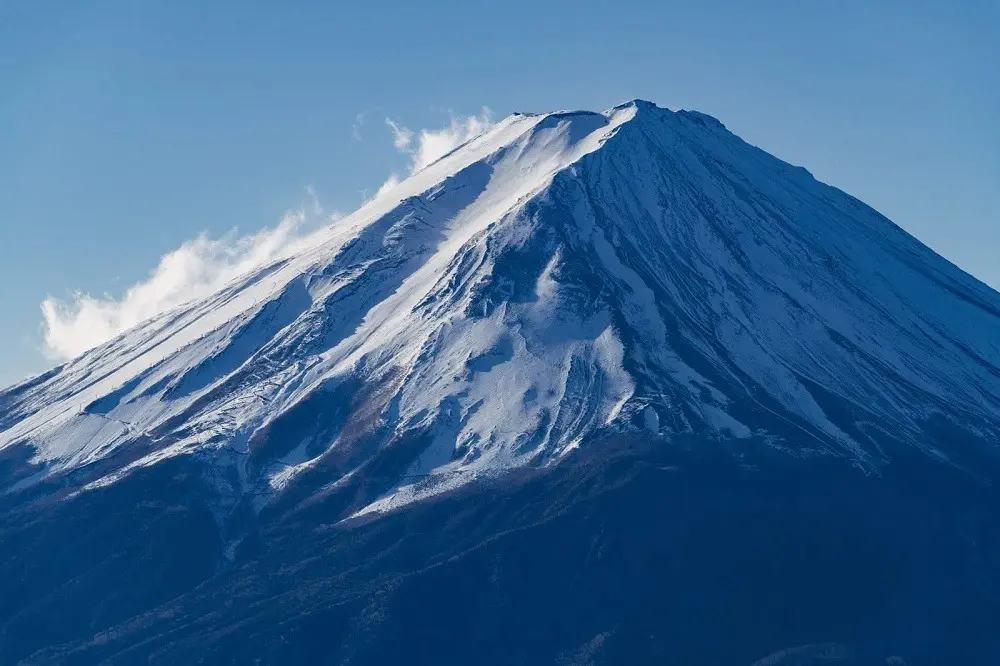
As the official climbing season for Japan’s iconic Mt. Fuji draws to a close, regional authorities are bracing for a critical policy review that could fundamentally reshape how reckless mountaineers are handled. Forestry officials and local government representatives in Shizuoka Prefecture—one of the two principal jurisdictions encompassing the majestic peak—are convening to evaluate the logistical performance, foot traffic, and trail management of the past few months.
However, the most pressing item on their agenda does not concern the busy summer months. Instead, officials are taking dead aim at the perilous and increasingly controversial practice of climbing Mt. Fuji outside its designated operational window. Driven by rising taxpayer frustration, stretched public resources, and the persistent danger posed to emergency personnel, Shizuoka Prefecture is weighing a bold legislative pivot: requiring off-season hikers to pay the exorbitant costs of their own mountain rescues.
The debate surrounding off-season ascents on Japan’s highest peak is fraught with legal ambiguity, administrative hurdles, and deep-seated public safety concerns. While venturing onto the mountain when it is officially closed has long been discouraged, doing so currently exists in a murky legal gray area. Under current Japanese jurisprudence, public rescue services are guaranteed to individuals in distress, meaning taxpayers frequently foot the bill when overconfident or under-prepared adventurers have to be airlifted or tracked down by emergency response teams.
With regional economies feeling the pinch and unauthorized winter attempts yielding a spike in dangerous rescue missions, local lawmakers are exploring innovative regulatory frameworks—including mandatory climbing declarations and prospective penalty fees—to shift the financial and legal liability back onto those who willingly court disaster on the snowy slopes of Mt. Fuji.
Detailed Chronology and Legal Landscape: Navigating the Rules of Japan’s Highest Peak
To understand the gravity of Shizuoka’s proposed policy changes, one must first examine the complex rules governing Mt. Fuji throughout the calendar year. Contrary to popular belief, the mountain is not accessible for unrestricted hiking year-round.
The Official Season vs. The Off-Season
Mt. Fuji operates under a strictly enforced, albeit slightly variable, official climbing season that typically runs from early July to early September. During this brief summer window, the weather is relatively mild, mountain huts and medical relief stations are fully staffed, and the trails are maintained to ensure optimal safety for hundreds of thousands of domestic and international tourists.
Once September closes, the mountain undergoes a dramatic transformation. The weather deteriorates rapidly, high-altitude winds reach dangerous velocities, temperatures plunge well below freezing, and all support infrastructure is shuttered.
The Road Act and the Illusion of Legality
The question of whether climbing Mt. Fuji in the off-season is "illegal" is surprisingly nuanced. According to the Mt. Fuji Official Climbing Website, Article 46 of Japan’s Road Act dictates that all official trails leading to the summit are legally closed and prohibited from use during the off-season.
Violating this restriction is not merely a localized infraction; it is a serious offense. Trespassing on these closed routes can carry penalties of up to six months in prison and a fine of 300,000 yen (approximately $1,890 USD). Because these trails hold the legal status of prefectural roads, local jurisdictions retain the statutory authority to bar public access to them.
However, a legal loophole has historically complicated enforcement:
- The Trail vs. The Mountain: While using the official trails during the off-season constitutes a prosecutable violation of the Road Act, ascending the mountain outside of those established paths—or navigating the broader terrain of the volcano—does not inherently trigger a criminal charge under the same statute.
- The Deterrence Gap: Because adventurous climbers often bypass the official trails to avoid checkpoints or bypass closures, they frequently find themselves in legal limbo. They may not technically be walking on a "closed prefectural road," yet they are plunging headfirst into an uncontrolled, high-alpine wilderness without legal safety nets.
Supporting Context & Metrics: The Human and Financial Toll of Off-Season Rescues
The impetus behind Shizuoka Prefecture’s urgent review is not merely administrative; it is rooted in a growing financial and ethical crisis.
The Economics of Disaster
Under the current legal framework in Japan, search and rescue (SAR) operations executed by local police, fire departments, and volunteer mountaineering groups are classified as essential public services. When a hiker calls for help, the state responds—regardless of whether the individual ignored explicit safety warnings or entered a restricted zone.
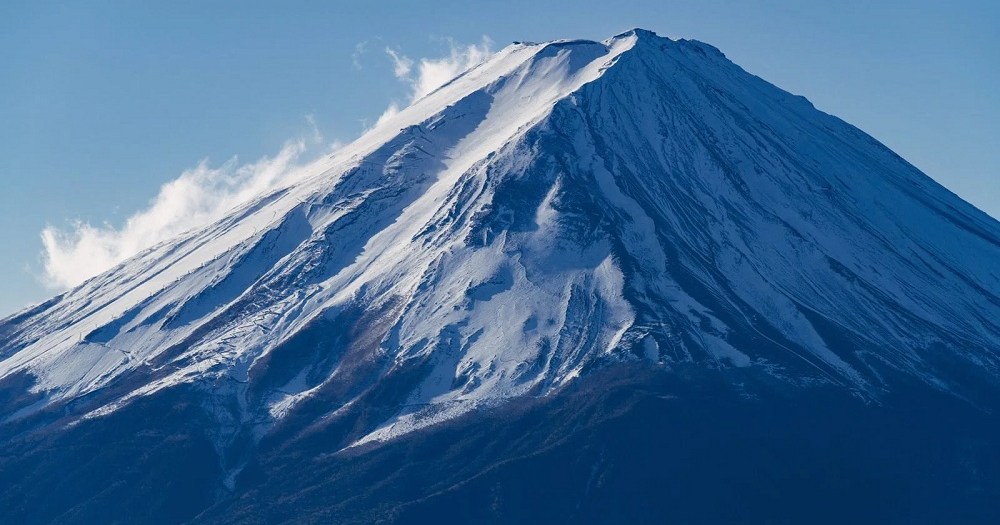
Consequently, the entire bill for these high-risk operations is shouldered by the prefectural government, which translates directly to the taxpayers of Shizuoka and Yamanashi prefectures. In an era marked by sluggish economic growth, inflationary pressures on household budgets, and strained municipal services, local residents have grown increasingly resentful. Taxpayers are essentially subsidizing the costly, preventable extractions of thrill-seekers who treat a hazardous 3,776-meter volcano like a weekend amusement park.
The Dangers to Emergency Personnel
The financial expense, however, pales in comparison to the human cost. Off-season rescue operations on Mt. Fuji are exponentially more perilous than summer operations. Rescuers must contend with:
- Severe, Unpredictable Weather: Rapid blizzards, whiteout conditions, and hurricane-force winds can materialize within minutes.
- Compromised Terrain: Without maintained trails, footing is treacherous, characterized by loose scree, deep snowdrifts, and sheets of black ice.
- Zero Infrastructure: With mountain huts and relief centers completely unmanned, rescue teams have no outposts for shelter, staging, or medical stabilization during an extended multi-day search.
When an inexperienced or reckless hiker becomes stranded near the summit in December or January, dispatching a rescue team places professional emergency workers and volunteers at severe risk. Critics of the current system argue that offering a "free ride home" to rule-breakers not only depletes public coffers but actively endangers the lives of those sworn to protect the public.
Official Statements and Proposed Regulatory Shifts
Recognizing that the status quo is untenable, prefectural committees in Shizuoka are actively designing countermeasures to plug the legal and financial loopholes that currently protect off-season transgressors.
The Mandatory Off-Season Declaration
Because the Japanese government cannot legally bill citizens for essential rescue services without a prior breach of statutory responsibility, Shizuoka Prefecture is exploring a clever workaround: establishing a mandatory "Off-Season Climbing Declaration."
Under this proposed regulatory framework:
- Anyone planning to climb Mt. Fuji outside the official summer window would be legally required to file a comprehensive off-season climbing declaration with the local government prior to their ascent.
- If an unauthorized or unregistered hiker requires a rescue, their failure to file the mandatory declaration would constitute a formal legal violation.
- This procedural breach would theoretically unlock the government’s ability to bill the individual for the total cost of the rescue operation or levy severe administrative fines, regardless of whether they were rescued directly on a closed trail or elsewhere on the mountain’s slopes.
Conceptual Hurdles and Yamanashi’s Parallel Efforts
While the proposal is currently in its conceptual and evaluative phase, policymakers are weighing how strictly to implement the declaration system. Questions remain as to whether the filing process should be intentionally restrictive, costly, or laden with rigorous safety prerequisites (such as proof of advanced mountaineering certification and specialized insurance) to act as an active psychological and financial deterrent.
Furthermore, Shizuoka is not acting in a vacuum. Yamanashi Prefecture—the neighboring jurisdiction that shares administrative control over Mt. Fuji and its popular northern routes—is reportedly pursuing its own independent legislative avenues. Yamanashi officials are similarly studying methods to penalize off-season rule-breakers and pass rescue expenditures back onto the hikers who require emergency extraction.
Future Outlook: A New Era for Japan’s Most Sacred Peak
As Shizuoka forestry officials finalize their evaluation meetings following the conclusion of the recent summer season, the writing is on the wall for casual, reckless off-season mountaineering on Mt. Fuji.
The convergence of tighter local budgets, heightened public outrage, and mounting risks for emergency crews has created an irresistible political momentum for change. Whether through the implementation of mandatory pre-climbing declarations, steep financial liabilities for rescue operations, or an outright tightening of the Road Act to criminalize all unauthorized off-season ascents, the days of the "free-ride rescue" appear to be numbered.
For international tourists and domestic adventurers alike, the message from Japanese authorities is crystal clear: Mt. Fuji is a majestic symbol of nature, but it is also a lethal high-altitude environment. Those who choose to defy seasonal closures and warnings in the future may soon find that their hubris comes with a devastatingly heavy price tag.






Belum ada komentar. Jadilah yang pertama berkomentar!