

Executive Overview
In an era defined by rapid urbanization, soaring utility costs, and shifting modern lifestyles, traditional community spaces face an unprecedented existential crisis. Among the casualties of this modern wave in Japan are sento—the historic, neighborhood public bathhouses that have served as social epicenters for generations of residents. Between 2015 and 2025 alone, Tokyo watched its active public bathhouse count plummet from 628 to 417 locations. For decades, these cultural cornerstones have quietly surrendered to the relentless pressures of demographic aging and deteriorating infrastructure.
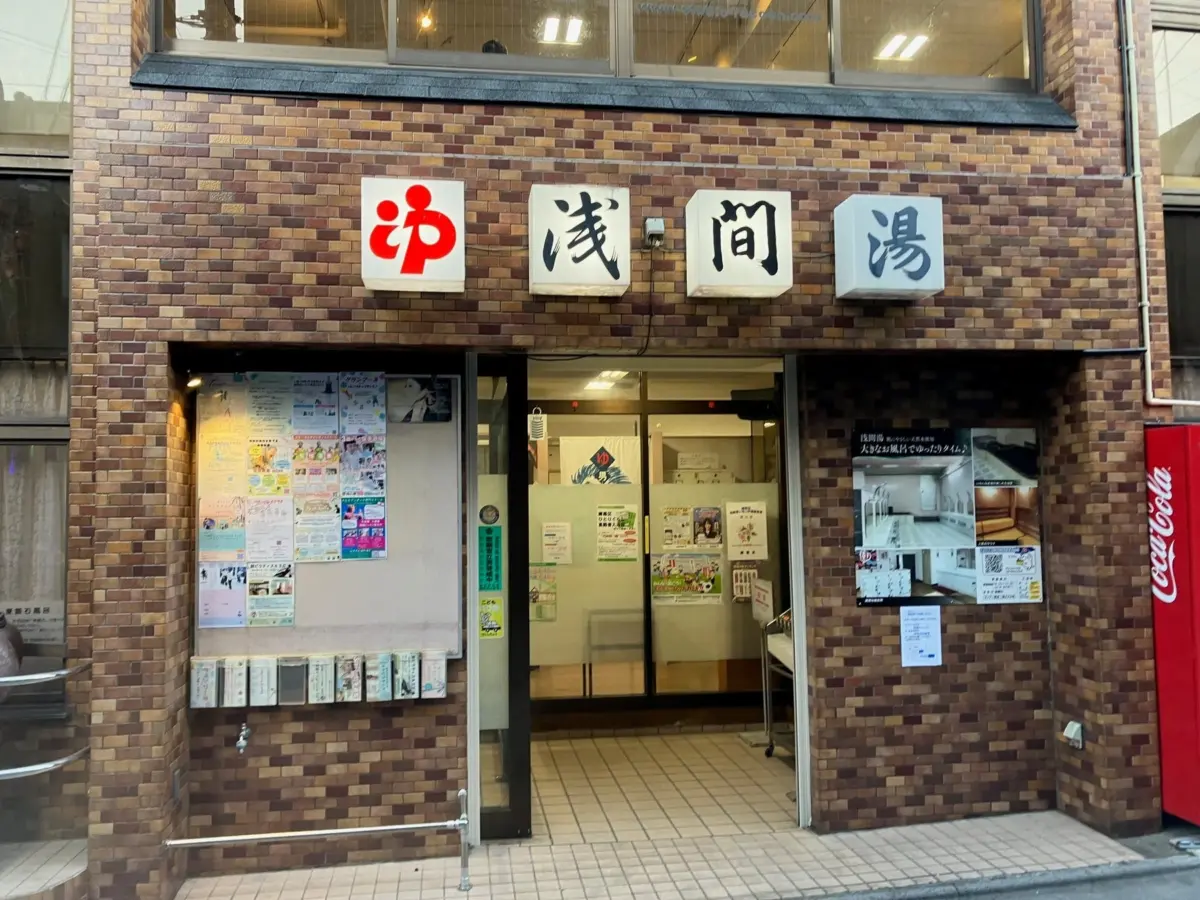
Yet, amid this steady decline, a powerful counter-narrative of urban preservation, community resilience, and intergenerational collaboration is taking shape. Sengenyu, a beloved public bathhouse operating in Tokyo’s Nerima Ward since 1927, has narrowly escaped the wrecking ball. Facing imminent closure due to the advanced age of its third-generation operators and extensive facility degradation, Sengenyu has been saved through a visionary public-private partnership.
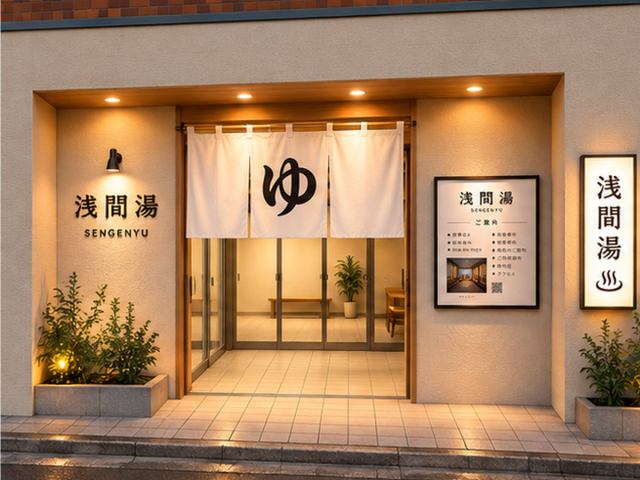
Facilitated by the Tokyo Public Bathhouse Succession Matching Program—a joint initiative managed by the Tokyo Metropolitan Government and the Tokyo Public Bathhouses Association—the historic institution was acquired by Ofuro Works. Currently undergoing a comprehensive, sensitive restoration, Sengenyu is scheduled to throw open its doors to the public once again in early December. This project is far more than a mere commercial renovation; it represents a masterclass in heritage preservation, featuring modern amenities infused with historic charm, student-led artistic branding, and a localized crowdfunding campaign designed to stake the community’s claim in its own future.
Detailed Chronology: From Brink of Closure to Revival
The journey of Sengenyu from a fading family-run relic to a modern community hub is a testament to the power of structured institutional intervention and grassroots passion.
1927–2025: A Century of Community Service
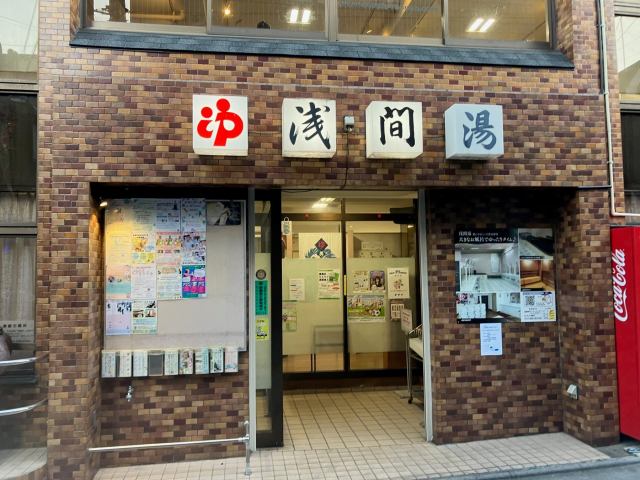
Established nearly a century ago in 1927, Sengenyu spent decades anchoring the neighborhood fabric of Nerima Ward. For generations, local residents—ranging from school children and university students to elderly neighborhood mainstays—relied on its steaming mineral waters to unwind, socialize, and connect. However, as the decades passed, the burdens of maintaining an aging physical plant took a heavy toll. Run by its third-generation family owners, the bathhouse ultimately reached a critical juncture. Aging proprietors coupled with mounting capital expenditure requirements for failing pipes, boilers, and structural elements made continued operation untenable. The family prepared to close its doors permanently, threatening to erase another irreplaceable chapter of Tokyo’s architectural and social history.
The Intervention of the Succession Matching Program
Sengenyu’s salvation arrived via the Tokyo Public Bathhouse Succession Matching Program. Recognizing that many historic sento operators face closure simply due to a lack of intra-family successors rather than a lack of market demand, the Tokyo Metropolitan Government and the Tokyo Public Bathhouses Association established this matchmaking initiative. The program acts as a bridge, connecting retiring bathhouse owners with viable corporate or individual operators equipped with the capital, vision, and technical expertise required to sustain these businesses. Through this matchmaking apparatus, Ofuro Works stepped forward to acquire Sengenyu, ensuring that the property would retain its civic purpose rather than being sold off for commercial redevelopment or residential housing.
Fall 2025: The Comprehensive Renovation Phase
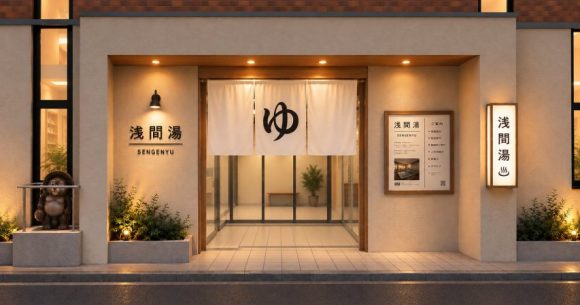
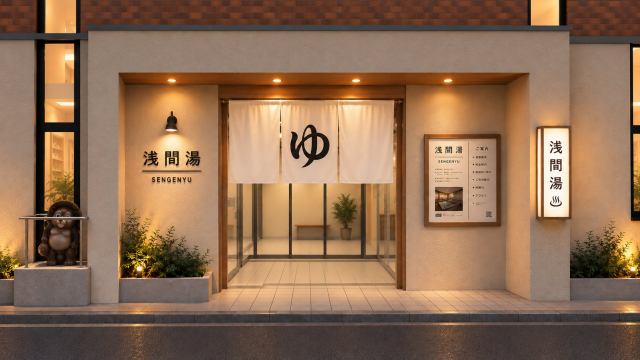
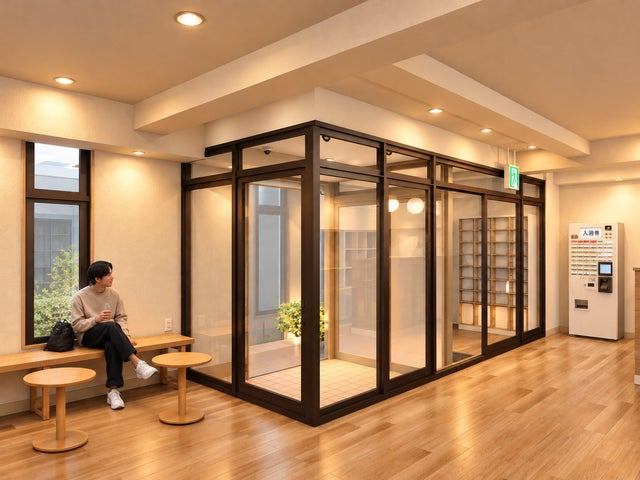
With ownership secured, Ofuro Works launched a sweeping, multi-faceted renovation initiative. The capital works project spares virtually no corner of the historic property, targeting critical updates to the entryway, expansive lobby, changing rooms, and sauna facilities.
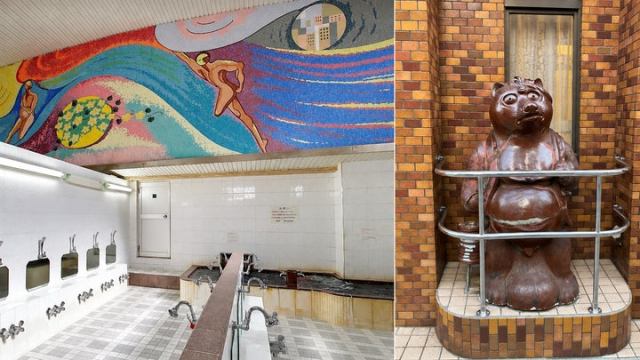
Rather than stripping the building of its soul, the developers have balanced modernization with historic preservation. While the mechanical infrastructure has been overhauled to meet contemporary hygiene and energy standards, treasured legacy features have been carefully safeguarded. This includes preserving the bathhouse’s signature retro-style bathroom layout, characterized by vibrant, hand-laid colorful tile art, as well as the iconic Shigaraki ware tanuki (raccoon dog) statue that has historically greeted visitors at the threshold.
November 2025: Grassroots Crowdfunding Launch
To deepen local investment in the project, Ofuro Works announced a public crowdfunding campaign hosted on Campfire, Japan’s largest crowdfunding platform, slated to launch on November 1. Setting a target of 1 million yen (approximately US$6,375), the campaign is structured not merely as a fundraising mechanism, but as a community-building exercise. Backers contributing to the restoration fund are rewarded with exclusive commemorative merchandise, including bespoke towels and T-shirts, alongside an exclusive behind-the-scenes preview tour of the newly renovated Sengenyu prior to its grand public reopening.
Early December 2025: The Grand Reopening
Sengenyu is set to resume operations in early December, introducing updated operating hours (3:00 PM to 11:00 PM, with Mondays designated as the regular closing day). Situated at 38-3 Sakae-cho, Nerima-ku, the revitalized facility promises to blend the best of early 20th-century architectural heritage with the sophisticated comforts of modern Japanese wellness culture.
Supporting Context & Metrics: The State of the Sento
To fully appreciate the significance of Sengenyu’s resurrection, one must examine the broader socio-economic landscape governing public bathhouses in contemporary Japan.
The Statistical Realities in Tokyo
The decline of the traditional sento is a well-documented phenomenon driven by post-war modernization. As private apartments and homes became increasingly equipped with private bathrooms and water heaters throughout the latter half of the 20th century, the daily necessity of visiting a communal bath diminished.
| Metric Indicator | Historical Data | Recent Data | Percentage Change / Trend |
|---|---|---|---|
| Tokyo Operating Sento (2015–2025) | 628 locations (2015) | 417 locations (2025) | Down ~33.6% over a decade |
| Maximum Adult Entry Fee | Historically regulated at low baselines | Regularly adjusted upward (e.g., mid-2026 hike) | Incremental increases to offset utility costs |
| User Demographics | Aging core demographic | Expanding younger demographic | Surge in millennial and Gen-Z interest |
As illustrated by municipal tracking, the contraction of Tokyo’s sento ecosystem has been severe, with over a third of operating bathhouses disappearing over a ten-year span. This contraction has been accelerated by skyrocketing utility expenses—particularly natural gas and electricity required to heat vast quantities of water daily—alongside tightening municipal regulations and the high cost of earthquake-retrofitting aging wooden and concrete structures.
A Ray of Hope: The Counter-Trend in Ridership
Despite the alarming closure rate of physical facilities, recent demographic metrics offer a powerful counter-narrative. Data from the Tokyo Metropolitan Government indicates that while the absolute number of operating bathhouses is shrinking, overall user volume is actually on the rise.
This resurgence is largely propelled by younger generations—including university students, young professionals, and urbanites living in compact rental apartments who view the sento not as a relic of hygiene necessity, but as a luxurious, low-cost social sanctuary. Moreover, Japan’s modern "sauna boom" has converted a new generation of urban dwellers into passionate advocates of bathhouse culture. This demographic shift explains why ventures like Ofuro Works are willing to invest heavily in historic properties: the audience is there, hungry for authentic community spaces that offer a tactile escape from digital isolation.
Official Statements and Stakeholder Collaboration
The restoration of Sengenyu is a masterclass in cross-sector collaboration, bringing together municipal bodies, corporate innovators, traditional artisans, and academic institutions.
Municipal and Corporate Synergy
The partnership between the Tokyo Metropolitan Government, the Tokyo Public Bathhouses Association, and Ofuro Works underscores a growing recognition that cultural heritage cannot survive on nostalgia alone; it requires agile business models and institutional backing. By streamlining the acquisition process through the Succession Matching Program, municipal authorities are actively preventing urban blight while preserving social infrastructure that contributes to public health and community cohesion.
Academic Integration: Nihon University College of Art
One of the most innovative aspects of Sengenyu’s revitalization is its partnership with students from the nearby Nihon University College of Art. Recognizing the deep historical ties between local university students and the bathhouse, Ofuro Works invited the art students to spearhead the creation of a brand-new visual identity, including a modern logo and an updated mascot character derived from the building’s historic Shigaraki ware tanuki statue.
The resulting design bridges folklore and contemporary graphic arts: the new logo ingeniously merges the billowing steam of a traditional bathhouse with the mystical puff of smoke associated with a tanuki transforming in Japanese folklore. This collaboration ensures that the younger generation is not merely a passive consumer of the restored space, but an active co-creator of its legacy.
Technological and Artisanal Upgrades
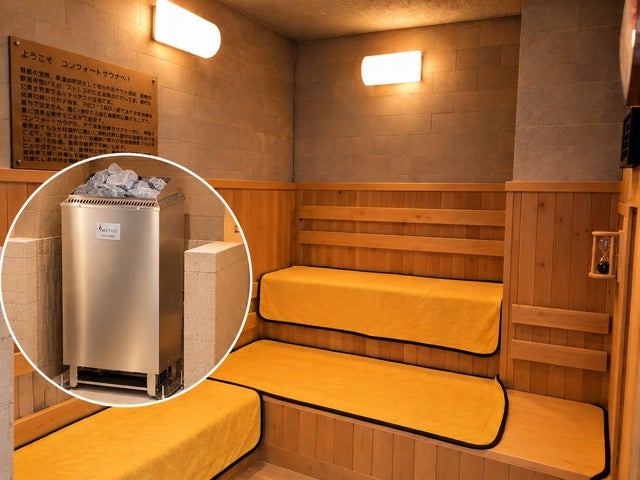
While the aesthetic honors the past, the mechanical core looks firmly to the future. Sengenyu’s saunas have been outfitted with state-of-the-art electric heaters sourced from renowned Japanese bath equipment manufacturer Metos. Crucially, the renovation preserves the beloved interactive element of traditional Japanese sauna culture: patrons retain the ability to perform loyly—throwing water onto heated stones themselves to customize steam density and ambient heat to their personal preferences.
Future Outlook: A Blueprint for Urban Cultural Preservation
The successful rescue and modernization of Sengenyu serves as a vital blueprint for urban planners, cultural preservationists, and business owners grappling with the loss of historic community spaces across Japan and beyond.
As Tokyo’s maximum entry fees for public baths undergo periodic, government-sanctioned adjustments to help operators absorb inflationary pressures, the financial viability of individual sento remains a delicate balancing act. However, facilities that successfully pivot into experiential hubs—combining high-end wellness amenities (such as upgraded saunas and aesthetic wood-themed lounges) with deep community roots—are proving remarkably resilient.
The intersection of municipal succession programs, corporate capital, student-led artistic innovation, and crowdfunding demonstrates that historic preservation does not require museums or government stasis. Instead, it thrives when traditional institutions are empowered to adapt, welcoming new generations while honoring the patina of their past.
If the current surge in youthful sento patronage continues, and if programs like Tokyo’s succession matching initiative continue to rescue endangered properties like Sengenyu, these architectural gems may well defy the odds—transforming from a dying breed into thriving community sanctuaries poised to flourish for another century and beyond.


Belum ada komentar. Jadilah yang pertama berkomentar!