

Executive Overview
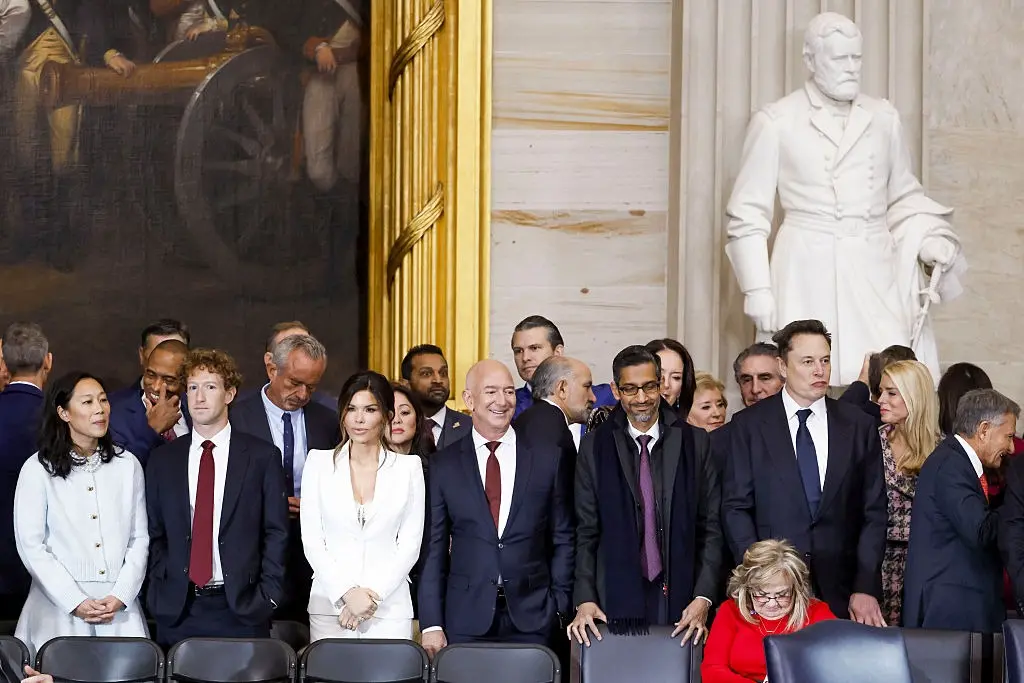
The landscape of American politics and technological governance is undergoing a high-stakes recalibration. For the past two years, Silicon Valley’s elite enterprises basked in the warmth of a remarkably friendly federal administration. Major tech executives aligned themselves closely with President Donald Trump and his inner circle, securing critical regulatory relief, generous tax incentives, and the temporary freezing of aggressive federal investigations. In exchange, executives contributed millions of dollars to political action committees, attended exclusive White House affairs, and systematically rolled back internal Diversity, Equity, and Inclusion (DEI) frameworks to appease conservative stakeholders.
However, the political pendulum is swinging once again. The recent midterm elections have shifted the balance of power in Washington, empowering a Democratic contingent that has long pledged to institute stringent oversight, consumer protections, and rigorous regulation of artificial intelligence. Sensing this seismic shift, Big Tech firms are executing a rapid and calculated pivot.
From high-profile strategic hires—such as OpenAI bringing on Jessica Schumer, the daughter of Democratic Senator Chuck Schumer—to inventive corporate rebranding efforts like labeling massive data centers as "compute campuses," the industry is engaged in an aggressive public relations charm offensive. Critics characterize these moves as mere "PR washing," doubting whether superficial image-polishing can repair strained relationships with lawmakers and a skeptical public.
As Washington braces for potential gridlock, the true battlegrounds for the future of artificial intelligence are shifting toward state capitols, local communities pushing back against power-hungry data centers, and volatile financial markets reacting to the pressures of an unprecedented tech boom. With economic anxieties mounting and the specter of an AI market correction looming over the current administration, Silicon Valley finds itself navigating a treacherous political and economic tightrope.
Detailed Chronology: From Trump-Era Alignment to the Midterm Pivot
To understand Silicon Valley’s current frantic repositioning, one must examine the trajectory of industry relations with Washington over the preceding presidential term.
The Trump Alignment (2024–2026)
Following the return of President Trump to the White House, major technology conglomerates recognized an opportunity to reset their regulatory burdens. For years, companies like Meta, Google, and OpenAI had faced intensifying scrutiny from both sides of the aisle over data privacy, market monopolies, algorithm transparency, and the societal impacts of generative AI.
Under the Trump administration, the federal posture shifted dramatically toward deregulation. The administration championed the principle that U.S. artificial intelligence companies must be unburdened by "cumbersome regulations" to maintain global dominance over geopolitical rivals, particularly China. Key policy milestones during this period included:
- The AI Litigation Task Force: Established via executive order in late 2025, this Department of Justice entity was specifically mandated to challenge and overturn state-level AI laws deemed hostile to federal innovation priorities.
- Regulatory Halts: The pausing or softening of several federal antitrust and anti-competition investigations that had previously threatened Meta and other social media giants.
- Corporate Cultural Shifts: In a bid to align with conservative economic and cultural priorities, several tech firms quietly scaled back or restructured their DEI programs and initiated closer dialogues with conservative policymakers.
Despite these federal wins, the industry was not entirely insulated from legal friction. Meta faced ongoing, bruising lawsuits and multi-billion-dollar fines, while OpenAI and other foundational model developers wrestled with civil litigation alleging that their technologies infringed on copyrights or caused psychological and societal harm to users.
The Midterm Realignment (Late 2026)
As the midterm elections approached, polling data and political forecasts signaled growing Democratic enthusiasm and potential gains in Congress. Corporate strategy departments across Silicon Valley immediately initiated contingency planning. Recognizing that a divided government or a empowered Democratic opposition would aggressively pursue oversight hearings and stricter compliance mandates, tech lobbyists and executives began laying the groundwork for a bipartisan reconciliation.
- The Schumer Appointment: In a move that signaled immediate intent, OpenAI hired Jessica Schumer—an attorney and strategist, and crucially, the daughter of Senate Democratic leader Chuck Schumer—right before the midterm cycle concluded.
- Lexical Softening: Tech companies began altering their corporate vernacular. OpenAI announced plans to rebrand its massive, energy-intensive data infrastructure facilities from "data centers" to "compute campuses," a subtle linguistic shift designed to evoke academic innovation and environmental integration rather than industrial resource consumption.
- Public-Private Partnerships: Companies doubled down on workforce and educational alliances. This included expanding OpenAI’s partnership with the American Federation of Teachers, Anthropic’s launch of the "Claude Corps," and Meta’s rollout of the "America’s Workforce Academy."
Meta President Dina Powell McCormick addressed this strategic necessity head-on at the WSJ Tech conference held during election week. "You have to work with the government that the American people elect," McCormick remarked. "I have seen it across the board that you have to be bipartisan, and you want to be, because you want buy-in on the things that you’re trying to do."
Supporting Context & Metrics: The Mechanics of "PR Washing"
Industry critics and policy experts argue that these eleventh-hour overtures are transparent attempts to deflect mounting public anger and preempt aggressive legislative action.
The Advocacy Perspective
J.B. Branch, director of federal AI governance and technology policy at Public Citizen—a prominent, nonpartisan nonprofit advocacy organization—did not mince words when evaluating the industry’s recent behavior.
"The tech industry realizes they have an optics problem," Branch stated, characterizing initiatives like the Schumer hire and campus rebranding as classic examples of "PR washing."
Branch pointed to the proliferation of corporate partnerships with labor unions and educational bodies as part of a broader strategy to embed tech companies into civic infrastructure before lawmakers can penalize them. "I would imagine more of that sort of investment in these corporate, private-public partnerships," he added, warning that such moves are designed to create political shields against antitrust and safety legislation.
The Skepticism of Civil Society
This sentiment is echoed by Alice Marwick, director of research at Data & Society, a tech policy research institute. Marwick argues that while Big Tech is predictably attempting a frantic pivot back toward the political center—and potentially courting the left—the strategy may prove ineffective.
"It’s a little too late," Marwick noted. "Tech companies should be asking themselves how their products can make people’s lives better, because right now, it doesn’t seem like they are."
Marwick’s critique touches on a fundamental disconnect between Silicon Valley’s valuation models and the lived experiences of everyday Americans. While executives focus on parameters, model sizes, and trillion-dollar infrastructure builds, ordinary citizens face very tangible disruptions: displaced jobs, pervasive deepfakes, surging household electricity bills driven by data center power demands, and a general erosion of trust in digital information systems.
The State-Level Frontline
Because Washington often finds itself paralyzed by partisan gridlock, much of the actual conflict over AI regulation has migrated to state capitols and local municipal boards.
Aryan Ranjan, founder of Baraza, a political campaign management software company, emphasizes that state governments have proven far more aggressive than federal lawmakers in passing binding rules. States have already initiated lawsuits against major platforms and enacted localized restrictions regarding generative chatbots, deepfakes, and algorithmic bias.
"A coalition built on newer, working-class voters is likely to push Democrats to frame AI around electricity bills, data-center siting, and jobs rather than abstract AI safety," Ranjan explained. This pragmatic framing resonates deeply at the local level, where communities are increasingly pushing back against the massive resource footprints of modern AI operations.
Official Statements and Institutional Positions
The friction between rapid technological expansion and democratic governance is reflected in the carefully calibrated statements issued by federal authorities and industry leaders alike.
The White House Perspective
Despite the shifting political winds in Congress, the executive branch maintains its core commitment to maintaining American dominance in artificial intelligence. In a formal statement provided to industry analysts, a White House official underscored the administration’s national security priorities:
"American leadership in super intelligence is essential for our national security, economic prosperity, and the quality of life of the American people. President Trump is committed to ensuring America continues to lead the world in super intelligence while protecting American consumers. As the President has said, he’s willing to work with anyone to continue delivering victories for hardworking Americans."
This stance highlights a persistent tension: while the executive branch views unfettered AI development as an imperative of geopolitical survival, a bipartisan cross-section of voters and legislators increasingly demands enforceable guardrails to protect consumer rights and public infrastructure.
Industry Concessions on Local Autonomy
Privately and publicly, tech leadership is beginning to acknowledge that community pushback cannot be ignored through lobbying alone. Addressing the fierce resistance to data center construction, Meta’s Dina Powell McCormick emphasized that infrastructure growth must be negotiated with local populations.
According to McCormick, Meta aims to demonstrate that communities welcoming its massive investments will experience "an enormous amount of benefit." Crucially, she conceded that localities exercising their democratic right to reject these facilities "will of course have the right to stop them."
Future Outlook: Gridlock, Market Bubbles, and the Next Two Years
As the dust settles on the midterm elections, the immediate future of artificial intelligence governance will likely be defined by three converging forces: federal gridlock, localized resistance, and macroeconomic market pressures.
1. Legislative Gridlock and State-Level Action
With Congress divided, sweeping federal AI safety legislation may face steep hurdles. Consequently, the primary theater of regulatory combat will remain decentralized. As Aryan Ranjan noted, "For the next two years, a company’s AI rules may depend more on where it operates rather than on anything Washington passes." Companies will have to navigate a complex, fragmented patchwork of state laws governing data privacy, algorithmic accountability, and environmental impact.
2. The Infrastructure Backlash
Data center moratoriums are gaining significant traction nationwide. As local utility grids strain under the unprecedented electricity demands of training and running large language models, communities are demanding accountability. The debate over data center siting is transforming AI from an abstract Silicon Valley discourse into a visceral kitchen-table issue involving municipal zoning, water usage, and spiking utility bills.
3. The Looming Market Correction
Perhaps the most volatile variable is the financial health of the AI sector itself. On the Wednesday immediately following the midterm elections, the broader markets experienced a sharp, trillion-dollar sell-off that rattled investors across the board. Whispers of a potential bubble have intensified, with financial analysts openly questioning the viability of unprecedented corporate valuations, including Anthropic’s rumored trillion-dollar initial public offering (IPO).
J.B. Branch of Public Citizen offered a stark warning regarding the intersection of political fortunes and market stability:
"There’s a very strong likelihood that there will be an AI bubble pop, and it’ll happen on Trump’s hands. Does he want to sink or swim along with the AI industry?"
If an economic correction or market collapse occurs, the political calculus for both the White House and Capitol Hill will shift overnight. An industry that once appeared untouchable due to its limitless financial momentum could suddenly find itself facing intense populist anger, diminished lobbying leverage, and a unified bipartisan demand for structural reform.
For now, Silicon Valley’s leaders are hedging their bets—hiring strategists from across the political aisle, rebranding industrial infrastructure with eco-friendly lexicon, and attempting to convince a wary public that their technological ambitions serve the common good. Whether these cosmetic and strategic realignments will suffice in an increasingly skeptical political climate remains one of the defining questions of the digital age.







Belum ada komentar. Jadilah yang pertama berkomentar!