

Executive Overview
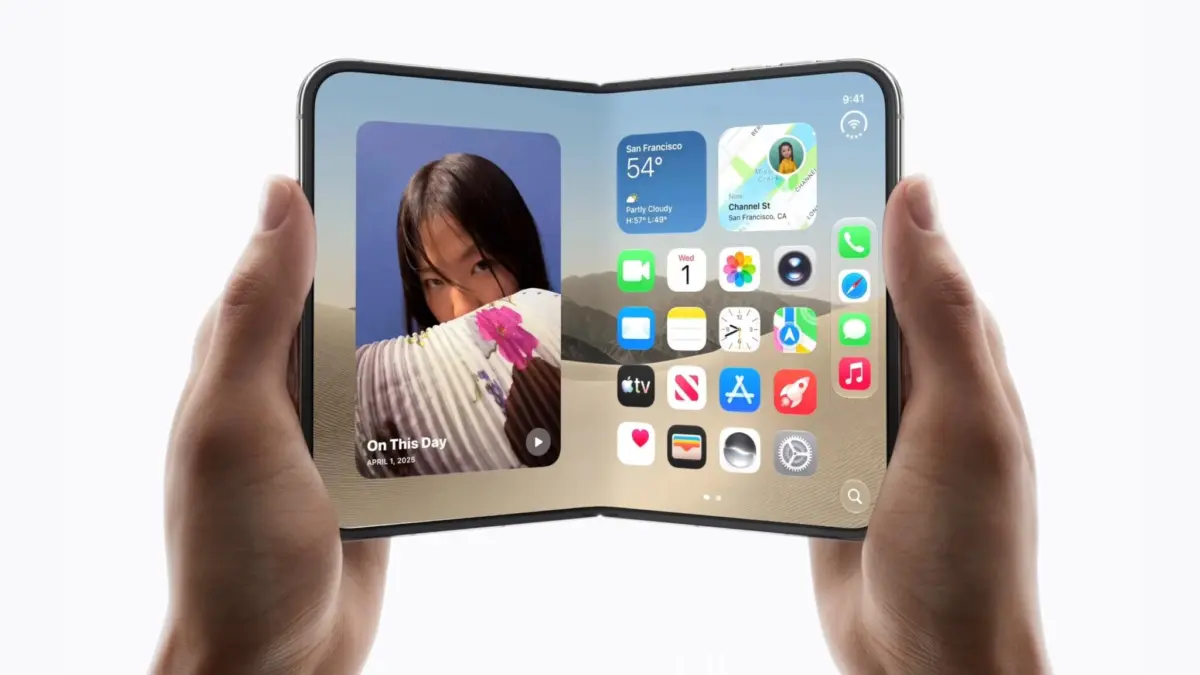
When Apple officially entered the foldable smartphone market with the heavily anticipated iPhone Duo, early reviews were a mixed bag of awe and criticism. While critics universally praised the device’s ingenious hardware engineering—particularly its durable, seamless hinge mechanism—many pointed out a glaring Achilles’ heel: a shortage of software optimized specifically for the Duo’s unique dual-screen form factor. At launch, users firing up productivity apps, streaming services, and social media platforms were frequently greeted by awkward letterboxing, black sidebars, and clumsy overflow menus that failed to exploit the expansive canvas of Apple’s debut foldable.
However, the tech giant is moving aggressively to silence early skeptics. In a major milestone announcement, Apple revealed that the App Store now hosts over 100,000 native and optimized apps built specifically for the iPhone Duo, with thousands of new titles rolling out daily. This rapid influx of software coincides with a massive wave of updates from major enterprise, media, and consumer brands—including Microsoft Word, Zoom, the NBA, Etsy, and the Halide Mark III camera app—joining early pioneers like Netflix, Instagram, and YouTube.
Despite a hefty starting price tag of $1,999 for the 256GB base model, consumer demand for the iPhone Duo has thoroughly outpaced supply, leading to significant backorders extending deep into next year. Apple executives have acknowledged that production constraints remain a bottleneck. Behind this hardware triumph and software surge lies a concerted global effort by Apple to educate developers, host hands-on workshops, and rapidly mature the iOS 27 ecosystem. This report provides an in-depth look at how Apple is bridging the foldable software gap, the developer mobilization behind the iPhone Duo, and what the future holds for the industry’s most talked-about device.
Detailed Chronology: From Launch Friction to the 100,000-App Milestone
To understand the current state of the iPhone Duo ecosystem, it is essential to trace the timeline from its rocky initial debut to the sweeping software updates transforming the user experience today.
The Launch Window: Hardware Brilliance Meets Software Hurdles
When review units of the iPhone Duo first landed in the hands of tech journalists and early adopters, the consensus was clear: Apple had built a marvel of hardware engineering. The hinge mechanism, in particular, was lauded for its structural integrity, smooth actuation, and flush closure. Yet, the initial user experience was tempered by software friction.
Because many third-party apps had not yet been updated to support the Duo’s unfolding display ratios, they defaulted to standard single-screen emulation. This resulted in jarring black bars running down the sides of the display, wasting valuable screen real estate and forcing users to constantly adapt to legacy UI designs. Reviewers rightly pointed out that launching a device at a luxury price point ($1,999 and up) without universal app adaptation created a disjointed early-adopter experience.
The Developer Mobilization and Global Workshops
Recognizing that hardware excellence alone cannot sustain a revolutionary form factor, Apple launched an aggressive developer outreach campaign. Realizing that many iOS developers needed specialized guidance to transition their applications to the Duo’s unique multi-window and expandable display architectures, Apple rolled out an extensive support program.
According to company data, more than 2,000 app developers participated in over 50 in-person workshops hosted across 19 major technology hubs worldwide. These intensive sessions gave developers direct access to Apple engineers, allowing them to test their code on actual iPhone Duo hardware, troubleshoot layout rendering issues, and leverage Apple’s latest UI frameworks. This hands-on collaboration laid the groundwork for the rapid acceleration of optimized software we are witnessing today.
The Tipping Point: 100,000 Optimized Apps and Counting
The fruits of these workshops materialized in a major announcement on Friday, when Apple confirmed that the App Store had crossed the critical threshold of 100,000 Duo-optimized apps.
This milestone was underscored by a simultaneous wave of high-profile app updates. Productivity powerhouses like Microsoft Word, Outlook, Excel, PowerPoint, and Zoom rolled out native updates to capitalize on the Duo’s split-screen multitasking capabilities. Media and entertainment brands—including the NBA, NHL, Etsy, LTK, Goodnotes, Extra, and the professional-grade Halide Mark III camera app—also joined the fold, bringing the total ecosystem up to speed and drastically reducing the frequency of the dreaded black sidebar.
Supporting Context & Metrics: Supply Constraints and Ecosystem Expansion
The success of the iPhone Duo is not merely a software story; it is deeply intertwined with unprecedented market demand and complex global supply chain dynamics.
Exploding Demand and Supply Chain Bottlenecks
Priced at a premium starting point of $1,999 for the 256GB model, market analysts initially questioned whether consumers would embrace a foldable Apple device during an economically cautious climate. Those doubts were quickly dispelled within hours of pre-orders opening.
The iPhone Duo sold out almost instantly across global markets. Current shipping estimates have slipped well into the following year, leaving eager buyers waiting months for fulfillment. During Apple’s recent quarterly earnings call, company executives addressed the persistent stock shortages, admitting candidly that it is “hard to predict when constraints will improve.” The silicon and specialized hinge component suppliers are reportedly operating at maximum capacity, making the iPhone Duo one of the most supply-constrained consumer electronics launches in recent history.
A Comprehensive List of Ecosystem Additions
Apple’s data indicates that the pipeline of optimized applications is expanding exponentially, with thousands of new submissions arriving daily. Beyond the headline-grabbing releases, a massive roster of enterprise, media, utility, and lifestyle applications have been updated or announced for iOS 27 optimization on the iPhone Duo:
- Streaming & Media: Spotify, CBS, Tubi, BBC iPlayer (U.K.), The Weather Channel, FOX Weather, RainViewer.
- Social & Communication: Facebook Messenger, Google Chat, ChatGPT, Grok Bot, Microsoft Copilot, Substack, Tinder.
- Finance & News: Yahoo Finance, Yahoo News, FOX News, Kalshi, The Washington Post, SAP Concur, Citi Bike.
- Productivity & Document Management: PDF Expert, Documents, iA Writer, Canva, Suno, monday.com.
- Travel & Navigation: Priceline, Viator, Tesla Robotaxi, Transit, ParkMobile, Google Translate.
- Health & Fitness: Strava, Alma, Withings, MyFitnessPal, Bevel, Sportsnet (Canada), Yahoo Fantasy Sports.
- Food & Retail: Kroger, Domino’s, Taco Bell, Untappd.
Note on Rollout Delays: While these titles have been officially cleared and announced as part of Apple’s optimized rollout, complete server-side updates and global App Store propagation can occasionally experience slight delays. For instance, testing units of the Duo have occasionally shown legacy letterboxing on apps like Spotify while awaiting the final client-side rollout, though these minor discrepancies are clearing up rapidly.
Official Statements and Industry Perspective
Apple’s leadership has been vocal about the rapid cultural and technical shift surrounding the iPhone Duo. Susan Prescott, Apple’s Vice President of Worldwide Developer Relations, issued a statement highlighting the dedication of the global developer community:
"It’s been wonderful to see how quickly developers have embraced iPhone Duo, and we’re grateful for their creativity and innovation. The enthusiasm has been incredible, and we’re excited to see the pace of updates continue to accelerate as more and more apps optimize for iPhone Duo."
Industry analysts view this rapid software adoption as a vital turning point for the foldable category as a whole. While Android-based foldables have enjoyed a multi-year head start in software adaptation, Apple’s ability to mobilize tens of thousands of developers within weeks of launch demonstrates the unmatched gravitational pull of the iOS ecosystem. By pairing hardware exclusivity with streamlined development tools, Apple has successfully averted the software stagnation that historically plagued early-generation foldable devices.
Future Outlook: What Lies Ahead for the iPhone Duo Ecosystem
As Apple navigates ongoing manufacturing bottlenecks and works to fulfill its staggering backlog of hardware orders, the software trajectory for the iPhone Duo points toward a mature, highly polished ecosystem by mid-year.
- Closing the Optimization Gap: With over 100,000 apps already optimized and thousands more entering the App Store daily, the visual inconsistencies—such as side black bars and buried overflow menus—will soon become edge cases rather than everyday annoyances.
- Advanced Form-Factor Utilization: As developers move beyond basic scaling and begin implementing advanced multi-window drag-and-drop, persistent split-screen dashboards, and hardware-accelerated camera integrations (as seen in Halide Mark III), the true potential of the Duo form factor will be unlocked.
- Hardware Scaling: Resolving the supply chain constraints remains Apple’s primary operational challenge. Until production yields match consumer demand, the iPhone Duo will remain an exclusive commodity, making the software experience even more critical for the high-net-worth early adopters who managed to secure initial units.
Ultimately, the iPhone Duo has transitioned from a risky hardware experiment marred by early software compromises into a booming, rapidly expanding platform. If the current velocity of app optimization is any indication, Apple’s first foldable is well on its way to redefining productivity, entertainment, and daily communication in the modern mobile era.






Belum ada komentar. Jadilah yang pertama berkomentar!