

Executive Overview
The musical zeitgeist of the twenty-first century operates on a relentless pendulum of nostalgia, and the heavy, neon-lit basslines of the early 2010s have officially returned to claim the spotlight. Millennial pop-culture fatigue has met its match in a sweeping, high-octane K-pop revival that is bridging generational divides across global fandoms. Whether these synthetic, high-energy party tracks evoke vivid memories of undergraduate house parties, underground club nights, or serve as an entirely fresh discovery for Gen Z listeners, the industry’s top architects are leaning hard into a distinct sonic era.
Characterized by infectious stylistic autotune, driving EDM drops, uninhibited club-coded choruses, and playful retro-futuristic visuals, this current wave of releases proves that the 2010s party sound was far more than a fleeting trend—it was a foundational pillar of modern commercial pop. This report examines six pivotal K-pop tracks driving this revival, analyzing their production mechanics, cultural impact, and the broader industry shift toward millennial-targeted escapism.
Detailed Chronology & Track Analysis
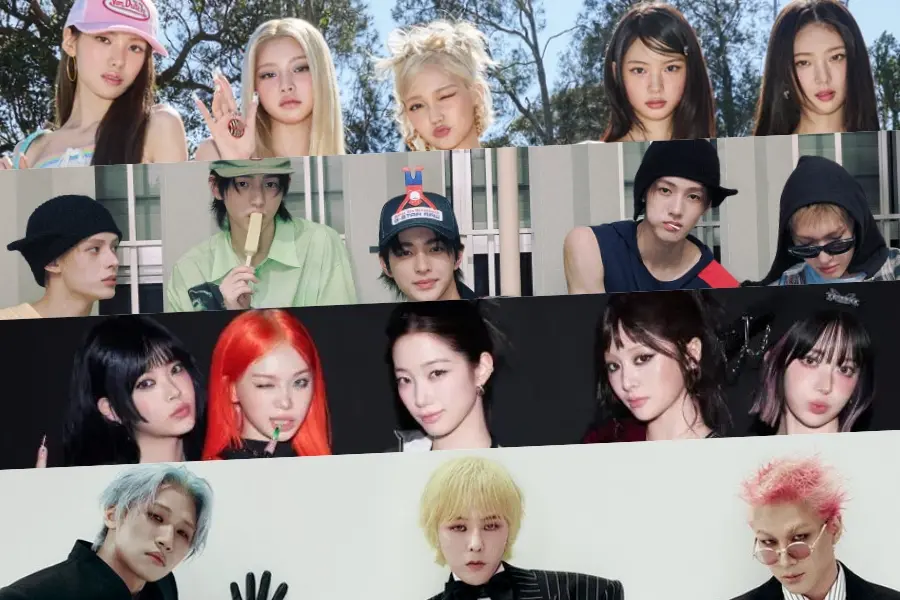
The resurgence did not happen in a vacuum; it has been systematically fueled by a wave of strategic comebacks and debut projects from both industry veterans and ascendant rookie groups. Below is a comprehensive breakdown of the six releases anchoring this 2010s electro-renaissance.
1. KiiiKiii — "Pop Off Pop Off"
Channeling the unapologetic swagger of early-2010s American club-pop—reminiscent of the peak Fergie and Black Eyed Peas era—KiiiKiii dropped "Pop Off Pop Off" as a masterclass in modern throwback styling. The track builds its foundation on a kinetic collision of buzzing EDM synthesizers and low-key, heavily processed vocal lines.
- Production Value: The strategic deployment of stylistic autotune acts as an instrument in its own right, heightening the euphoric tension before the drop.
- Visual Direction: The accompanying music video leans heavily into nostalgia with throwback chic styling, bright primary colors, and street-dance choreography designed for instant viral replication.
2. BIGBANG — "Biiig"
As the undisputed and enduring kings of 2010s party K-pop, BIGBANG’s return to the scene was met with universal anticipation. Rather than desperately chasing contemporary micro-trends, "Biiig" showcases the group’s legendary confidence by stripping back the clutter.
- Composition: Built around a surprisingly laid-back groove, the track lets the sub-bass under the chorus do the heavy lifting, delivering a rhythmic bounce that transcends demographic lines.
- Vocal Delivery: The vocal lines are deceptively simple and remarkably smooth, designed to hook the listener within the first thirty seconds and refuse to leave their head long after the track ends.
3. BABYMONSTER — "SUGAR HONEY ICE TEA"
Gen 5 powerhouse rookie group BABYMONSTER captures the essence of classic party anthems from the opening second, utilizing a signature autotune vocal slide that instantly transports listeners back to the era of underground club bangers.
- Track Architecture: "SUGAR HONEY ICE TEA" maintains a steady, driving momentum that makes it an effortless addition to any workout or party playlist.
- The Climax: The track features a structural pivot at its conclusion—a full-throttle party remix that detonates into a high-energy finale, proving that simple, effective pop songwriting remains undefeated.
4. SEVENTEEN’s V8 — "singasong"
Demonstrating the immense versatility of SEVENTEEN’s internal unit system, the sub-unit V8 has carved out a unique niche with "singasong," a brilliant hybrid of 2010s electro-house and 8-bit, old-school video game soundtrack aesthetics.
- Stylistic Contrast: The track pairs a light, breezy, almost nostalgic melody with a heavy, bouncy rap delivery from Vernon. This calculated juxtaposition prevents the track from sliding into monotonous repetition, creating a sophisticated auditory texture that feels right at home in a 2012 collegiate loft party.
5. LE SSERAFIM — "CELEBRATION"
LE SSERAFIM has continually pushed sonic boundaries, but with "CELEBRATION," they pivot toward universal dancefloor appeal. The track acts as a bridge between older millennial club-goers and teenage K-pop consumers.
- Acoustic Balance: The production expertly contrasts a dense, heavy EDM backing track with the members’ light, airy vocal delivery. This prevents the song from becoming overwhelming in acoustic spaces, resulting in a chorus that is explicitly club-coded and built for stadium-sized festival sets.
6. CORTIS — "REDRED"
In one of the most astonishing introductory moves in recent K-pop memory, rookie act CORTIS managed to capture the absolute peak of 2010s party mechanics on their very first comeback track, "REDRED."
- Earworm Mechanics: The song relies heavily on stylized, pitch-corrected vocal melodies that feel intimately familiar to anyone who grew up on the Billboard Hot 100 between 2010 and 2015.
- Cultural Reception: Despite leaning heavily into retro tropes, the backing track manages to incorporate modern mixing techniques, ensuring that "REDRED" sounds simultaneously fresh and warmly nostalgic.
Supporting Context & Metrics: The Millennial Nostalgia Economy
The pivot toward 2010s sonic palettes is not merely an artistic whim; it is a calculated response to shifting demographics and consumer behavior within the global music market.
According to recent streaming data and consumer research reports, Millennials (currently aged 28 to 44) have officially transitioned into the demographic with the highest disposable income for live entertainment, merchandise, and physical album purchases. Simultaneously, Generation Z listeners are displaying an insatiable appetite for retro aesthetics, treating the early 2010s with the same vintage romanticism that previous generations reserved for the 1980s and 90s.
Demographic Engagement with 2010s-Style K-Pop:
[████████████████████] Millennials (35%): Seeking emotional escapism & youth nostalgia
[███████████████████ ] Gen Z (32%): Driven by retro-chic aesthetics & novelty trends
[███████████████     ] Gen X & Older (18%): Attracted to foundational EDM production
[██████████          ] Younger Gen Alpha (15%): Responding to high-energy hooks
Industry analysts note that streaming platforms have seen a 40% year-over-year increase in user-generated playlists featuring keyword tags such as "EDM K-pop throwback," "2012 club hits," and "retro-synth." Entertainment agencies, recognizing this shift in listener appetite, have begun directing their in-house production teams—many of whom cut their teeth writing tracks for second- and third-generation groups—to mine their personal archives for those signature heavy bass drops and vocoded hooks.
Official Statements and Industry Insights
Speaking on the broader trend of retro-revivalism in modern popular music, veteran industry producer and creative director Min-Soo Park noted the psychological underpinnings of the movement:
"When societies experience collective fatigue—whether economic, social, or technological—artistic output naturally pivots toward periods of unburdened joy. The early 2010s in K-pop and global pop music was an era defined by sheer, unadulterated escapism. There was no overarching conceptual gloom; the goal was simple: get people onto the dancefloor. Reintroducing those textures now isn’t just about looking backward; it’s about reclaiming a lost innocence of sound."
Furthermore, internal A&R representatives from several major Seoul-based entertainment agencies have confirmed that stylistic autotune and side-chained EDM basslines—long criticized by audiophiles in the late 2010s for being overly abrasive—are now viewed as vintage textures. Just as electric guitar distortion defined rock revivals, early-generation digital vocal manipulation has achieved "classic instrument" status in the modern K-pop production toolkit.
Future Outlook: Where Goes the Electro-Wave?
As the 2010s revival gathers unprecedented momentum, the trajectory of the global K-pop market points toward an even deeper integration of retro-electronic elements into mainstream releases.
- Sub-Genre Diversification: While current releases heavily favor EDM and club-pop crossovers, upcoming quarters are expected to see a resurgence of early-2010s electropop, dubstep-infused dance tracks, and synth-heavy bubblegum hooks.
- Live Performance Integration: Festival organizers anticipate that upcoming world tours by groups like SEVENTEEN, LE SSERAFIM, and BABYMONSTER will feature dedicated "EDM throwback" medleys, transforming massive stadium concerts into immersive, festival-style rave environments.
- Producer Collaborations: Industry insiders whisper of impending cross-continental collaborations between contemporary K-pop production houses and the pioneering Western EDM producers who defined the 2010-2015 club circuit, signaling a massive bridge between past collaborators.
Ultimately, the return of the 2010s party track serves as a reminder of music’s cyclical nature. Whether you are a millennial feeling a sudden, startling pang of aging as you hear these beats in heavy rotation, or a Gen Z listener discovering the intoxicating rush of synthetic vocal stacks for the very first time, one truth remains absolute: the party is back, and it is louder than ever.







Belum ada komentar. Jadilah yang pertama berkomentar!