

Executive Overview
In the hyper-connected landscape of modern social media, the pursuit of aesthetic perfection and viral clout frequently overshadows basic engineering realities. A recent cautionary tale emerging from the gaming hardware community highlights this dangerous intersection of online trends and physical hardware limits. A user on the popular Reddit community r/Asustuf has become the latest casualty of a bizarre viral trend: using a gaming laptop upside-down, resting entirely on the top edge of its display lid, to create a minimalist desk setup.
The result was as entirely predictable to engineers as it was devastating to the user’s wallet: catastrophic hinge failure.
While the internet is no stranger to users ignoring sound technical advice for the sake of internet points, this incident serves as a stark reminder of the mechanical vulnerabilities inherent in modern mobile computing architecture. Laptops are intricate assemblies of micro-electronics, thermal management systems, and delicate mechanical joints. They are engineered to distribute weight across a specific base chassis, resting on rubber feet designed to absorb shock and maintain airflow.
When users invert these principles—literally and figuratively—to mimic cinematic, aesthetic desk setups popularized on Instagram reels and TikTok, the structural integrity of the machine gives way. Compounding the tragedy in this specific case? The broken Asus TUF gaming laptop didn’t even belong to the perpetrator.
This report investigates the mechanics of the viral trend, the physics of laptop hinge failures, the psychology of online-driven hardware abuse, and the broader implications for consumers navigating tech culture in the age of algorithmic validation.
Detailed Chronology: Anatomy of a Hardware Disaster
The path to destroyed hardware rarely happens in a vacuum. It is typically a sequence of escalating poor decisions fueled by confirmation bias, peer encouragement, and a detachment from physical consequences.
The Rise of the "Aesthetic" Inverted Setup
Over the past year, short-form video platforms like Instagram, TikTok, and YouTube Shorts have birthed a sub-genre of content dedicated to ultra-minimalist desktop workspaces. Creators strive for clean lines, hidden cables, and unorthodox hardware placements to drive engagement and shock value. Among these trends is the practice of standing laptops vertically in reverse—resting the machine on the top edge of the display lid rather than the bottom chassis or a dedicated vertical stand.
Proponents argue this hides ports, optimizes cable routing, or provides a unique viewing angle for secondary monitoring. However, it fundamentally violates every law of laptop structural design.
Ignored Warnings and Peer Feedback
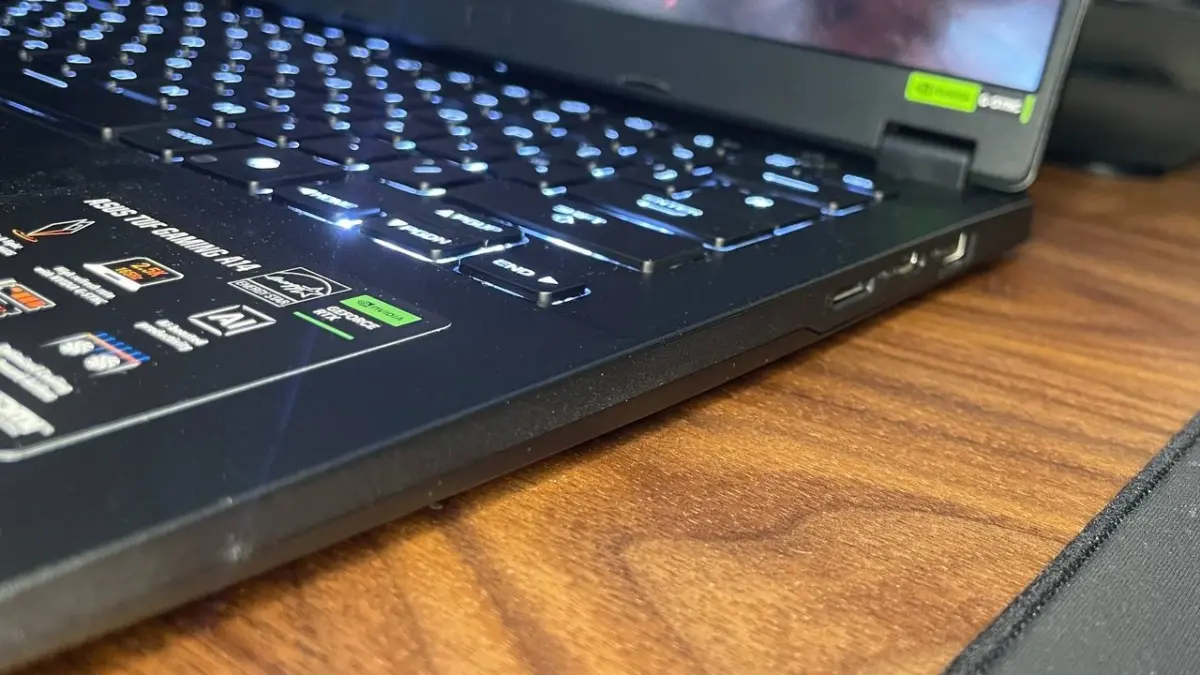
The unfortunate protagonist of our story encountered this trend via an Instagram reel. Enticed by the visual appeal, they replicated the setup with an Asus TUF gaming laptop—a ruggedized, yet fundamentally plastic-and-metal-hinged machine designed for traditional desktop or lap use.
Before disaster struck, community members on previous forum posts actively warned the user about the mechanical risks. Commenters pointed out that the display hinges were never rated to bear the gravitational weight of the entire chassis, let alone lateral and torsional pressures.
According to the user’s subsequent confession on the r/Asustuf subreddit, these warnings fell on deaf ears:
"People on Reddit on my last post were saying that the hinges could break, but I didn’t really pay attention to that."
The Point of Failure
The structural collapse was swift. Unlike a gradual weakening of materials, the sudden inversion placed immense shear stress on the torque clutches within the display hinges. As the user attempted to maintain the aesthetic setup, the housing gave way.
Describing the aftermath, the user noted that while one hinge managed to violently snap back into place, the primary supporting joint suffered irreversible structural fracture. The plastic bezel cracked, the internal metal anchor ripped away from its mounting points, and the display assembly was permanently compromised.
The Ultimate Sting: "It Ain’t Even Mine"
Adding insult to severe mechanical injury, the user casually dropped a final detail in their confession that sent shockwaves through the hardware community: "Yeah it might be ggs and this laptop ain’t even mine."
The admission transformed a routine tale of user error into a cautionary nightmare of borrowed hardware destruction, highlighting the ethical and social fallout of chasing viral trends using other people’s property.
Supporting Context & Metrics: The Engineering Reality of Laptop Hinges
To fully understand why the inverted laptop trend is an engineering catastrophe, one must examine how modern laptops are designed, tested, and manufactured.
The Physics of Laptop Hinges
Laptop hinges are marvels of micro-mechanical engineering, yet they operate under severe physical constraints. A typical hinge assembly consists of:
- The Torque Clutch: A series of spring washers and friction plates designed to hold the screen at any desired angle (usually between 0 and 140 degrees) without sagging.
- Anchor Mounts: Small brass threaded inserts molded directly into the plastic casing of the laptop base and the display lid.
- Power and Data Pathways: Micro-cables (Wi-Fi antennas, webcam wires, and eDP display cables) that thread directly through or around the hinge mechanism.
When a laptop sits normally on a desk, gravity pushes the base downward, while the display is supported by its own minimal weight pivoting on the clutches.

What Happens When You Turn It Upside Down?
When inverted onto the top edge of the screen:
- Inverted Load Distribution: The entire weight of the laptop’s heavy lower chassis (housing the motherboard, heavy battery, discrete GPU, cooling fans, and keyboard) is now suspended from—or resting entirely upon—the fragile top bezel of the display lid.
- Torsional Shear Stress: Display lids are structurally thin by design to keep laptops portable. They are not reinforced to act as load-bearing columns. Placing vertical weight on them forces the display frame to bow inward, placing extreme pressure directly onto the fragile bezel corners where the hinges are housed.
- Internal Cable Severing: As the plastic chassis flexes and breaks under the inverted load, the micro-cables routing through the hinges are easily stretched, pinched, or sheared completely, leading to immediate display failure or Wi-Fi connectivity loss.
The Asus TUF Design Philosophy
Asus’s TUF (The Ultimate Force) gaming laptop line is marketed toward budget-conscious gamers looking for military-grade durability (MIL-STD-810H standards). While these laptops are genuinely tougher than standard thin-and-light ultrabooks—withstanding drops, vibrations, and extreme temperatures better than average consumer devices—they are not indestructible.
MIL-STD testing certifies resistance to shock, vibration, and humidity during normal operational postures. It does not test for structural integrity when a user stands a 5-pound gaming rig upside down on its monitor frame.
The Psychology of Social Media Tech Abuse
The phenomenon of destroying or endangering expensive hardware for the sake of social media validation is a growing psychological concern among tech content consumers and creators alike.
The Algorithmic Incentive Structure
Platforms like Instagram Reels, TikTok, and YouTube Shorts reward visual novelty above all else. A standard laptop sitting normally on a desk does not generate algorithmic reach. However, an unusual, provocative, or chaotic setup immediately hooks viewers, driving comments, shares, and engagement.
Viewers often lack the technical literacy to distinguish between clever engineering solutions and dangerous hacks. When an influencer stages an inverted laptop setup for a 5-second transition video, they rarely stick around to film the aftermath three days later when the hinges snap.
Confirmation Bias and Cognitive Dissonance
In the case of the r/Asustuf user, psychological defense mechanisms played a crucial role. The user received explicit warnings from experienced community members warning of hinge failure. Yet, cognitive dissonance allowed them to dismiss the warnings.
This behavior stems from the "optimism bias"—the psychological tendency for individuals to believe that negative consequences (like broken hardware) happen to other people, but not to them. Coupled with the fact that the laptop was borrowed, the psychological barrier against taking reckless risks with the hardware was significantly lowered.
Official Industry Perspectives and Repair Realities
When hardware fails due to user negligence, the implications extend far beyond a bruised ego. They hit the consumer directly in the repair bay and the wallet.
Warranty Voidance and Repair Costs
Major manufacturers, including Asus, maintain strict warranty guidelines. Standard manufacturer warranties cover hardware defects, component failures under normal use, and factory assembly errors. They explicitly exclude:
- Accidental damage
- Misuse and abuse
- Structural damage caused by unorthodox positioning or unauthorized modifications
When a user brings a laptop to a service center with sheared hinge mounts and a cracked display bezel caused by standing the machine upside down, technicians classify it as Customer Induced Damage (CID).
The Cost of a Hinge Repair
Replacing a broken laptop hinge is rarely a simple matter of tightening a screw. Because modern laptops integrate hinge mounts directly into the plastic palm rest or display back cover, a broken hinge mount usually requires:
- Replacing the entire upper display assembly (costing anywhere from $150 to $400 in parts alone).
- Replacing the bottom base chassis if the anchor inserts have ripped out of the plastic housing.
- Professional labor hours, often totaling hundreds of dollars.
For a borrowed Asus TUF laptop, a hinge failure of this magnitude can easily approach half the total value of the machine—turning a casual online experiment into an expensive friendship-ending disaster.
Future Outlook: Navigating the Era of Viral Tech Stunts
As social media platforms continue to dominate how younger generations consume information and styling tips regarding technology, the friction between viral aesthetics and mechanical reality is bound to intensify.
The Need for Consumer Digital Literacy
Industry analysts and tech content creators emphasize the growing need for digital and technical literacy. Just as internet safety courses teach users not to click malicious links, consumer tech education must emphasize that physical devices operate under strict laws of physics that cannot be renegotiated for internet clout.
Manufacturer Responses and Design Evolution
To combat user abuse, some manufacturers are beginning to design more robust hinge systems and utilize metal-reinforced chassis frames across mid-range gaming lines like Asus TUF. However, no amount of engineering can completely bulletproof a device against intentional physical misuse.
Final Verdict: Keep It Right-Side Up
The moral of this hardware saga is as timeless as it is simple: use your expensive electronics the way they were intended to be used.
Laptops are designed to rest flat on their rubber feet. Displays are designed to hinge open and closed within a specified arc—not to support the gravitational burden of an entire gaming rig. And above all else, if you are going to experiment with reckless social media trends, at least make sure you are breaking your own equipment—not someone else’s.
As the gaming community processes yet another casualty of the "aesthetic setup" movement, one can only hope the viral trend dies a quiet death before any more innocent laptops meet their untimely, upside-down demise.









Belum ada komentar. Jadilah yang pertama berkomentar!