

Executive Overview
The landscape of modern philanthropy has undergone a radical decentralization. No longer confined to the sterile boardrooms of legacy foundations or the hushed auction houses of elite galas, charitable giving has found a hyper-engaged, highly mobilized home in the digital arena. Nowhere is this transformation more visible than on YouTube, where creators command audiences that rival—and frequently surpass—traditional media networks.
As the calendar turns toward the closing weeks of the year, YouTube has officially kicked off the final sprint of its annual Season of Giving. Over the past several weeks, independent content creators hailing from every corner of the globe have leveraged their platforms to rally millions of fans. Their mission: to raise critical funds and amplify awareness for causes ranging from pediatric cancer research and global reforestation to animal rescue and educational equity.
This year, however, the scale of mobilization has reached unprecedented heights. What began years ago as sporadic, individual charity streams has matured into a synchronized, multi-platform logistical powerhouse. This week, the creator "frenzy-of-goodness" goes into overdrive, featuring coordinated livestreams, high-profile cross-channel collaborations, and high-stakes interactive events designed to weaponize community engagement for social good.
At the center of this movement are marquee events like The Game Theorists’ epic Giving Tuesday marathon for St. Jude Children’s Research Hospital, the final high-velocity push of the MrBeast-backed #TeamTrees campaign, and institutional fundraising mainstays like the Vlogbrothers’ Project for Awesome. Together, these initiatives illustrate a profound shift in digital culture: entertainment and empathy are no longer mutually exclusive; rather, they are symbiotic engines driving measurable, real-world change.
Detailed Chronology: A Week of Unprecedented Mobilization
The culminating week of YouTube’s Season of Giving is a masterclass in digital event programming. Designed to maximize viewer retention, cross-pollinate audiences, and convert passive entertainment into active philanthropy, the schedule is packed with high-production-value events that push the technical and creative limits of live broadcasting.
The St. Jude Giving Tuesday Takeover: 9 Hours, Dozens of Creators, and a Half-Million-Dollar Challenge
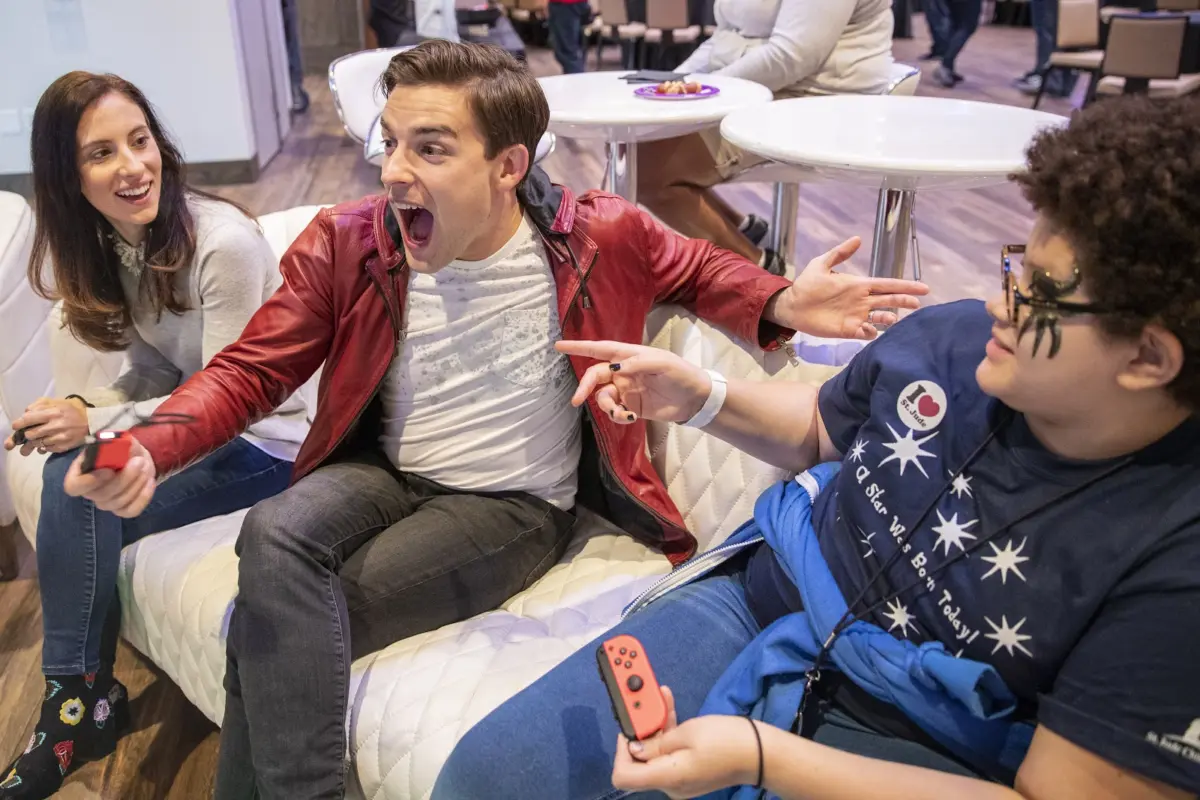
On Giving Tuesday, routine viewing habits across the platform ground to a halt. MatPat and Stephanie Patrick, the creative forces behind The Game Theorists, orchestrated a monumental 9-hour all-day livestream dedicated entirely to supporting St. Jude Children’s Research Hospital.
The broadcast functioned as an Avengers-style crossover event for internet culture. MatPat and Stephanie assembled an elite roster of digital heavyweights, including Binging with Babish, The Completionist, Dawko, Jackie Aina, Kyle Hill (Because Science), Markiplier, Miranda Sings, NateWantsToBattle, TheOdd1sOut, Rhett and Link, Rosanna Pansino, SomethingElseYT, The Try Guys, and VSauce3. This collective coalition of creators marshaled their respective fanbases with a singular, unifying objective: to help St. Jude defeat childhood cancer and other life-threatening illnesses.
To escalate the stakes, the broadcast featured a jaw-dropping incentive courtesy of Scott Cawthon, the elusive creator of the globally sensation-status game Five Nights at Freddy’s. Cawthon issued a public challenge: if viewers could successfully uncover specific Easter eggs hidden within an unreleased, custom-built game designed expressly for the event—and launch it within one hour of going live—he would personally wire a $500,000 donation directly to St. Jude.
Led on-screen by strategic minds like MatPat, Markiplier, and Dawko, the chat rooms exploded into a collaborative hive-mind. Gamers, theorists, and casual viewers alike worked in real-time to dissect the code, turning a standard charity stream into an interactive, high-stakes digital treasure hunt that shattered fundraising milestones.
TeamTrees: The Final Sprint Toward a 20-Million-Tree Milestone
While livestream marathons dominated Giving Tuesday, the ecosystem’s background hum remained anchored by the relentless momentum of #TeamTrees. Spearheaded by digital pioneers Jimmy Donaldson (MrBeast) and Mark Rober, the initiative set out with a staggering objective: to raise $20 million to plant 20 million trees globally by January 1, 2020.
As the campaign entered its final weeks heading into December, the digital grassroots movement had narrowed its gap to just 4 million trees. The underlying architecture of #TeamTrees was deceptively simple: $1 equals one tree planted via the Arbor Day Foundation. Yet, this simplicity was precisely what allowed the campaign to achieve viral velocity.
From day one, the metrics were staggering. Within the first 48 hours of its October launch, the campaign hauled in $5 million. By the end of its first week, independent creators across YouTube had uploaded more than 3,800 dedicated videos tagged with #TeamTrees, proving that the modern attention economy could be successfully harnessed for environmental restoration at an industrial scale.
Institutional Pillars: Project for Awesome, Khan Academy, and Hope For Paws
Beyond the viral juggernauts, YouTube’s Season of Giving provides a sustained megaphone for long-standing philanthropic institutions.
- The Project for Awesome (P4A): Entering its 13th annual iteration, Hank and John Green (the vlogbrothers) once again transformed the platform into a two-day carnival of charity. Creators and fans alike submitted video pitches for their favorite charities, with all ad revenue and direct donations distributed between organizations like Partners in Health and Save the Children.
- Khan Academy: Proving that digital philanthropy extends deeply into educational equity, the platform hosted its "All in for Education" livestream, rallying donors to support free, world-class education for anyone, anywhere.
- Hope For Paws: Animal rescue organizations leveraged the visual storytelling power of YouTube to spotlight field rescues, converting emotional resonance into immediate operational funding.
To navigate this staggering volume of content, YouTube curated a centralized, dynamic playlist designed to guide viewers through the top-performing fundraisers of Giving Week, ensuring that no worthy cause was lost in the algorithmic shuffle.
Supporting Context & Metrics: The Mechanics of Digital Generosity
To understand the efficacy of YouTube’s Season of Giving, one must examine the underlying mechanics of creator-driven economies. Philanthropy in the digital age is not merely about emotional appeal; it is a finely tuned ecosystem powered by data, community trust, and infrastructural integration.
The Trust Dividend: Creators as Modern Philanthropic Conduits
Traditional charities often struggle with donor acquisition costs and administrative overhead transparency, which can dampen public enthusiasm. In contrast, YouTube creators operate on a currency of radical transparency and parasocial intimacy. Fans spend hours every week watching their favorite creators; they know their voices, understand their humor, and—crucially—trust their judgment.

When a creator like MatPat or MrBeast endorses a cause, they are transferring their personal "trust dividend" onto the institution. The audience does not view the call-to-action as an impersonal corporate advertisement, but rather as an invitation from a trusted peer to participate in a collective community value.
Infrastructure as an Accelerator: YouTube Giving Tools
Good intentions alone do not build multi-million-dollar campaigns; frictionless technology does. Over recent years, YouTube has systematically integrated native fundraising tools directly into its video player and livestream interfaces.
- Direct Donation Badges & Panels: Viewers no longer need to navigate away from a stream, type in credit card information on a third-party site, or worry about security vulnerabilities. The "Donate" button sits directly beneath the video frame, allowing for one-click contributions via Google Pay and saved credentials.
- Real-Time Thermometers: Live subscriber and donor tickers provide immediate feedback loops. When a viewer sees a donation ticker jump in real-time, it triggers a psychological response of urgency and collective accomplishment—the digital equivalent of watching the totals climb on a telethon board, amplified to a global scale.
Quantitative Impact: A Macro View
While exact final tallies for the peak week of the Season of Giving fluctuate as matching grants and late donations clear, the macro-trends demonstrate a fundamental shift in capital allocation:
- Micro-Transactions at Scale: The success of #TeamTrees ($20 million target) proves that the aggregation of small-dollar donations ($1 to $5 increments) from a global, digital-native demographic can match or exceed the contributions of traditional high-net-worth major donors.
- Cross-Platform Synergy: Campaigns rarely live in a vacuum. YouTube livestreams act as the central broadcast hubs, while platforms like Twitter, TikTok, and Instagram serve as amplification funnels, driving traffic back to the primary donation stream.
Official Statements & Community Perspectives
The profound cultural resonance of this year’s Season of Giving has prompted reflection from both platform leadership and the creators driving the movement on the ground.
Reflecting on the ethos of the community, YouTube representatives emphasized that generosity is not an incidental feature of the platform, but its foundational heartbeat. In an official statement released at the onset of the week’s events, the platform noted:
"The spirit of generosity and support is one of the things that makes our community so special. On behalf of everyone at YouTube, thank you to all of the creators, fans, and friends who are using their voices to make the world a better place."
For the creators themselves, the transition from entertainers to philanthropic leaders carries a deep sense of responsibility. Speaking from St. Jude Children’s Research Hospital in Memphis ahead of their marathon stream, Stephanie and MatPat of The Game Theorists shared the emotional weight of seeing their community mobilize:
"When you put this many passionate creators and millions of dedicated fans in one virtual room, you realize that entertainment isn’t just an escape—it’s a powerful tool for intervention. We aren’t just here to play games; we’re here to change outcomes."
This sentiment was echoed across the creator ecosystem. Mark Rober, co-creator of #TeamTrees, frequently highlights the democratization of impact: "People often feel like they are just one person and can’t make a difference against massive global problems. What #TeamTrees and these YouTube fundraisers prove is that when you link arms digitally, millions of small acts combine to move mountains—or in our case, plant millions of trees."
Future Outlook: The Evolution of Creator-Led Altruism
As the final sprint of YouTube’s Season of Giving concludes, industry analysts are looking ahead to what this means for the future of both entertainment and philanthropy. The success of the 2019-era initiatives has established a new baseline expectation for digital creators: massive reach commands systemic social responsibility.
1. Institutional Partnerships Will Deepen
Non-profits, research hospitals, and global NGOs are permanently altering their development strategies. Moving forward, partnering with digital creators will no longer be viewed as an experimental marketing tactic, but as a core pillar of donor acquisition. Legacy institutions are rapidly building dedicated influencer relations teams to interface directly with multi-channel networks and independent creators.
2. Technological Integration Will Advance
We can anticipate further platform-side innovations from YouTube and competitors alike. Future iterations of charity streaming will likely incorporate augmented reality (AR) interactive elements, deeper blockchain-verified transparency ledgers for fund distribution, and frictionless crypto/micro-currency integration to ease cross-border transaction frictions.
3. Year-Round Philanthropy Replacing Seasonal Sprints
While events like Giving Tuesday and December holiday drives will remain focal points, the trajectory of creator philanthropy is moving toward continuous integration. Creators are increasingly embedding charitable components into their standard content slates—designating percentages of merchandise sales, running recurring membership-funded donation drives, and establishing independent private foundations funded entirely by digital revenue streams.
Conclusion
YouTube’s Season of Giving is far more than a marketing campaign or a collection of entertaining livestreams. It is a vivid demonstration of a new cultural paradigm. By harnessing the participatory nature of digital media, creators have transformed passive audiences into active global philanthropists.
As millions tuned in to watch MatPat, Markiplier, and an army of digital stars decode puzzles for St. Jude, or as supporters chipped in their dollars to plant the final trees of the #TeamTrees initiative, one reality became abundantly clear: the future of generosity is digital, decentralized, and deeply collaborative. On behalf of creators, fans, and the countless beneficiaries of these historic fundraisers, the message echoing across the internet is unequivocal—philanthropy has found its new digital home, and it is just getting started.






Belum ada komentar. Jadilah yang pertama berkomentar!