

Executive Overview
The modern consumer appliance market sits at a fascinating intersection between artisanal hobbyism and hands-off technological convenience. For decades, the ritual of crafting a café-quality espresso drink at home was gatekept by a steep learning curve. Achieving the "god shot" required an intimate, almost monastic understanding of variables: grind size distributions, micro-adjustments in tamping pressure, precise water temperatures down to the degree, and exact extraction timing. Enthusiasts spent years dialing in equipment, analyzing spent espresso pucks for channeling, and mastering the delicate physics of milk texturing.
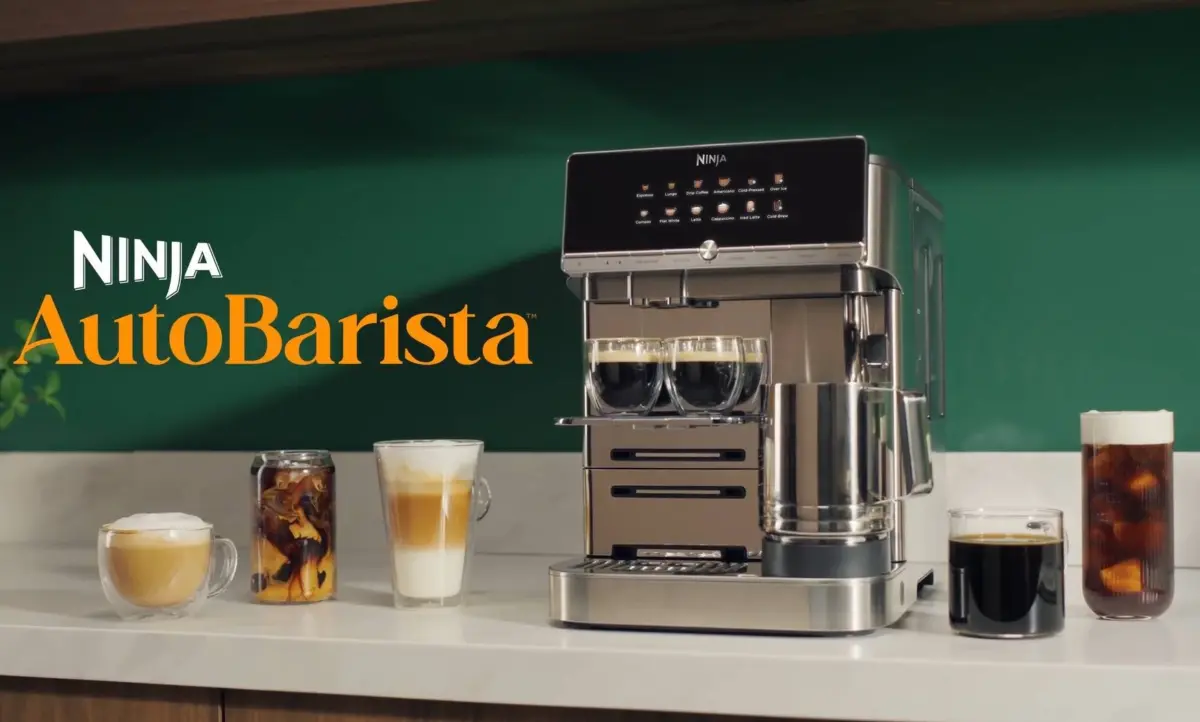
Enter the fully automatic espresso machine—a category designed to obliterate these barriers to entry. Among the latest contenders to enter this high-stakes market is the Ninja AutoBarista, priced at a hefty $999.99. Designed to bridge the gap between high-end commercial performance and domestic simplicity, the AutoBarista promises to replicate the sophisticated ecosystem of a neighborhood coffee shop right on your kitchen counter. It is an all-in-one culinary powerhouse that combines a precision conical burr grinder, an integrated food scale, a dual-function brewing system capable of handling both drip coffee and espresso, and an automated milk frother complete with customizable texture and temperature settings.
Yet, convenience always exacts a toll. For the purist, the machine’s heavy reliance on proprietary, automated calibration feels antithetical to the craft. Conversely, for the casual caffeine consumer, the day-to-day realities of cleaning, maintenance, and spatial management can transform an otherwise sleek countertop appliance into a high-maintenance chore.
This comprehensive review explores the mechanics of the Ninja AutoBarista, analyzing its proprietary "Grind iQ" technology, weighing its impressive versatility against its physical and operational drawbacks, and evaluating whether a machine hovering near the thousand-dollar mark genuinely serves the modern household or merely complicates it.
Detailed Chronology: Testing the Limits of Hands-Off Brewing
To fully understand the capabilities and quirks of the Ninja AutoBarista, one must trace the brewing journey from raw bean to finished beverage. Over the course of evaluating a dozen distinct coffee drinks—ranging from standard morning drip and classic espressos to flat whites, cappuccinos, and rapid cold brews—a clear picture of the machine’s operational ethos begins to emerge.
Phase 1: The Zero-Knowledge Brewing Experience
From the very first extraction, the AutoBarista establishes its core value proposition: complete abstraction of the brewing variables. The user does not need to know whether their beans require a setting of 12 or 14 on a burr grinder. They do not need to calculate the ratio of grounds to liquid or worry about whether their tamper is exerting precisely 30 pounds of pressure.
With 13 distinct pre-programmed beverages accessible via a streamlined interface, the machine dictates the physics of the pull. By pressing a single button, the user commands the internal systems to grind, dose, tamp, extract, and—where applicable—foam milk without manual intervention. For a user uninitiated in the esoteric arts of espresso extraction, this eliminates the paralyzing intimidation factor typical of manual or semi-automatic espresso makers.
Phase 2: Dual-Sided Workflow and Milk Integration
The physical layout of the AutoBarista is engineered for parallel processing. On one side of the chassis, the brewing head handles the heavy lifting of extracting espresso shots or pouring standard drip coffee. On the opposing side, an integrated automatic milk frother paired with a dedicated stainless-steel pitcher manages the dairy (or plant-based alternative) requirements.
During testing, the milk frother proved remarkably accommodating. Users can calibrate the system based on their preferred temperature thresholds and foam density—ranging from light, airy microfoam suitable for a latte to heavier, structured foam for a traditional cappuccino. Crucially, the inclusion of a dedicated plant-based milk setting demonstrates an awareness of modern dietary shifts, adjusting the frothing parameters to handle the lower fat contents and unique proteins found in oat, almond, and soy milks.
Phase 3: The Maintenance Reality Check
While the brewing phase is characterized by frictionless automation, the post-consumption phase introduces the friction that often plagues high-end kitchen appliances.
To ensure the integrity of subsequent brews and prevent flavor cross-contamination, the AutoBarista automatically executes a self-rinsing cycle before and after every single drink preparation. While this proactive hygiene protocol is commendable—saving users from manually flushing lines—it creates a significant logistical byproduct: water accumulation.
The rinse water is systematically diverted into an internal drip tray. Because the machine executes these cycles so frequently, the drip tray fills rapidly, often reaching capacity after preparing just three or four beverages. In a multi-person household, emptying the drip tray transitions from an occasional chore to a mandatory daily ritual.
Compounding this issue is the physical design of the tray itself. While engineered to slide out smoothly from the base, its shallow depth and high fluid volume make it exceptionally prone to spilling. A careless tug or a slightly overfilled basin routinely results in coffee-tinted water splashing across the kitchen floor—a minor design flaw that quickly shifts from a nuisance to a dealbreaker.
Supporting Context & Metrics: Technology, Pricing, and Target Demographics
To contextualize the Ninja AutoBarista within the broader landscape of kitchen technology, one must examine the specific engineering choices, financial investments, and demographic alignments that define its existence.
The Brains: Grind iQ Technology
The cornerstone of the AutoBarista’s versatility is its proprietary Grind iQ technology. Unlike traditional grinders that require manual adjustments whenever a user transitions from an oily dark roast to a dense, lightly roasted single-origin bean, Grind iQ introduces a layer of environmental awareness to the grinding process.

The system is engineered to detect key properties of the coffee beans loaded into the hopper, including:
- Bean Size & Density: Automatically altering the burr spacing to achieve optimal particle distribution.
- Roast Type: Adjusting extraction times and water temperatures to account for the solubility differences between light, medium, and dark roasts.
- Freshness Metrics: Compensating for off-gassing and moisture levels in newly opened bags versus older beans.
Furthermore, as the user interacts with the digital interface to customize shot counts, flavor intensity, or temperature profiles, Grind iQ communicates dynamically with the dosing and tamping mechanisms. It is an algorithmic approach to a culinary art form.
The Demographic Divide: Convenience vs. Control
The existence of technologies like Grind iQ highlights a stark philosophical divide in the consumer coffee market. The machine’s design philosophy can be polarizing:
- The Casual Enthusiast / Time-Starved Consumer: For individuals who want high-grade coffee without investing hours into studying extraction theories, the AutoBarista is a revelation. It prioritizes speed, consistency, and ease of use.
- The Coffee Purist / Manual Artisan: For those who view espresso preparation as a meditative craft—complete with weighing scales, manual WDT (Weiss Distribution Technique) tools, and bottomless portafilters—the AutoBarista is viewed with skepticism. As critics often note, relying on automated calibration systems is akin to "playing Mario Kart with steer assist" or "bowling with the bumpers up." It strips away the granular control that defines specialty coffee culture.
Financial Viability and the Appliance Ecosystem
Priced at $999.99, the Ninja AutoBarista occupies a premium tier of consumer kitchen hardware. At this price point, it competes directly with entry-to-mid-level commercial machines and established domestic heavyweights from brands like Breville, De’Longhi, and Jura.
To justify this investment, SharkNinja leans heavily on its corporate reputation for multi-use kitchen appliances. The AutoBarista consolidates several distinct devices into a single footprint:
- A conical burr coffee grinder
- An integrated food scale / dosing mechanism
- A drip coffee maker
- A fully automatic espresso machine
- An automated milk frother
For a consumer who utilizes all of these integrated functions on a daily basis, the $999.99 price tag represents a space-saving consolidation of disparate tools. However, if a buyer only leverages a fraction of these capabilities—such as pulling a single morning espresso while ignoring the drip functions, cold brew modes, and complex milk texturing—the financial math falters. For instance, dedicated cold brew enthusiasts might achieve superior results with manual systems like the OXO Cold Brew Coffee Maker, which retails for a mere fraction (approximately 6%) of the AutoBarista’s cost.
Official Statements & Manufacturer Intent
SharkNinja has consistently positioned its product lines around the concept of "democratizing luxury" through intuitive engineering. While official press releases and product documentation for the AutoBarista emphasize the seamless integration of professional-grade features into the home, the subtext of their design strategy is clear: friction reduction.
In support materials for the Grind iQ system, the manufacturer stresses that the technology was developed to eliminate human error—the single greatest variable in domestic coffee preparation. According to SharkNinja’s engineering philosophy, asking an average consumer to diagnose extraction channels, measure exact extraction yields in grams, or manually purge steam wands creates an unnecessary barrier to product adoption.
By automating the mechanical feedback loop, the company aims to capture a lucrative market segment: consumers who appreciate specialty third-wave coffee shop beverages but lack the patience, counter space, or inclination to operate traditional semi-automatic espresso machinery. The incorporation of self-cleaning purge cycles and smart sensors is framed not merely as a convenience feature, but as a preservation mechanism designed to protect a thousand-dollar investment from user neglect.
Future Outlook: The Evolution of Smart Countertop Appliances
As we look toward the future of kitchen automation, devices like the Ninja AutoBarista signal a broader industry trend: the integration of ambient computing and smart sensors into traditional mechanical appliances.
1. The Rise of Sensor-Driven Culinary AI
The success of features like Grind iQ suggests that future consumer coffee hardware will lean even further into machine learning and predictive analytics. Rather than relying on static presets, upcoming generations of espresso machines may track local water mineral content via smart plumbing integrations, automatically adjust grind parameters based on ambient humidity sensors in the kitchen, and predict bean degradation over time to dynamically alter pressure profiles.
2. Maintenance Engineering as a Competitive Advantage
As appliances become more technologically complex, the primary battleground for consumer satisfaction is shifting away from feature lists and toward maintenance ergonomics. The primary pain points identified in testing the AutoBarista—rapidly filling drip trays, internal moisture management, and the biological hazards of neglected knock boxes (such as mold accumulation within a few days of disuse)—highlight the urgent need for better waste-management architecture in automated devices. Future iterations of high-end appliances will likely focus heavily on closed-loop waste disposal, larger-capacity internal reservoirs, and antimicrobial materials to reduce the burden of routine upkeep.
3. Market Consolidation and Niche Polarization
The market will likely bifurcate further. On one side, hyper-automated, all-in-one appliances like the AutoBarista will capture busy professionals and families who view coffee as an efficient, high-quality ritual of convenience. On the other side, manual and semi-automatic enthusiasts will continue to champion analog control, treating coffee brewing as a tactile hobby.
For the prospective buyer standing at this crossroads, the decision ultimately hinges on personal lifestyle alignment. If your morning routine demands zero cognitive load before 8:00 AM, and you have the patience to manage daily water tray maintenance, the Ninja AutoBarista offers an undeniably impressive convergence of capabilities. If, however, your kitchen philosophy centers on granular control, mechanical simplicity, and minimal cleanup, traditional brewing methods—no matter how primitive they may seem to Silicon Valley engineers—will remain the gold standard.







Belum ada komentar. Jadilah yang pertama berkomentar!