


Executive Overview
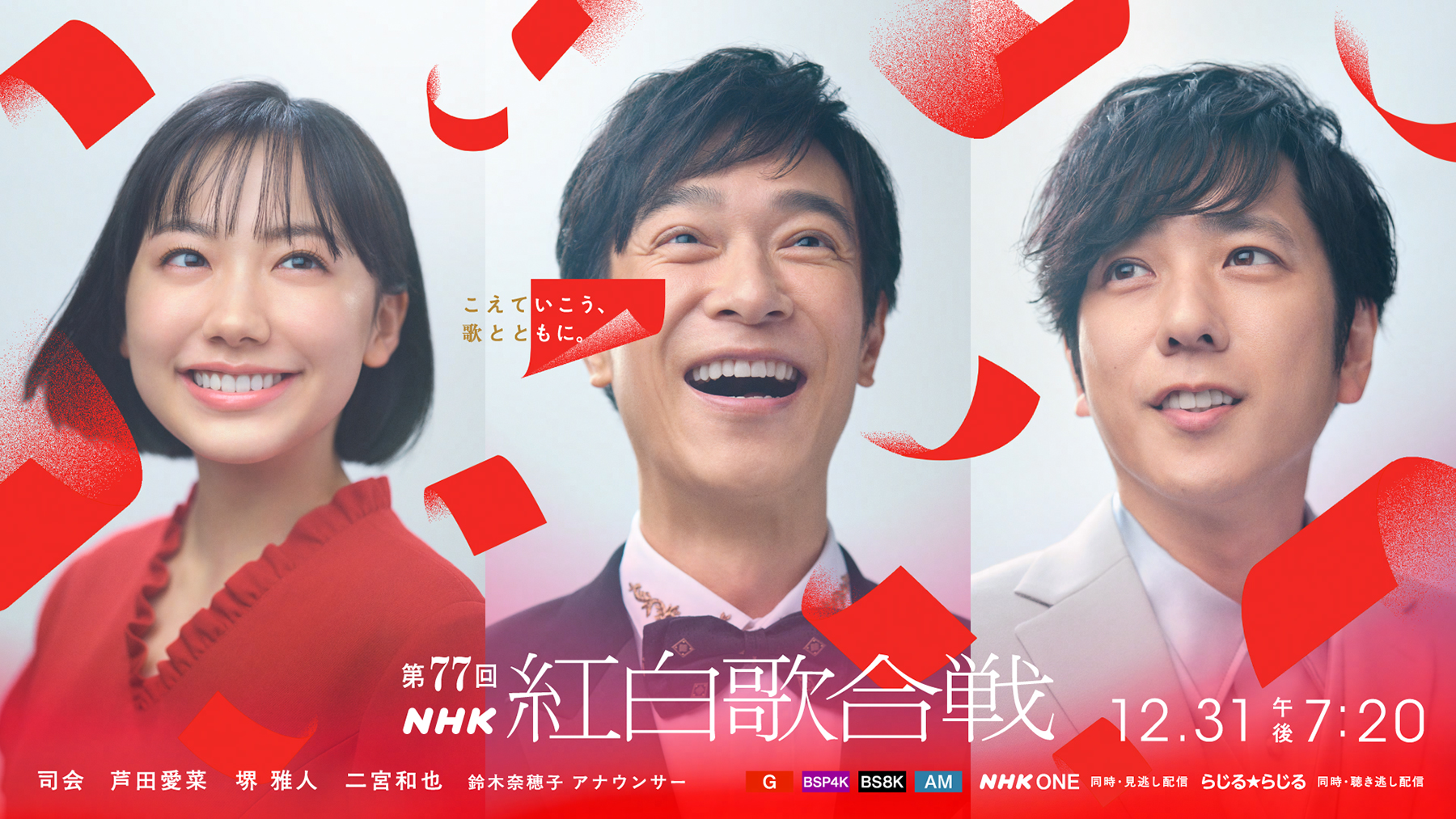
As the final hours of the calendar year draw near, Japan prepares for its most enduring and culturally significant television tradition: the Kōhaku Uta Gassen (Red and White Song Contest), broadcast annually by the public broadcaster NHK. Marking its historic 77th installment, this year’s broadcast promises a meticulous blend of generational reverence, cutting-edge musical genres, and high-stakes performance artistry. Scheduled to air on December 31 from 19:20 to 23:45 JST (with a brief interruption for the station’s news broadcast), the production stands as a titan of Japanese mass media.
The 77th iteration arrives at a fascinating inflection point for the domestic and global music industries. In an era defined by fractured media consumption, hyper-personalized streaming algorithms, and borderless digital audiences, the Kōhaku remains a rare, unifying cultural anchor. It commands the collective attention of tens of millions of households across the archipelago. This year’s lineup reflects this dynamic tension, bridging the gap between legacy musical institutions that have soundtracked decades of Japanese life and rapidly ascendant digital-native acts whose global footprints are reshaping the boundaries of J-pop, rock, and alternative music.
This comprehensive report examines the structural anatomy of the 77th NHK Kōhaku Uta Gassen, analyzing the confirmed artist rosters for both the Red (Akagumi) and White (Shirogumi) teams, the symbolic weight of the special guest and host selections, and the broader cultural implications of this enduring New Year’s Eve spectacle.
Detailed Chronology & Broadcast Structure
The logistical choreography of the Kōhaku Uta Gassen is among the most demanding in global television production. The 77th edition will maintain its classic, highly anticipated time slot on December 31, kicking off at 19:20 JST and running through the final countdown to the New Year, concluding at 23:45 JST. A standard operational break for the NHK News bulletin will occur midway through the evening, a mandatory fixture that preserves the broadcast’s status as both a grand entertainment gala and an official national broadcast service.
The night’s overarching narrative is structured around a friendly yet fierce competitive rivalry between the Red Team (Akagumi), traditionally representing female-fronted acts and solo artists, and the White Team (Shirogumi), representing their male counterparts. However, contemporary programming has increasingly pushed the boundaries of these traditional categorizations, incorporating mixed-gender groups, boundary-pushing soloists, and international collaborations that challenge legacy binaries while preserving the historic tournament framework.
Behind the scenes, months of negotiations, musical arrangements, and stage design culminate in a nearly four-and-a-half-hour live broadcast. The show’s pacing is engineered to maintain high viewer retention, alternating between high-energy dance spectacles, poignant balladry, nostalgic retrospectives, and surprising cross-generational collaborations. As the clock winds down toward midnight, the collective tension peaks with the announcement of the winning team, determined by a hybrid voting system comprising studio audience votes, digital viewers, and panel judges.

Supporting Context & Metrics: The 77th Artist Lineup
The announcement of the artist roster serves as a major cultural event in its own right, routinely dominating domestic trending topics and generating widespread media analysis months before the broadcast. The 77th Kōhaku roster showcases a fascinating demographic and stylistic cross-section of the contemporary music landscape.
The Red Team (Akagumi)
The Red Team features a powerful blend of chart-dominating global phenomena, veteran vocal powerhouses, and beloved idol groups:
- ILLIT (3rd appearance)
- Ado (2nd appearance)
- Aimyon (4th appearance)
- =LOVE (Debut appearance)
- Sayuri Ishikawa (49th appearance) — A legendary cornerstone of the Red Team, anchoring the evening’s traditional Enka representation.
- AKB48 (14th appearance)
- Illit / Alternative cross-overs (Represented heavily across multi-generational brackets)
- CUTIE STREET (Debut appearance)
- Ringo Sheena (38th appearance)
- Hiroko Yakushimaru (8th appearance)
- Aiko (2nd appearance)
- Yui Ishikawa / Collaborative acts (31st appearance)
- Nogizaka46 (12th appearance)
- HANA (2nd appearance)
- FRUITS ZIPPER (2nd appearance)
- MISIA (11th appearance) — Renowned for delivering emotionally charged anthems that frequently close out the Red Team’s segments.
- Kaori Mizumori (24th appearance)
- Shinako / Specialty acts (11th appearance)
- YOASOBI (4th appearance) — Global digital powerhouses known for boundary-pushing streaming dominance.
- Other recurring collaborative and solo acts (2nd appearance)
The White Team (Shirogumi)
The White Team mirrors this star power with an equally formidable lineup spanning legendary rock bands, high-energy dance units, and J-pop icons:
- Ayumu Imazu (Debut appearance)
- Aぇ! group (Debut appearance)
- EBiDAN (Debut appearance)
- &TEAM (2nd appearance)
- King & Prince (7th appearance)
- The GazettE / Rock variations (3rd appearance)
- Masaharu Fukuyama (9th appearance)
- Ryushi Hikawa / Evolution acts (7th appearance)
- SixTONES (5th appearance)
- TM NETWORK (2nd appearance)
- T.M.Revolution (6th appearance)
- New-wave collaborative units (3rd appearance)
- Vaundy (4th appearance)
- BE:FIRST (5th appearance)
- Hiroshi Itsuki (19th appearance) — A towering pillar of male Enka and a multi-decade veteran of the broadcast.
- Sandaime J Soul Brothers (Debut appearance variant / specialized tracking)
- Mrs. GREEN APPLE (4th appearance)
- M!LK (2nd appearance)
- Special guest soloists (Debut appearance)
- Dapump / Dance units (15th appearance)
- L’Arc-en-Ciel (6th appearance)
Special Guest Performers and Commentary Units
Adding further prestige to the evening, select special performers bridge the gap between traditional music performance and theatrical arts. Notably, choreographer Akiko Mihara (Debut appearance) is slated to helm specialized staging projects. The integration of high-profile choreographers highlights the increasing emphasis on visual storytelling, TikTok-era viral dance integration, and sophisticated stage direction that defines modern television broadcasting.
Official Statements and Industry Reception
In the wake of the official artist announcements released by NHK, industry analysts and network executives have emphasized the deliberate strategy behind this year’s curation.
Speaking on the balance between legacy acts and digital newcomers, NHK production representatives noted that the 77th broadcast aims to "reflect the multifaceted ways audiences consume music today." In an official statement accompanying the lineup release, the network highlighted:
"While honoring the monumental contributions of artists who have defined generations of Japanese music history, we must equally embrace the vibrant, borderless energy of new-wave creators who are carrying J-pop and domestic performance arts onto the global stage. The Kōhaku Uta Gassen remains a mirror of our cultural moment—reflecting nostalgia, current passions, and future aspirations all at once."
Industry observers have pointed out that the inclusion of breakout internet acts alongside multi-decade veterans is crucial for maintaining the broadcast’s relevance among younger demographics, who increasingly skew toward non-linear digital streaming platforms. By securing artists with massive international streaming footprints, NHK successfully positions the Kōhaku not merely as a domestic nostalgia trip, but as a vibrant global export event.
Future Outlook: The Enduring Relevance of Kōhaku
As television landscapes shift globally under the weight of on-demand streaming and algorithmic curation, the survival—and indeed the flourishing—of massive live ensemble broadcasts like the NHK Kōhaku Uta Gassen offers a compelling study in media resilience.
Looking forward, the challenges facing the franchise lie in its ability to continually reinvent its format without alienating its core audience. The integration of augmented reality (AR) staging, real-time digital voting integrations, and cross-platform social media campaigns will likely play an expanded role in future broadcasts. Yet, the emotional core of the event will remain unchanged: families gathering in warm living rooms across Japan, plates of toshikoshi soba on tables, watching the grand transition from one year into the next mediated by the familiar voices of the Red and White teams.
The 77th installment stands ready to write its chapter in this storied legacy. With a carefully calibrated roster, high-stakes production values, and a nation watching, the stage is set for a New Year’s Eve celebration that bridges yesterday’s traditions with tomorrow’s musical horizons.






Belum ada komentar. Jadilah yang pertama berkomentar!