

Executive Overview
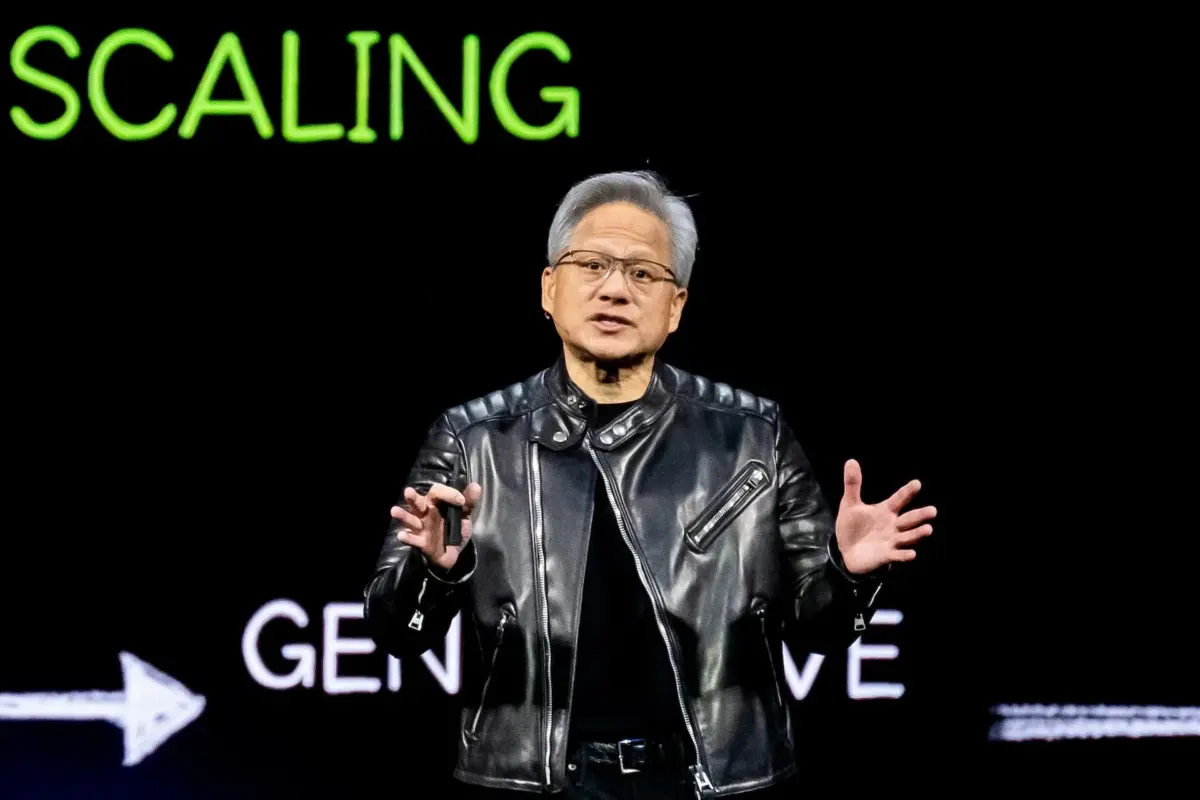
In a turbulent confluence of high-stakes geopolitics, corporate governance failures, and national security vulnerabilities, the global technology sector is reeling from an unprecedented crisis at semiconductor giant Nvidia. The unfolding scandal has triggered a dual-pronged congressional investigation, forced the abrupt ouster of visionary founder and CEO Jensen Huang, and exposed the complex, highly contentious mechanisms governing advanced artificial intelligence hardware exports to China.
The trouble intensified on Thursday when Democratic leaders on key congressional oversight committees officially launched an aggressive inquiry into the Trump administration’s handling of Nvidia’s multi-billion-dollar chip sales to China. This legislative maneuver follows explosive revelations that Huang confessed to an extramarital affair with an alleged Chinese intelligence asset, alongside subsequent reports of additional workplace relationships. The cumulative fallout resulted in Huang’s immediate resignation and interim succession by Chief Financial Officer Colette Kress.
Parallel to the Democratic probe, Republican-led congressional panels have intensified their own oversight efforts, securing an agreement from the disgraced former CEO to testify behind closed doors. At the heart of these intersecting investigations is a web of allegations involving an unconstitutional revenue-sharing export tax, suspect shell companies routing restricted hardware to foreign adversaries, and troubling questions regarding corporate donations intersecting with high-level executive branch decision-making.
Detailed Chronology of Events
The rapid sequence of events that brought down one of the most influential executives in Silicon Valley and triggered a major constitutional and regulatory battle unfolded across several distinct phases:
August 2025: The Unconventional Revenue-Sharing Pact
The foundation for the current legislative scrutiny was laid in the late summer of 2025, when the administration brokered a highly controversial agreement with major American semiconductor firms, notably Nvidia and Advanced Micro Devices (AMD). Under the terms of this public arrangement, the corporations agreed to remit 15% of their gross revenue generated from Chinese market sales directly to the U.S. government. In exchange, the Department of Commerce, spearheaded by Secretary Howard Lutnick, issued the necessary export licenses to clear the shipment of restricted high-performance chips, such as Nvidia’s advanced H200 processors, overseas.
Late 2025 – Early 2026: The Unraveling of Jensen Huang
As the semiconductor shipments moved through global supply chains, intelligence reports began accumulating regarding the integrity of the distribution networks. Central to the counterintelligence concern was Alice Huang (no relation), an executive at Megaspeed—a Singapore-based enterprise identified as a primary Nvidia customer. U.S. intelligence officials increasingly suspected Megaspeed of acting as a sophisticated conduit, illegally routing cutting-edge American AI hardware past export controls and directly into mainland China.
Simultaneously, personal indiscretions at the top tier of Nvidia management compromised national security protocols. Jensen Huang confessed to an extramarital affair with Alice Huang. Subsequent journalistic investigations by Reuters and other outlets revealed further workplace entanglements, leaving the company’s chief executive deeply vulnerable to foreign intelligence exploitation. Despite intelligence warnings reaching the Commerce Department regarding Alice Huang’s alleged espionage ties, federal approvals for Megaspeed and similarly dubious Asian intermediaries—many operating without verified physical office presences—reportedly continued unabated.
Mid-November 2026: Resignation, Testimony, and Inquiries
The crisis culminated in a dramatic multi-day cascade:
- The Ouster: Facing insurmountable pressure from the board, institutional investors, and mounting regulatory scrutiny, Nvidia ousted Jensen Huang, naming CFO Colette Kress as interim CEO.
- The Republican Demands: A coalition of Republican-led House committees—including the Select Committee on the Chinese Communist Party, the Foreign Affairs Committee, and the Intelligence Committee—demanded Huang’s immediate appearance for a closed-door deposition, threatening a formal congressional subpoena should he refuse. Huang subsequently agreed to comply.
- The Democratic Inquiry: Amplifying the pressure, House Ways and Means Committee Ranking Member Richard Neal (D-Mass.) and Senate Finance Committee Ranking Member Ron Wyden (D-Ore.) launched a formal oversight inquiry, dispatching a scathing investigative letter to Commerce Secretary Howard Lutnick.
Supporting Context, Mechanics, and Financial Entanglements
To fully comprehend the gravity of the congressional inquiries, analysts must examine the specific mechanics of the alleged export tax system and the financial exchanges said to have accompanied regulatory approvals.
The "Unconstitutional Export Tax" Allegation
In their joint correspondence to Secretary Lutnick, Democratic lawmakers detailed what they characterize as an illegal and constitutionally dubious policy framework. According to the letter, the administration’s transactional approach operated through a distinct sequence:
- Manufacturing & Inbound Transit: Advanced chips manufactured primarily in Taiwan were required to pass through the United States before heading to international destinations.
- The Tariff Levying: Upon arrival on U.S. soil, the administration levied a targeted tariff on the hardware.
- The Cut: Lawmakers argue this functioned as a direct federal extraction—effectively taking a direct fiscal cut of private corporate sales through what they term an unconstitutional export tax system.
- Licensing Clearance: Once the financial tribute was accounted for, the Commerce Department cleared the export license.
Lawmakers emphasize that this arrangement bypassed traditional statutory export control reviews, substituting a pay-to-play revenue-sharing model that prioritized fiscal intake and political favors over stringent national security safeguards.
Donations, Compromise, and Coercion
Beyond the mechanics of the tariff scheme, the congressional inquiry probes the timing of the export approvals relative to corporate philanthropy and executive compromise. Public disclosures reveal that Nvidia contributed $26 million toward presidential projects, including a high-profile ballroom initiative.
Investigators are aggressively questioning whether the administration accelerated or approved the chip sales after becoming aware of Jensen Huang’s compromised personal standing. This inquiry gains additional credence in light of a public interview granted by President Trump to CBS’s “60 Minutes,” wherein he casually recounted threatening an unnamed artificial intelligence executive with imprisonment, noting that the executive "totally changed" their posture following the ultimatum.
Democratic and Republican investigators alike are now seeking to establish whether executive branch powers were leveraged to extract financial contributions and compliance by exploiting vulnerabilities related to foreign espionage and personal misconduct.
Official Statements and Institutional Responses
The federal government and corporate entities involved have begun formulating defensive postures, though transparency remains limited as investigations accelerate.
- The Department of Commerce: Secretary Howard Lutnick’s office has faced immediate demands to preserve all internal records, electronic communications, and intelligence briefings concerning Megaspeed, Alice Huang, and the 15% revenue-sharing framework. To date, the department has defended its licensing decisions as necessary balances between American commercial competitiveness and strategic oversight, though it has yet to comprehensively address allegations that it ignored direct intelligence warnings regarding front companies.
- Nvidia Corporation: Under interim CEO Colette Kress, Nvidia has attempted to project operational stability. In statements released following the board’s emergency restructuring, the company emphasized its commitment to global compliance, internal ethical standards, and uninterrupted service to its vast enterprise client base. Representatives for the chipmaker confirmed full cooperation with ongoing congressional fact-finding missions.
- Congressional Leadership: In a joint statement accompanying their letter to Secretary Lutnick, Senator Wyden and Representative Neal underscored the severity of the alleged infractions: "The American people deserve to know whether vital national security controls were bypassed, compromised, or monetized for political and financial gain. Allowing sensitive artificial intelligence hardware to flow to foreign adversaries through phantom front companies—while executives were demonstrably compromised by foreign intelligence assets—represents an intolerable failure of governance."
Future Outlook and Market Implications
The fallout from the Nvidia scandal extends far beyond the fate of a single corporate executive or a partisan legislative battle; it signals a profound structural shift in the relationship between Silicon Valley and Washington, D.C.
Regulatory Tightening on AI Hardware
For years, the semiconductor industry operated under a relatively predictable framework of export controls designed to restrict the proliferation of high-performance computing capabilities to geopolitical rivals like China. The revelation that these controls were allegedly monetized through a 15% revenue-sharing model—and compromised by corporate espionage—will likely result in a dramatic hardening of federal oversight. Future shipments of advanced accelerators face indefinite delays as the Bureau of Industry and Security (BIS) re-evaluates every active export license tied to Asian intermediaries.
Corporate Governance and Geopolitical Compliance
The ouster of Jensen Huang marks the end of an era for Nvidia. As interim CEO Colette Kress navigates the ship through turbulent waters, institutional investors are demanding rigorous internal audits of supply chain integrity, foreign customer verification, and executive security vetting. Silicon Valley tech titans can no longer treat geopolitics as a secondary compliance concern; national security vetting is now central to corporate survival.
The Legislative and Legal Horizon
As Jensen Huang prepares for his closed-door deposition before Republican-led committees, and as Democratic lawmakers press for document production from the Commerce Department, the investigation is expected to deepen. Should evidence confirm that export licenses were granted in exchange for financial contributions or under the duress of personal blackmail, the political consequences for the administration could match the severe market disruptions currently impacting the global tech sector.
The semiconductor industry now stands at a historic crossroads, where the relentless pursuit of artificial intelligence dominance collides with the uncompromising realities of national security, intelligence counter-measures, and the rule of law.







Belum ada komentar. Jadilah yang pertama berkomentar!