

Executive Overview
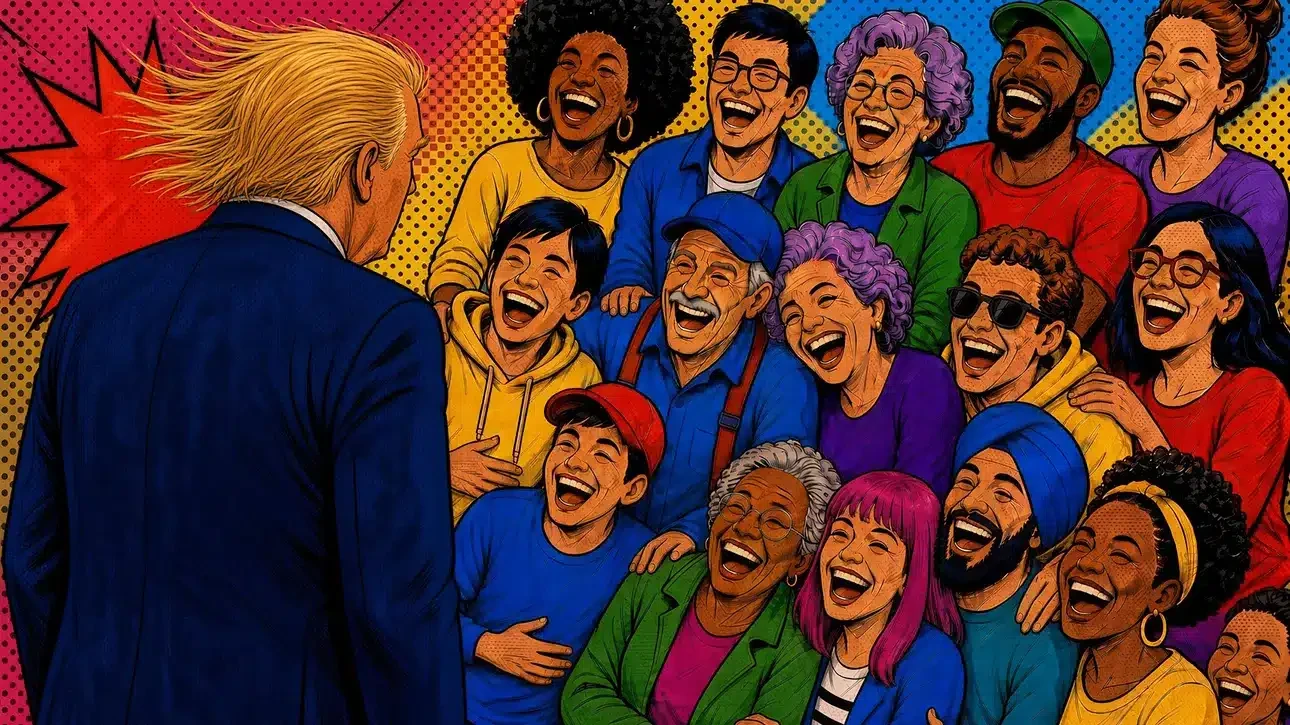
In an era where democratic institutions face unprecedented strain, the modalities of political opposition are undergoing a fundamental transformation. When formal legislative checks—such as a divided Congress or a compromised judiciary—falter, civil resistance often shifts from institutional maneuvering to cultural insurgency. In the contemporary United States, this resistance has found an unlikely vanguard: late-night television comedians and political satirists.
As traditional journalism increasingly struggles under the weight of access-driven compromises and hollowed-out "fair and balanced" equivalencies, the American public has turned toward comedic counter-narratives for moral clarity and factual reckoning. This cultural phenomenon is not merely an outlet for frustration; it is a structural challenge to authoritarianism. Dictators and aspiring autocrats thrive on solemnity, unthinking obedience, and the illusion of omnipotence. Conversely, political humor acts as a cognitive solvent, eroding the iron will of authoritarian regimes by exposing hypocrisy and dismantling manufactured majesty.
The flashpoint of this dynamic culminated in the late-2025 confrontation between the Trump administration and late-night host Jimmy Kimmel. Triggered by a politically volatile climate following the Charlie Kirk assassination, the administration utilized federal regulatory pressure—spearheaded by FCC Chairman Brendan Carr—to force media conglomerates into silencing critical voices. Yet, this high-stakes standoff exposed both the vulnerabilities of corporate media under political duress and the resilient power of collective consumer resistance. The swift, organized public backlash, plummeting corporate stock values, and Kimmel’s subsequent triumphant return to the airwaves serve as a watershed moment. It illustrates that while authoritarian figures may seek to weaponize the levers of the state against comedians, the public’s instinctual defense of free expression remains a formidable constitutional bulwark.
Detailed Chronology: The Escalation and Standoff of Late-Night Censorship
The systematic friction between the modern American executive branch and the late-night comedy community represents a departure from historical norms. For decades, the presidency and late-night television existed in an unspoken symbiotic contract: politicians endured good-natured ribbing as a symbolic tax on holding high public office, while comedians exercised free speech as a reflection of democratic health. However, as political polarization deepened, this social contract eroded, culminating in direct structural assaults on media independence.
The Groundwork of Coercion (Mid-2025)
The systematic targeting of late-night satirists intensified during the summer of 2025. Facing corporate mergers and business deals requiring explicit federal approval, major media conglomerates found themselves uniquely vulnerable to executive branch leverage. In July 2025, CBS’s parent company, Paramount, sought regulatory clearance for a major corporate transaction. Coincidentally or by design, the imminent cancellation of Stephen Colbert’s program was announced, signaling to the broader entertainment industry that political alignment was a prerequisite for regulatory favor.
The Flashpoint: The Charlie Kirk Assassination (September 2025)
The fragile equilibrium shattered two months later following the assassination of Charlie Kirk, an event that ignited profound outrage across right-wing information silos. With political tensions at a fever pitch, the MAGA movement sought immediate cultural and political retribution.
On September 25, 2025, during his regular monologues, Jimmy Kimmel addressed the atmosphere of vengeance, noting that the "MAGA gang" was weaponizing the tragedy for political point-scoring regardless of factual accuracy. This critique immediately triggered a coordinated campaign from the far right, mobilizing administrative machinery to silence the broadcast.
Regulatory Retaliation and Corporate Capitulation
Seizing upon the manufactured controversy, Federal Communications Commission (FCC) Chairman Brendan Carr publicly threatened regulatory action against ABC and its parent company, Disney. Fearing both regulatory reprisal and the disruption of pending corporate mergers, media conglomerates yielded. Nexstar Media Group pulled Jimmy Kimmel Live! from its ABC-affiliated stations, and Disney instructed ABC to suspend production and broadcasting indefinitely.
To industry observers, the move was reminiscent of classic corporate coercion—an offer that media executives could not refuse. A triumphant executive branch celebrated what it viewed as the permanent neutralization of a primary cultural adversary.
The Counter-Offensive and Public Reclamation
The administration’s victory lap, however, was short-lived. The suppression of Kimmel triggered an immediate, asymmetric counter-offensive from the American public and the wider entertainment community.
- Industry Solidarity: Competing late-night hosts and the broader comedy guild offered immediate, unvarnished condemnations of the suspension, framing it as a direct assault on the First Amendment.
- Consumer Mobilization: Years of audience trust in late-night commentators translated directly into collective action. Citizens organized boycotts of Disney products and services.
- Market Repercussions: The financial markets reacted swiftly to the manufactured crisis. Disney’s stock value plummeted as consumer outrage translated into tangible economic loss.
Faced with mounting financial damage, plummeting public approval, and a united cultural front, the corporate and political coalition retreated. Disney reversed its suspension, and Jimmy Kimmel returned to the airwaves to soaring approval ratings, cementing the episode as a profound tactical failure for state-level censorship.
Supporting Context & Metrics: The Sociological and Cognitive Power of Satire
To understand why authoritarian figures display such intense aversion to comedians, one must examine the cognitive and sociological mechanics of humor. Scholar John Morreall, in his seminal work Taking Laughter Seriously, observes that "[people] with a sense of humor can never be fully dominated." Humor fosters an internal landscape of imagination, liberation, and critical possibility that stands in direct opposition to the rigid compliance demanded by totalitarian regimes.
+-----------------------------------------------------------------+
|                   COGNITIVE DYNAMICS OF POWER                   |
+----------------------------------+------------------------------+
|       Authoritarianism           |        Satirical Humor       |
+----------------------------------+------------------------------+
| Demands unthinking obedience     | Challenges the mind to       |
| and absolute conformity.         | perceive hypocrisy.          |
+----------------------------------+------------------------------+
| Fosters fear, anger, and         | Unites through shared        |
| scapegoating of "others."        | laughter and human mores.    |
+----------------------------------+------------------------------+
| Projects an image of absolute    | Serves as the "kryptonite"   |
| superiority and infallibility.   | for narcissists and egotists.|
+----------------------------------+------------------------------+
Historical Precedents of Comedic Resistance
The use of satire as an instrument of political subversion is deeply rooted in human history.
- Ancient Greece: Comic poets of the 6th century BC used theatrical performances to steer Athenian civic life away from tyranny.
- Medieval Europe: Carnivals and court jesters provided safe harbors for the ridicule of repressive monarchs, functioning as a "social corrective" to remind rulers of universal moral codes.
- American Revolution: Political cartoons and satirical pamphlets, championed by figures like Benjamin Franklin and later Mark Twain, provided the cultural momentum necessary to challenge monarchical rule.
In the modern context, as documented by scholar Chaya Ostrower in It Kept Us Alive: Humor in the Holocaust, gallows humor even served as a vital psychological survival mechanism for concentration camp prisoners, allowing them to temporarily rise above hopeless circumstances through the assertion of mental autonomy.
The Crisis of Modern Journalism
The societal reliance on late-night satirists is compounded by structural failures within traditional American journalism. Unlike in parliamentary democracies like the United Kingdom—where investigative journalists routinely subject politicians to relentless, unsparing cross-examinations—American political reporting has increasingly retreated into access-driven journalism. Fearing professional exclusion from favored press corps, reporters frequently abandon lines of inquiry after encountering dismissive insults.
This journalistic timidity has created a profound vacuum. According to media analyses and public trust metrics, a significant portion of the American electorate places greater trust in late-night comedic commentators for political analysis than in conventional news anchors. As media scholar Geoffrey Baym argues in his analysis of The Daily Show, satirists engage in "discursive integration," offering a "rhetoric of challenge" that critiques both politics and journalism itself. By evaluating political actors through a moral rather than partisan lens, late-night hosts have effectively stepped into the role of the collective public conscience.
Official Statements and Responses
The confrontation over late-night broadcasting drew sharp commentary from political figures, media analysts, and free-speech advocates across the political spectrum:
-
On Regulatory Intervention and Free Speech:
Following the FCC’s implicit threats against broadcast networks, civil liberties organizations issued urgent warnings regarding government overreach. A coalition of First Amendment advocates stated:"When state power is mobilized to compel corporate censorship of political humorists, the boundary between democratic governance and authoritarian control collapses. Comedy is not a threat to public safety; it is the vital diagnostic tool of a free society."
-
On the Administration’s Response:
Celebrating the initial suspension of critical programming, administration officials defended the use of regulatory oversight. FCC Chairman Brendan Carr remarked during a media briefing:"Broadcasters operate under public interest standards. When networks platform relentless partisan attacks that inflame civil unrest under the guise of entertainment, it is incumbent upon regulatory bodies to ensure accountability."
-
On Public and Industry Solidarity:
Upon his return to the airwaves, Jimmy Kimmel addressed the suspension and the ensuing public mobilization, emphasizing the collective nature of the victory:"This was never just about one show or one host. It was a test of whether an administration can bully corporations into rewriting the First Amendment. The American people proved that when you weaponize consumer power in defense of free expression, even the most powerful political machines have to back down."
Future Outlook: The Resilience of Civic Resistance
The resolution of the Kimmel-Kirk saga offers both a cautionary tale for aspiring authoritarians and a blueprint for democratic resilience in the 21st century. As long as democratic institutions remain vulnerable to capture, the defense of free expression will increasingly rely on non-traditional fronts—namely, the intersection of popular culture, civic engagement, and consumer activism.
- Corporate Vulnerability vs. Consumer Power: Media conglomerates will continue to face intense pressure from political actors seeking to shape public discourse. However, the financial and reputational fallout experienced by Disney and its affiliates demonstrates that corporate capitulation carries severe economic risks. Future attempts at state censorship will likely encounter swift, organized consumer boycotts.
- The Evolution of Political Satire: As technological platforms evolve and traditional broadcast models shift toward decentralized digital media, political satirists possess greater autonomy to bypass traditional corporate gatekeepers entirely. This decentralization makes future suppression efforts exponentially more difficult for state actors.
- The Preservation of Democratic Guardrails: Ultimately, the events of late 2025 underscore a fundamental truth: constitutions and laws, while essential, require an engaged and vigilant citizenry to give them life. As long as the public retains its natural inclination to defend free speech, reject vindictive censorship, and find strength in shared laughter, authoritarian impulses will face a persistent, unyielding cultural counterweight.




Belum ada komentar. Jadilah yang pertama berkomentar!