

Executive Overview
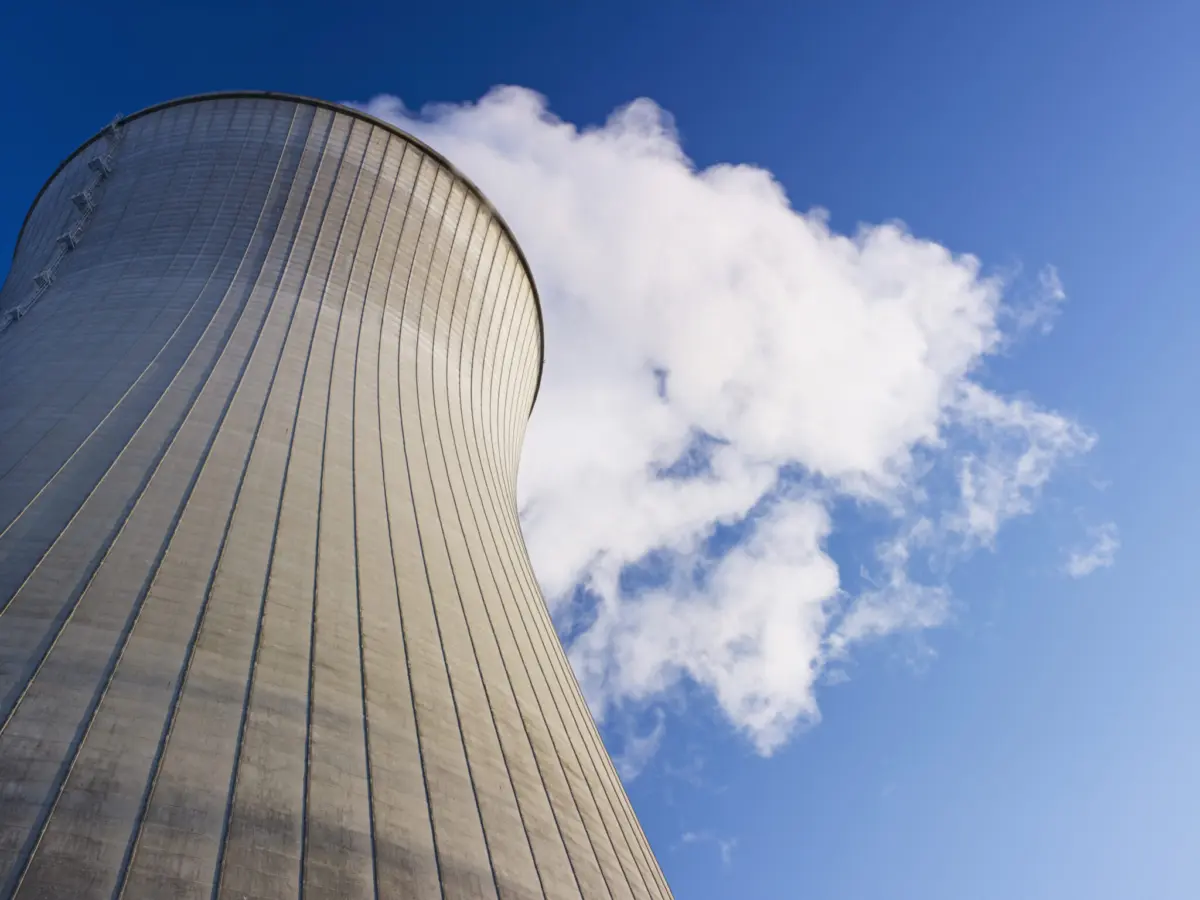
The intersection of artificial intelligence and national energy infrastructure has reached a pivotal milestone. In a move that underscores the federal government’s aggressive pivot toward revitalizing legacy power generation, the U.S. Department of Energy (DOE) has awarded a monumental $1.9 billion loan to NextEra Energy. The capital is earmarked for a single, high-stakes objective: resurrecting the Duane Arnold Energy Center, a shuttered nuclear power plant in Iowa, and bringing it back from the dead by 2029.
This sizable financial backing marks the second major federal intervention of its kind under the current administration, signaling a broader, systemic strategy. The federal government increasingly views idled nuclear facilities not as relics of a bygone industrial era, but as indispensable baseload assets required to fuel the exploding power needs of Big Tech’s artificial intelligence data centers.
The transaction closely mirrors the DOE’s $1 billion loan extended to Constellation Energy to restart a reactor at Three Mile Island, and it sits within a broader corporate scramble that has seen tech giants like Microsoft, Meta, and Google bypass traditional utility development cycles. Instead, these corporations are directly partnering with nuclear operators to secure guaranteed, zero-emission, firm power.
With data center electricity consumption projected to nearly triple through 2035, the commercial race to plug massive AI server farms into reliable energy sources is fundamentally reshaping the American energy landscape. As nuclear reactors are brought back online, the calculus of grid management, environmental offsets, and regional electricity pricing is undergoing a radical, high-stakes transformation.
Detailed Chronology: From Mothballed Asset to Federal Priority
The Fall and Rise of Duane Arnold
The journey of the Duane Arnold Energy Center is a case study in how rapidly macroeconomic conditions can shift the energy sector. Located in Linn County, Iowa, the facility operated reliably for decades until August 2020, when a violent and intense derecho—a widespread, straight-line windstorm—struck the region, causing localized damage to the plant’s infrastructure and forcing an unscheduled shutdown.
Rather than committing the substantial capital required to repair the storm-damaged components, plant owner NextEra Energy elected to mothball the facility permanently. At the time, the decision made sound financial sense. The American energy market was being flooded with cheap, abundant natural gas driven by the shale boom, which depressed wholesale electricity prices and made nuclear power economically unappealing to operate and maintain. NextEra initiated the decommissioning process, viewing the plant as a stranded asset in an era of cheap fossil fuels.
However, the operational freeze proved to be temporary in the grand arc of energy planning. Following decades of flat, highly predictable electricity demand across the United States, the sudden, exponential rise of generative AI in the early 2020s—sparked by the mainstreaming of tools like ChatGPT—completely upended power markets. Coupled with the aggressive, economy-wide push toward vehicle and home electrification, utilities and merchant generators suddenly found themselves scrambling to secure new, reliable generation sources.
By October of last year, the narrative around Duane Arnold inverted entirely. Google, looking to massively expand its computing footprint in the region, began evaluating the site to support up to six new data centers. Recognizing the unprecedented alignment of corporate demand and federal policy, NextEra reversed course, setting the stage for a 2029 restart.
The newly approved $1.9 billion DOE loan provides the definitive financial bridge to make that resurrection a reality. During the refurbishment process, NextEra engineers plan to squeeze an additional 14 megawatts of capacity out of the facility, pushing its total output to 615 megawatts—proving that legacy nuclear assets can not only be recovered, but optimized.
Supporting Context & Metrics: The Math Behind the AI Energy Crisis
To understand why the federal government and Silicon Valley are aggressively underwriting the resurrection of retired nuclear plants, one must examine the staggering macroeconomic metrics defining modern energy demand.
The Tripling of Data Center Loads
According to industry forecasts, the explosive growth of artificial intelligence and hyperscale cloud computing is expected to nearly triple the data center sector’s overall electricity demand by 2035. Training and running large language models requires server racks packed with power-hungry GPUs operating continuously, demanding "firm power"—electricity that is available 24/7 regardless of weather conditions, unlike intermittent renewables such as solar and wind.
The scale of this demand is difficult to comprehend without localized comparisons. Consider the energy footprint of Meta’s planned Hyperion AI data center. To sustain its operations, the facility will require the energy equivalent of 10 utility-scale natural gas power plants. When fully operational, this single campus will consume more electricity than the entire state of South Dakota.
Similarly, the Duane Arnold restart carries massive regional implications. NextEra CEO John Ketchum noted during an investor earnings call that 50 megawatts of the plant’s revived capacity will be explicitly set aside for the local power cooperative. While that number sounds modest alongside the plant’s total output, it represents a staggering 18% of the entire state of Iowa’s total electricity demand growth accumulated since 2021—the year before ChatGPT catalyzed the AI boom.
The Tech Industry’s Nuclear Pivot
Duane Arnold is far from an isolated anomaly; it is part of a broader, systemic trend of tech conglomerates locking down nuclear capacity to power their computational ambitions:
- Three Mile Island (Pennsylvania): Microsoft entered into a landmark power purchase agreement with Constellation Energy to tap into the historic Three Mile Island facility, reviving a reactor that last operated in 2019. Backed by a $1 billion federal loan, the reactor is scheduled to come back online in 2028, injecting 835 megawatts of clean energy back into the PJM Interconnection grid.
- Clinton Clean Energy Center (Illinois): Facing potential closure due to historical market pressures, Constellation Energy’s 1.1-gigawatt Clinton plant found an unlikely savior in Meta. While the plant’s physical electrons flow into the local grid, Meta is purchasing 100% of the clean energy attributes and environmental credits to offset the massive carbon emissions generated by its fossil-fuel-reliant data centers elsewhere.
Scraping the Bottom of the Barrel
These three high-profile facilities—Duane Arnold, Three Mile Island, and Clinton—represent what energy analysts call the "lowest hanging fruit" in the American nuclear fleet. They are facilities that were either recently shuttered or operating on the precipice of retirement, meaning their infrastructure, regulatory pathways, and grid interconnects are still largely viable.
Industry reports suggest there may be only one or two additional viable candidates nationwide that fit this expedited profile. Facilities like the shuttered San Onofre nuclear plant in California have been offline for significantly longer periods and would require exponentially more capital, time, and regulatory battles to bring back from the dead, rendering them far less practical for the immediate AI deployment timeline.
Official Statements & Industry Perspectives
The federal government’s wholehearted embrace of nuclear restarts has been framed not only as a national security and economic imperative, but as a boon for consumer electricity pricing—though this claim remains a point of intense debate among energy economists.
James Danly, Deputy Secretary of Energy, defended the administration’s aggressive capital allocation during recent briefings, asserting that the Duane Arnold plant’s scheduled 2029 restart will "drive down electricity costs." Danly and other federal officials argue that adding massive blocks of zero-emission baseload power to the grid will stabilize wholesale prices over the long term, offsetting the inflationary pressures caused by surging industrial demand.
However, critics and consumer advocates point out the glaring disconnect between macro-level grid stabilization and local market realities. While federal officials promise system-wide cost reductions, the immediate commercial reality is that the vast majority of Duane Arnold’s 615 megawatts will be consumed directly by private tech infrastructure, leaving only a fraction (50 megawatts) for the local utility cooperative.
NextEra leadership has remained bullish on the commercial viability of the project. John Ketchum emphasized to investors that the convergence of tech sector capital and federal loan guarantees has fundamentally altered the risk profile of nuclear investments. Where private capital once fled from nuclear assets in the face of cheap shale gas, government-backed financing mechanisms have effectively de-risked the multi-billion-dollar outlays required to overhaul complex radiological facilities.
Future Outlook: The Intersection of Grid Reliability and Climate Goals
As the United States hurtles toward 2030, the revival of the Duane Arnold Energy Center and its sister nuclear facilities serves as a clear indicator of how the energy transition is evolving. The ideological purity of the early green movement—which frequently sidelined nuclear power due to legacy safety concerns and waste disposal challenges—has largely given way to a pragmatic, engineering-first consensus.
For tech companies pledging net-zero carbon emissions while simultaneously building out power-hungry AI clusters, nuclear energy offers the only scalable, zero-carbon solution capable of matching the relentless 24/7 uptime requirements of modern data centers. Without nuclear baseloads, tech giants would be forced to lean heavily on coal and natural gas peaker plants, severely undermining corporate climate commitments.
Yet, significant challenges remain on the horizon. The regulatory hurdles overseen by the Nuclear Regulatory Commission (NRC) are famously rigorous, and executing major engineering overhauls on facilities that have sat dormant for nearly a decade carries inherent execution risks, supply chain bottlenecks, and potential budget overruns. Furthermore, questions regarding long-term spent fuel storage and regional grid equity will only grow louder as tech companies secure preferential access to clean power generation.
Ultimately, the $1.9 billion infusion into Duane Arnold signals that the federal government is willing to act as a direct venture partner in the industrial scaling of AI. Whether these resurrected nuclear titans can successfully balance the grid, lower consumer costs, and sustain the boundless computational appetite of Silicon Valley will define the trajectory of American energy infrastructure for the next half-century.






Belum ada komentar. Jadilah yang pertama berkomentar!