

Executive Overview
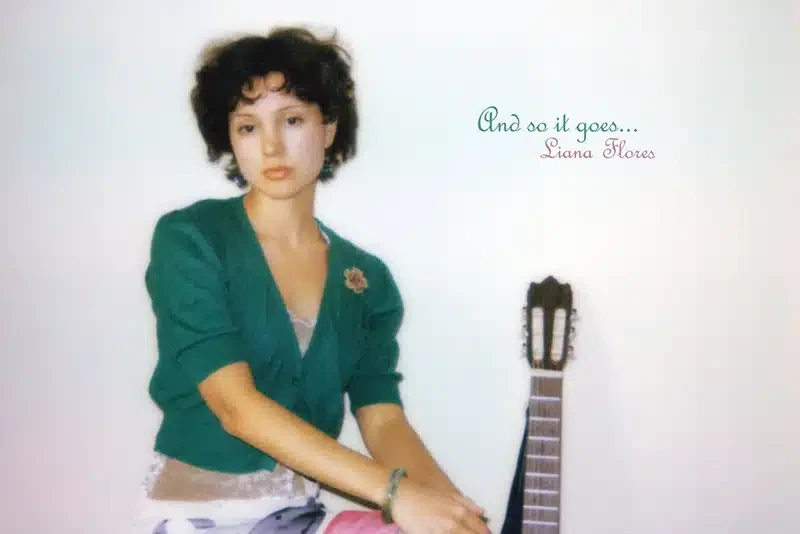
Following a string of independently released extended plays and her critically lauded 2024 full-length debut, Flower of the Soul, singer-songwriter and guitarist Liana Flores has returned with a breathtaking new collection: And So It Goes. Co-produced by Flores alongside Grammy-nominated sonic architect Paul Butler, the record spans a mere 16 minutes, yet packs an immense aesthetic and emotional punch. It is a masterclass in economy, blending sun-drenched bossa nova textures with idiosyncratic, wandering pop structures that both impress and tantalize the listener.
Born to an English father and a Brazilian mother, Flores utilizes this concise release to dive headfirst into her maternal heritage, merging the sophisticated chord voicings and rhythmic syncopation of classic 1960s bossa nova with the intimate introspection of the English folk renaissance. The result is a work that feels simultaneously timeless and strikingly modern.
As music critics and streaming audiences dissect the project, And So It Goes marks a definitive turning point in Flores’ career. No longer merely a promising voice shaped by her clear inspirations—ranging from Vashti Bunyan to Sade—Flores emerges here as a fully formed auteur. With razor-sharp arrangements, a cosmopolitan sheen, and lyrics that trade in equal parts wry detachment and profound vulnerability, she has delivered a definitive artistic statement wrapped in a sophisticated, retro-modern pop mantle.
Detailed Chronology: From DIY Roots to Bossa Nova Mastery
To fully understand the artistic weight of And So It Goes, one must trace the winding trajectory of Flores’ musical journey. Her early career was characterized by a cottage-industry approach to songwriting, defined by three independently dropped EPs that circulated among dedicated online communities and indie-folk purists. These early works established her penchant for long, wandering melodies built upon vague tonal centers—compositions that intentionally invite unexpected harmonic diversions rather than adhering to rigid pop formulas.
This trajectory culminated in her 2024 full-length album, Flower of the Soul. That record heavily foregrounded her deep-seated love for the English folk renaissance, earning her frequent comparisons to vanguard artists like Vashti Bunyan. Yet, even within those pastoral, acoustic-driven arrangements, the seeds of a broader stylistic shift were being sown.
With the sudden rollout of And So It Goes, Flores has streamlined her approach. Rather than leaning purely into the acoustic introspection of her past, she has pivoted toward the rhythmic sophistication of her Brazilian roots. Working closely with Paul Butler, Flores spent months refining the sonic palette of the new project, balancing a desire for organic, live-room warmth with meticulous pop arrangement.
The chronological evolution from the wandering, unhurried folk of her early career to the taut, punchy arrangements of tracks like "Silvershoes" demonstrates an artist rapidly hitting her stride. Every track on the new release represents a carefully calculated step forward, proving that Flores is an artist who refuses to remain static, preferring instead to let her identity shift with the tides of her diverse cultural heritage.
Supporting Context & Metrics: Sound, Style, and Cultural Fusion
Clocking in at a brisk 16 minutes, And So It Goes challenges the contemporary streaming-era mandate for bloated tracklists. Instead, Flores and Butler have engineered an immersive, highly curated micro-album where every second serves a distinct architectural purpose.
The Title Track: Lazy Afternoons and Heartbreak
The record opens with its title track, "And So It Goes," which immediately establishes its bossa nova credentials. Anchored by the characteristic finger-style bum-de-bum-bum of the guitar—tracked with a warm, enveloping room reverb—the song transports the listener to a lazy beach afternoon.
"The planet spins," Flores sings with disarming casualness, "The river flows / And so it goes, and so it goes."
However, beneath the tranquil surface lies a sobering undercurrent of romantic loss. Infusing the track with Portuguese lyricism—"Sem você, vou sonhar e vou me mover" ("Without you, I will dream, and I will move"), justified by the poignant query "Que mais tem pra fazer?" ("What else is there to do?")—Flores contrasts breezy escapism with existential heartbreak. Supported by syncopated rim shots and the familiar sixteenth-note rattle of the cabasa, the track serves as a refreshing, melancholic dip into the past.
"Silvershoes": From Beach to Rio Nightclub
The second single, "Silvershoes," sharply accelerates the tempo. Driven by busy brushed drums and a slapping double bass, the track shifts the setting from a sunlit shoreline to a pulsing Rio nightclub.
A signature element of Flores’ vocal identity is her liberal deployment of wordless vocalizations, utilizing her voice as an elastic lead instrument. On "Silvershoes," stylish lyrics spill out in syncopated sprays over rhythmic piano stabs and guitars that Butler has hard-panned in his dynamic modern/retro mix. Beneath the glamour, the song paints a picture of an ordinary person daydreaming about the dazzling, complex life of a star.
Cinematic Intrigue and Cosmopolitan Flair
The middle of the record introduces a sense of cinematic cool. "Gemini" evokes the smoky, mysterious aura of a classic James Bond theme, underscored by an undulating flute solo and the distinctively vintage timbres of a Wurlitzer electronic piano. Lyrically, Flores flips the classic "Bond girl" dynamic on its head, casting herself as the cynical, in-control architect of a temporary romance. She muses:
"You wouldn’t ask the summer to stay / Come back, I didn’t mean that way / You know that my heart is my guide / But it comes and goes like the tide."
Following this, "So Mysterious" leans into an airy, cosmopolitan atmosphere reminiscent of Pink Martini. Here, Flores effortlessly floats between chest voice and head voice, executing elaborate multi-part vocal harmonies that evoke the sophisticated arrangements of legendary vocal groups like The Fifth Dimension.
Folk Roots and Pop Balladry
As the record draws to a close, Flores nods gently to her English folk origins. On "Here to Stay," she channels the confident, effortlessly hip vocal delivery historically championed by Sade.
Yet, the project’s ultimate curveball arrives with its closing track, "The Way I Say Goodbye." Departing from bossa-pop syncopation, the song stands as a traditional, sweeping pop ballad. It bears striking structural and emotional similarities to the work of The Carpenters, with Flores beginning low in her register—reminiscent of Karen Carpenter—backed by an expansive arrangement style that evokes the genius of Richard Carpenter.
Official Statements and Critical Reception
The critical response to And So It Goes has been overwhelmingly positive, with industry analysts praising the seamless synergy between Flores and co-producer Paul Butler. In promotional interviews surrounding the release, Flores has spoken candidly about the intentionality behind exploring her maternal heritage.
"For a long time, my writing was very insular, rooted almost entirely in the folk traditions I discovered as a teenager in England," Flores noted in a recent press statement. "Immersing myself in bossa nova wasn’t about abandoning those roots; it was about finding the emotional bridge between the melancholy of English folk and the complex, bittersweet sunshine of Brazilian music. Paul helped me build that bridge without losing the raw honesty at the center of the songs."
Paul Butler echoed these sentiments, highlighting Flores’ innate melodic intuition: "Working with Liana is a masterclass in subtlety. Most artists with her vocal caliber want to belt and over-sing to prove their worth. Liana understands space, phrasing, and restraint. Every chord voicing she chooses has a purpose, and our job in the studio was simply to frame that diamond as cleanly as possible."
Reviewers across major cultural and music publications have similarly lauded the project’s focus. Where Flower of the Soul was occasionally viewed through the lens of its obvious inspirations, And So It Goes has been universally hailed as the moment Flores stepped out of the shadow of her influences to claim a singular, unmistakable artistic identity.
Future Outlook: What Lies Ahead for Liana Flores
As And So It Goes continues to gain traction across global streaming platforms and independent radio stations, the industry is left to ponder what comes next for the burgeoning songwriter. At a mere 16 minutes long, the release leaves listeners hungry for a fully fleshed-out, long-form exploration of this new sonic territory.
Yet, this calculated brevity may well be Flores’ greatest strategic advantage in the modern music landscape. By refusing to overstay her welcome, she has crafted a pristine, highly repeatable listening experience that rewards close analytical listening and casual enjoyment alike.
Looking forward, Flores stands at a fascinating crossroads. She has successfully proven her dexterity across disparate genres—translating the rustic warmth of 1960s English folk into the sophisticated, cosmopolitan pulse of bossa nova-infused pop. Whether her next major project expands upon these Brazilian rhythms or pivots toward yet another uncharted musical topography, one reality remains indisputable: Liana Flores is no longer just an artist to watch; she is a vital architect of modern pop’s acoustic renaissance.





Belum ada komentar. Jadilah yang pertama berkomentar!