


Executive Overview
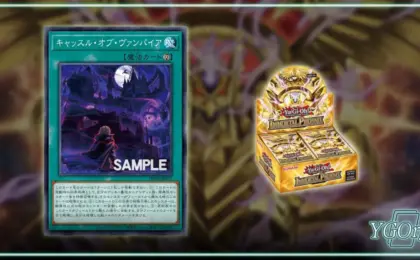
The landscape of competitive Yu-Gi-Oh! is perpetually defined by incremental shifts in card design, archetype synergy, and the resurgence of legacy strategies. On the heels of recent product cycles, Konami has revealed a brand-new Normal Spell card destined to redefine the parameters of Zombie-type and Ritual-focused archetypes. Coded IMPH-JP068, and titled Kepher no Kinjitou (The Pyramid of Kepher), this card bridges the gap between ancient mythological motifs and modern deck-building optimization.
At its core, The Pyramid of Kepher acts as both a specialized consistency tool and a recursive engine piece. By facilitating the direct placement of Field Spells—crucial touchstones for archetypes like "Vendread" and "Zenmaity" (referenced playfully in the initial reveal)—while dumping essential Zombie Ritual monsters straight to the Graveyard, the card promises to radically elevate the speed, versatility, and resilience of the undead type.
This investigative report provides an in-depth breakdown of IMPH-JP068. We will analyze its mechanical utility, explore its etymological and mythological roots, project its impact on the meta-game landscape, and evaluate how it reshapes the future of Zombie strategies within the modern Yu-Gi-Oh! Trading Card Game (TCG) and Official Card Game (OCG) environments.
Detailed Chronology: The Reveal and Mechanics of IMPH-JP068
The announcement of IMPH-JP068 rippled across digital platforms via the official Yu-Gi-Oh! OCG X (formerly Twitter) feed, instantly galvanizing competitive theorists and casual deck-builders alike. The promotional rollout accompanied evocative flavor text hinting at legendary deck foundations: "Whether the Vendread Nights or the Endless Journey of the Zenet: It all begins here."
To understand why this specific card has generated such intense discourse, one must examine its exact localized text, limitations, and operational phases within a standard duel.
Card Profile: The Pyramid of Kepher
- Card Type: Normal Spell Card
- Passcode: IMPH-JP068
- Effects:
You can only use the (1) and (2) effects of this card’s name each once per turn.
(1) Send 1 Zombie Ritual Monster from your Deck to the GY; place 1 Field Spell from your Deck or GY face-up on your field, also you cannot activate monster effects for the rest of this turn after this card resolves, except Zombie monsters’.
(2) If your opponent controls an Effect Monster: You can banish this card from your GY, then target 1 Ritual Monster in your GY; add it to your hand.
Phase-by-Phase Operational Breakdown
1. The Opening Salvo (Activation & Effect 1)
Upon resolution, The Pyramid of Kepher executes a powerful double-action sequence. First, it acts as a specialized burial tool, dispatching any Zombie Ritual Monster directly from the Deck to the Graveyard. This bypasses standard summoning requirements and sets up immediate resource loops, particularly for monsters that derive benefits or activate secondary effects within the graveyard.
Simultaneously, the card secures a Field Spell directly from either the Deck or the Graveyard, placing it face-up on the field. Crucially, because it "places" the card rather than "activating" it, this circumvents certain counter-play windows and avoids activation cost restrictions.
2. The Restriction Clause
Balance in modern Yu-Gi-Oh! is often maintained through stringent locks. The Pyramid of Kepher imposes a notable restriction: "…you cannot activate monster effects for the rest of this turn after this card resolves, except Zombie monsters’."
While this effectively limits generic multi-type engine splashes (such as miscellaneous Cyberse or Fiend extenders), it acts as a negligible barrier for dedicated Zombie strategies, which naturally revolve around undead synergy.
3. The Graveyard Utility (Effect 2)
The card’s secondary effect provides valuable mid-to-late-game resource recovery. If the opponent controls an Effect Monster, the player can banish The Pyramid of Kepher from the Graveyard to target and retrieve any Ritual Monster from the Graveyard back to the hand. This ensures that the engine does not burn out after a single turn, providing crucial follow-up for subsequent phases of the duel.
Supporting Context & Metrics: Mythology, Synergy, and Meta Impact
To fully appreciate the design philosophy behind IMPH-JP068, we must contextualize it through three distinct lenses: its etymological inspiration, its integration with existing archetypes, and its statistical/mechanical weight in competitive deck construction.
[The Pyramid of Kepher]
       │
       ├─► Effect (1): Send Zombie Ritual to GY + Place Field Spell
       │        │
       │        └─► Feeds Archetypes: Vendread, Mayakashi, Shiranui, etc.
       │
       └─► Effect (2): Banish from GY to Recycle Ritual Monster
Etymological and Mythological Foundations
The card’s name, Kepher (or Khepri), holds deep historical resonance in ancient Egyptian mythology. Khepri was the scarab-headed god associated with the rising sun, creation, and the eternal cycle of rebirth and renewal.
The thematic alignment with the Zombie monster type is nothing short of brilliant. Just as Khepri rolled the sun across the sky and personified rebirth each dawn, Zombie monsters in Yu-Gi-Oh! perpetually claw their way back from the nether realms of the Graveyard. The visual imagery of a sacred pyramid housing the eternal rites of resurrection bridges ancient theological concepts with the game’s dark fantasy aesthetic.
Archetypal Synergy Analysis
The Vendread Integration
The most prominent beneficiary of this card is undoubtedly the Vendread archetype. Vendreads are uniquely positioned as a Ritual-focused Zombie strategy that heavily relies on field presence and graveyard setup.
- Vendread Nights and Vendread Evolution dictate the rhythm of the deck. By utilizing The Pyramid of Kepher, a player can instantly access critical Field Spells while dumping high-level Vendread Ritual bosses (such as Vendread Executor or Revendread Slayer) straight into the graveyard. From there, graveyard-based effects can trigger, or the secondary recovery effect can pull them back to hand for subsequent ritual offerings.
Broader Zombie Ecosystems
Beyond Vendreads, the card broadens the horizons for any hybrid Zombie-Ritual experimentation. While traditional Zombie decks (such as Eldlich, Mayakashi, or Shiranui) historically lean toward Synchro or Xyz summoning, the introduction of universal support like The Pyramid of Kepher encourages designers and players to explore experimental builds combining ritual mechanics with classic Zombie engines like Uni-Zombie and Mezuki.
Official Statements and Community Discourse
The unveiling of IMPH-JP068 has ignited widespread debate across international forums, competitive discords, and content-creator platforms. Because the card addresses multiple mechanical bottlenecks simultaneously—deck-thinning, graveyard setup, and field spell searching—it has been scrutinized from both casual and hyper-competitive perspectives.
Competitive Theorist Insights
Leading tournament analysts have pointed out that Normal Spells capable of searching Field Spells while simultaneously dumping specific monster types carry inherent power.
- "The ability to fetch any Field Spell from the deck without requiring activation timing opens up immense tactical flexibility," notes one prominent OCG meta analyst. "When you couple that with a targeted Foolish Burial for Zombie Rituals, you have a card that essentially performs two essential engine functions at the cost of a single card slot."
Community Reception and Concerns
On community hubs like Reddit and the official Yu-Gi-Oh! Discord channels, player sentiment has been overwhelmingly positive regarding the card’s art and flavor, though tempered with cautious optimism about its target pool.
Because the pool of dedicated Zombie Ritual archetypes is historically narrow—primarily anchored by Vendreads—some players express concern that the card’s true potential is bottlenecked until Konami prints additional support for Zombie Ritual strategies. Conversely, optimists view IMPH-JP068 as a foundational cornerstone, a "future-proof" design that signals impending support in upcoming booster sets.
Future Outlook: The Horizon for Zombie Strategies
As the Yu-Gi-Oh! TCG and OCG continue to evolve, cards like IMPH-JP068 serve as vital barometers for how Konami intends to support niche mechanics. Ritual summoning has historically required steep resource investments, often suffering from consistency issues compared to Extra Deck mechanics that sit readily available in the command zone.
Strategic Predictions for Upcoming Formats
- Archetypal Revitalization: The release of The Pyramid of Kepher breathes immediate life into rogue strategies, elevating Vendreads from casual fan-favorite status to a more formidable contender in local and regional competitive scenes.
- Design Precedent: By restricting monster effects strictly to Zombies after resolution, Konami demonstrates a clear commitment to archetype-purity. This design philosophy prevents generic abuse in unrelated tier-one strategies while ensuring maximum payoff for dedicated deck-builders.
- Future Support Vectors: The specificity of the card’s text ("Zombie Ritual Monster") strongly implies that future product lines will feature additional undead ritual entities. Players should anticipate new waves of support designed to synergize directly with the engine pieces established by IMPH-JP068.
Conclusion
IMPH-JP068 (The Pyramid of Kepher) stands as a masterclass in thematic card design and functional engine building. By weaving ancient Egyptian mythology with modern card game mechanics, Konami has delivered a powerful Normal Spell that addresses historical consistency hurdles for Zombie Ritual strategies.
Whether it serves as the definitive catalyst for a Vendread renaissance or lays the groundwork for entirely new archetypal expansions down the line, The Pyramid of Kepher has permanently altered the strategic horizon for the undead. As duelists prepare for its integration into competitive play, one thing remains certain: in the world of Yu-Gi-Oh!, death is never the end—it is merely the beginning of the journey.







Belum ada komentar. Jadilah yang pertama berkomentar!