


Executive Overview
The landscape where venture capital intersects with professional sports is undergoing a seismic, structural evolution. Collaborative Fund—a prominent, 15-year-old New York-based generalist venture capital firm managing roughly $1 billion in assets—has broken new ground. Known historically for backing early-stage consumer icons such as Lyft, Reddit, Sweetgreen, and Olipop, the firm is expanding its operational horizon by taking an ownership stake in Major League Soccer (MLS) side D.C. United and its home ground, Audi Field.
This investment is subject to final league approval, but its strategic weight is already rippling through both Silicon Valley and the sports business ecosystem. Collaborative Fund is following a pathway opened just months prior by Thrive Capital, the Joshua Kushner-led firm that shattered historical boundaries by channeling venture capital into professional sports franchises.
However, Collaborative Fund’s maneuver is not merely a carbon copy of Thrive’s strategy. While Thrive engineered a dedicated, standalone, permanent-capital vehicle specifically designed to hoard "trophy assets" over decades, Collaborative is executing its play using its primary early-stage venture fund. Rather than viewing the stake as a standalone trophy or a private equity-style financial engineering play, Collaborative is treating D.C. United and Audi Field as active infrastructure—a living, breathing laboratory and distribution channel for its consumer-facing portfolio.
This article examines the mechanics of this landmark deal, contextualizes it within the broader macro-shift of institutional money entering professional sports, details the financial tailwinds driving American soccer, and projects how this blending of venture capital and live-event real estate could redefine the future of consumer marketing.
Detailed Chronology and the Evolution of Sports Ownership
To fully appreciate the significance of Collaborative Fund’s stake in D.C. United, one must look at how professional sports teams have historically changed hands—and how rapidly that playbook has been rewritten over the last 24 months.
The Traditional Era: Individual Tech Fortunes and Family Offices
For decades, the dominant archetype of a sports team owner was the ultra-wealthy individualist. Tech titans, media moguls, and generational industrial fortunes would park personal wealth into sports franchises as prestige assets, vanity projects, or legacy holdings.
This trend remains alive and well. For instance, tech billionaire Vinod Khosla and his family made headlines when they agreed to acquire the NFL’s Seattle Seahawks for a staggering $9.6 billion. This transaction closely followed another family-office play in which the Khoslas secured a minority stake in the San Francisco 49ers alongside OpenAI Chairman Bret Taylor. These are textbook examples of personal-wealth plays—centralized, highly individualized capital deployments designed to capture cultural cachet.
The Private Equity Influx
As franchise valuations ballooned out of reach for even many multi-millionaires, institutional private equity (PE) stepped into the vacuum. Over the past several years, specialized sports-focused PE funds have acquired sprawling, diversified portfolios of minority and majority stakes across global sports leagues:
- Sixth Street holds strategic stakes in the Boston Celtics, the New England Patriots, and Major League Baseball’s San Francisco Giants.
- Ares Management owns an outright piece of the NFL’s Miami Dolphins and engineered a $500 million preferred-equity financing deal to support Chelsea FC’s stadium master plan.
- RedBird Capital Partners owns Italian powerhouse AC Milan outright while maintaining a significant minority stake in Fenway Sports Group, the holding company behind Liverpool FC and the Boston Red Sox.
- Arctos Partners has built a vast mosaic of minority positions scattered across MLB, the NFL, the NBA, and elite European football clubs.
- Apollo Global Management, a newer entrant to the space, has primarily focused on sports debt financing and stadium capital structuring rather than direct equity ownership.
The Venture Capital Pivot: Thrive Capital and Collaborative Fund
Venture capital firms, historically bound by traditional 10-year fund lifecycles and hyper-focused on software, biotech, and direct-to-consumer startups, largely sat on the sidelines of pro sports ownership. That paradigm shifted abruptly when Thrive Capital launched Thrive Eternal.
Thrive Eternal was engineered as a distinct vehicle built expressly to hold "iconic franchises and cultural institutions" over multi-decade time horizons, backed by the same limited partners already funding Thrive’s core venture and growth portfolios. Thrive kicked off this strategy by acquiring a stake in the San Francisco Giants. Months later, operating through that same vehicle—and buoyed by the high-profile addition of former Disney CEO Bob Iger as a co-owner—Thrive acquired the Los Angeles Lakers outright in a record-shattering $12.5 billion transaction.
Collaborative Fund’s entry into D.C. United represents the next evolutionary step in this movement. While Thrive created a specialized, permanent-capital vehicle tailored for mega-market trophy assets, Collaborative is executing its strategy using its traditional early-stage fund, treating the investment through an infrastructure and operational lens.
Supporting Context, Thesis, and Financial Metrics
In a comprehensive strategy memo shared with TechCrunch, Collaborative Fund founder and managing partner Craig Shapiro outlined the philosophical core of the deal: "A franchise is the ultimate consumer product."
By partnering with D.C. United—one of Major League Soccer’s original charter clubs boasting a passionate, decades-long fan base—Collaborative is buying into an established institutional footprint rather than trying to build a brand from scratch.
The Macro Tailwinds of American Soccer
Shapiro’s thesis is supported by powerful macro-economic tailwinds propelling the sport of soccer in North America:
- The Global Mega-Event Runway: The sport is riding an unprecedented wave of momentum, positioned immediately downstream of a historic North American FIFA World Cup and upstream of the upcoming Los Angeles Olympic Games.
- Grassroots Surge: Youth participation numbers across the United States continue to break historical records, cementing soccer as a core sport for younger demographics.
- The D.C. United Asset Ecosystem: Beyond the MLS club itself, D.C. United brings a powerful localized infrastructure package, including ownership of Audi Field (a state-of-the-art soccer-specific stadium in the heart of Washington, D.C.), a robust talent-development pipeline routed through Loudoun County, Virginia (Loudoun United FC), and strategic rights tied to a prospective future Baltimore expansion franchise.
Valuation Explosions in MLS
While Collaborative Fund’s strategy relies heavily on operational synergy, the underlying financial metrics of the league provide a sturdy financial safety net. Soccer valuations have been on an extraordinary tear globally, and MLS is no exception.
The arrival of Lionel Messi at Inter Miami roughly doubled that franchise’s valuation almost overnight. Across the league, average MLS club values have skyrocketed by approximately 134% since 2019. D.C. United’s own trajectory reflects this broader market re-rating: the club’s valuation has climbed from $35 million in 2008 to an estimated $785 million today, bolstered significantly by its ownership of Audi Field and the lucrative commercial real estate surrounding the venue.
Official Statements and Strategic Vision
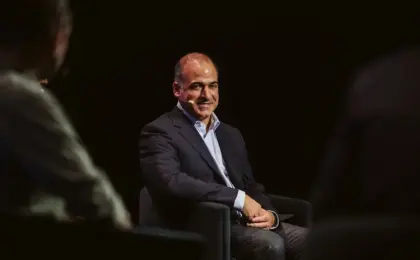
Speaking at the TechCrunch StrictlyVC event in New York, Craig Shapiro elaborated on why a venture capital firm would want a seat in a stadium boardroom. The strategy, according to Shapiro, diverges sharply from traditional private equity return models. It is less about betting purely on the appreciation of the franchise’s equity price tag and more about leveraging the utility of what the stadium makes possible.
Collaborative Fund envisions turning Audi Field into a living, breathing showroom and consumer activation testbed for its broader venture portfolio.
Case Studies in Stadium-As-Distribution
Consider two prominent consumer brands in Collaborative Fund’s investment stable:
- Whoop: The high-end biometric fitness wearable maker.
- Olipop: The fast-growing, gut-healthy functional soda brand.
Under Collaborative’s strategic vision, Audi Field can be deployed as an interactive deployment environment. Fans attending a match could experience Whoop-powered biometric fan activations, tracking exertion or engagement in real-time. Simultaneously, Olipop beverages can be woven directly into game-day concessions, putting the product in front of thousands of captive consumers simultaneously.
Shapiro views the stadium’s predictable foot traffic—tens of thousands of consumers gathering on a fixed, recurring schedule—as an invaluable distribution channel. This value proposition is amplified in the modern era. As generative artificial intelligence and synthetic media make daily digital life feel increasingly digitized, automated, and intangible, physical, live-event experiences are experiencing a massive surge in relative economic and cultural value.
Audi Field becomes an offline fortress of attention in an increasingly fragmented digital world.
Future Outlook: What This Means for Venture Capital and Sports
Collaborative Fund’s acquisition of a stake in D.C. United signals that the wall separating Silicon Valley venture capital from traditional brick-and-mortar sports infrastructure has permanently fallen.
However, the divergence between Thrive Capital’s mega-vehicle strategy and Collaborative Fund’s agile, portfolio-synergy approach suggests that venture firms will not utilize sports ownership in a monolith fashion. Moving forward, we are likely to see a bifurcated landscape:
- Mega-Funds will continue building permanent-capital vehicles to capture ultra-prime legacy assets (like NBA and NFL franchises) as inflation-hedged, multi-generational stores of wealth.
- Early-to-Growth Stage Funds may increasingly look at mid-market properties—such as MLS, NWSL, WNBA, and USL franchises—not just as passive financial holdings, but as active distribution engines, marketing testbeds, and physical retail laboratories for their tech portfolios.
If Shapiro’s thesis proves correct—that a sports franchise truly represents the ultimate consumer product—then Collaborative Fund has not merely bought a piece of a soccer team. They have acquired a physical media channel, a real-world testing ground, and an unprecedented bridge between the digital economy and the physical stadium seat.
As the transaction awaits final MLS approval, the broader venture ecosystem will be watching closely. If Collaborative Fund successfully turns D.C. United into a compounding growth engine for its startups, expect a stampede of early-stage funds looking to draft off their playbook.







Belum ada komentar. Jadilah yang pertama berkomentar!