Published: October 20, 2026 Dateline: HOKUTO CITY, Yamanashi Prefecture, Japan Author: Special Correspondents, Regional Tourism & Cultural Desk
Executive Overview
Just two hours by rail or highway from the hyper-dense sprawl of Tokyo, the topography of Yamanashi Prefecture undergoes a profound metamorphosis as the calendar turns toward late autumn and winter. Here, framed by the jagged silhouettes of the Southern Alps and the Yatsugatake mountain range, Hokuto City—encompassing the alpine retreats of Yatsugatake and the historic Kiyosato highlands—presents a masterclass in regional winter destination management.
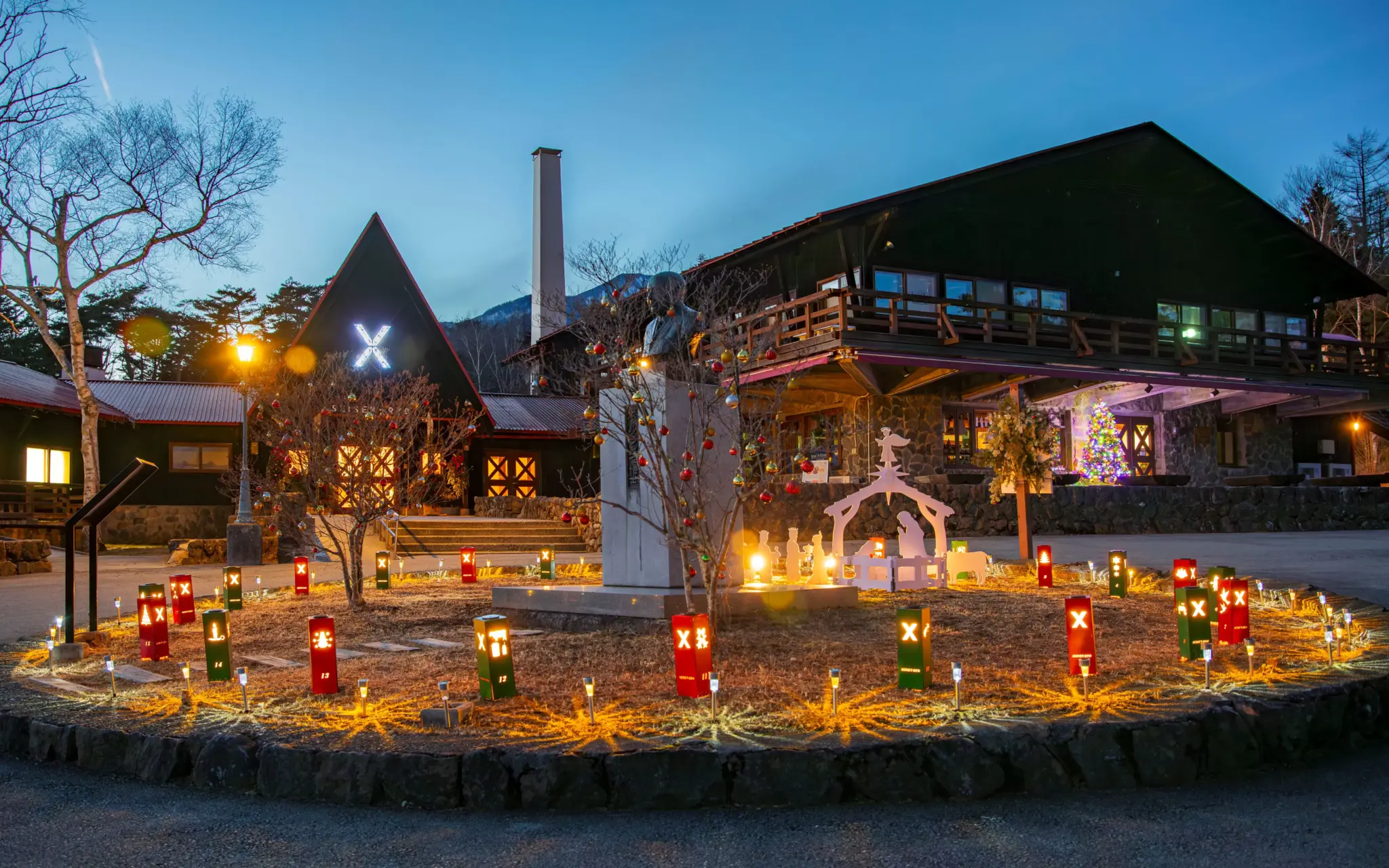
At the epicenter of this seasonal transformation is the Wine Resort Christmas 2026 initiative hosted at the flagship Hoshino Resorts RISONARE Yatsugatake. Far from relying on generic holiday tropes, this year’s program leverages the region’s deep-rooted viticultural heritage—most notably its identity as a premier Japanese wine-producing prefecture. By integrating upcycled materials, local agriculture, and high-design architectural staging, the resort anchors a broader regional tourism circuit that includes the storybook artisan enclave of Moegi no Mura and the historic dairy estate of Seisenryo.
This report delivers a rigorous examination of the 2026 winter season in Hokuto City. Utilizing data on visitor demographics, spatial design economics, and environmental sustainability initiatives, we explore how local stakeholders have engineered a winter travel experience that marries aesthetic innovation with regional pride.
Detailed Chronology: The Evolution of Hokuto’s Winter Season
The curation of Hokuto City’s winter tourism economy does not happen overnight. It represents a meticulously timed sequence of events, operational scaling, and design executions that peak between December 1 and December 25.
Phase One: The Pre-Winter Transition (Late October – November)
As the autumn foliage fades from the Yatsugatake foothills, local municipal bodies and private hospitality groups initiate transition protocols. The crisp, sub-zero air of the highlands signals the shift from leaf-peeping tourism to snow-season preparations. During this window, logistics teams at Hoshino Resorts RISONARE Yatsugatake begin staging the monumental infrastructure required for Piman Street, the resort’s 160-meter European-styled architectural spine. Simultaneously, regional craft guilds in Kiyosato prepare inventory for the incoming wave of weekend holiday travelers.
Phase Two: The Grand Activation (December 1 – December 15)
The official launch of the Wine Resort Christmas on December 1 marks the formal commencement of Hokuto’s winter high season.
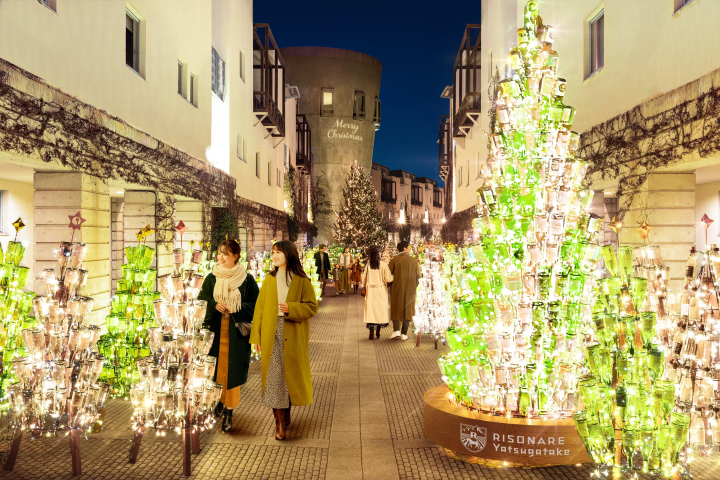
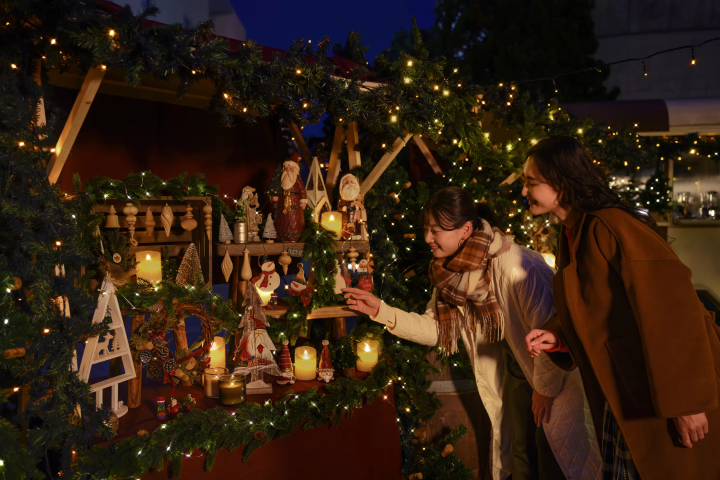
December 1: The inauguration of the primary Christmas market along Pepper Street, alongside the lighting of the 12,000 upcycled wine bottle installations.
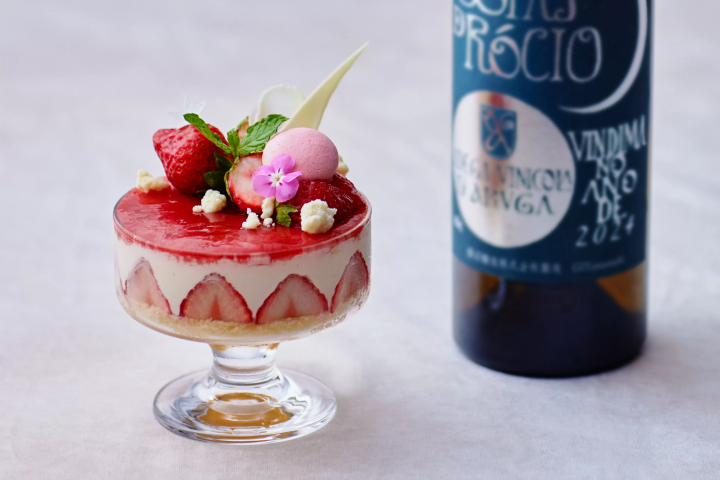
December 5–10: Rollout of specialized culinary programs, including the limited-edition Koshu wine-infused mascarpone strawberry parfaits and the debut of the Risonare Kids Studio pastry curricula.
December 12–15: First wave of peak-season reservations hits capacity, prompting extended shuttle bus operations from JR Kobuchizawa Station to accommodate weekend influxes from the Kanto metropolitan area.
Phase Three: The Solstice Peak & Holiday Festivities (December 16 – December 25)
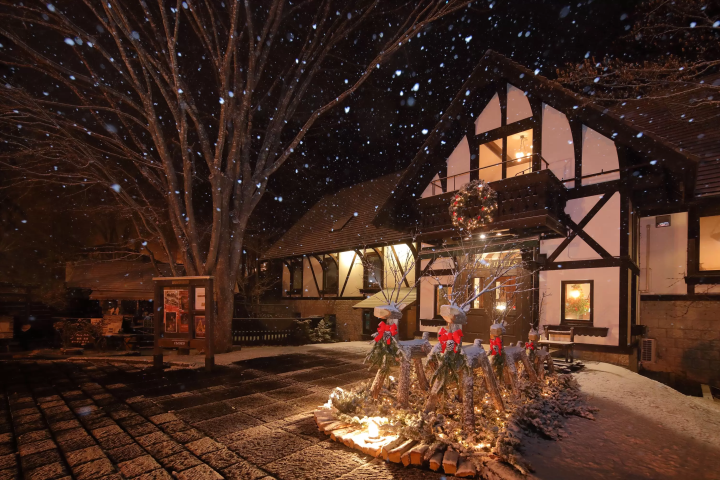
As the winter solstice brings the longest nights of the year, the illuminations along Piman Street and the forest canopy at Moegi no Mura achieve maximum visual impact. This window features direct community engagement initiatives, including daily "Meet Santa" commemorative photo sessions and hands-on artisan workshops focused on wine-aroma candle making and bespoke wreath curation.
Phase Four: Post-Christmas to New Year Operational Shift (December 26 – Onward)
Following the conclusion of the Christmas event cycle on December 25, the region transitions seamlessly into New Year (Hatsumode) and deep-winter snow-tourism operations, shifting focus toward Seisenryo’s winter footbaths, hot spring networks, and frost-viewing excursions across the highlands.
Supporting Context & Metrics: Architecture, Sustainability, and Economics
To understand the operational scope of Hokuto City’s winter tourism model, one must examine the quantitative and qualitative frameworks governing its primary attractions.
1. Hoshino Resorts RISONARE Yatsugatake: The Viticultural Design Matrix
Designed originally by world-renowned architect Mario Bellini, the structural aesthetic of RISONARE Yatsugatake mimics a hillside European village. For the 2026 winter installation, this European-style streetscape serves as a canvas for a massive circular economy and upcycling experiment.
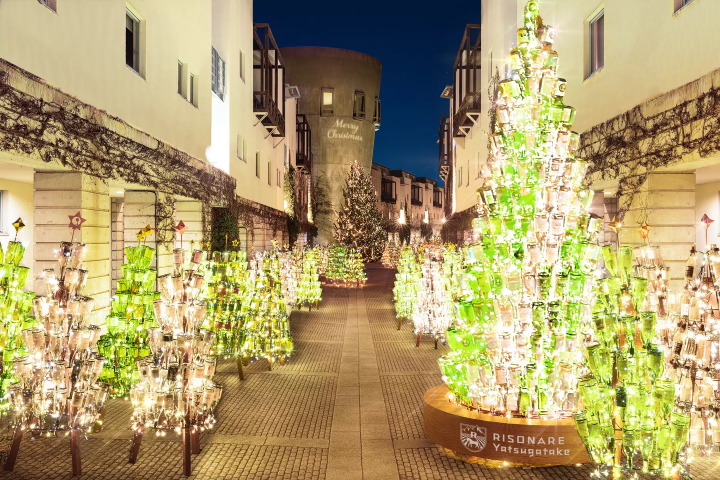
Upcycled Material Metrics: The centerpiece installation features an aggregate of 12,000 empty wine bottles sourced directly from Yamanashi Prefecture’s sprawling network of commercial wineries.
Structural Specifications: The main focal point is a 3.5-meter-tall structural Christmas tree, flanked by an array of bottle-constructed evergreen formations lining the 160-meter Piman Street corridor.
Optical Physics of the Installation: By utilizing bottles of varying green, amber, and clear glass tones—cast-off relics of Koshu wine production—internal LED lighting arrays project refracted, gem-like chromatic patterns onto the cobblestone walkways. This design choice simultaneously minimizes synthetic plastic decor waste and reinforces Yamanashi’s branding as Japan’s premier wine prefecture.
2. Culinary Engineering and Local Sourcing
The visitor economy is heavily supported by localized gastronomic integrations. Data from the resort’s temporary food truck operations indicate high yields on specialty items designed specifically to bridge local agriculture with seasonal festivities:
The Koshu Wine-Infused Strawberry Parfait: Combines high-altitude, greenhouse-grown Yamanashi strawberries with a proprietary mascarpone cream base subtly infused with local Koshu white wine reduction.
The Kids Studio Curriculum: Integrates early-childhood culinary education with holiday motifs, where participants don custom-colored chef jackets to assemble cream-puff towers, teaching spatial geometry and fine-motor skills through pastry arts.
3. Regional Connectivity and Infrastructure Metrics
Hokuto City benefits immensely from its strategic geographical positioning along primary transit arteries:
Rail Transit: Direct access via the JR Chuo Main Line brings travelers from Shinjuku Station (Tokyo) to JR Kobuchizawa Station in approximately 1 hour and 50 minutes via limited express trains. Free resort shuttle services bridge the final 5-minute leg to RISONARE Yatsugatake.
Highway Access: Motorists utilizing the Chuo Expressway can exit at the Kobuchizawa Interchange, placing them within a 5-minute drive of the resort, and a 20-to-25-minute scenic drive up the Kiyosato Skyline toward Moegi no Mura and Seisenryo.
Official Statements & Stakeholder Perspectives
The strategic alignment between municipal tourism boards and private hospitality titans has been a core driver of Hokuto City’s post-pandemic regional revitalization.
"Our objective with the Wine Resort Christmas 2026 is not merely to construct a temporary visual spectacle, but to tell an authentic story of regional terroir," notes the management committee at Hoshino Resorts RISONARE Yatsugatake. "When a visitor walks down Piman Street and looks through twelve thousand upcycled wine bottles glowing under the Yatsugatake night sky, they are engaging directly with Yamanashi’s agricultural soul. Every bottle represents a harvest, a local vintner, and a commitment to sustainable reuse."
Municipal tourism authorities in Hokuto City emphasize the dispersion of economic benefits across micro-destinations within the broader highlands:
"Hokuto is uniquely blessed," states a representative from the Hokuto City Tourism Association. "While travelers initially arrive drawn by the high-design illuminations of RISONARE, our marketing architecture is designed to propel them further into the highlands—to the historic artisan workshops of Moegi no Mura and the pastoral heritage of Seisenryo. We are creating an interconnected ecosystem where high-end resort luxury and rustic mountain tradition reinforce one another."
Local merchants in Kiyosato echo this sentiment. The integration of winter footbath facilities at Seisenryo—allowing visitors to consume their iconic Jersey milk soft-serve ice cream while gazing at snow-capped Mount Fuji—represents a deliberate shift toward sensory, comfort-driven travel experiences.
As global climate patterns shift and urban centers experience increasingly erratic weather extremes, destinations like Hokuto City are uniquely positioned to capture the growing demand for climate-refuge travel and intentional regional tourism.
1. Expansion of Circular Economy Initiatives in Hospitality
The success of the 12,000-bottle installation at RISONARE Yatsugatake has established a new benchmark for sustainable holiday decor in Japanese resort management. Industry analysts project that this model of large-scale upcycling will be expanded in future fiscal years to incorporate local agricultural byproducts—such as pruned grapevines and discarded oak barrel staves—transforming winter event staging into a permanent showcase of industrial symbiosis.
2. Infrastructure and Digital Integration
To manage the projected 15% year-on-year increase in winter foot traffic through 2028, Hokuto City’s municipal planning board is currently reviewing infrastructure enhancements:
Smart Shuttle Integration: Real-time GPS tracking for the free shuttle bus fleet connecting JR Kobuchizawa Station, RISONARE, and the Kiyosato highlands.
Multilingual Digital Infrastructure: Expanding regional wayfinding apps to provide seamless English, Traditional Chinese, and Thai language support—matching the proactive social media engagement already spearheaded by the city’s specialized regional Instagram channels.
3. Preservation of Highland Tranquility
A central challenge moving forward will be balancing destination marketing with environmental preservation. Unlike over-touristed alpine hubs in Western Europe or domestic heavy-hitters like Karuizawa, Hokuto City maintains its appeal precisely because of its crisp, uncrowded air and serene forestscapes. Future development guidelines prioritize low-impact, sustainable illumination protocols (such as solar-assisted LED arrays) and strict zoning laws that preserve the storybook rustic aesthetic of Moegi no Mura and the sweeping pastoral vistas of Seisenryo.
Conclusion
Hokuto City’s winter offering for 2026 transcends the traditional boundaries of a seasonal holiday event. By weaving together the high-design viticultural artistry of Hoshino Resorts RISONARE Yatsugatake, the artisan community spirit of Moegi no Mura, and the restorative natural majesty of Seisenryo, Yamanashi Prefecture has crafted a compelling, multi-faceted winter destination. For travelers seeking an escape from the metropolitan rush into a world of sparkling glass, crisp highland air, and profound regional authenticity, Hokuto City stands undisputed as Japan’s premier winter sanctuary.






Belum ada komentar. Jadilah yang pertama berkomentar!