

Executive Overview
The global transportation ecosystem is undergoing a generational restructuring, driven by the convergence of advanced artificial intelligence, vertical hardware integration, and shifting geopolitical landscapes. At the center of this transformation is the autonomous vehicle (AV) sector, which continues to transition from an experimental frontier into an entrenched, commercialized reality.
Recent developments highlight an industry pushing aggressively into new operational domains while simultaneously reckoning with hardware supply chains, sovereign security evaluations, and evolving regulatory frameworks. Alphabet’s Waymo has escalated its strategy of vertical integration, revealing custom silicon engineered to power its next-generation robotaxis as it expands service footprints across major U.S. metropolitan areas. Simultaneously, municipal and federal authorities are casting a wider net over the underlying components of autonomous and connected mobility, exemplified by government lab investigations into Chinese lidar technology and massive multi-vehicle recall mandates affecting electric vehicle (EV) heavyweights like Tesla.
Against this backdrop of technical ambition and regulatory oversight, venture capital and strategic partnerships continue to reshape the delivery, freight, and urban mobility markets. From Rivian spinout Also securing a hefty Series D investment to Uber diversifying its autonomous ecosystem through multi-partner global deployments and aerial drone integration, the commercial playbook for transportation has shifted definitively toward diversification, resilience, and scale. This report provides a comprehensive examination of the structural shifts, strategic deals, and policy headwinds shaping the future of mobility.
Detailed Chronology: Key Events and Developments
Waymo’s Deep Dive into Vertical Integration
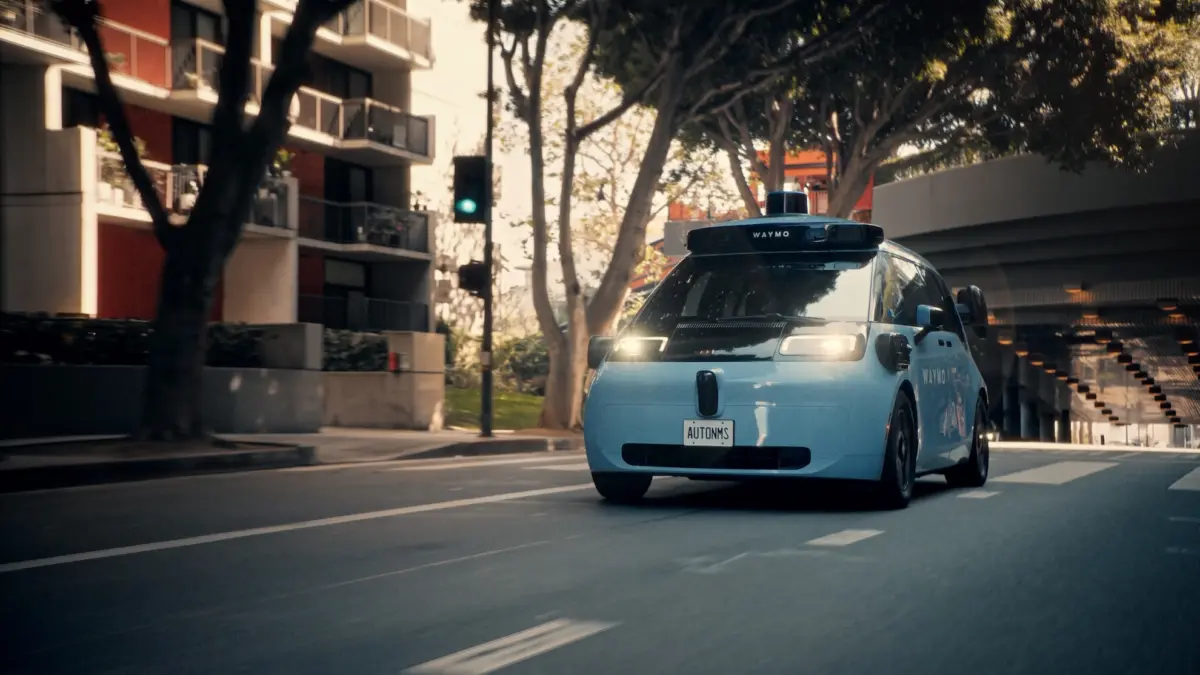
Waymo’s rapid market expansion has long served as a benchmark for the autonomous vehicle industry. Following the commercial debut of its next-generation "Ojai" vehicle platform—equipped with the company’s sixth-generation self-driving system—Waymo officially opened its robotaxi service to the general public in Los Angeles, Phoenix, and San Francisco. Central to the commercial viability of this rollout is the imperative to reduce manufacturing, operational, and maintenance overhead.

To achieve the computational efficiency required for safe, high-density urban navigation, Waymo unveiled a custom 5nm Application-Specific Integrated Circuit (ASIC) chip. Designed to process raw data streams from the Ojai’s 13 high-fidelity cameras before it reaches the vehicle’s core decision-making architecture, the custom silicon delivers over 1,000 TOPS (trillions of operations per second) of computing performance. This positions Waymo’s internal hardware on par with heavy-duty automotive processors like Nvidia’s DRIVE AGX Thor. While relying on an extensive coalition of manufacturing and semiconductor partners—including AMD, Micron, Nvidia, Samsung, Sandisk, Socionext, and TSMC—Waymo’s pivot toward custom silicon underscores a broader industry realization that commercial profitability hinges on proprietary hardware optimization.
National Security and the Lidar Probe
Parallel to hardware advancements in autonomy, federal entities are scrutinizing the supply chains underpinning automated driving systems. According to investigative reporting by TechCrunch’s Sean O’Kane, the Idaho National Laboratory has initiated an evaluation to determine whether Chinese lidar sensors present security vulnerabilities if deployed widely across consumer and commercial vehicle fleets in the United States.
Notably, this investigative evaluation is financed directly by private entities within the electric and autonomous vehicle sectors. When contacted by media, prominent domestic EV and AV manufacturers—including Rivian, General Motors, Ford, Kodiak, Lucid Motors, Nuro, and Uber—stated they were unaware of the review, while other industry leaders like Aurora, Nvidia, and Zoox declined to comment. This opaque funding structure points to underlying competitive and geopolitical tensions regarding hardware provenance in the domestic vehicle market.
Shifting Alliances in Sidewalk and Aerial Delivery
The commercial delivery sector is witnessing high-profile realignments. Sidewalk delivery robotics pioneer Serve Robotics experienced a strategic pivot following an earnings disclosure that revealed Uber had scaled back its deployment of Serve robots on its app, culminating in Uber liquidating its entire equity stake in the company.

However, Serve mitigated potential exposure by finalizing a series of diversification deals prior to the Uber fallout. Serve announced a major partnership with Grubhub to deploy sidewalk robots in Chicago, Los Angeles, and Alexandria, Virginia, while simultaneously expanding its existing footprint with DoorDash into San Jose and Washington, D.C.
In the aerial logistics space, Amazon announced aggressive scaling plans for its Prime Air drone delivery service, targeting nearly 500 U.S. cities by the end of 2026—a sixfold expansion of its current geographic footprint. Concurrently, Uber announced an investment and strategic partnership with drone delivery startup Zipline, establishing a long-term target of facilitating one million daily deliveries via Zipline drones on the Uber Eats network by the close of 2029.
Supporting Context & Metrics
The financial and operational metrics underpinning the current mobility landscape illustrate an industry mobilizing capital at an unprecedented scale:
- $150 Million: The Series D funding secured by Also, the electric vehicle startup incubated within Rivian. Led by Prysm Capital with participation from Eclipse, Greenoaks, and MVP Ventures, this latest round brings Also’s total capital raised to $455 million since its spinout in March 2025. Originally conceptualized as a micromobility venture for e-bikes and cargo quads, Also has pivoted to building advanced autonomous small electric vehicles, fueled by a multi-year commercial deployment agreement with DoorDash.
- 500 Tesla Semis: The volume of heavy-duty electric commercial trucks secured by Swedish autonomous and electric trucking firm Einride in a direct procurement deal with Tesla. Einride plans to integrate these Semis into its customer fleets (including Amazon) in phases starting in September, testing Tesla’s production scalability amidst the EV maker’s fluctuating manufacturing timelines.
- 8,000 Commercial Robotaxis: The maximum capacity authorized under commercial permits granted by Nevada regulators in Clark County (Las Vegas) to Tesla, Uber, and Waymo. The multi-operator deployment schedule spans the next 12 months, reshaping the urban transport grid of the Las Vegas metropolitan area.
- €825 Million ($966 Million): The historic fine levied against Uber by the Dutch Data Protection Authority. The regulatory penalty stems from Uber’s automated system practices, which deactivated or suspended driver accounts without adequate notification, violating European data privacy and labor regulations.
- $5 Million & $19 Million: Seed funding secured by Detroit-based EV van customizer Grounded (backed by SpaceX alumni and early-stage funds) and Series A funding raised by New Zealand electric hydrofoil boat innovator Vessev, respectively.
Official Statements and Industry Perspectives
Corporate disclosures and regulatory filings from the past week reveal how industry leaders are framing their strategic trajectories:

- On Silicon Optimization: Waymo emphasized that its custom 5nm ASIC chip provides "unmatched efficiency and performance," asserting that proprietary silicon is a non-negotiable prerequisite for managing the heavy data loads demanded by high-density urban autonomy.
- On Delivery Diversification: The rapid maneuvering by sidewalk robot provider Serve Robotics—transitioning away from reliance on Uber toward multi-platform integrations with Grubhub and DoorDash—highlights an unwritten industry axiom articulated by market analysts: "Always diversify." Scaling logistics infrastructure requires insulation against single-partner strategic shifts.
- On Autonomous Worksite Integration: Bedrock Robotics, founded by alumni from Waymo and Segment, noted that its retrofitted autonomous excavators are now operating in unattended production environments across Nevada and Texas, signaling that heavy industry automation is moving past pilot phases into operational deployment.
- On Regulatory Compliance and Safety: Following an ongoing inquiry by the National Highway Traffic Safety Administration (NHTSA) into a low-speed collision involving a Waymo robotaxi and a child, Waymo confirmed its submission of formal responses, though public transparency remains bottlenecked by extensive document redactions.
Future Outlook: The Road Ahead for Autonomous Systems
As the transportation sector looks toward the remainder of the decade, three primary vectors will dictate the trajectory of autonomous and electric mobility:
1. The Economics of Scale and Silicon Independence
Waymo’s investment in custom silicon signals a broader industry trend away from off-the-shelf automotive computing components toward purpose-built architectures. As robotaxi fleets scale to thousands of units across multiple states—exemplified by the massive Clark County deployment approvals—unit economics will dictate survival. Companies that control their hardware stack, from custom ASICs to vehicle manufacturing partnerships, will capture sustainable margins, while those dependent on high-cost third-party components risk margin compression.
2. Geopolitical Hardware Audits and Supply Chain Realignment
The Idaho National Laboratory’s probe into Chinese lidar sensors represents a harbinger of deeper supply chain decoupling. As national security considerations increasingly intersect with automotive engineering, domestic AV and EV developers will face mounting pressure to vet tier-one component providers. This dynamic could accelerate domestic semiconductor manufacturing and domestic sensor fabrication, though it risks introducing short-term cost inflation and project delays for fleets reliant on global supply chains.
3. Multi-Modal Diversification and Platform Agnosticism
The turbulence observed in the delivery robotics sector—exemplified by Uber’s pivot away from Serve and its simultaneous investments in Zipline drones, Wayve robotaxis in London, Pony.ai in Zagreb, and Baidu’s Apollo Go in Dubai—demonstrates that mobility platforms are shifting toward multi-vendor aggregators. For startups in autonomous delivery, trucking, and passenger transport, survival requires avoiding single-channel dependency. The future belongs to network operators capable of dynamically routing consumer demand across autonomous cars, delivery bots, aerial drones, and heavy electric freight.







Belum ada komentar. Jadilah yang pertama berkomentar!