

August 24, 2026 — For millions of international travelers, Kansai International Airport (KIX) serves as the bustling threshold to western Japan. Yet, for decades, the vast majority of visitors have treated the surrounding territory merely as a transit hub—a place to collect luggage, board an express train, and rush headlong into the neon-drenched urban cores of Osaka City or Kyoto.
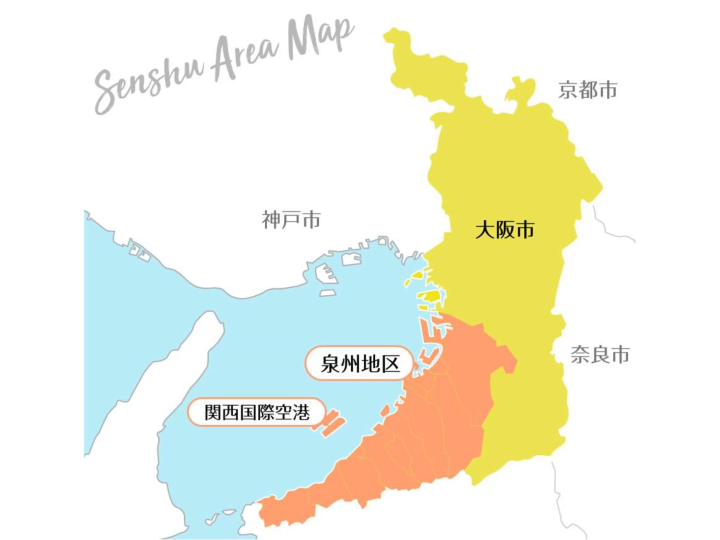
Just beyond the tarmac, however, lies an undiscovered realm that challenges the conventional tourist itinerary. The Senshu region, sprawling across the southwestern corner of Osaka Prefecture, bridges the gap between ancient Japanese heritage and seamless modern transit. Comprising 13 distinct municipalities—ranging from historic castle towns to rugged mountain enclaves—Senshu offers an immersive portal into traditional Japanese culture, architecture, spirituality, and gastronomy, all within arm’s reach of the airport.

Executive Overview: The Gateway Paradox
The Senshu region—composed of Sakai City, Takaishi City, Izumiotsu City, Izumi City, Tadaoka Town, Kishiwada City, Kaizuka Town, Kumatori Town, Izumisano City, Tajiri Town, Sennan City, Hannan City, and Misaki Town—presents a fascinating geographical and cultural paradox. Flanked by the sweeping expanse of Osaka Bay to the northwest and the formidable Izumi Mountains to the south, the area enjoys a mild, maritime-influenced climate that has historically earned it the moniker "the kitchen of Osaka."
Despite its strategic location and abundant natural bounty—ranging from pristine mountain produce to rich seafood harvested straight from Osaka Bay—Senshu has remained remarkably off the beaten path for international tourism. Regional tourism boards, transport operators, and local stakeholders are now racing to rewrite this narrative. By positioning Senshu as a high-value pre- and post-flight destination, local authorities aim to decentralize tourism from core urban hubs while offering travelers a deeply textured cultural decompression chamber right next door to KIX.
Detailed Chronology: A Tapestry of Heritage and Modern Adaptation
To understand Senshu’s appeal, one must trace its historical evolution from a feudal trade and spiritual nexus to its current incarnation as a cultural sanctuary.
The Feudal and Industrial Roots (Pre-20th Century)
Long before the construction of Kansai International Airport on an artificial island in Osaka Bay, the Senshu coastline was a vital maritime and commercial artery connecting the capital regions to western Japan. Inland, the Izumi Mountains served as sacred training grounds for Shugendo—an ancient syncretic religion blending folk animism, Shinto, and esoteric Buddhism. Monks and ascetics carved out sanctuaries in the primeval forests, establishing temples that would endure for over a millennium. Meanwhile, coastal settlements like Kishiwada grew into prosperous castle towns, anchored by the formidable Kishiwada Castle and governed by influential feudal domains that fostered refined arts, including Noh theater and high-end Japanese architecture.
The Taisho and Showa Transformations (1910s–1940s)
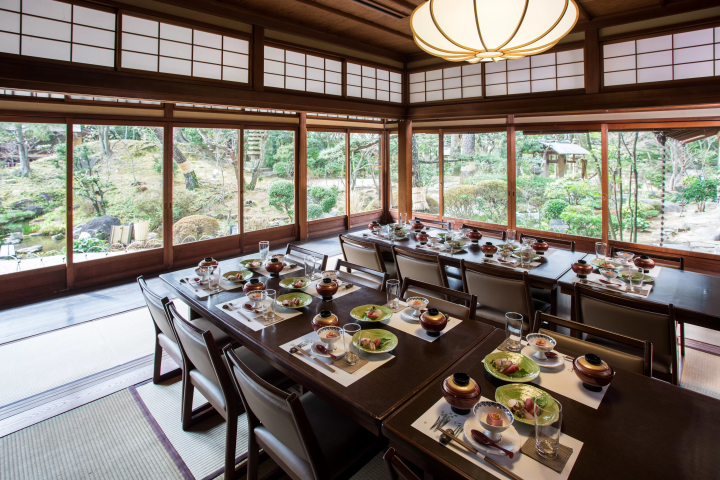
The early 20th century brought rapid modernization to Senshu, leaving behind stunning architectural testaments that blend traditional Japanese aesthetics with early Western modernist influences. In 1917, the Sugie Noh Theatre was constructed in Kishiwada, cementing the city’s status as a cultural heavyweight. A little over a decade later, in 1929, the sprawling villa known today as Gofuso was erected as a private residence for the head of the Terada zaibatsu family, showcasing master-class landscape and structural design.
The Aviation Era and Modern Tourism Pivot (1994–Present)
The opening of Kansai International Airport in 1994 fundamentally reshaped Senshu’s geopolitical and economic landscape. Suddenly, the region was tethered directly to the global aviation network. Initially, this resulted in Senshu being viewed strictly as a transit corridor. However, recent strategic initiatives—leveraging digital ticketing platforms, historical preservation designations, and community-led adaptive reuse projects—have transformed historical assets like closed clinics, century-old theaters, and heritage temples into accessible, high-yield tourism destinations.

Supporting Context & Metrics: Navigating the Senshu Ecosystem
For the discerning traveler looking to maximize a layover or book a dedicated cultural getaway, Senshu offers exceptional logistical convenience paired with profound historical depth. Below is a detailed breakdown of five cornerstone destinations that define the contemporary Senshu experience.
1. Gofuso (Kishiwada City)
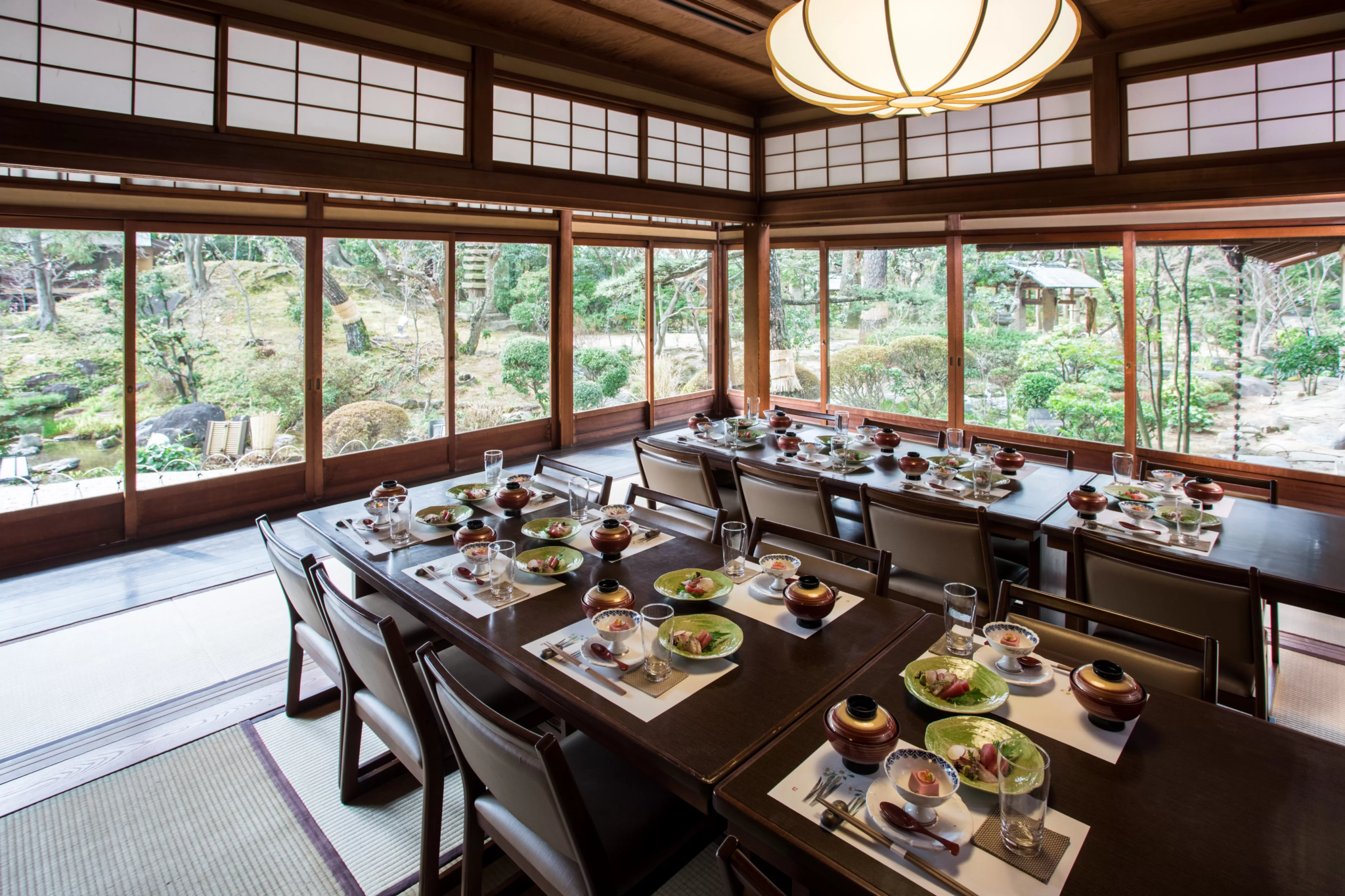
- Historical Profile: Built in 1929 as a luxury retreat for the Terada zaibatsu industrial conglomerate, Gofuso is an architectural masterpiece featuring classic Japanese residential design paired with an exquisite stroll-style garden (kaiyushiki-teien). It is officially designated as a tangible cultural property of Kishiwada City.
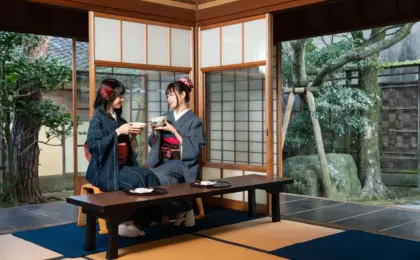
- Cultural Experience: Visitors can step back in time to dine in a meticulously preserved historical setting, savoring authentic Japanese haute cuisine crafted from seasonal local ingredients. The experience concludes with a peaceful walk through the estate’s sprawling gardens.
- Logistics & Access: Located at 18-1 Kishijocho, Kishiwada City. Accessible via a 3-minute walk from Takojizo Station or a 10-minute walk from Kishiwada Station on the Nankai Main Line.
2. Kofuan inside Sugie Noh Theatre (Kishiwada City)
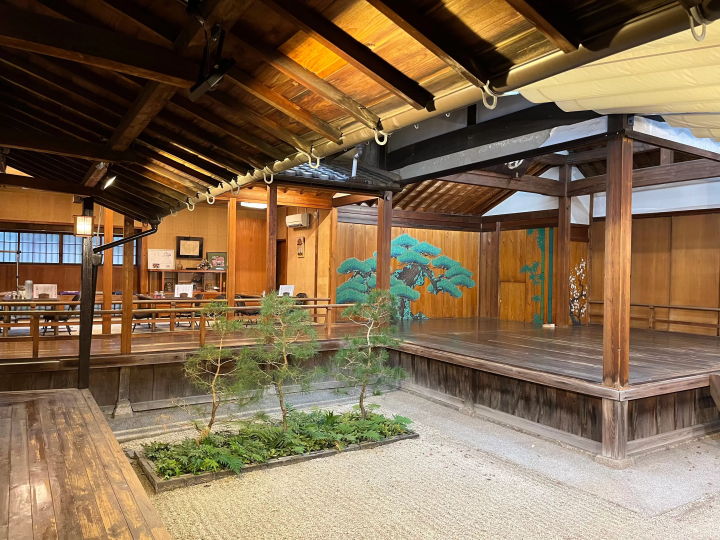
- Historical Profile: Operating within the venerable Sugie Noh Theatre—erected in 1917 and recognized as the oldest surviving Noh stage in Osaka Prefecture—Kofuan offers an encounter with the performing arts that is centuries in the making.
- Cultural Experience: The restaurant Kofuan is nestled inside this registered tangible cultural property. Diners partake in leisurely meals surrounded by the solemn, hushed atmosphere of a historic wooden stage where time appears to stand still.
- Logistics & Access: Located at 6-10 Kishijo-cho, Kishiwada-shi. Conveniently situated a 7-minute walk from Takojizo Station and 15 minutes from Kishiwada Station on the Nankai Main Line.
3. Minpaku Murakami International (Kishiwada City)
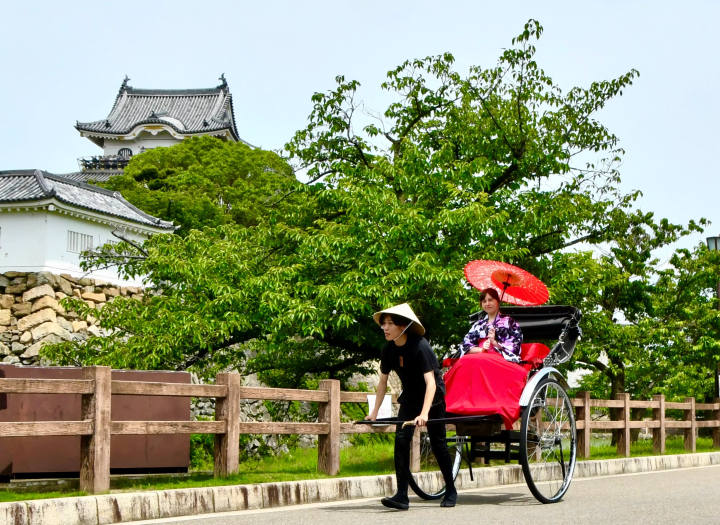
- Historical Profile: A masterclass in adaptive reuse, this private lodging (minpaku) occupies a historical building that served as the Murakami Clinic for half a century. Today, it stands as the only facility in Kishiwada City that maintains its own fleet of traditional tourist rickshaws.
- Cultural Experience: Beyond offering atmospheric lodging steeped in Showa-era medical history, the facility serves as a base for guided rickshaw tours winding around Kishiwada Castle and its surrounding network of ancient shrines, temples, and preserved merchant quarters.
- Logistics & Access: Located at 2-18-20 Nodacho, Kishiwada City. Just a 10-minute walk from Kishiwada Station on the Nankai Main Line.
4. Inunakisan Shippo-ryuji Temple (Izumisano City)
- Historical Profile: Perched deep within the Izumisano mountains, Shippo-ryuji Temple is the head temple of the Inunaki school of Shingon Buddhism and one of the 28 sacred Shugendo training sites founded by the legendary ascetic En no Gyoja.
- Cultural Experience: Surrounded by untouched primeval forests, hikers and spiritual seekers can experience authentic ascetic practices, including the dramatic Goma fire prayer ceremony, blending intense spiritual discipline with pristine natural beauty.
- Logistics & Access: Located at 8 Oki, Izumisano City. Accessible by taking a Nankai bus bound for Inunakisan from either JR Hineno Station or Nankai Izumisano Station, disembarking at "Inunakisan," and embarking on a scenic 40-minute mountain hike.
5. Fudoguchikan (Izumisano City)
- Historical Profile: A premier hot spring (onsen) inn situated directly along the rushing mountain streams of the Inunakisan valley.
- Cultural Experience: Fudoguchikan acts as the ultimate restorative retreat. Offering both overnight stays and day-trip bathing packages, its open-air baths (rotenburo) immerse bathers in the shifting seasonal foliage of the valley. It serves as the ideal post-hike sanctuary for travelers returning from Shippo-ryuji Temple.
- Logistics & Access: Located at 7 Oki, Izumisano City. Reached via the Nankai bus bound for Inunakisan from JR Hineno Station or Nankai Izumisano Station, stopping directly at the "Inunakisan" bus stop.
Official Statements and Regional Strategy
As regional municipalities push to elevate Senshu’s profile ahead of major international events in western Japan, local tourism authorities emphasize the unique value proposition of the area.
"For too long, Kansai International Airport has been viewed purely as an exit gate rather than an entry point to immediate cultural immersion," noted a representative from the Senshu Regional Tourism Promotion Council. "Our 13 cities and towns hold the genuine, unvarnished soul of Osaka—from the monastic silence of our mountain temples to the culinary heritage of our castle towns. We are giving travelers a reason to slow down and experience authentic Japanese traditions before they even step foot in a major metropolis."
Cultural preservationists working within Kishiwada City’s designated historical districts echo these sentiments, highlighting the economic and social benefits of adaptive reuse. By converting heritage structures—such as the Terada family villa and the former Murakami Clinic—into functioning boutique dining and lodging venues, the region ensures that its architectural heritage remains economically self-sustaining while remaining open to global explorers.

Future Outlook: Sustainable Tourism and Seamless Connectivity
Looking ahead, the Senshu region is poised for a significant transformation in how it manages international visitors. Infrastructure upgrades are currently underway to improve multilingual signage, expand digital reservation ecosystems (such as integrated transit and ticketing passes), and promote eco-friendly hiking and cycling trails through the Izumi mountain ranges.
Furthermore, regional planners are prioritizing sustainable tourism models that protect Senshu’s fragile ecosystems—particularly the pristine forests surrounding Inunakisan and the coastal environments of Osaka Bay. By capping mass-tourism footprints in sensitive ecological zones and steering visitors toward community-led cultural enterprises like rickshaw heritage tours and local artisan workshops, Senshu aims to safeguard its identity while welcoming the world.
For travelers navigating through Kansai International Airport, the message is clear: the true adventure begins just outside the terminal doors. Whether it is savoring multi-course traditional cuisine inside a century-old Noh theater, bathing in mineral-rich mountain hot springs, or tracing the footsteps of ancient mountain ascetics, Senshu stands ready to redefine the modern Japanese travel narrative.




Belum ada komentar. Jadilah yang pertama berkomentar!