

WASHINGTON, D.C. — In the high-stakes, hyper-accelerated ecosystem of artificial intelligence investment, fortunes can be made—and unmade—in a matter of heartbeat-paced trading cycles. Few enterprises embody this volatile reality quite like Situational Awareness, an AI-focused hedge fund that captured the imagination of Wall Street before crashing headlong into a convergence of market corrections and federal inquiries.
Led by Leopold Aschenbrenner, a precocious former OpenAI researcher in his twenties, the fund was once hailed as the definitive vehicle for capturing the generational wealth boom promised by artificial general intelligence (AGI). Today, however, the firm is navigating the darkest chapter of its brief history: nursing billions in erased market value following a late-summer sector downturn, while simultaneously batting away the heavy, unyielding gaze of federal regulators.
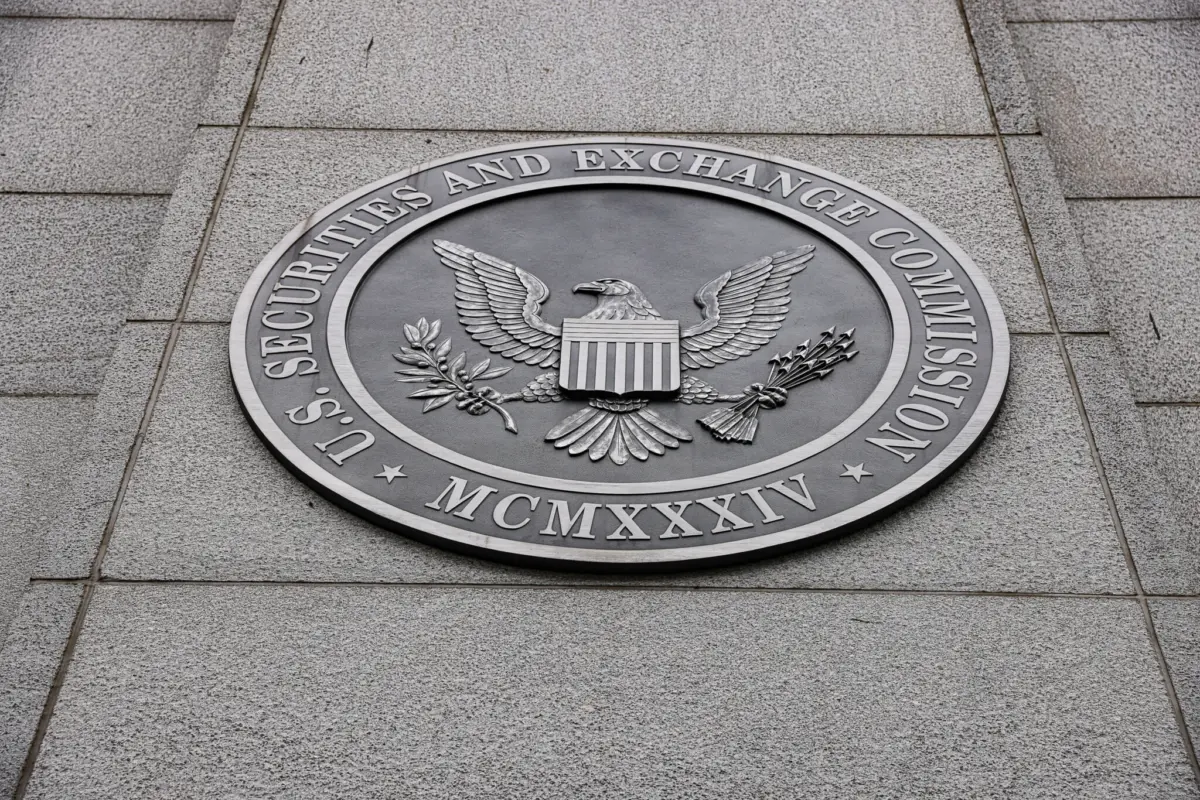
According to reports initially surfaced by The New York Times, the U.S. Securities and Exchange Commission (SEC) has initiated a sweeping probe into the hedge fund, issuing subpoenas to major financial institutions that previously partnered with the firm. As Wall Street reevaluates its romance with the generative AI boom, the saga of Situational Awareness is rapidly transforming from a cautionary tale of overexposure into a litmus test for regulatory oversight in the age of algorithmic finance.
Executive Overview
The trajectory of Situational Awareness reads like a modern financial fable, capturing the unbridled optimism of the 2024–2026 AI investment gold rush. Founded on the thesis that exponential leaps in machine intelligence would fundamentally rewrite the global economic order, the fund attracted immense pools of capital from eager institutional investors, tech elites, and risk-tolerant family offices.
By taking aggressive, highly concentrated positions in a portfolio of emerging AI infrastructure, semiconductor plays, and foundational model developers, Aschenbrenner and his team achieved phenomenal, head-turning growth during their initial months of operation. The fund quickly graduated from a niche industry obsession to a mainstream financial titan, touted by market analysts as a masterclass in reading the macroeconomic tea leaves of the technological revolution.
However, the fund’s hyper-focused strategy carried systemic risks. By hitching its entire portfolio wagon to the seemingly unstoppable upward trajectory of the AI sector, Situational Awareness left itself acutely vulnerable to sector-wide corrections. When market sentiment shifted abruptly at the end of July, triggering a broad-based sell-off in AI equities, the fund’s asset valuation plummeted, wiping out billions in paper wealth almost overnight.
Compounding these staggering market losses, the SEC has stepped in to examine the mechanics behind the fund’s rapid ascent and sudden liquidity strains. While no formal accusations of wrongdoing have been leveled against Situational Awareness or its leadership, the federal subpoenas signal a growing anxiety among regulators regarding how high-risk, tech-centric hedge funds leverage leverage, margin, and institutional backing during speculative manias.
Detailed Chronology: From OpenAI Alum to Federal Subpoenas
To understand how Situational Awareness arrived at its current precarious juncture, one must trace the timeline of its dramatic rise and sudden, bruising collision with market gravity.
Phase I: The Genesis and the Vision (Late 2024 – 2025)
The narrative of Situational Awareness is inextricably linked to the persona of Leopold Aschenbrenner. Having previously worked within the safety and alignment teams at OpenAI—one of the premier epicenters of the generative AI revolution—Aschenbrenner cultivated deep industry connections and a reputation as a visionary prognosticator of AGI timelines.
Capitalizing on his insider perspective, Aschenbrenner established Situational Awareness with a bold mandate: to aggressively back the infrastructure and firms powering the AI transition. In an economic climate hungry for exposure to the next industrial revolution, capital flowed into the fund with unprecedented velocity. Wall Street institutions, eager not to miss out on the ground floor of what was marketed as a trillion-dollar transformation, competed for allocation.
Phase II: The Zenith and Market Dominance (Early 2026)
During the first half of 2026, Situational Awareness was the talk of Manhattan and Silicon Valley alike. Its portfolio companies consistently outperformed broader market indices, buoyed by relentless corporate spending on enterprise AI, cloud data centers, and advanced silicon chips.
The fund’s proponents viewed Aschenbrenner as an oracle who understood the computational scaling laws better than traditional Wall Street veterans. This period of peak exuberance saw the fund’s assets under management swell, cementing its status as an influential market maker in tech-heavy equities. Yet, behind the scenes, the concentration risk was reaching critical mass.
Phase III: The Late-July Bloodbath (July 31, 2026)
The turning point arrived with brutal swiftness at the close of July. Triggered by a combination of macroeconomic headwinds, shifting monetary policy expectations, and growing investor skepticism regarding the immediate monetization timelines of enterprise AI applications, a sharp downturn ripped through the technology sector.

AI-adjacent stocks bore the brunt of the correction. For Situational Awareness, which had deployed capital with minimal diversification outside the tech ecosystem, the shock was catastrophic. In a matter of trading sessions, the valuation contraction erased billions of dollars in value, shocking investors who had bought into the narrative of an immutable tech bull market.
Phase IV: The SEC Steps In (August 2026)
As the dust settled on the July market rout, federal regulators moved in to investigate the collateral effects and operational integrity of the fund’s activities. Reports emerged that the SEC had begun issuing subpoenas to prominent commercial and investment banks that facilitated transactions for Situational Awareness.
Investigators trained their sights on the financial institutions responsible for supervising the fund’s trading activities and channeling the capital streams that fueled its high-velocity investments. While regulators issued standard directives for banks to preserve all communications and data related to the fund, legal experts were quick to note that a subpoena does not equate to formal charges. Nevertheless, the regulatory spotlight has cast a long, chilling shadow over the firm’s prospects for recovery.
Supporting Context & Metrics: The Anatomy of an AI Bubble
The travails of Situational Awareness do not occur in a vacuum; they reflect broader systemic anxieties plaguing the contemporary financial landscape. For over three years, global markets have experienced an unprecedented capital influx into artificial intelligence. Trillions of dollars have been committed to building out the physical and digital architecture of the AI economy—spanning massive server farms, specialized semiconductor fabrication plants, and energy-intensive power grids.
Financial historians and market analysts have increasingly drawn parallels between the current AI boom and the late-1990s dot-com bubble. During both eras, visionary technologies with genuine, world-altering potential served as catalysts for speculative excesses, overleveraged investments, and unsustainable valuations.
- Concentration Risk: Situational Awareness exemplified extreme portfolio concentration. While diversification acts as a traditional hedge against volatility, the fund’s strategy relied on the premise that the AI sector would decouple from broader economic cycles—an assumption that proved fatal during the July correction.
- Institutional Exposure: The involvement of major Wall Street banking partners underscores the systemic interconnections between modern hedge funds and traditional financial intermediaries. When a specialized fund experiences a liquidity crisis or dramatic valuation drop, the shockwaves ripple through prime brokerages and custodial banks.
- Regulatory Vigilance: The SEC’s proactive stance highlights a post-2008 regulatory environment determined to monitor systemic risks in private markets, particularly as non-bank financial intermediaries increasingly shoulder high-risk, tech-leveraged strategies.
Official Statements and Industry Reactions
As news of the SEC subpoenas reverberated across the financial press, stakeholders across the tech and finance sectors scrambled to assess the fallout.
TechCrunch reached out to Situational Awareness for immediate comment following the publication of the regulatory developments, though the firm initially did not respond directly to those inquiries. However, representatives for the hedge fund provided a statement to The New York Times, acknowledging the intense public interest while downplaying the immediate legal threat.
"Scrutiny of high-profile funds is to be expected in volatile market conditions," a representative for Situational Awareness told The New York Times. The firm further emphasized its commitment to transparency, stating unequivocally that it would "cooperate to the fullest extent with any regulatory request."
Market commentators and financial analysts have offered mixed interpretations of the unfolding situation. Some view the investigation as standard due diligence by federal watchdogs following a historic sector-wide drawdown. Others, however, argue that the probe could expose deeper vulnerabilities in how alternative investment vehicles assess risk, manage leverage, and market hyper-growth strategies to institutional clients.
Venture capitalists and traditional fund managers alike are watching the proceedings closely. For an industry that thrives on confidence, momentum, and the promise of limitless technological frontiers, the humbling of a poster-child fund like Situational Awareness serves as a sobering reminder that financial gravity cannot be indefinitely suspended by technological innovation alone.
Future Outlook: A Cautionary Tale for the New Era
As the autumn of 2026 approaches, Situational Awareness stands at a critical crossroads. The immediate challenges facing the firm are formidable: restoring investor confidence after a multi-billion-dollar valuation wipeout, managing the operational friction of an ongoing federal investigation, and navigating a newly cautious Wall Street that is suddenly acutely aware of downside risk in the AI sector.
Whether the SEC probe uncovers systemic regulatory infractions or concludes without enforcement action, the broader legacy of Situational Awareness is already secured. The fund will long be studied as a primary case study in the velocity of modern market bubbles—illustrating how rapidly capital can accumulate around a compelling technological narrative, and how swiftly market corrections can dismantle overexposed portfolios.
For the wider artificial intelligence industry, the downfall of Aschenbrenner’s flagship fund marks the end of an era of unchallenged euphoria. As investors mature and regulators sharpen their oversight, the era of "easy money" predicated solely on AI hype is giving way to a more disciplined, rigorous approach to valuation and risk management. Ultimately, Situational Awareness may well be remembered not as the pioneer of the AGI financial frontier, but as the cautionary tale that taught Wall Street how high the stakes truly are when betting on the future.







Belum ada komentar. Jadilah yang pertama berkomentar!