

Executive Overview
In an era saturated with highly curated, public-relations-vetted celebrity autobiographies designed primarily to protect legacies or launch lifestyle brands, Anthony Kavanagh’s critically acclaimed memoir, Pop Scars, shatters the mold. Eschewing the conventional glossy highlights reel and the predictable trajectory of the traditional "fall from grace," Kavanagh delivers a brisk, unflinching, and occasionally grotesque succession of cinematic vignettes.
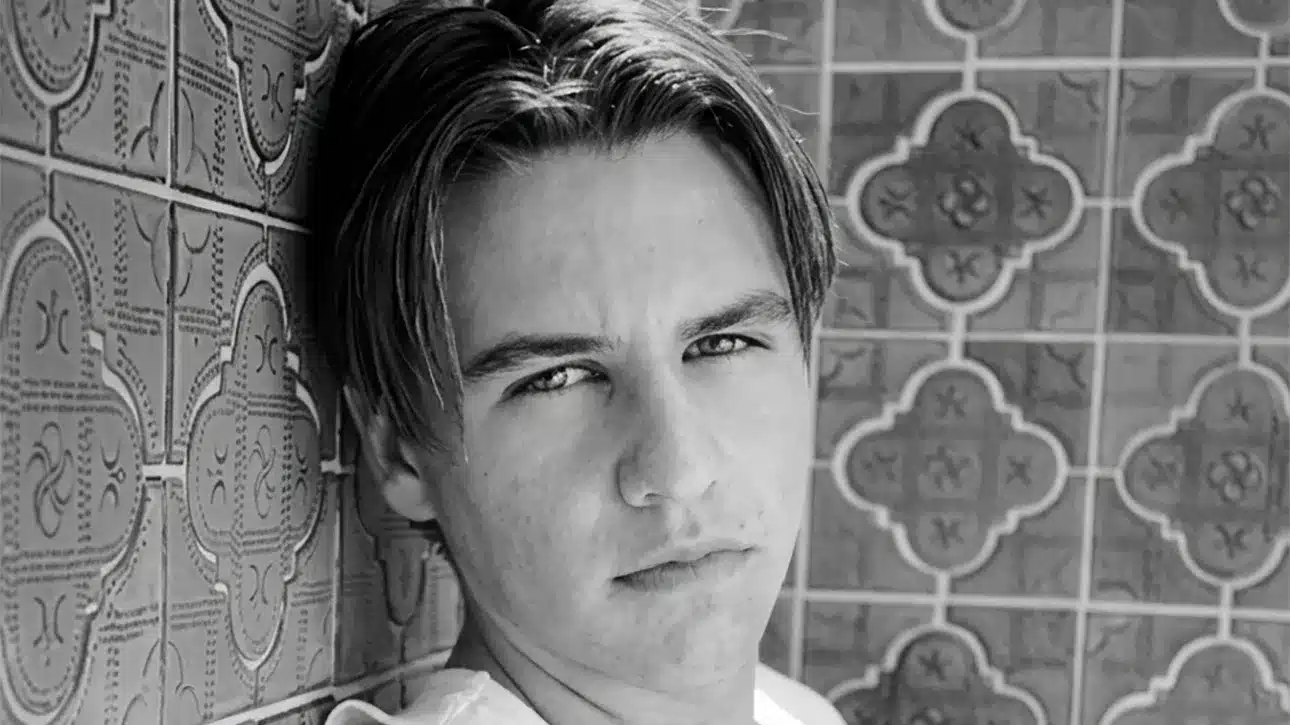
During the late 1990s, Kavanagh—recording simply as Kavana—was a ubiquitous fixture of British pop culture. He amassed four UK top 20 singles and claimed an equal number of Smash Hits magazine cover shoots, the unassailable currency of 1990s youth notoriety. Yet, beneath the perfectly parted hair, doe eyes, and manufactured wholesomeness lay a profound psychological fracture. Pop Scars chronicles a young man swept from a Manchester council house and dropped directly into the machinery of the corporate music industry, a journey that ultimately cost him his innocence, his safety, and nearly a decade of his life to addiction and blackouts.
Written without the assistance of a ghostwriter—honed instead through a literary agency course led by best-selling author Christie Watson—the memoir substitutes self-pity with a sharp, sardonic wit. It traces Kavanagh’s trajectory from teen idol to the decadent, drug-fueled underworld of Los Angeles, through unimaginable personal grief, and finally into hard-won sobriety and self-acceptance. Far from a standard celebrity cash-in, Pop Scars stands as a vital autopsy of the 1990s pop machine and a harrowing examination of the price of fame.
Detailed Chronology: From Manchester Council House to the Global Stage
The Fabrication of an Icon
Anthony Kavanagh’s entry into the music industry began with a classic pop archetype: a chance encounter in a gay nightclub with a predatory music impresario referred to throughout the book only as "The Manager." This eternal archetype of the pop svengali quickly put his new acquisition to work, employing him as an office gofer before securing a £150,000 publishing deal. The Manager’s objective was singular: to sculpt the teenage singer-songwriter into a wholesome, adolescent-targeted fantasy.
In 1996, Kavanagh released his debut single, "Crazy Chance." Penned by Howard Donald of Take That—then Britain’s biggest boy band—the track’s origin was cleverly spun by management.
"Even though I had this whole album full of songs now—I’d written a lot of the songs myself at home, and they’d been produced by some great producers—The Manager’s angle was, ‘We’ll say that Howard wrote your first single,’" Kavanagh explains. "It was actually one of his spare demos for his album, so I just reworked it and sang it, and that was that."
When his follow-up composition, "Where Are You"—a slower, emotive track reminiscent of Gary Barlow’s style—failed to set the charts ablaze, the label reverted to a proven formula. Following Take That’s success with disco covers, Kavanagh recorded a smooth, blue-eyed soul rendition of Shalamar’s "I Can Make You Feel Good." Recorded in his bedroom on a four-track recorder, Virgin Records opted to keep the production identical to the original. It proved to be a make-or-break hit that kept his career alive.
The Peak and the Parallel Reality
By late 1997, Kavanagh had secured two major hits and won Best Male Singer at the Smash Hits Poll Winners Party. At this populist alternative to the BRIT Awards, he leaned into the night’s superhero theme, performing "I Can Make You Feel Good" dressed as Clark Kent before ripping off his overcoat to reveal a Superman T-shirt emblazoned with "Kav."
Yet, this theatrical duality mirrored his inner turmoil. Behind the scenes, Kavanagh lived in constant terror of being outed by the tabloids. He monitored his cologne for perceived femininity and worried that television makeup would accentuate his naturally long eyelashes. In a chilling juxtaposition, moments after accepting his Best Male award before an arena of screaming fans, a 20-year-old Kavanagh sat alone in his hotel room, doing cocaine off the flat surface of the statuette.
Touring the globe—from Italy to Germany and Australia—proved to be "hell on earth." Amidst grey cement radio tour buildings and lonely hotel rooms, he found rare solace in a tender, private friendship with Stephen Gately of Boyzone.
"It was the first time I’d experienced that—the butterflies when I’d see the Irish number come up on my mobile, or the smell of his aftershave… Suddenly the world became Technicolor. It was like The Wizard of Oz," Kavanagh recalls.
Transition to Instinct and the Shadow of George Michael
Sensing that his team at Virgin was shifting its focus to the wildly successful Spice Girls who had moved to America, Kavanagh changed management, signing with Peter Evans. Evans brought in the Absolute production team (Paul Wilson and Andy Watkins)—the masterminds behind the Spice Girls’ albums—to helm Kavanagh’s second record, Instinct.
Recorded over three months in Italy, the album produced the breezy single "Funky Love." Its music video, directed by Phil Griffin, featured Kavanagh watching ambiguous models grind in a Y2K club set inside an empty swimming pool. The shoot brought him dangerously close to his suppressed desires:
"I really fancied a couple of the male models in the shoot as well. I was like, oh God, I wonder if they were gay? Obviously, I couldn’t do anything about it… those that knew, knew, but they wouldn’t say it."
Simultaneously, George Michael’s sexuality was forcibly thrust into the global headlines following his arrest in a public bathroom. Having heavily modeled his vocal style and visual mannerisms—such as his signature moving right eyebrow—on the Wham! frontman, Kavanagh’s anxiety spiked to new heights as he prepared for an extensive Asian tour.
The Los Angeles Abyss
As diminishing chart returns inevitably led to Virgin dropping him—delivered via an awkward meeting where Kavanagh wore a blazer to signal his professional commitment—he utilized his severance package to relocate to Los Angeles on a "special talent visa."
What followed was a six-year descent into a "lost decade" fueled by cocaine, ecstasy, and crystal meth. Moving through the Playboy Mansion, Chateau Marmont, and the Viper Room, Kavanagh sought the dopamine his brain had always lacked. Despite the darkness, he leavened the tragedy with dark comedy, recounting absurd anecdotes such as dining with an admiring Prince of Brunei or contracting a sexually transmitted disease from a soap actor with a humiliation kink.
Supporting Context & Metrics
To understand the cultural landscape Kavanagh inhabited, one must evaluate the metrics of late-1990s pop stardom:
- The Smash Hits Metric: In an era before social media algorithms, print magazines like Smash Hits dictated adolescent adoration. Securing four covers was a quantifiable barometer of mainstream cultural saturation.
- Chart Vulnerability: The heavy reliance on manufactured packaging left artists uniquely vulnerable to shifting A&R priorities. When Virgin’s focus pivoted entirely to the Spice Girls, mid-tier acts like Kavana were swiftly discarded.
- The Queer Experience in Pre-Millennium Pop: Kavanagh’s narrative highlights the immense psychological toll placed on gay artists during a time when institutional homophobia and tabloid ruthlessness forced performers into strict lavender closets. Reflecting on today’s queer-inclusive pop landscape, Kavanagh admits to feeling "quite envious… It really is great to see, but I can’t help but feel a little sad for the younger me."
Official Statements & Literary Genesis
The path to publishing Pop Scars was neither straightforward nor conventional. Following a run of reality television appearances and a lifetime ban from the chat show Loose Women due to drunken on-screen conduct, Kavanagh’s personal life fractured further. His father passed away from cancer, his only sister died, and his mother slipped into advanced dementia while the family home fell into disrepair.
After enduring a bizarre stalking incident with an obsessed fan straight out of Stephen King’s Misery, and completing two residential rehabilitation programs, Kavanagh achieved lasting sobriety. This clarity allowed him to reevaluate his life story, leading him to a literary agency course taught by professor and author Christie Watson.
Initially intimidated by his accomplished, predominantly female classmates, Kavanagh doubted his literary credentials. Watson, however, recognized his perceived failures as his greatest asset:
"She said, ‘Lean into the kitchen sink, lean into the perceived failure because… not everybody wants to read a memoir written by somebody from a place of privilege.’ That completely changed the whole scope of how I did it."
Inspired by Jennette McCurdy’s 2022 memoir I’m Glad My Mom Died, Kavanagh adopted a rapid-fire, sensory-rich writing style. Threading his Catholic guilt—symbolically tied to his namesake, Saint Anthony, the patron saint of lost things—throughout the narrative, he exposed the machinery of the commercial pop industry without self-pity.
Future Outlook
Today, Anthony Kavanagh has finally come home to himself, reconciling the pop idol of his youth with the mature artist and writer he has become. His fascinating, egoless encounters with cultural titans like Bono, Prince, Amy Winehouse, and Lulu—who trusted him to dog-sit while she was abroad—prove that he was never truly an outsider to the industry, merely an outsider to himself.
Reflecting on his lifelong quest for validation, Kavanagh notes:
"What I’ve been looking for all my life, I think, is recognition. Recognition for who I really am, which to me is an artist, and someone that’s talented… But I was looking for it in the wrong places. At the end of the book something happens with my mum, where obviously she’s got Alzheimer’s, but she has a moment of lucidity… I went all the long way around to find it, and actually, the person it meant the most to was her in that moment, you know?"
With Pop Scars, Kavanagh has permanently discarded the manufactured persona of "Kavana." In its place stands a courageous, transparent accounting of survival, proving that true pop survival is measured not by chart longevity, but by the ability to emerge from the darkness and finally speak one’s absolute truth.

Belum ada komentar. Jadilah yang pertama berkomentar!