

Executive Overview
Few figures in modern entertainment history have achieved the rare equilibrium of ubiquitous pop culture saturation and profound, enduring artistic reverence quite like Dolly Parton. As tributes poured in following her passing, the global chorus of grief underscored a rare consensus: Parton was not merely a country music luminary, but a foundational architect of American culture.
Her enduring influence stretches far beyond the high-energy melodies of "9 to 5" or the heart-wrenching ache of "Jolene." Parton was a masterclass in duality—a brilliant songwriter who weaponized self-effacing humor, a shrewd business mind disguised as a rhinestone-bedecked caricature, and an artist whose deep, uncompromising empathy bridged cultural divides. As fellow icon Jane Fonda aptly observed, “She can see into people. She’s deep. It’s like through her songs, she opens her arms wide and embraces such a broad swath of people that don’t always feel seen.”
While her philanthropic footprint—spanning childhood literacy initiatives, community redevelopment in her native East Tennessee, and substantial contributions to COVID-19 vaccine research—cements her status as a secular saint, it is her artistic output that demands rigorous examination. Parton understood the mechanics of fame long before the social media era forced modern pop stars to curate their digital personas. By weaponizing camp, owning her narrative, and masterminding her own self-mythology, Parton created the ultimate work of art: herself.
Detailed Chronology
The Smoky Mountain Roots and Early Nashville Success
Born into Dickensian poverty in the rugged mountains of Sevier County, Tennessee, Parton was the fourth of twelve children. This upbringing became the cornerstone of her self-mythology. She learned early on how to command attention in a crowded room, translating the struggles of rural survival into a fierce determination to escape hardship without ever abandoning her roots.
Moving to Nashville immediately after high school in 1964, Parton initially found success as a songwriter before catching her big break on The Porter Wagoner Show in 1967. Her tenure on Wagoner’s television variety show proved that she was much more than a gifted vocalist; she was a natural comedic performer with an innate understanding of television pacing and audience engagement. Though her departure from the show in 1974 sparked professional friction—immortalized by her classic heartbreak ballad "I Will Always Love You"—it marked the true beginning of her solo ascent.
The Crossover Ambitions and Hollywood Expansion
By the late 1970s, Parton had conquered the country charts, but her ambitions stretched far beyond Nashville’s traditional borders. In a 1976 New York Times interview, she articulated a delicate balancing act: "I don’t want to leave the country, but to take the country with me wherever I go."
This ambition catalyzed her mainstream crossover. Songs like "Here You Come Again" (1977) blurred the lines between country and pop, setting the stage for her cinematic debut in the 1980 workplace satire 9 to 5, alongside Jane Fonda and Lily Tomlin. The film was a critical and commercial triumph, cementing Parton’s affinity for the underdog. She followed this with roles in The Best Little Whorehouse in Texas (1982) and Steel Magnolias (1989). While Parton was the first to jokingly downplay her acting prowess—often quipping that she wasn’t a great actress—she possessed something far more potent: an unmistakable cinematic presence that transformed every film she touched into an extension of her vibrant brand.
The 1990s Crossroads and the Bluegrass Renaissance
By the mid-1990s, however, the relentless machinery of pop crossover and the rhinestone-encrusted persona threatened to overshadow her foundational musicianship. Facing an increasingly hostile commercial country radio landscape that marginalized aging veterans, Parton made a characteristically bold pivot.
Refusing to apologize or chase fleeting youth-oriented trends, she returned to her acoustic roots with the 1998 album Hungry Again. This strategic retreat birthed what is widely considered the finest chapter of her recording career: her celebrated bluegrass trilogy—The Grass Is Blue (1999), Little Sparrow (2001), and Halos & Horns (2002). Operating away from the suffocating pressures of major-label pop expectations, Parton delivered urgent, deeply traditional music that earned critical acclaim and proved her enduring artistic vitality. Explaining this artistic freedom in a 2001 interview with NPR, she famously remarked:
"You can’t make much money [making bluegrass music], so I had to get out in the world and kinda make a living so I could afford. I had to get rich so I could afford to sing like I’m poor again."
Supporting Context & Metrics
The Weaponization of Camp and Aesthetics
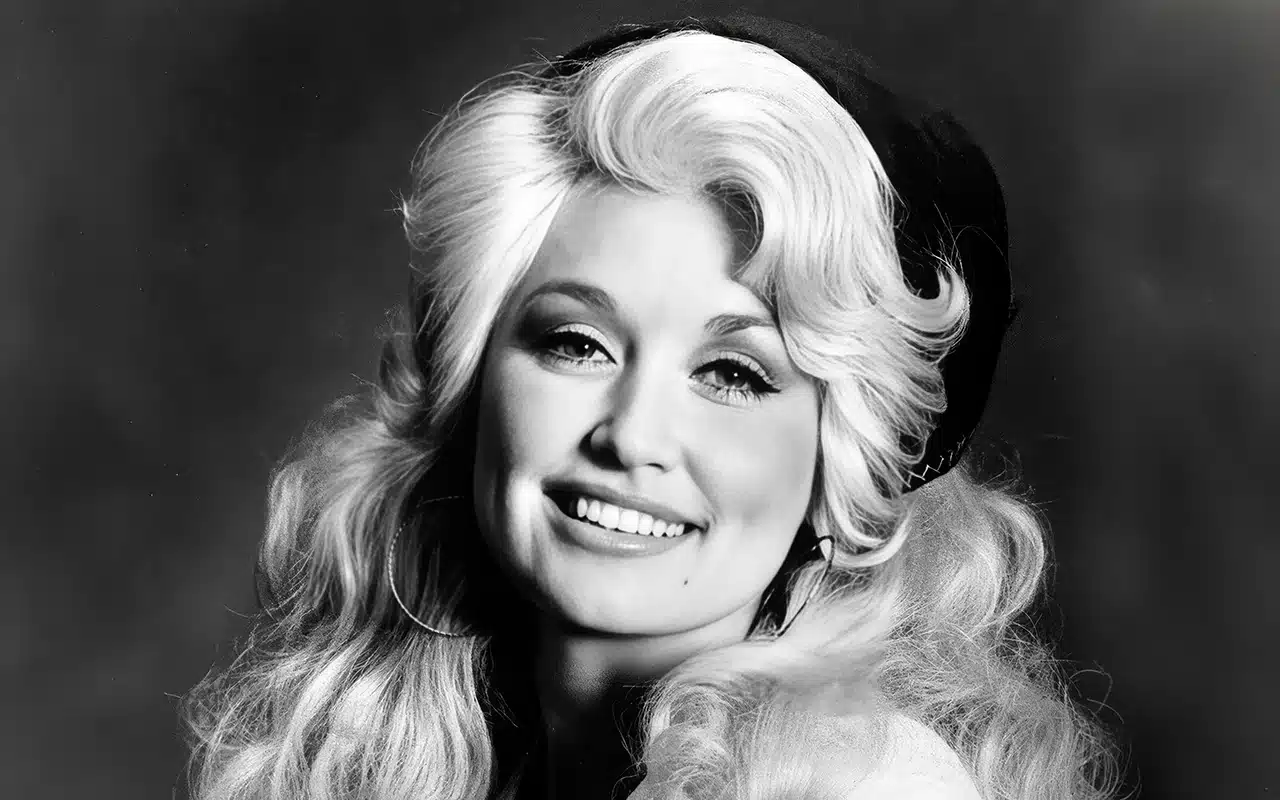
Parton’s visual aesthetic—her towering wigs, heavy makeup, impossibly cinched waistlines, and glittering stage costumes—was frequently misconstrued by critics as shallow self-promotion. In a notorious 1970s interview, broadcast journalist Barbara Walters condescendingly reduced Parton to a "hillbilly" trope, questioning her reliance on flash.

Yet, Parton was perpetually operating several steps ahead of her detractors. In her self-titled anthem "Backwoods Barbie," she directly addressed these superficial judgments:
“Don’t judge me by the cover ’cause I’m a real good book / Don’t be fooled by thinkin’ that the goods are not all there / Don’t let these false eyelashes lead you to believe that / I’m as shallow as I look ’cause I run true and deep.”
As Susan Sontag noted, true camp requires a degree of sincerity; Parton inverted this by pairing radical sincerity with calculated, self-aware irony. In her own words:
"I just decided that I would do something that would at least get the attention. Once they got past the shock of the ridiculous way I look, then they would see there were parts to be appreciated… Show business is a money-making joke, and I always like telling jokes."
Empathy as a Musical Framework
Beneath the glittering surface and comedic timing lay an emotional depth rooted in profound empathy. Parton’s songwriting systematically championed the marginalized: women navigating the oppressive corporate structures of the 1980s ("9 to 5"), pregnant teens facing societal ostracization ("Down from Dover"), single mothers fighting against generational cycles of poverty ("Coat of Many Colors"), and transgender individuals searching for belonging ("Travelin’ Thru").
Her late-career bluegrass output further underscored this melancholy undercurrent. Songs like "Little Sparrow" deployed traditional Appalachian gothic imagery to explore the crushing weight of heartbreak:
“All ye maidens, heed my warning / Never trust the hearts of men / They will crush you like a sparrow / Leaving you to never mend.”
Official Statements & Industry Impact
The cultural footprint left by Dolly Parton is visibly stamped across generations of contemporary performers. Pop icons like Lady Gaga and Katy Perry mirror her mastery of high-camp visual iconography, while country artists ranging from Kacey Musgraves to Reba McEntire have continually validated Parton’s core thesis: that professional ambition, steely resilience, and profound vulnerability can coexist.
In the wake of her passing, peers and cultural institutions rushed to honor her legacy.
- Jane Fonda, reflecting on their decades-long friendship and professional collaboration, noted: "She can see into people. She’s deep. It’s like through her songs, she opens her arms wide and embraces such a broad swath of people that don’t always feel seen."
- Music Historians have frequently drawn parallels between Parton and Andy Warhol. While Warhol predicted a culture of transient, 15-minute fame, Parton constructed an immortal, cartoon-colored empire where she remained the sole architect and master of her image from inception to legacy.
Future Outlook
As the dust settles on an extraordinary life in the public eye, the future study of American popular culture will inevitably grapple with the paradox of Dolly Parton. She proved that an artist could be simultaneously commercially ruthless and deeply humanitarian, hyper-capitalist and fiercely grassroots, a cartoonish caricature and an authentic poetic voice.
Her influence will continue to reverberate through multiple mediums. In Nashville, her blueprint guides independent female artists who reject major-label constraints. In Hollywood, her self-authored origin story remains the gold standard of personal branding. And in the hearts of millions worldwide who found solace in her lyrics, her enduring message remains clear: do not judge the book by its glittering cover, because the pages inside run true and deep.






Belum ada komentar. Jadilah yang pertama berkomentar!