

Executive Overview
The mobile gaming landscape is fiercely competitive, driven by relentless demands for higher frame rates, advanced thermal management, and uncompromising ergonomic designs. Amidst this high-stakes ecosystem, Lenovo has established a formidable presence with its dedicated gaming smartphone lineup. Although an anticipated January 1, 2022, launch date came and went without a formal product debut, the technology giant kept the momentum alive by releasing an official teaser video. This strategic preview offered enthusiasts and industry analysts a comprehensive look at the upcoming Lenovo Legion Y90.
Building directly upon the foundation laid by its predecessor, the Legion Duel 2, the Legion Y90 introduces refined design aesthetics, robust active and passive cooling solutions, and top-tier display specifications. While official pricing and a definitive release date remain under wraps, the preliminary disclosures paint a clear picture of a device engineered for hardcore mobile gamers. This comprehensive report delves into the architectural design, thermal engineering, display capabilities, internal hardware configurations, and the broader implications of the Legion Y90 within the contemporary smartphone market.
Detailed Chronology
The Missed Launch Window and the Pivot to Teasers
Industry watchers widely anticipated that Lenovo would initiate the new year by unveiling its flagship gaming smartphone on January 1, 2022. When that date passed without a formal press event or product announcement, speculation arose regarding potential supply chain delays or strategic scheduling shifts. Rather than leaving consumers in the dark, Lenovo pivoted quickly by utilizing social media platforms—specifically Weibo—to release an official teaser video.
This short promotional clip served a dual purpose: it quelled concerns about the device’s development status and immediately ignited online discussions by showcasing the physical chassis, button placement, and unique central design philosophy of the Legion Y90. By offering a calculated glimpse into the hardware layout, Lenovo successfully sustained consumer interest while finalizing the operational and logistical preparations required for a formal commercial rollout.
Evolution of the Design Language
A comparative analysis between the Legion Y90 and the preceding Legion Duel 2 reveals a clear design lineage, albeit with targeted structural optimizations. The Legion Y90 retains the distinctive central bump philosophy that defined its predecessor, a layout specifically chosen to optimize internal component distribution for landscape-oriented gaming.
Housed within this central ridge is a sophisticated thermal vent system, a dual-camera setup accompanied by a dual-LED flash module, and an iconic Y-shaped RGB lighting array. This luminous branding element remains a staple of the Legion gaming ecosystem, allowing users to customize their aesthetic preferences while signaling the device’s high-performance pedigree.
Unlike traditional smartphones that prioritize symmetrical, minimalist rear panels, the Legion Y90 embraces a bold, aggressively utilitarian aesthetic. The curved edges of the chassis are engineered to improve palm grip during extended gaming sessions, reducing hand fatigue and minimizing accidental touches on the responsive display edges.
Supporting Context & Metrics
Display Engineering and Visual Performance
At the core of any premier gaming smartphone is its visual interface. The Lenovo Legion Y90 is confirmed to feature an expansive 6.92-inch E4 AMOLED display panel. Manufactured to meet rigorous modern standards, this screen prioritizes both color fidelity and motion smoothness.
- Refresh Rate: 144Hz, ensuring butter-smooth animations and transitions that drastically reduce motion blur during fast-paced competitive gameplay.
- Touch Sampling Rate: 720Hz, providing near-instantaneous touch registration that gives competitive players a critical millisecond advantage in shooter and action titles.
- Visual Enhancements: Full High Dynamic Range (HDR) support for enhanced contrast and vibrant color reproduction, alongside certified anti-blue light eye protection to mitigate visual fatigue during marathon gaming sessions.
Significantly, unlike the Legion Duel 2, which relied on a motorized side-mounted pop-up camera mechanism, the Legion Y90 adopts a more streamlined approach. The selfie camera is integrated directly into the top-right corner of the bezel area, completely eliminating the need for a distracting punch-hole cutout or notch. This design choice preserves an uninterrupted, symmetrical viewing canvas for media consumption and gaming.
Thermal Architecture: Double Engine Air Cooling Technology
Mobile processors generate immense thermal energy under sustained loads, often leading to thermal throttling—a phenomenon where the CPU and GPU reduce their clock speeds to prevent overheating, resulting in stuttering frame rates. To combat this, Lenovo has equipped the Legion Y90 with an innovative Double Engine Air Cooling Technology.
The chassis layout reflects this thermal priority:
- The Central Vent: Positioned directly within the central rear bump to exhaust heat away from the user’s primary grip areas.
- Additional Side Vents: The power button is strategically located on the right side of the device, flanked by two dedicated ventilation grates to maximize airflow.
- Volume Control Placement: Situated on the left edge, maintaining ergonomic separation from the active thermal zones.
This multi-vent architecture, working in tandem with internal vapor chambers and potentially active cooling fans, ensures that the device can sustain peak performance benchmarks over extended periods without compromising structural integrity or user comfort.
Hardware Foundation and Software Ecosystem
Underneath its rugged exterior, the Legion Y90 is built to handle the most demanding mobile titles currently available. While final specifications are subject to confirmation upon full release, industry leaks and official previews point toward flagship processing architecture, utilizing either Qualcomm’s high-performance Snapdragon 888 or the cutting-edge Snapdragon 8 Gen 1 System-on-Chip (SoC).
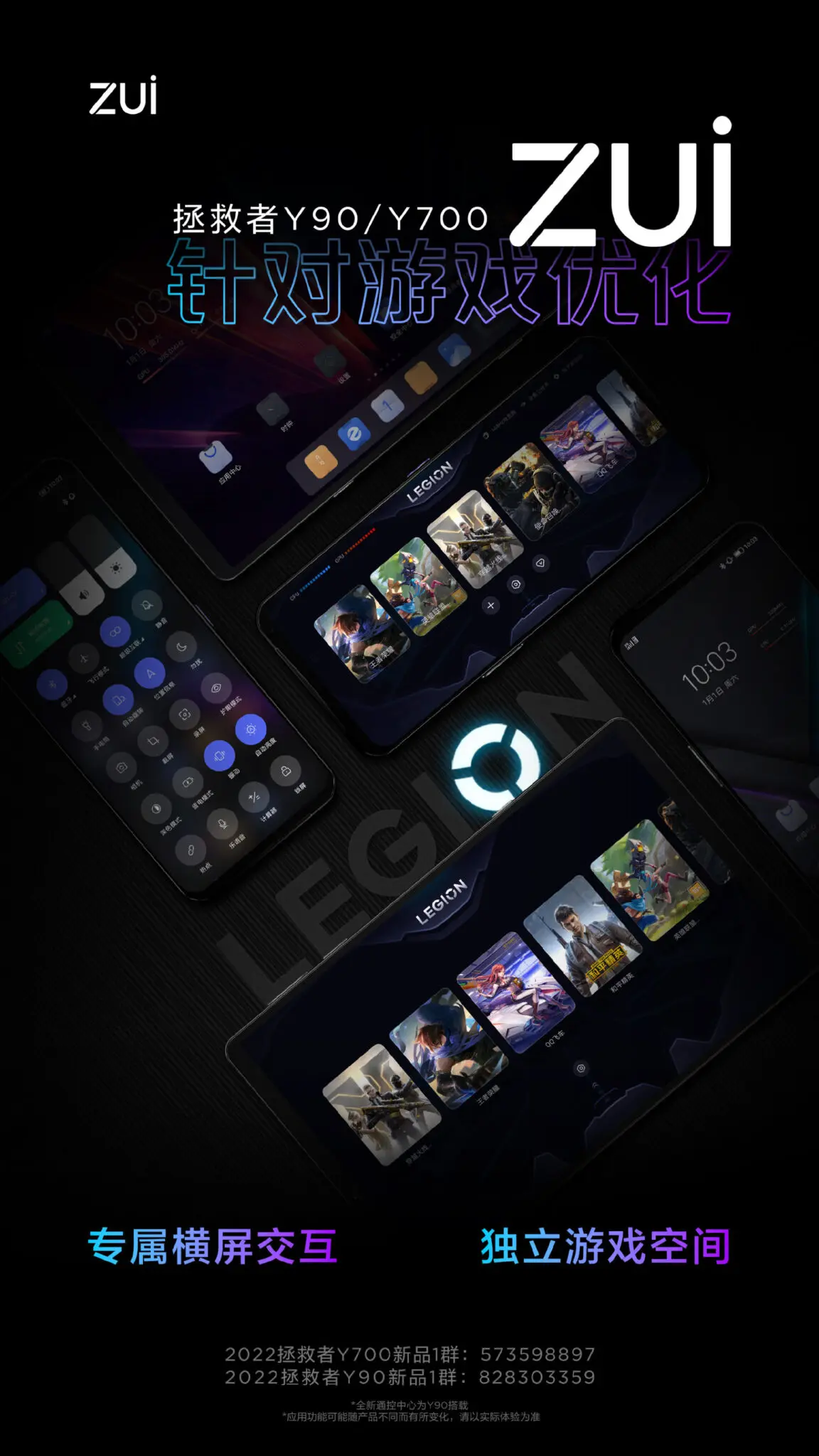
Running on Lenovo’s proprietary ZUI 13 software interface, the device is optimized specifically for gaming utility. ZUI 13 introduces specialized software enhancements, including floating windows for multi-tasking, deep performance-tuning profiles, and macro configurations that allow players to map complex touch inputs to physical triggers or gestures.
Official Statements and Industry Insights
While Lenovo has maintained a measured approach regarding comprehensive specification sheets, statements released alongside the Weibo teaser campaign emphasize the brand’s commitment to uncompromising performance. Representatives have repeatedly highlighted that the Legion Y90 is not merely an iterative update, but a comprehensive redesign aimed at addressing the real-world pain points experienced by mobile esports athletes and enthusiasts.
Industry analysts reviewing the leaked metrics and promotional assets have noted that Lenovo’s decision to retain a landscape-first design philosophy sets it apart from mainstream flagship competitors. While brands like Samsung and Apple design phones primarily for vertical, one-handed operation, Lenovo continues to tailor its hardware architecture around the two-handed, horizontal gaming paradigm. This deliberate divergence underscores a growing market segmentation where specialized gaming phones command a dedicated, highly loyal consumer base willing to trade mainstream subtlety for raw ergonomic and thermal dominance.
Future Outlook
The delayed launch of the Lenovo Legion Y90 has done little to dampen enthusiasm within the mobile technology community. As leaks continue to validate the device’s impressive feature set—ranging from the 144Hz E4 AMOLED display and 720Hz touch sampling rate to the advanced Double Engine Air Cooling Technology—all eyes remain fixed on Lenovo’s next moves.
As the smartphone market matures, the success of the Legion Y90 will likely hinge on two critical factors: aggressive global pricing and regional availability. While initial releases traditionally target the hyper-competitive Chinese market, a robust international rollout will be essential for Lenovo to capture market share from established rivals like ASUS (ROG Phone series) and Nubia (RedMagic series).
As soon as Lenovo officially breaks its silence regarding the final launch date, pricing structures, and global distribution plans, the industry will receive a definitive answer as to whether the Legion Y90 can successfully redefine the boundaries of mobile gaming performance. Stay tuned for further updates as this developing story unfolds.








Belum ada komentar. Jadilah yang pertama berkomentar!