

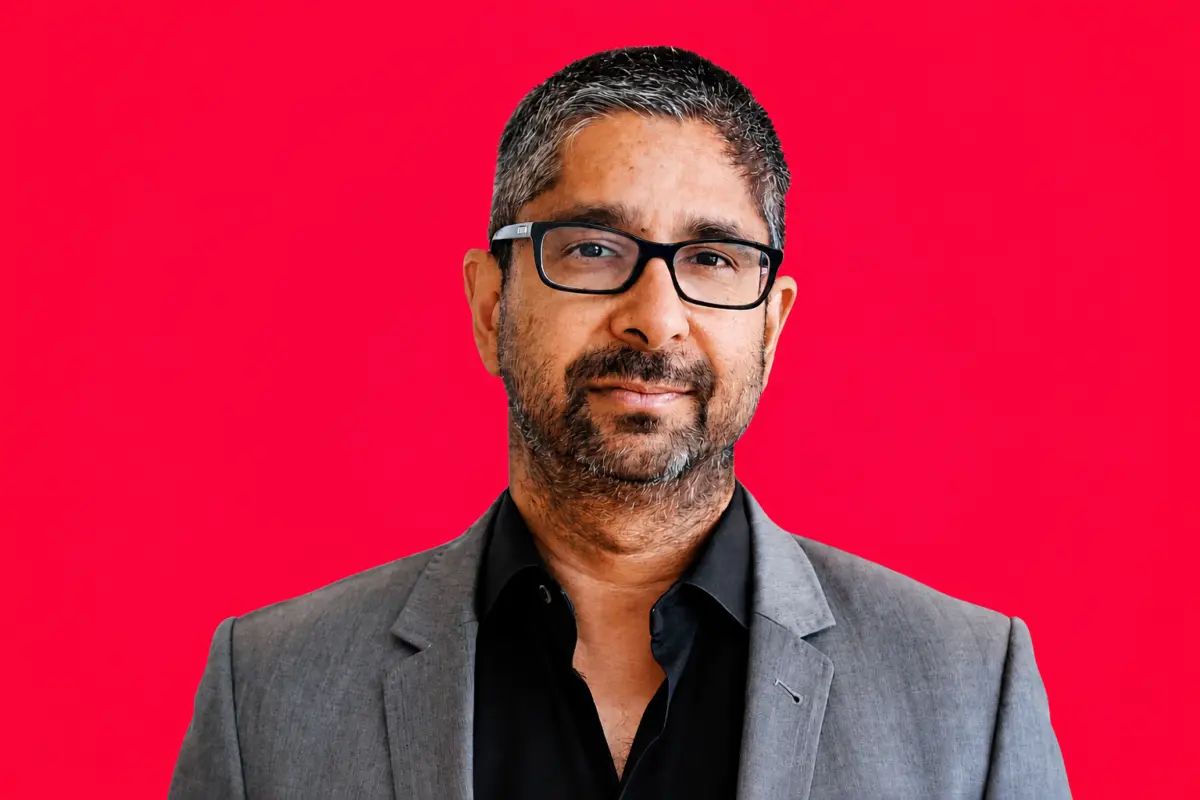
For over a decade, Vijay Pande was a towering figure in venture capital, steering Andreessen Horowitz’s (a16z) life sciences and healthcare practice into a nearly $4-billion powerhouse. Before that, he was a revered Stanford chemistry professor globally recognized for creating Folding@home, a pioneering distributed-computing project that turned millions of consumer computers into a massive supercomputer dedicated to disease research.
Yet, in June of last year, Pande stepped away from the institutional scale of a16z to embark on an entirely different journey. Alongside longtime investor Zach Werner, he launched VZVC, a boutique venture firm that fundamentally reimagines how early-stage biotech and healthcare investing operates. Rejecting the high-volume, broad-portfolio approach common among traditional Silicon Valley venture firms, VZVC makes only a handful of highly concentrated bets annually, employs zero human associates—opting instead for proprietary AI operational agents—and emphasizes deep, hands-on partnerships with founders.
This extensive interview explores Pande’s hard pivot, the structural transition of biology from a science of discovery to an engineering discipline, the underlying data hurdles facing AI-driven medicine, and why the future of biotech relies heavily on open-source foundation models rather than walled corporate data silos.
Detailed Chronology: From Academic Pioneer to Venture Capital Titan
To understand Pande’s current entrepreneurial venture, it is essential to trace the arc of his career, which bridges computational biology, academic research, and institutional venture capital.
The Stanford Days and Folding@home
Long before entering the boardrooms of Sand Hill Road, Pande built his reputation in academia. As a professor of chemistry at Stanford University, his most defining early achievement was the creation of Folding@home in the year 2000. By harnessing idle computing power across millions of personal computers worldwide, the project simulated protein folding—a notoriously complex molecular process central to understanding diseases like Alzheimer’s, Huntington’s, and various cancers. This early venture proved the profound potential of distributed computing in life sciences long before "AI for drug discovery" became a mainstream commercial sector.
The Andreessen Horowitz Era
Pande’s transition into venture capital happened abruptly twelve years ago. Marc Andreessen and Ben Horowitz—who had explicitly avoided healthcare and life sciences during their firm’s first five years of operation—decided the sector was ripe for technological disruption. They handed the keys of their newly minted bio fund to Pande. Over the subsequent decade, Pande transformed a skeptical initial bet into a powerhouse practice managing close to $4 billion, backing breakthrough companies such as Genesis Therapeutics (spun out of his Stanford lab) and Insitro (founded by his former Stanford colleague Daphne Koller).
The Birth of VZVC
Despite overseeing billions of dollars at a16z, Pande felt constrained by the operational gravity of a massive institutional fund. In June of last year, he walked away to co-found VZVC with Zach Werner. Named after its founders (Vijay and Zach), the firm was deliberately engineered to reject traditional venture scaling. Rather than hiring a fleet of human analysts and associates, VZVC leverages bespoke internal AI agents to handle day-to-day operations, enabling a lean, highly focused partnership model.
Supporting Context & Metrics: The Paradigm Shift in Biology and AI
The launch of VZVC coincides with a fundamental transformation in how medicines are researched, developed, and delivered. Pande points out several critical structural trends defining the current landscape of computational biology.
From Discovery to Engineering
Historically, drug discovery was largely a process of serendipity and trial-and-error. Researchers screened thousands of molecules, hoping to stumble upon a compound that interacted favorably with a disease target. Today, AI and machine learning have turned biology into an engineering discipline. Algorithms can map complex molecular interactions, predict disease targets, design custom molecules, and streamline clinical trial architectures.
The Economics and Flaws of Clinical Trials
Despite technological acceleration, clinical trials remain the most expensive and high-risk bottleneck in medicine. Pande notes the stark economic reality of drug development:
- High Failure Rates: Only about 20% of drugs successfully transition from Phase 1 clinical trials through the end of Phase 3.
- The Animal Model Fallacy: The primary reason for clinical trial failure is not flawed biological theory, but the reliance on animal models—such as mice—which are fundamentally poor predictors of human physiological responses.
- Cost Amortization: Because 8 out of 10 drugs fail after consuming hundreds of millions of dollars, the successful drugs must carry massive price tags to cover past losses. While synthetic data and AI cannot instantly eliminate clinical trial costs, they significantly improve predictive accuracy over traditional animal testing, crossing a critical scientific threshold.
Precision Medicine vs. Population Averages
Traditional healthcare relies heavily on population averages, comparing an individual’s diagnostic metrics against broad demographic norms. Pande emphasizes that the future lies in precision medicine—shifting the diagnostic standard from "Is this result normal for a population?" to "Is this result anomalous for you?" By combining multi-omic measurements (such as proteomics and genomics) with advanced AI diagnostics, doctors can tailor treatments specifically to an individual’s unique biological state from day one, avoiding the grueling trial-and-error prescribing cycles common in oncology and other complex fields.
Official Statements & Insights: The Interview Transcript
The following conversation has been edited for length and clarity.
On Engineering Biology
Interviewer: You’ve said biology is moving from a “science of discovery” to something you can engineer. What does that mean?
Vijay Pande: For a lot of the way drugs have been developed, there was very much a fortuitous aspect to it. I think what’s shifted is that AI and machine learning allow computers to wrap their type of understanding around something very, very complicated—to try to figure out what targets you want your drugs to hit, for specific diseases, to be able to make those drugs, and now even to help in the clinical trials—which are the most expensive part of the process.
Interviewer: I thought clinical trials were getting cheaper because drug developers are using more synthetic data, so not as many people are needed for these trials.
Vijay Pande: That’s, I think, very much an aspiration. The cost and time to get to clinical trials has been shrinking, especially with AI, but it could still cost hundreds of millions of dollars to run a trial, which is why drugs are very expensive. The probability of a drug going successfully from the first trial to the end of the third trial is just 20%. If 8 out of 10 fail, and these things cost hundreds of millions of dollars, the amortized cost gets really high. The reason they fail typically is not that the biologist did something wrong; it’s that all the experiments these drugs were designed on were on animal models like mice, and in the end, animal models are just not very predictive of humans. The AI model is not going to be perfect, but it’s going to be way better than any animal model would be, and once it crosses that bar, that’s where it gets really exciting.
On Precision Medicine and Data Convergence
Interviewer: Would you say the path to this moment has been slow and steady, or did it spike more recently?
Vijay Pande: I think it’s lots of different things coming together. So for instance, precision medicine for the longest time was based on genomics. But the reality is your genome is kind of like the blueprint for your house on day one, but your house is fairly different now compared with the moment it was built. So there are many other things that people can now measure in proteomics and so on that are much more relevant for understanding disease and where your body is now. There has also been a lot of automation in robotic measurements that is naturally tied into AI, and those two go hand in hand really well. Over the last decade, there’s been this steady clip for both AI for biology and AI for chemistry. The biology part is like, how can we treat this disease? And then the chemistry part is, how can we come up with a drug to go after that specific protein? There have actually been very significant advances over those 10 years.
The Data Conundrum in Biotech
Interviewer: You mentioned that biology is one of the few places AI can’t just scrape data off the internet. What does that mean for how the field develops?
Vijay Pande: It’s a place where you don’t have any of this data that people can just all train the same thing, and your data can’t be distilled from one model to another. It’s a really interesting play from just the pure AI sense.
Interviewer: Doesn’t that echo a familiar problem in medicine, though—doctors operating in territorial, often competitive silos?
Vijay Pande: You’re onto something really big here. Let’s say someone has some type of cancer, and it’s both an issue in oncology and endocrinology—those two doctors really don’t sync together very well. What is really intriguing about AI is that it can, in principle, be a specialist in everything, and it can start to see things that really any single human being couldn’t. It would be equivalent to having a team of the very best doctors all clamoring together in that moment.
Interviewer: But is there enough data sharing for that vision to actually be realized? I understand why founders and investors want to protect their respective findings, but…
Vijay Pande: I think one of the bigger trends is that we’re starting to see a shift toward building these atlases of biological information—which, from a technology standpoint, are typically foundation models. And as they become more common, I think we’ll see the same thing that’s happened with open-source LLMs, which do very well against the corporate ones: open-source foundation models in biology having a very broad impact.
Founder Selection and Lessons Learned
Interviewer: You’re involved with Genesis Therapeutics and Insitro, and you’re incubating a company with a founder you’ve known for 20 years. What are you looking for in founders, and in what areas?
Vijay Pande: There are two areas that I’ve been spending most of my time on. One is AI for healthcare delivery, which I did a ton at a16z as well, and then AI for clinical trials. One of the things that’s most important to me [about founders] is that we can really trust each other—founders that have high integrity, that do what they say they’re gonna do… I’m expecting this relationship to be 5, 10 years plus into, ideally, their next company. I want to work with people who are thinking long term like that. Ideally, these are people who are not just trying to win and beat other people, but really thinking about the question: how do we win together?
Interviewer: What have you gotten right and wrong in your investing career so far?
Vijay Pande: When I started talking about AI and machine learning and technology and medicine and bio 10 plus years ago, there was a lot of resistance and a lot of people saying, ‘Oh, that’s never going to happen. That’s never going to be useful,’ and so on. That resistance is largely gone and seeing this arc is very fulfilling. I think it took me some time to really appreciate that as seductive as the coolest technologies are, it really always comes back to go-to-market. I tell my founders, especially the ones who are coming from the science or the product side, for them to take all their brilliance and creativity and really apply it to the go-to-market side, that the go-to-market part is at least as hard or harder than the technology side.
The VZVC Operating Model
Interviewer: Help us understand how you’re designing this new firm differently, compared with what you were running at a16z.
Vijay Pande: Right now, we’re doing something really quite different… VZ is named after me, Vijay, and my co-founder, Zach Werner—he’s the Z. We’re intentionally really quite small… on the investment side, it’s really just the two of us. We were actually intending on hiring associates, but it turned out, with the agents that we’ve built up, not to be something that we need to do.
Interviewer: How concentrated is “concentrated”?
Vijay Pande: We’re not driving 30 bets per year… we’re talking about probably five, not a lot of investments—very concentrated. Adding a company at a typical fund is like adding a Facebook friend—that’s something you do pretty quickly. For Zach and I, it’s more like wanting to have another child. This is a big deal for us.
Interviewer: With that structure, who are you competing against for deals?
Vijay Pande: The funny thing about this model is that typically we’re not trying to compete for a hot round—people make room for us. It’s a very different thing than trying to get the hot Series A or Series B. Largely, people want us as investors because of what Zach and I can do, and how hands-on we can be. When I look at people who are inspirations, I look at someone like Antonio Gracias at Valor—he’s well-known now because of the SpaceX deal, but he’s been doing what he’s been doing for 20 years. What Thrive has done, with a more concentrated portfolio, is also a real inspiration. Obviously, a16z is sort of in my DNA as well, but I think those other ones are new additions to how we think about things.
Interviewer: What’s overhyped right now in AI and biotech?
Vijay Pande: The reality is that AI can find insights that we can’t get from just humans alone. The thing that always gets tricky is when there’s this call that AI is going to cure everything. The reason for hesitance there is not because of any doubt about AI—it’s about doubt of the data. LLMs work because there’s so much data to learn from. When the data is simply not there, then AI can’t magically solve that problem.
Future Outlook: The Next Decade of Computational Life Sciences
As VZVC establishes its footprint in the venture ecosystem, Vijay Pande’s career shift highlights a broader evolution within technology investing. The era of sprawling, multi-billion-dollar generalist funds deploying capital across dozens of speculative bets is increasingly being challenged by hyper-focused, tech-enabled boutique firms. By utilizing custom AI agents to streamline back-end operations, Pande and Werner have demonstrated that venture capital firms can scale their intellectual impact without necessarily scaling their headcount.
In the realm of biotech and healthcare, the horizon is defined by two competing forces: the immense promise of multi-omic precision medicine and the stubborn reality of proprietary biological data silos. While text-based large language models benefit from the nearly infinite expanse of the public internet, biological discovery requires proprietary wet-lab experimentation, clinical validation, and secure data harmonization.
Looking forward, the success of AI-driven medicine will depend on the emergence of robust open-source biological foundation models and cross-disciplinary medical coordination. If pioneers like Pande can successfully back founders who navigate both the rigorous science and the arduous go-to-market strategies, the next decade may finally bridge the gap between computational aspiration and clinical reality, fundamentally altering how humanity diagnoses and treats disease.








Belum ada komentar. Jadilah yang pertama berkomentar!