

Executive Overview
The mobile gaming landscape is on the cusp of another seismic shift. Following earlier official design reveals that offered enthusiasts a glimpse at the bold aesthetics of Lenovo’s upcoming flagship hardware, a massive specifications leak has surfaced, painting a comprehensive picture of what the Lenovo Legion Y90 is truly capable of.
Sourced from the reputable Weibo tipster Panda is bald, these newly unveiled technical details confirm that Lenovo is not merely competing in the mobile gaming arena; it is aggressively looking to redefine performance ceilings, thermal management standards, and multitasking capacities.
At its core, the Legion Y90 is designed to bridge the gap between heavy-duty desktop-class performance and pocket-sized portability. Packing Qualcomm’s bleeding-edge Snapdragon 8 Gen 1 system-on-chip (SoC), a staggering physical configuration of up to 18GB of RAM augmented by virtual memory expansion, and an expansive 6.92-inch AMOLED display, Lenovo is pulling out all the stops.
Furthermore, the device targets critical pain points for mobile esports athletes and power users alike: thermal throttling, battery longevity, tactile feedback, and high-speed input registration. As the mobile gaming sector matures, devices like the Legion Y90 represent a specialized class of hardware engineered to withstand hours of sustained, high-intensity processing without breaking a sweat.
This in-depth investigative report explores the leaked specifications of the Lenovo Legion Y90, contextualizes its hardware against the broader mobile gaming ecosystem, evaluates its advanced cooling architecture, and analyzes its strategic positioning ahead of its anticipated mid-2022 market launch.
Detailed Chronology of the Leak and Hardware Evolution
From Design Teasers to Under-the-Hood Revelations
The journey of the Lenovo Legion Y90 into the public eye has been a masterclass in controlled leaks and targeted promotional rollouts. Initially, Lenovo focused consumer attention entirely on the physical industrial design of the smartphone. The teasers showcased a distinct gaming-centric chassis—complete with aggressive lines, centralized internal components optimized for cooling, and unmistakable Legion branding that appeals directly to the competitive esports demographic.
However, hardware enthusiasts and prospective buyers were left with a critical void: what was driving this formidable machine beneath its sleek exterior?
That void was filled when Weibo user Panda is bald published a detailed breakdown of the device’s internal specifications sheet. This leak effectively bridged the gap between industrial design and functional capability. By detailing the exact display panels, memory configurations, battery capacities, and cooling mechanisms, the leak transformed the Legion Y90 from an intriguing design concept into a tangible, high-performance contender.
The Trajectory Toward Launch
The emergence of these hardware specifications aligns with a broader product cycle for Lenovo’s gaming division. Industry insiders note that the Legion Y90 is not arriving in a vacuum; it is expected to debut alongside the highly anticipated Lenovo Legion Y700 gaming tablet, signaling a coordinated push by Lenovo to capture market share across both the smartphone and tablet form factors for mobile gaming.
While Lenovo has yet to lock in an official, concrete launch date, industry consensus points toward an unveiling before the midpoint of 2022. This timeline positions the Legion Y90 to compete directly against other early-2022 flagship gaming releases, setting the stage for a fiercely contested battle for supremacy in the Android gaming ecosystem.
Supporting Context & Metrics: A Deep Dive into the Legion Y90 Specifications
To truly understand the engineering philosophy behind the Lenovo Legion Y90, one must analyze the individual hardware components that make up its spec sheet. Every element—from the visual output to the tactile inputs—has been selected to maximize competitive advantage.
Display Technology: Fluidity and Responsiveness
Mobile gamers live and die by their frame rates and touch latency. Recognizing this, Lenovo has equipped the Legion Y90 with a massive 6.92-inch AMOLED display.
- Refresh Rate: Operating at a fluid 144Hz, the screen ensures that fast-paced titles—such as Call of Duty: Mobile, PUBG Mobile, and Genshin Impact—run with exceptional motion clarity, drastically reducing motion blur during rapid camera pans.
- Touch Sampling Rate: To ensure that every swipe and tap registers instantaneously, the display features an ultra-responsive 720Hz touch sampling rate. This minimizes input lag, giving competitive players a critical millisecond advantage in twitch-reaction scenarios.
Processing Power and Memory Architecture: Pushing the Limits
Under the hood, the Lenovo Legion Y90 houses Qualcomm’s premier Snapdragon 8 Gen 1 SoC. Built on an advanced 4nm manufacturing process, this chipset offers substantial generational leaps in both CPU performance and GPU rendering capabilities compared to its predecessor, all while boasting improved energy efficiency.
However, processing power is only as good as the memory infrastructure supporting it. Here, Lenovo has shattered conventional smartphone standards:
- Physical RAM: The device packs a phenomenal 18GB of LPDDR5 RAM.
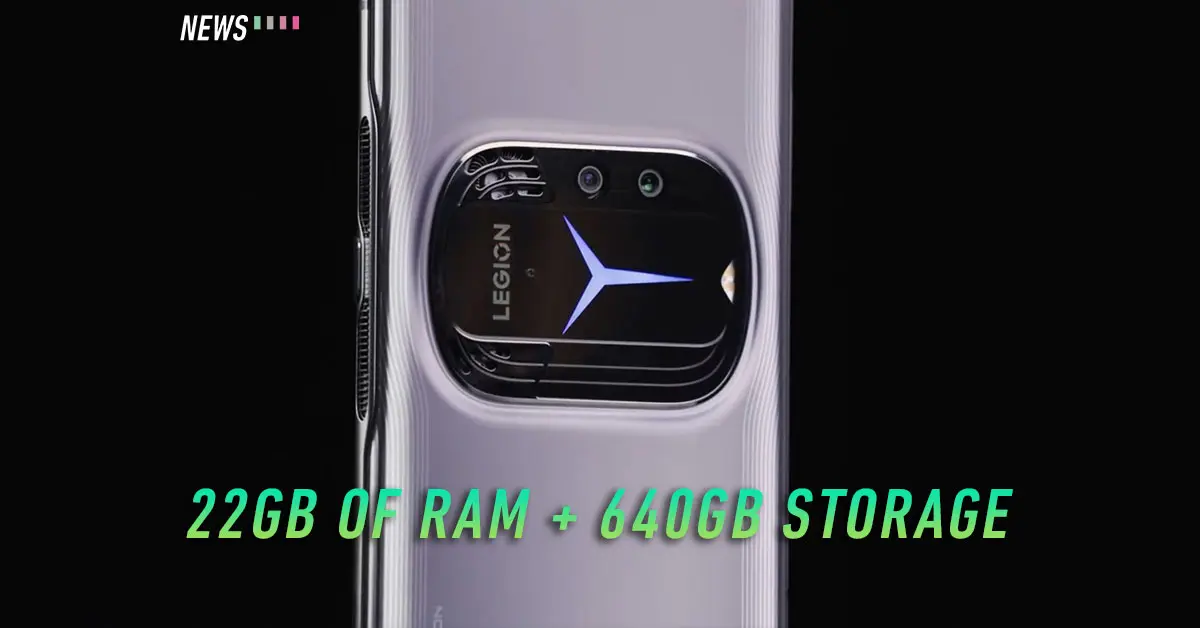
- Virtual RAM Expansion: To take things a step further, the Legion Y90 supports an additional 4GB of virtual RAM, bringing the total possible memory pool to an astonishing 22GB. This ensures that background apps remain cached without interrupting active gaming sessions, allowing for seamless multitasking.
- Massive Storage Options: To accommodate ever-growing game installation sizes—some of which easily surpass 10GB to 20GB—the Legion Y90 can be configured with up to 640GB of storage. This immense capacity eliminates the need for external cloud storage or constant app management.
Tactile Feedback and Controls
True mobile gaming hardware requires more than just a touchscreen. Lenovo has integrated physical control schemes to mimic the ergonomics of a dedicated console controller:
- Shoulder Triggers: The device features 2×2 ultrasonic shoulder keys, giving players additional customizable input points to map complex in-game actions without cluttering the screen with on-screen virtual buttons.
- Haptic Feedback: A dual X-axis linear motor delivers precise, crisp haptic feedback, heightening immersion by simulating the recoil of firearms, footsteps, and environmental impacts with pinpoint accuracy.
Power Management and Thermal Architecture
High-performance processing generates immense heat, which historically leads to thermal throttling—a phenomenon where the processor slows itself down to prevent overheating, resulting in stuttering and frame drops during extended gaming sessions.
To combat this, the Legion Y90 introduces several advanced endurance and cooling solutions:
- Double Engine Air Cooling Technology: This proprietary active/passive cooling system is designed to rapidly dissipate heat away from the Snapdragon 8 Gen 1 chipset, ensuring sustained peak performance over hours of continuous gameplay.
- Battery and Charging: The device is powered by a robust 5,600mAh battery, providing the deep reserves needed for long gaming sessions away from a wall outlet. When it is finally time to recharge, 68W fast charging support ensures the device is topped up and ready to go with minimal downtime.
- Audio Immersion: Completing the multimedia package are dual Dolby Atmos speakers, delivering directional, high-fidelity audio that allows players to track enemy footsteps and environmental cues purely by sound.
Official Statements and Industry Insights
While Lenovo has maintained a relatively guarded stance regarding the final pricing structure and exact global availability of the Legion Y90, executive commentary from the brand’s mobile division has consistently emphasized a commitment to uncompromising performance.
Industry analysts point out that Lenovo’s strategy mirrors the trajectory of specialized PC gaming hardware brands: cultivating a dedicated community through enthusiast-grade specifications that outclass mainstream consumer flagships.
According to mobile industry reports gathered by outlets such as Notebookcheck, leaks of this magnitude—particularly originating from reliable supply-chain insiders like Panda is bald—rarely miss the mark regarding core hardware specifications. They serve as an unofficial barometer for consumer excitement, gauging how the market reacts to unprecedented configurations like 22GB total RAM and massive storage tiers in a smartphone form factor.
Furthermore, tech commentators have highlighted that the inclusion of active-adjacent cooling technologies like "Double Engine Air Cooling" indicates a growing industry trend: smartphone manufacturers are no longer relying solely on passive vapor chambers, but are instead engineering comprehensive thermal ecosystems to handle the immense wattage demands of modern mobile chipsets.
Future Outlook: What the Legion Y90 Means for the Market
As we look toward the official launch of the Lenovo Legion Y90 in the first half of 2022, several key implications emerge for the mobile technology and esports landscapes:
- Raising the Baseline for Flagship Performance: With configurations pushing 18GB+ of RAM and 640GB of storage, the Legion Y90 challenges the very definition of what a smartphone needs to be. It blurs the line between mobile devices and mid-range laptops, setting a new benchmark that competitors like ASUS ROG, RedMagic, and Black Shark will be forced to address.
- The Maturation of Mobile Esports: As mobile titles become increasingly graphically demanding and mechanically complex, hardware ecosystems must adapt. Devices featuring dedicated shoulder triggers, ultra-high refresh rate touchscreens, and advanced cooling will increasingly become the standard for competitive mobile esports athletes.
- Ecosystem Synergy: The simultaneous or near-simultaneous release of the Legion Y90 smartphone and the Legion Y700 gaming tablet demonstrates Lenovo’s ambition to build a cohesive hardware ecosystem for mobile gamers. Users who demand high frame rates and seamless software integration across multiple screens will find Lenovo’s unified approach highly appealing.
Final Thoughts
The Lenovo Legion Y90 is shaping up to be an engineering powerhouse. By combining Qualcomm’s Snapdragon 8 Gen 1 with industry-leading RAM configurations, an esports-grade 144Hz AMOLED display, robust dual cooling technology, and tactile shoulder triggers, Lenovo is addressing every single demand of the modern mobile gamer.
As we await the official launch event slated for the first half of 2022, one thing is abundantly clear: the Legion Y90 is not just another smartphone; it is a statement of intent. Stay tuned as we continue to track developments, official release dates, and hands-on reviews of Lenovo’s most ambitious gaming handset to date.









Belum ada komentar. Jadilah yang pertama berkomentar!