

Executive Overview
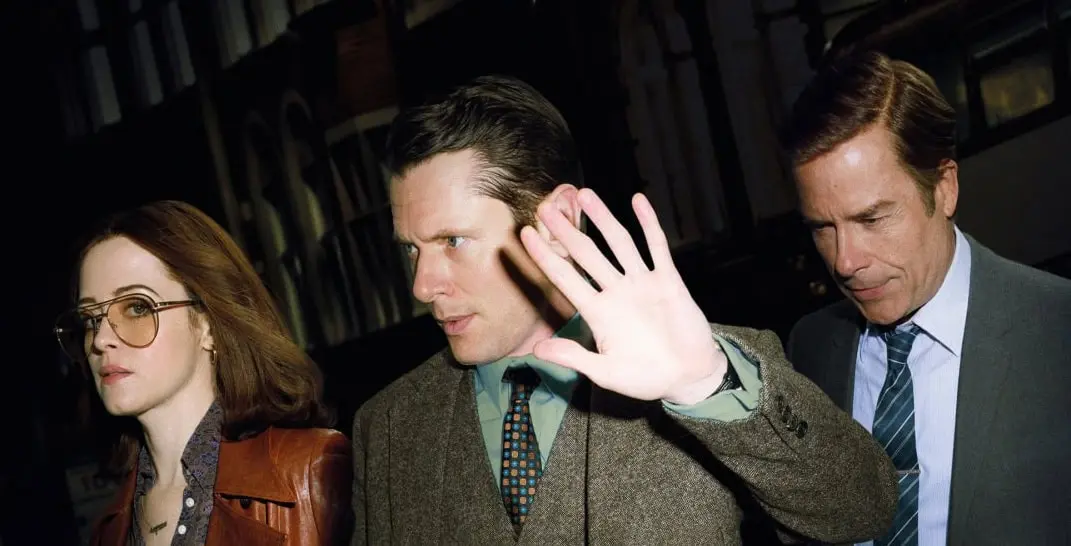
The intersection of media, power, and audacity takes center stage in StudioCanal’s upcoming biographical drama, Ink. Directed by Academy Award-winning filmmaker Danny Boyle (Slumdog Millionaire, Trainspotting, 28 Days Later), the feature film chronicles the volatile, high-stakes rise of The Sun newspaper under the visionary yet ruthless stewardship of media mogul Rupert Murdoch and his trailblazing editor, Larry Lamb.
Based on the multi-Olivier Award-winning stage play of the same name by celebrated playwright James Graham (Voter Fig, Sherwood, Best of Enemies), Ink is poised to examine the birth of modern tabloid journalism. StudioCanal has officially dropped the highly anticipated first teaser trailer alongside a striking suite of character posters, offering cinephiles and media historians their first glimpse into the neon-lit, smoke-choked newsrooms of early-1970s London.
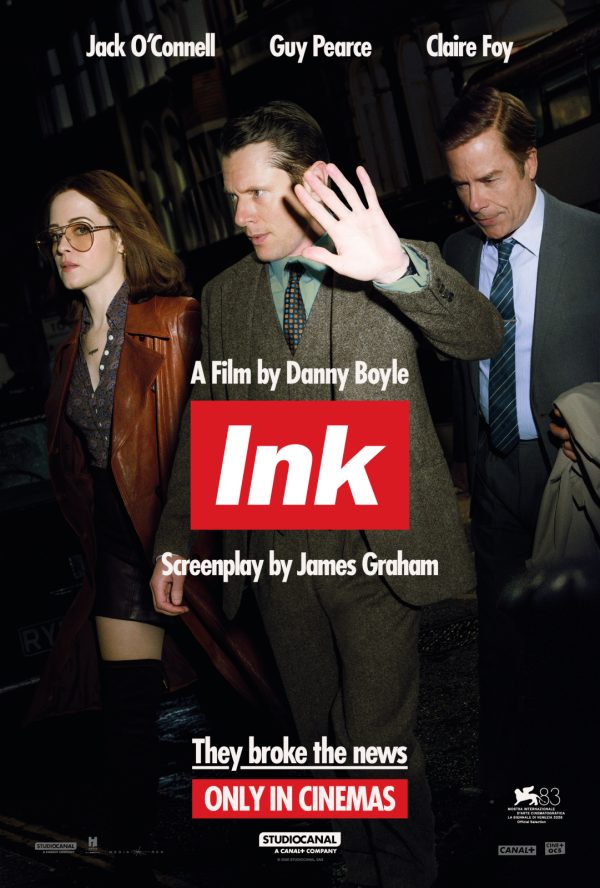
The film boasts an elite ensemble cast. Guy Pearce (Memento, LA Confidential) steps into the looming, calculating shadow of Rupert Murdoch; Jack O’Connell (Skins, Starred Up, Ferrari) captures the manic, relentless energy of editor Larry Lamb; and Claire Foy (The Crown, First Man) features prominently as Jules Davies, rounding out a trio of performers known for their intense, character-defining work.

Described by StudioCanal as "an explosive cinematic rollercoaster about a group of visionaries and misfits who had an idea for a new kind of news," Ink explores how a radical editorial shift gave the public "what they want"—forever altering the sociopolitical landscape and laying the bedrock for contemporary media consumption. Ink is scheduled to hit theaters on January 8th, setting the stage for what is expected to be a major awards-season contender and a fiery cultural conversation piece.
Detailed Chronology: The Birth of a Media Empire
To understand the narrative gravity of Danny Boyle’s Ink, one must look back at the tumultuous Fleet Street of 1969. Before Murdoch acquired The Sun, it was a struggling, traditional broadsheet publication—stuffy, respectable, and rapidly bleeding money under the ownership of IPC (International Publishing Corporation).
The Takeover (1969)
In late 1969, a relatively young and aggressive Australian publisher named Rupert Murdoch swept into London to purchase the failing broadsheet for a modest sum. Eschewing the conventional wisdom of establishment newspaper barons, Murdoch recognized an untapped demographic in the British working class—an audience alienated by high-minded journalism and hungry for entertainment, scandal, human interest, and relatability.

The Appointment of Larry Lamb
Murdoch enlisted Larry Lamb as his editor, tasking him with the seemingly impossible: reinventing the daily paper from the ground up within a matter of weeks. Lamb assembled a ragtag team of journalists, layout designers, and maverick reporters who operated with the frantic energy of an underground startup rather than a wing of the Fourth Estate.
Breaking the Mold
Under Lamb’s direction, The Sun transformed into a tabloid. It embraced bold headlines, punchy writing, sports coverage, serialized human-interest stories, and, most famously, the introduction of Page 3 in 1970. The editorial shift was polarizing, drawing fierce condemnation from traditionalists who accused the paper of dragging public discourse into the gutter. Yet, the strategy was undeniably effective. Circulation figures skyrocketed from hundreds of thousands into the millions, fundamentally altering British journalism, setting off a ruthless circulation war, and establishing a new paradigm for how news was packaged, sold, and consumed.
Supporting Context & Metrics: The Play-to-Screen Journey
The journey of Ink from the London stage to the silver screen highlights the enduring fascination with the mechanics of media influence. James Graham’s original play premiered at London’s Almeida Theatre in 2017 before transferring to the West End’s Duke of York’s Theatre. It was a critical and commercial triumph, netting multiple Laurence Olivier Awards—including Best Actor in a Supporting Role for Bertie Carvel (who played Murdoch) and dominating discussions regarding the ethical boundaries of popular journalism.
Adapting for the Cinematic Medium
Adapting a critically acclaimed stage play for film presents unique challenges, but in Danny Boyle, StudioCanal found a director uniquely equipped to handle the material. Boyle is celebrated for his kinetic visual style, pulsating soundtracks, and ability to inject raw, visceral energy into dialogue-driven narratives. Where a stage play relies on theatrical space and verbal sparring, Boyle’s cinematic vision utilizes rapid-fire editing, immersive production design, and intense close-ups to recreate the sensory overload of a 1970s newsroom racing against a ticking clock.
Box Office and Cultural Impact Projections
As media landscapes face their own digital reckonings in the 2020s, looking back at the analog revolution of the 1970s offers sharp parallels. Industry analysts project Ink to perform strongly both domestically and internationally, driven by:
- Star Power: The combined global drawing power of Guy Pearce, Jack O’Connell, and Claire Foy.
- The Director’s Brand: Danny Boyle’s reputation for delivering distinct, high-energy cinematic experiences.
- Topicality: In an era defined by clickbait, algorithmic news feeds, and debates over journalistic integrity, the origin story of modern tabloid sensationalism feels more relevant than ever.
Official Statements and Promotional Rollout
The release of the teaser trailer and character posters marks a major milestone in StudioCanal’s marketing campaign for Ink.
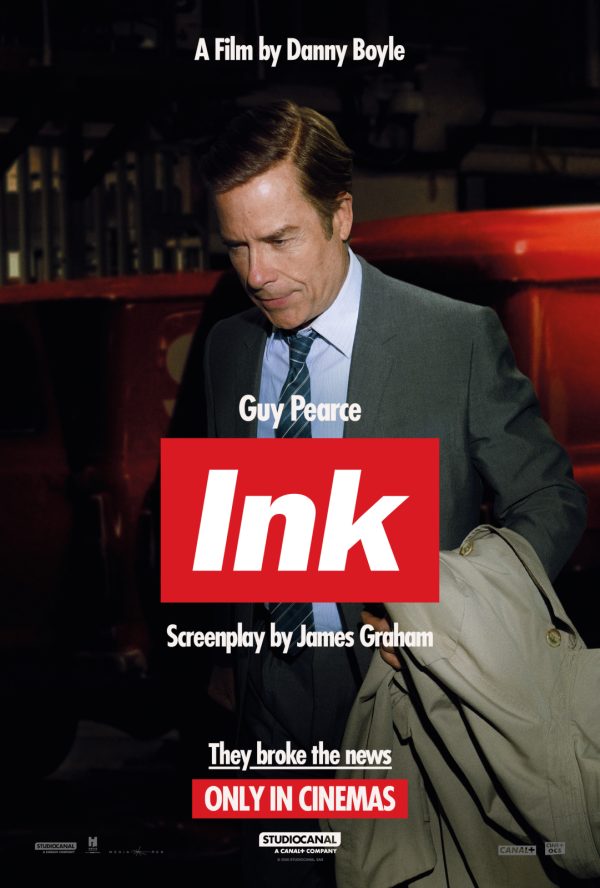
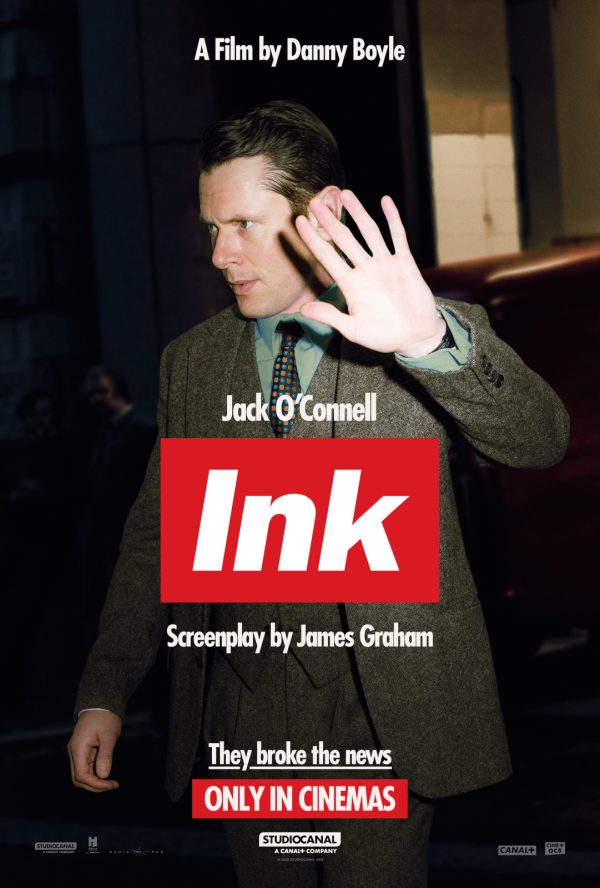
The newly revealed promotional materials emphasize the distinct personas driving the narrative:
- Guy Pearce’s Rupert Murdoch is portrayed with a quiet, menacing stillness—a man who views empire-building not merely as business, but as a chess match against the establishment.
- Jack O’Connell’s Larry Lamb is captured in a state of chaotic motion, embodying the sweat, strain, and intoxicating ambition of a man betting his entire career on a seismic editorial gamble.
- Claire Foy’s Jules Davies brings an intellectual and tactical sharpness to the frame, signaling a character who navigates the shark-infested waters of Fleet Street with fierce resolve.
While formal press junkets are still on the horizon, early word from test screenings and industry insiders suggests that Boyle’s direction leans heavily into the moral ambiguities of the era. Rather than offering a simplistic morality tale, Ink positions its protagonists as cultural architects who built an empire by giving the masses exactly what they craved, regardless of the societal cost.
Future Outlook: What Ink Means for 2026 Cinema
As the industry looks ahead to the film’s January 8th release date, Ink is shaping up to be one of the most anticipated dramatic releases of the early year. By dropping right at the tail end of the traditional awards corridor or positioning itself as a prestige counter-programming option, StudioCanal is signaling immense confidence in the project’s artistic and commercial viability.
For James Graham, seeing his theatrical masterwork translated into a major international motion picture cements his status as one of the preeminent chroniclers of modern British history and politics. For Danny Boyle, Ink represents a return to gritty, character-driven filmmaking that explores the fault lines of ambition and power.
As audiences await the full theatrical rollout, the teaser trailer serves as a potent reminder of the power of the printed word—and the ruthless visionaries who weaponized ink and paper to reshape the modern world.







Belum ada komentar. Jadilah yang pertama berkomentar!