

Executive Overview
The triumphant return of Fortnite to the United States App Store last month—following a grueling five-year legal and regulatory standoff between Epic Games and Apple—signaled a major turning point for mobile gaming. Millions of iPhone and iPad users rejoiced as Apple’s walled garden welcomed back one of the world’s most lucrative and culturally significant titles. However, the fragile peace between developer and platform was briefly tested by an unexpected technical crisis.
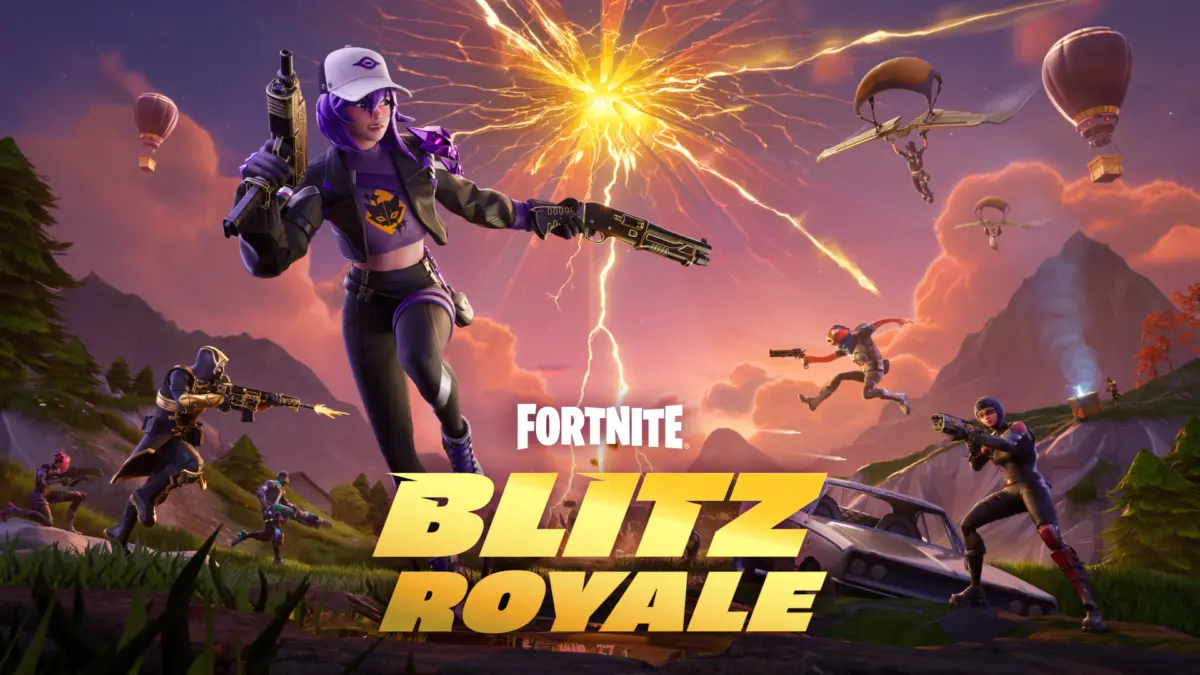
On June 17, 2025, Epic Games deployed a major update introducing Blitz Royale, an accelerated, mobile-optimized game mode designed for quick matches. While intended to revolutionize on-the-go play, the patch inadvertently caused Fortnite to crash instantaneously on devices running the newly minted iOS and iPadOS developer betas. For adventurous early adopters testing Apple’s upcoming operating systems, the game became completely unusable overnight.
The sudden incompatibility sparked widespread panic and confusion across social media platforms like X (formerly Twitter) and Reddit. Gamers and developers alike questioned whether Epic Games had intentionally blocked beta operating systems or if the crash was merely an unintended regression bug. Compounding the issue was Epic’s strict requirement that all online players must run the exact same app version to participate in multiplayer matches, effectively locking beta-testing users out of the game entirely unless they chose to downgrade their device operating systems.
Fortunately, swift action by Epic Games averted a prolonged PR disaster. Just eight days later, on June 25, 2025, a subsequent patch (version 36.10.1) quietly rolled out to the App Store, fully restoring iOS and iPadOS beta support. This comprehensive retrospective examines the timeline of the crash, the mechanics of the newly introduced Blitz Royale mode, the unique engineering challenges of supporting beta software, and the broader implications for the fragile ecosystem governing iOS app distribution.
Detailed Chronology: From App Store Triumph to Beta Blackout
To understand the severity of the June crash, one must first view it within the broader historical timeline of Epic Games’ rocky relationship with Apple’s mobile ecosystem.
The Return and the Catalyst
- Late May 2025: Following years of antitrust litigation, regulatory pressure from the European Union, and shifting domestic legal landscapes, Fortnite officially made its long-awaited comeback to the U.S. App Store. Within hours, it surged to the top of the "Top Free Games" charts, proving that consumer demand for the battle royale juggernaut on iOS remained remarkably high.
- Mid-June 2025: Apple released its initial developer betas for iOS and iPadOS. Historically, major system updates introduce breaking changes for third-party applications, but early testers noted that Fortnite was initially running surprisingly well on the new software builds.
- June 17, 2025: Epic Games deployed version 36.10 of Fortnite. The primary marketing driver of this patch was the global rollout of Blitz Royale, a fast-paced, 32-player variant custom-tailored for mobile screens. However, hidden within the code or triggered by interactions with the fresh iOS environment, the update introduced a critical failure: the application crashed to the home screen the exact moment it was launched on any device running the iOS or iPadOS developer beta.
The Community Reaction and Silence
Within hours of the update hitting the App Store, communities on X and Reddit lit up with bug reports. Users attempting to boot the game on iOS beta hardware were met with immediate CTD (Crash to Desktop) phenomena.
![PSA: Fortnite for iPhone and iPad no longer runs on iOS 26 beta after Blitz Royale update [U]](https://9to5mac.com/wp-content/uploads/sites/6/2025/06/GtlJqQ0WQAIfa7F.jpeg?quality=82&strip=all&w=1600)
[User Launch Attempt] ➔ [App Initializing] ➔ [OS Environment Check: iOS 26 Beta] ➔ [Fatal Exception / Immediate Crash]Compounding the frustration, the official @FortniteStatus account on X remained silent regarding the beta-specific crashes for several days. This lack of official communication fueled wild speculation. Some conspiracy-minded players wondered if Epic Games was deliberately punishing Apple or early adopters of the developer beta, while seasoned software engineers pointed out that beta operating systems are notoriously unstable and prone to breaking graphics APIs, memory allocation hooks, and sandboxing protocols without warning.
The Resolution
- June 25, 2025: Eight days after the crisis began, Epic Games pushed out version 36.10.1 to the App Store. Without extensive public fanfare, the patch notes—or lack thereof regarding the issue—signaled a silent fix. Users who updated to the new patch found that Fortnite launched seamlessly on iOS and iPadOS betas once more, ending a week of enforced digital exile for the platform’s most enthusiastic testers.
Supporting Context & Metrics: The Technical Reality of Mobile Betas
Running high-end, cross-platform multiplayer titles on mobile operating systems requires an extraordinary balancing act between software optimization, hardware limitations, and operating system compliance.
Hardware Demands and RAM Restrictions
Just days prior to the Blitz Royale rollout, technical analysts highlighted strict hardware parameters required to run modern iterations of Fortnite smoothly on Apple hardware. Devices must feature a minimum of 4GB of RAM to handle the Unreal Engine pipeline, real-time asset streaming, and multiplayer packet synchronization without running into aggressive out-of-memory (OOM) kills by the iOS kernel.
| Hardware Tier | Minimum RAM Required | iOS Compatibility | Status on iOS Beta (June 17–25) |
|---|---|---|---|
| Older iPads / iPhones | < 4GB RAM | Incompatible | Ineligible |
| Modern iPhones (iPhone 14/15/16) | 4GB+ RAM | iOS 18 (Stable) | Fully Functional |
| Beta Testers (Advanced Hardware) | 4GB+ RAM | iOS 26 Beta | Crashing on Launch (Resolved June 25) |
The Multiplayer Version Lock Dilemma
Unlike single-player applications where users can comfortably run mismatched versions across different operating system builds, online multiplayer ecosystems rely on absolute parity. Every client connected to a match must interpret game states, hitboxes, physics calculations, and asset dictionaries in exact synchronization.
Because of this rigid design philosophy:
- Epic Games could not simply patch server-side scripts to let beta users play while older clients hung back.
- The client-side app must be updated to match the server deployment.
- When version 36.10 broke beta compatibility, affected users were left with an impossible choice: either completely wipe their primary mobile devices and downgrade from the iOS beta back to a stable production build (iOS 18)—a tedious process involving data backups and recovery modes—or simply abandon the game until Epic issued a counter-patch.
Spotlight on the Innovation: Inside Blitz Royale
While beta testers were temporarily locked out, the very update that caused the disruption brought one of the most exciting additions to mobile gaming in years. Epic Games developed Blitz Royale specifically to address the unique ergonomics and time constraints of gaming on smartphones and tablets.
![PSA: Fortnite for iPhone and iPad no longer runs on iOS 26 beta after Blitz Royale update [U]](https://9to5mac.com/wp-content/themes/ninetofive/dist/images/google-preferred-source-badge-dark.png)
Core Gameplay Mechanics of Blitz Royale
Traditional battle royale modes can drag on for twenty minutes per match, requiring intense focus and stamina that often clashes with mobile use-cases (such as playing on a commute or during a short break). Blitz Royale cuts straight to the action with a streamlined design philosophy:
- Pace and Duration: Designed specifically to conclude in five minutes or less, making it the ultimate bite-sized competitive experience.
- Lobby Size: A tight, high-intensity environment featuring 32 players dropped onto a scaled-down, rapidly shrinking map.
- Equitable Starts: To eliminate early-game RNG (Random Number Generation) frustration, all opponents drop onto the map with the exact same randomized starting Medallion or unique weapon. Every player begins on equal footing; victory is dictated purely by mechanical skill and tactical positioning.
- Blitz Level Progression: As players survive successive Storm circles and eliminate opponents, their Blitz Level increases. Higher levels unlock increasingly devastating weapons and field upgrades.
- Golden Chests and Supply Drops: Looting Golden Chests rewards players with powerful passive abilities known as "Boons," while Golden Supply Drops grant high-tier Medallions capable of turning the tide of a late-game skirmish.
- Flexibility: Gamers can tackle the mode solo or queue up in a squad of four.
"Blitz Royale is a 32-player Battle Royale mode with new gameplay every match and frequent updates. The best part? Victory can be yours in five minutes or less — perfect for playing on your phone!" — Epic Games Official Press Release
Initially slated to run as a limited-time event through July 15, Epic Games left the door open for the mode’s permanent return or cyclical re-introductions with refreshed map layouts and rewards depending on community engagement metrics.
Official Statements and Industry Implications
The eight-day blackout highlighted a broader tension within the modern software development lifecycle. As platform holders like Apple push developer betas out months before public release, third-party developers face an uphill battle maintaining zero-day compatibility while simultaneously pushing aggressive content pipelines like Blitz Royale.
Developer Responsibility vs. Platform Stability
Industry experts often debate where the burden of responsibility lies when beta software breaks consumer apps:
- The Platform Argument: Apple provides developer documentation, APIs, and beta profiles specifically so developers can stress-test their software months in advance, ensuring day-one stability when the public build drops.
- The Developer Argument: Developer betas are, by definition, unstable works-in-progress. Internal APIs shift, rendering pipelines change without warning, and spending engineering hours patching edge cases on unreleased operating systems can divert vital resources away from core product updates.
In Epic Games’ case, the silent rollout of version 36.10.1 suggested that the crash was likely an unintended side-effect of memory management changes implemented within the Blitz Royale update interacting poorly with Apple’s new beta graphics drivers. By addressing the bug within eight days, Epic demonstrated a newfound responsiveness to the iOS community—a stark contrast to the adversarial posture the company maintained during the height of the 2020–2025 App Store litigation.
![PSA: Fortnite for iPhone and iPad no longer runs on iOS 26 beta after Blitz Royale update [U]](https://9to5mac.com/wp-content/themes/ninetofive/dist/images/google-preferred-source-badge-light.png)
Future Outlook: What Next for Fortnite on iOS?
With version 36.10.1 now live on the App Store, stability has been restored, and iOS and iPadOS beta testers can seamlessly dive into Blitz Royale alongside millions of other players on stable builds.
However, this incident serves as a cautionary tale for both Epic Games and Apple’s mobile gaming community. As Apple prepares for the eventual public rollout of its next-generation operating system later this autumn, developers will face increasing pressure to ensure seamless cross-version compatibility.
For mobile gamers, the episode underscores both the exciting potential and the inherent risks of living on the bleeding edge of software development. While exploring unreleased operating systems grants early access to cutting-edge features, it remains a playground best navigated with patience, reliable backups, and the understanding that digital ecosystems are wonderfully complex—and occasionally fragile.
As Fortnite continues to cement its renewed footprint on iOS, players can look forward to rapid content iteration, ongoing refinements to mobile-exclusive modes like Blitz Royale, and—hopefully—a much smoother path forward through future operating system updates.









Belum ada komentar. Jadilah yang pertama berkomentar!