

Executive Overview
Nearly a year following its monumental and globally constrained market launch, Sony Interactive Entertainment is finally addressing one of the most persistent aesthetic demands from the gaming community: personalization. For the first time since the PlayStation 5 made its debut in November 2020—a launch characterized by its futuristic, polarizing, yet undeniably iconic monolithic white-and-black chassis—Sony is officially offering vibrant colour options to help players customize their gaming setups.
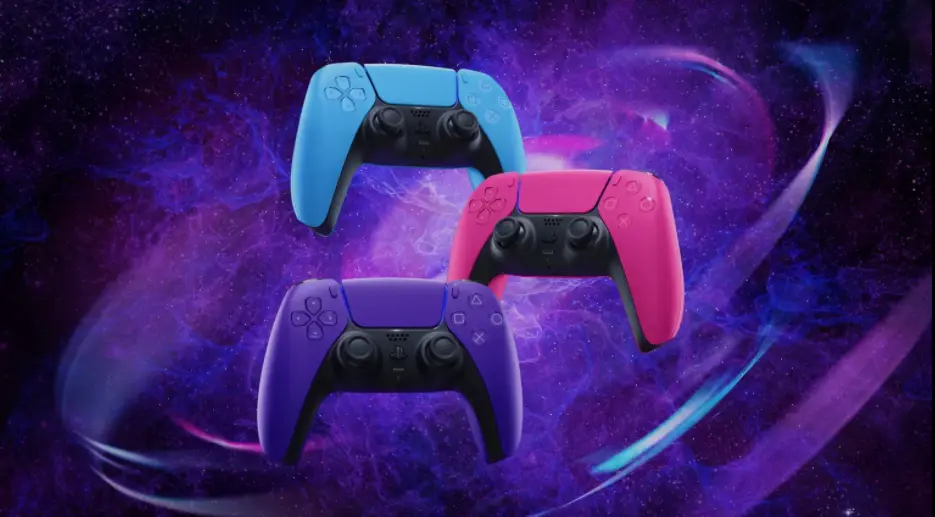
Titled the Galaxy Collection, this new ecosystem of official accessories introduces interchangeable console side-covers and a fresh lineup of matching DualSense wireless controllers. Drawing aesthetic inspiration from the vast expanses of the cosmos, the new colorways—Starlight Blue, Galactic Purple, Midnight Black, Cosmic Red, and Nova Pink—allow users to break away from the default aesthetic that has dominated living rooms and gaming dens worldwide.
However, industry watchers and consumers should note a distinct operational strategy: these aesthetic overhauls are being distributed as standalone accessories. Gamers cannot yet walk into a retailer and purchase a natively colored PlayStation 5 console straight out of the box. Instead, the philosophy is one of modular customization, empowering existing owners to transform their current hardware via easily swappable faceplates.
This comprehensive report examines the rollout of the Galaxy Collection, detailing release timelines, regional availability specifics for markets such as Malaysia, the engineering behind the modular console covers, and what this strategic shift means for the future of PlayStation hardware personalization.
Detailed Chronology of PS5 Customization
The journey toward official PlayStation 5 color customization has been a gradual evolution, marked by high-profile intellectual property battles, supply chain hurdles, and calculated corporate rollouts.
Phase 1: The Monolithic Era and Third-Party Friction (Late 2020 – Early 2021)
When the PlayStation 5 launched, it arrived in only one configuration: a stark white shell accented by a matte black inner chassis, flanked by the futuristic blue glow of the console’s LED status indicators. While praised by modernists, the stark white design drew criticism from gamers who favored understated entertainment centers, matching home theater setups, or simply preferred traditional black hardware.
Recognizing an immediate market gap, third-party manufacturers rushed to fill the void. Companies like PlateStation5 (later rebranded as Dbrand under the provocative banner "Robot Camouflage") began producing custom matte black faceplates. This sparked a high-stakes corporate standoff. Sony’s legal team swiftly moved to shut down third-party shell manufacturers, issuing cease-and-desist letters and asserting intellectual property rights over the console’s proprietary "V-shape" architectural design and cooling fin geometry.
Despite cracking down on unauthorized accessories, Sony’s aggressive legal posture signaled to consumers that the tech giant was keeping the customization space strictly reserved for its own future product roadmap.
Phase 2: The Controller Vanguard (Mid 2021)
Before touching the console’s exterior, Sony tested the waters with the DualSense wireless controller. In May 2021, the company announced the first wave of non-white controller variants: Midnight Black and Cosmic Red.
These initial controller drops proved that the market was starved for color. Players eagerly adopted the stealthy, matte-black aesthetic and the rich, nebula-inspired crimson. This success laid the logistical groundwork for the bolder, more saturated hues that would follow later in the year.
Phase 3: The Galaxy Collection Unveiling (December 2021)
The climax of Sony’s customization strategy arrived on December 13, 2021, via an official PlayStation Blog announcement and companion trailers. Sony pulled back the curtain on the Galaxy Collection, formally introducing the interchangeable PS5 console covers alongside three brand-new DualSense controller colors: Starlight Blue, Galactic Purple, and Nova Pink.
For the first time, PlayStation 5 owners were given the official green light to alter the physical silhouette of their consoles without resorting to illicit wraps, dangerous spray-painting, or third-party shells that risked violating patents or impeding thermal performance.
Supporting Context, Product Architecture, and Regional Metrics
Understanding the Hardware: Console Covers
The PS5 console covers are engineered specifically to match the exact dimensions, ventilation paths, and locking mechanisms of the hardware. Crucially, Sony produces two distinct sets of covers: one tailored for the standard PS5 with the Ultra HD Blu-ray disc drive, and another designed for the PS5 Digital Edition.
Because the physical symmetry of the console differs between the disc-equipped and digital-only models (due to the asymmetric bulge of the optical drive), consumers must verify their specific hardware edition before purchasing.
Installing the covers requires no specialized tools. Sony designed the system to be user-friendly: users simply pop off the original white wings by applying gentle upward leverage near the top corner, sliding them away from the central chassis, and snapping the new Galaxy Collection covers securely into place.
The DualSense Controller Expansion
Complementing the console covers, the DualSense wireless controller lineup expanded to match the cosmic theme. While the controller itself has always been praised for its ergonomic comfort, advanced haptic feedback, and adaptive triggers, its original two-tone white design was prone to showing dirt and oils over extended gaming sessions.
The introduction of Starlight Blue, Galactic Purple, and Nova Pink—joined by the previously released Midnight Black and Cosmic Red—completed a robust palette of five distinct controller options. This lineup gave players the freedom to mix and match colors, creating personalized multi-controller setups for couch co-op and competitive multiplayer gaming.
Regional Rollout and Availability (The Malaysian Market Focus)
As with many hardware launches in the consumer electronics sector, global supply chain bottlenecks influenced a staggered release schedule. For gamers in regions like Malaysia, the rollout was partitioned into two distinct waves:
- First Wave (January 2022): The more traditional, understated tones—Midnight Black and Cosmic Red—hit the Malaysian market first. These colors appealed directly to consumers seeking a seamless transition away from the stock white look toward a more classic, home-theater-friendly aesthetic.
- Second Wave (First Half of 2022): The more vibrant, expressive hues—Starlight Blue, Galactic Purple, and Nova Pink—alongside their corresponding console covers, were slated for a broader window spanning the first half of 2022.
Concurrently, the exact launch schedules for the matching colorway controllers in Southeast Asian markets required localized coordination with authorized retail partners, prompting Sony to advise fans to monitor official regional channels for exact drop dates.
Official Statements and Industry Perspective
Sony’s leadership and design teams framed the Galaxy Collection not merely as a commercial product refresh, but as an extension of player identity. In official statements accompanying the December 2021 launch, representatives emphasized that the new aesthetic options were inspired by the cosmos, designed to blend seamlessly into modern living spaces while allowing gamers to inject personal flair into their entertainment centers.
"Our goal has always been to listen to our community, who have been eager for ways to personalize their hardware," noted statements from the global PlayStation accessories team. "With the Galaxy Collection, we are bringing a piece of the universe into your living room, offering finishes that feel premium, modern, and uniquely yours."
Industry analysts noted that the delay between the console’s launch and the introduction of official faceplates was a calculated business decision. During the first twelve months of the PS5’s lifecycle, manufacturing capacity was stretched to its absolute limit to meet unprecedented global demand amidst severe semiconductor shortages. Diverting raw materials away from full console production to manufacture cosmetic side-covers would have exacerbated console scarcity. By waiting a full year, Sony stabilized its production pipelines sufficiently to support a lucrative, high-margin accessories ecosystem without cannibalizing core console manufacturing.
Future Outlook: The Evolution of Hardware Customization
The launch of the Galaxy Collection marked a foundational turning point for the PlayStation brand, establishing a precedent that physical customization is an essential component of modern console ownership.
The Modular Future
By embracing interchangeable faceplates rather than locking consumers into a single permanent color, Sony has opened the door to endless future iterations. Industry insiders speculate that subsequent hardware refreshes—whether tied to major first-party game releases like God of War, Spider-Man, or Horizon—will likely feature limited-edition console covers alongside bespoke DualSense controllers. This modular approach allows collectors to update their existing hardware without purchasing an entirely new console system every time a special edition drops.
Environmental and Economic Impact
From an economic standpoint, the sale of standalone accessories represents a high-margin revenue stream for Sony Interactive Entertainment. Furthermore, from a sustainability perspective, allowing users to refresh the look of their existing hardware via simple plastic panels extends the perceived lifespan of the device, mitigating electronic waste compared to consumers trading in whole systems simply for a color change.
Conclusion
What began as a contentious debate over third-party faceplates and a monolithic white design has matured into an official, thriving ecosystem of personal expression. With the Galaxy Collection, Sony successfully bridged the gap between functional engineering and aesthetic desire. As the PlayStation 5 generation progresses into its maturity, the ability to tailor hardware to individual tastes ensures that no two gaming stations need ever look alike.








Belum ada komentar. Jadilah yang pertama berkomentar!