

Executive Overview
The landscape of modern competitive trading card games and serialized lore-building has continually pushed the boundaries of narrative integration, transmedia storytelling, and intricate world design. Recently, fresh conceptual art, promotional materials, and design notes have emerged from official intelligence channels regarding one of the most enigmatic narrative mechanics in recent memory: the high-stakes, multi-tiered tournament known simply as "Zenet."
At the center of this latest disclosure are two pivotal figures who encapsulate the dangerous symbiosis required to survive this brutal contest: Zenet Prophet – Nefertari, the brilliant and fiercely confident human partner, and the Zenetnakht Sphinx, a terrifyingly majestic entity resurrected from the primordial depths of the underworld. Through a combination of ancient Egyptian-inspired iconography, cutting-edge holographic technology, and high-fantasy metaphysical stakes, the "Zenet" concept invites players and lore enthusiasts alike to reexamine the foundational myths of the living and the dead.
This comprehensive investigative report will dissect every facet of the newly released design documents. From the esoteric rules governing the relationship between human partners and underworld King candidates, to the precise anatomical and mechanical breakdowns of the Zenetnakht Sphinx and Nefertari’s jade-powered apparatus, we provide an authoritative overview of what promises to be a transformative addition to the franchise’s evolving mythos.
Detailed Chronology: The Mechanics and Origins of "Zenet"
To fully appreciate the significance of Nefertari and her Sphinx, one must first understand the metaphysical architecture of the world they inhabit. According to official translated concept lore, the grand premise of "Zenet" operates on a cross-dimensional plane bridging the mortal realm and the subterranean netherworld.
+---------------------------------------------------------------+
|                      THE WORLD OF ZENET                       |
+---------------------------------------------------------------+
       |                                                 |
       v                                                 v
+-----------------------------+         +-------------------------------+
|      HUMAN PARTNERS         |         |      KING CANDIDATES          |
|  (e.g., Nefertari)          |<=======>|  (e.g., Zenetnakht Sphinx)    |
|                             |  Forms  |                               |
| - Born of noble blood       |  Group  | - Souls from the underworld   |
| - Controls holographic grid |         | - Reincarnated via beasts     |
+-----------------------------+         +-------------------------------+
       |                                                 |
       +------------------------+------------------------+
                                |
                                v
                +-------------------------------+
                | THE GAME TO DECIDE THE "KING" |
                +-------------------------------+
The Summoning of the Underworld Souls
In this reality, humans residing in the world of the living do not merely fight their own battles; instead, they act as earthly anchors for powerful, slumbering entities. The core ritual of the setting involves summoning forth the souls of various King candidates who currently rest within the underworld.
For longtime aficionados of classic dueling lore, the concept of the "underworld" (meikai) carries profound thematic weight. In traditional mythos, the underworld serves as the ultimate destination or resting place for the soul of the Pharaoh. While linguistic nuances in the original text distinguish the generic term for "King" (ou) from the hyper-specific title of "Pharaoh," the spiritual architecture remains unmistakable: these are ancient, sovereign spirits tied to the very foundations of divine rule.
The Partnership Dynamic
A soul cannot ascend or claim dominance in isolation. To enter the tournament—the ultimate game that decides who shall rightfully sit upon the throne—a human must forge a symbiotic group with an underworld partner.
- The Candidate: The resurrected soul, who possesses overwhelming divine power, mystical capabilities, and physical manifestation as a board piece.
- The Partner: The living strategist, often drawn from high-ranking societal castes, who dictates tactical positioning, navigates the mortal realm’s dangers, and anchors the candidate’s presence in the physical plane through sophisticated arcane-technological relics.
In the case of our focal subjects, Zenetnakht Sphinx serves as the King candidate, having been successfully reincarnated after absorbing the primordial power of the underworld’s Divine Beasts. Meanwhile, Zenet Prophet – Nefertari acts as his indispensable living partner, operating the field through calculated precision and unbreakable iron will.
Supporting Context & Metrics: Anatomy of the Combatants
The released design sheets provide an exhaustive look into the physical composition, tactical hardware, and psychological profiles of both Nefertari and the Zenetnakht Sphinx. Below is a rigorous breakdown of these assets based on the official notes.
1. Zenet Prophet – Nefertari: The Noble Strategist
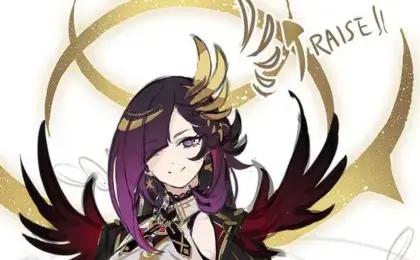
Nefertari is visually and conceptually framed as an aristocrat who refuses to let her pedigree keep her sidelined from destiny.
- Psychological Profile: Described as "strong-willed and overflowing with confidence," Nefertari exhibits zero hesitation despite the existential threats of the tournament.
- Motivation: Born into high nobility, she enters the perilous trials of "Zenet" entirely aware of the risks. Her ultimate ambition is to seize the prestigious, highly coveted royal title of "The King’s Daughter."
- The Technological Apparatus (The Bracelet): Nefertari’s primary conduit to the battlefield is an ornate bracelet worn on her wrist. The device functions via a central jade stone intertwined with a sacred scarab motif and stylized divine wings. When activated, the jade energy projects five holographic board spaces into the air, allowing Nefertari to physically manipulate the battlefield and dictate the movements of her monstrous partner.
- Physical Presentation: The design notes pay meticulous attention to her regal attire, confident posture, and even the intricate styling of her hair, noting the visual silhouette from the back of her head to ensure complete character fidelity.
2. Zenetnakht Sphinx: The Underworld Juggernaut
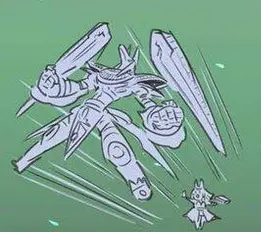
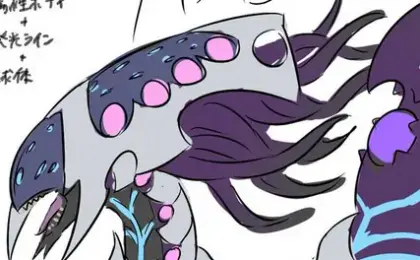
Operating as Nefertari’s primary board piece and combat asset, the Zenetnakht Sphinx is a masterclass in monstrous, divine iconography.
- Reincarnation Origin: The Sphinx is categorized as a King candidate who achieved rebirth only after harnessing the volatile, latent power of the underworld’s Divine Beasts.
- Board Piece Mechanics: While functioning as a terrifying, autonomous combat entity, it simultaneously operates as a physical game piece controlled directly by Nefertari’s holographic grid.
- Anatomical Highlights:
- Sarcophagus-Like Floating Wings: The wings of the Sphinx are modeled after ancient burial sarcophagi, designed to hover independently through mystical forces rather than relying solely on aerodynamics.
- Jade Light Effect: Radiating an ethereal, glowing green luminescence, the Sphinx embodies the corrupted, sacred magic of the nether realm.
- Cat-Like Sharp Retractable Claws: Capitalizing on classic feline predatory motifs, the creature’s limbs are engineered for lethal close-quarters combat on the holographic board.
3. Interpersonal Dynamics and Battle Fatigue
Interestingly, the design notes offer a rare glimpse into the operational strain experienced during active trials. A candid snippet of dialogue from the notes reveals the grueling physical and mental toll of the competition:
Zenetnakht Sphinx: "I… can’t go on anymore panting…"
Nefertari: [Seething sounds of intense determination and pressure]
This dynamic highlights that while the King candidates possess godlike supernatural power, they are ultimately tethered to mortal stamina and strategic execution. Nefertari’s refusal to relent—exemplified by her seething, unbroken focus even as her divine partner flags—cements her status as a formidable operator within the "Zenet" ecosystem.
Official Statements and Lore Implications
While the primary source material stems from early development concept sheets and promotional production updates shared via official channels (such as the @YuGiOh_OCG_INFO archive), the implications for world-building are vast.
Industry analysts and narrative theorists have pointed out several key takeaways regarding how "Zenet" expands upon traditional trading card game lore:
- Blurring the Lines Between Game and Reality: Unlike standard tabletop matches, the "Zenet" tournament appears to take place within an immersive, semi-physical augmented reality where board spaces materialize in the real world through magical artifacts like Nefertari’s scarab bracelet.
- The Maturation of Partner Dynamics: The relationship between Nefertari and the Sphinx moves away from simple master-servant tropes. It frames survival as a mutual endurance test where the human’s psychological fortitude must compensate for the physical exhaustion of the divine entity.
- Deepening the Mythos of the Underworld: By explicitly tying King candidates to the "Divine Beasts of the underworld," the narrative hints at a sprawling pantheon of forgotten sovereigns waiting to be summoned back to the living world.
Future Outlook
As further details regarding "Zenet" continue to surface, the community eagerly anticipates how these concepts will translate into official game rules, card archetypes, and expanded narrative chapters. Will Nefertari and the Zenetnakht Sphinx be featured as core protagonists in an upcoming manga adaptation, or will they manifest as a powerful new archetype within competitive card game formats?
Given the meticulous attention paid to the design elements—from the mechanics of the holographic bracelet to the socio-political ambition of the "King’s Daughter" title—it is clear that the creators are crafting a rich, multi-layered universe. Fans and collectors are advised to monitor official channels closely as the curtain continues to rise on the underworld’s ultimate game.





Belum ada komentar. Jadilah yang pertama berkomentar!