

Executive Overview
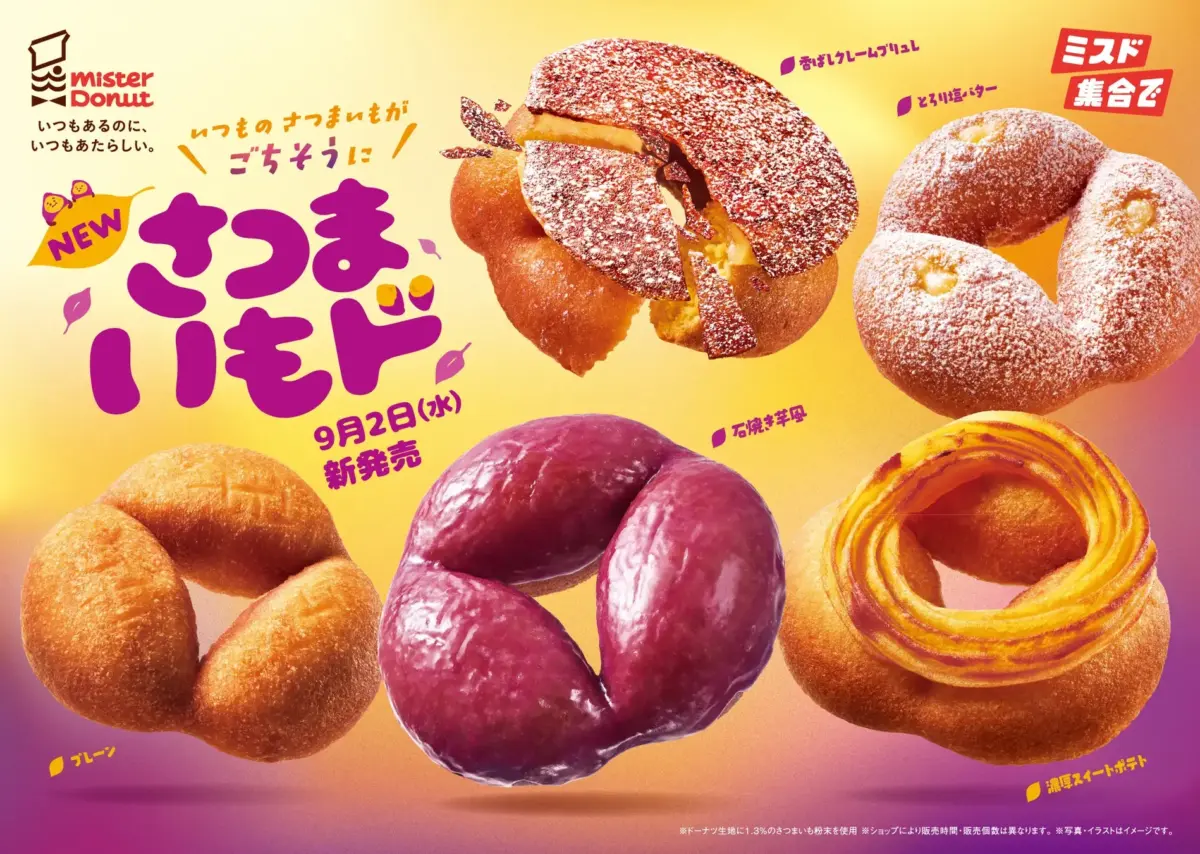
For dessert aficionados and seasonal food culture enthusiasts across Japan, autumn is synonymous with one unmistakable annual culinary pilgrimage: the arrival of the Satsumaimo Do lineup at Mister Donut. Marking its monumental eighth consecutive year, this limited-edition collection marries Japan’s deep-seated cultural affection for satsumaimo (Japanese sweet potato) with the ubiquitous comfort of the modern doughnut.
Yet, past iterations of the beloved autumn menu have occasionally drawn mixed reviews from discerning critics. While visually charming, previous collections frequently suffered from a common pitfall of seasonal fast-food marketing: the primary flavor profile—the delicate, earthy sweetness of the sweet potato—was often overshadowed by traditional sugary bases and heavy-handed dough formulations. For veteran food reporters like P.K. Sanjun of SoraNews24, the Satsumaimo Do range was historically viewed as a pleasant novelty, but ultimately "not really worth recommending" to calories-conscious consumers.
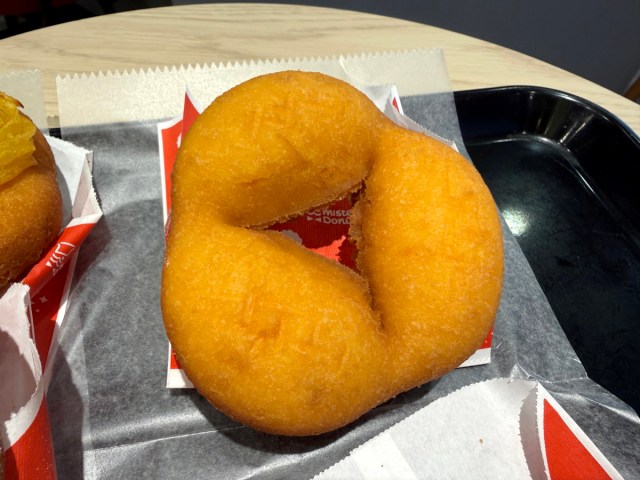
That narrative, however, has fundamentally shifted. For its 2026 rollout, Mister Donut’s product development division went back to the drawing board, implementing radical overhauls to both the structural geometry and the core culinary composition of the doughnuts. By introducing a signature three-lobed design—evoking the visual impression of a cluster of sweet potatoes arranged in a circular formation—and refining the dough matrix for an unprecedented, light-as-air yet crumbly mouthfeel, the franchise has unlocked a potent, authentic sweet potato essence.
This comprehensive investigative review explores the anatomy of the 2026 Satsumaimo Do collection. We examine the structural innovations, break down the individual offerings from a sensory perspective, analyze pricing and value metrics, and evaluate whether this eighth-generation evolution finally justifies the seasonal hype.
Detailed Chronology: The Evolution of an Autumn Staple
To understand the magnitude of Mister Donut’s 2026 redesign, one must look backward through the chronology of the Satsumaimo Do franchise. Launched nearly a decade ago, the concept was simple: capitalize on kamado (oven) and yaki-imo (roasted sweet potato) trends that sweep the Japanese archipelago every autumn as temperatures begin to cool.
In its early years, the collection relied heavily on exterior aesthetic gimmicks—dark purple glazes to mimic sweet potato skins or yellow sprinkles to denote the inner flesh. While successful from a marketing perspective, the underlying dough frequently mirrored standard cake or yeast formulations, diluting the authentic agricultural character of the star ingredient. Year after year, incremental tweaks were made, but the fundamental disconnect between the visual promise of a sweet potato and the actual palate experience remained a point of critique among culinary purists.
The turning point arrived in September 2026, when Mister Donut announced a total re-engineering of the series. The 2026 launch introduced two critical breakthroughs:
- The Tri-Lobed Morphology: Moving away from standard rings or filled spheres, the new dough shape mimics three distinct sweet potatoes fused in a circular layout. This was not merely an aesthetic choice; the structural geometry alters how the dough bakes and fries, creating varying densities within a single bite.
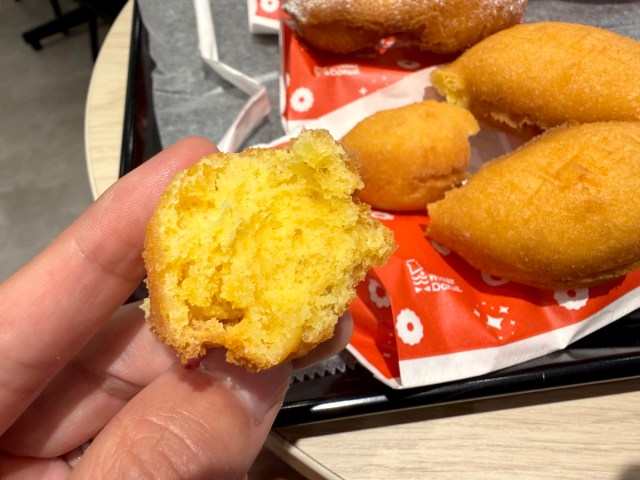
- The Crumbly-Light Matrix: Inspired by the legendary texture of an American-style Old Fashioned doughnut, the new base achieves a remarkably crumbly exterior that instantly dissolves on the tongue, yielding a weightless mouthfeel that completely eliminates the dense, heavy chew of past iterations.
When these structural enhancements hit store shelves in early September 2026, they immediately caught the attention of skeptics and fans alike, setting the stage for a rigorous, item-by-item taste test across the entire five-piece collection.
Comprehensive Product Breakdown & Tasting Analysis
P.K. Sanjun’s exhaustive tasting session covered all five iterations currently gracing Mister Donut display cases across Tokyo and the broader Japanese market. Each item was evaluated based on structural integrity, flavor authenticity, textural harmony, and overall value.
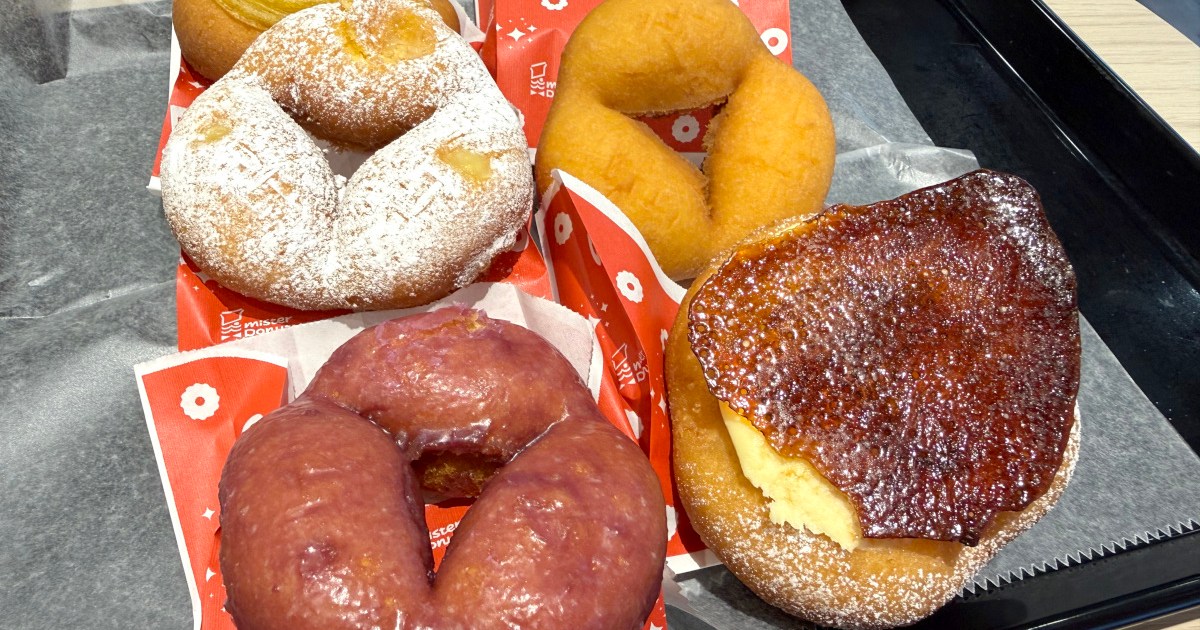
1. Satsumaimo Do Plain
- Pricing: Takeout: 183 yen (~US$1.17) | Dine-in: 187 yen
- Profile: The foundational baseline of the collection, stripped of glazes, creams, or heavy toppings.
- Tasting Notes: Stripping away external enhancements exposes the core engineering of the new dough. The immediate sensation upon the first bite is its extraordinary crumbliness—sharing structural similarities with an Old Fashioned, yet possessing an exponentially lighter mouthfeel. Most astonishingly, the natural flavor of the sweet potato is front and center. Without the crutch of a sweet glaze, the dough itself carries a profound, earthy sweetness that left our reviewer questioning how such intensity was achieved. It serves as a masterclass in minimalist baking.
2. Stone-Roasted Sweet Potato-Style (The Crown Jewel)
- Pricing: Takeout: 194 yen | Dine-in: 198 yen
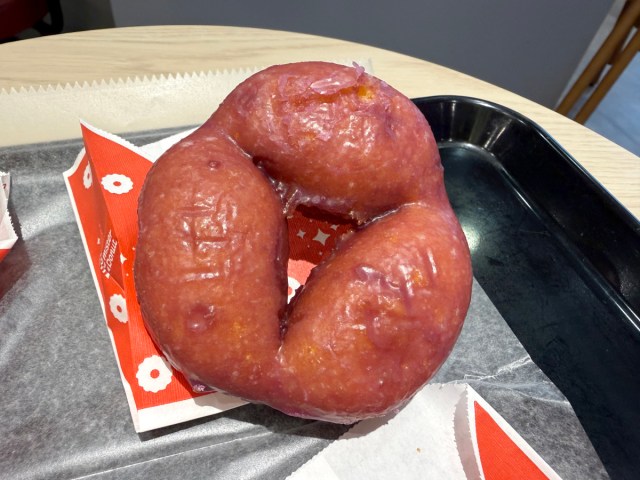
- Profile: Encased in a specialized glaze designed to replicate the appearance and sensory memory of traditional stone-roasted street sweet potatoes (ishiyaki-imo).
- Tasting Notes: An absolute stunner that earned the unanimous respect of our tasting panel. The specialized glaze mimics the darkened, caramelized exterior of a wood-and-stone-roasted tuber with startling visual accuracy. More importantly, the glaze acts as a flavor catalyst, accelerating the delivery of sweet, smoky, starchy notes to the taste buds the moment it touches the tongue. Unquestionably crowned as the best overall flavor experience within the 2026 range, this doughnut bridges the gap between confectionery art and agricultural nostalgia.
3. Satsumaimo Do Melty Salted Butter
- Pricing: Takeout: 194 yen | Dine-in: 198 yen
- Profile: Featuring a rich, buttery cream element designed to evoke the classic Japanese comfort food combination of baked sweet potato smothered in salted butter.
- Tasting Notes: While undeniably delicious on a purely technical level, this iteration represents the sole misstep in an otherwise stellar collection. The issue lies in the dominance of the dairy component: the rich, melty salted butter cream completely overpowers the delicate profile of the sweet potato dough. Rather than enhancing the tuber, the cream buries it, resulting in a profile where the defining characteristic of the Satsumaimo Do line is virtually undetectable. For dedicated sweet potato fans, this ranks at the bottom of the collection.
4. Satsumaimo Do Fragrant Crème Brûlée
- Pricing: Takeout: 216 yen | Dine-in: 220 yen
- Profile: Topped with a hardened, caramelized sugar crust that shatters upon impact, offering a sophisticated contrast of textures.
- Tasting Notes: A masterclass in textural balance. The crispy crème brûlée sheet delivers an irresistible, slightly bitter edge from the burnt sugar caramelization. Crucially, this bitterness does not detract from the underlying sweet potato profile; instead, it cuts through the sweetness to create a profound depth of flavor. The crispiness elevates the eating experience, making it a strong contender for the best overall balance in the entire seasonal lineup.
5. Satsumaimo Do Rich Sweet Potato
- Pricing: Takeout: 216 yen | Dine-in: 220 yen
- Profile: An upscale offering designed to maximize sweet potato concentration through supplementary paste and glaze techniques.
- Tasting Notes: Rich, decadent, and deeply flavorful, this doughnut delivers an abundance of sweet potato character even without relying on heavy paste dollops. However, when evaluated against the pricing metrics of the menu, it occupies an interesting psychological space. Costing identically to the Fragrant Crème Brûlée (216/220 yen), it provides a wonderful traditional experience, though savvy consumers looking for maximum culinary excitement will likely gravitate toward the theatrical crunch of the brûlée.
Supporting Context, Pricing, and Comparative Metrics
To fully appreciate the commercial positioning of the 2026 Satsumaimo Do collection, we must examine the economic and logistical framework surrounding its release. In the Japanese fast-casual dining sector, seasonal menu rotation is a high-stakes game. Brands must balance inflationary pressures on raw ingredients—particularly domestic Japanese agricultural products like satsumaimo—with consumer price sensitivities in a post-pandemic economy.
| Product Name | Takeout Price (JPY) | Dine-In Price (JPY) | Estimated USD Equivalent | Ranking / Verdict |
|---|---|---|---|---|
| Satsumaimo Do Plain | ¥183 | ¥187 | ~$1.17 | 3rd Place – Surprisingly robust base flavor. |
| Stone-Roasted Sweet Potato-Style | ¥194 | ¥198 | ~$1.24 | 1st Place – The undisputed champion of the range. |
| Satsumaimo Do Melty Salted Butter | ¥194 | ¥198 | ~$1.24 | 5th Place – Cream overpowers the sweet potato. |
| Satsumaimo Do Fragrant Crème Brûlée | ¥216 | ¥220 | ~$1.38 | 2nd Place – Incredible textural balance. |
| Satsumaimo Do Rich Sweet Potato | ¥216 | ¥220 | ~$1.38 | 4th Place – Delicious, but eclipsed by the Brûlée. |
Priced accessibly between 183 yen and 216 yen for takeout, the collection remains remarkably egalitarian, appealing to students, office workers, and families alike. This pricing strategy has proven critical for Mister Donut Japan, which continues to rely on high-frequency, low-barrier-to-entry seasonal campaigns to maintain foot traffic amidst stiff competition from convenience store (konbini) bakery counters.
Future Outlook and Market Implications
The triumphant redemption of the Satsumaimo Do series in 2026 sends a powerful signal to the Japanese quick-service restaurant industry. It demonstrates that legacy product lines—even those maturing into their eighth year—do not need to rely on perpetual gimmickry to remain relevant. Instead, profound structural reform, rigorous attention to ingredient authenticity, and textural innovation can revitalize consumer trust.
For skeptics like P.K. Sanjun, the 2026 collection has forced a complete reassessment of what seasonal fast-food doughnuts can achieve. By capturing the realistic sensory architecture of eating an actual roasted sweet potato—from the crumbly, starchy bite to the caramelized exterior—Mister Donut has set a new benchmark for autumn gastronomy.
However, consumers must act with urgency. True to the nature of Mister Donut’s limited-edition marketing strategy—echoing earlier high-profile campaigns such as the Mrs. Donut collaboration honoring Mrs. Green Apple—the Satsumaimo Do range is produced in finite quantities and available only for a strictly limited seasonal window. As autumn chill settles over Tokyo and regional branches alike, inventory is expected to deplete rapidly. For those willing to invest their calories and their yen into autumn’s premier pastry offering, a trip to the nearest Mister Donut is not merely recommended—it is an essential seasonal imperative.








Belum ada komentar. Jadilah yang pertama berkomentar!