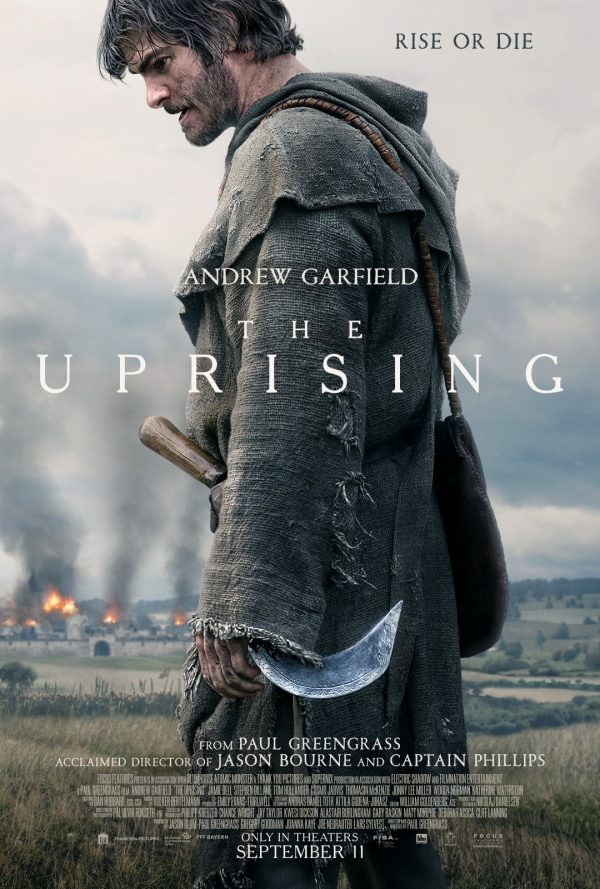
In an era where historical cinema frequently leans toward safe nostalgia or sanitized spectacle, writer-director Paul Greengrass has chosen a far more visceral, combustible path. His 2026 historical war drama, The Uprising, plunges audiences headfirst into the mud, blood, and fiery rhetoric of the 1381 Peasants’ Revolt. Anchored by a powerhouse lead performance from Andrew Garfield as a grieving ploughman pushed past his breaking point, the film reimagines one of medieval England’s most significant uprisings as a strikingly contemporary mirror for modern civil unrest, economic disparity, and populist rage.
Greengrass, renowned for his kinetic, documentary-style direction in films like United 93 and Captain Phillips, applies his signature urgent lens to a period defined by devastation. Set in the wake of the Black Death—a catastrophic pandemic that halved the English population—The Uprising charts how the surviving working class weaponized their scarcity. Rather than retreating into quiet misery, the peasantry organized, united under various ideological and spiritual banners, and marched directly on London to demand structural reform from a deeply insulated monarchy.
With an expansive ensemble cast featuring Jamie Bell, Thomasin McKenzie, Cosmo Jarvis, and Woody Norman as a chillingly youthful King Richard II, the film balances large-scale logistical chaos with intimate character studies. While critics have noted narrative bumps—particularly a jarring tonal shift toward its finale—The Uprising stands as a savage, unapologetic rallying cry. It bridges the gap between fourteenth-century feudal oppression and twenty-first-century anti-establishment sentiment, proving that the cry of "no kings" echoes just as loudly across the centuries.
Detailed Chronology: From Plagues to the March on London
To understand the narrative momentum of The Uprising, one must trace the meticulously constructed escalation of civil disobedience that Greengrass and his creative team bring to the screen.
Act I: The Catalyst of Pestilence and Taxation
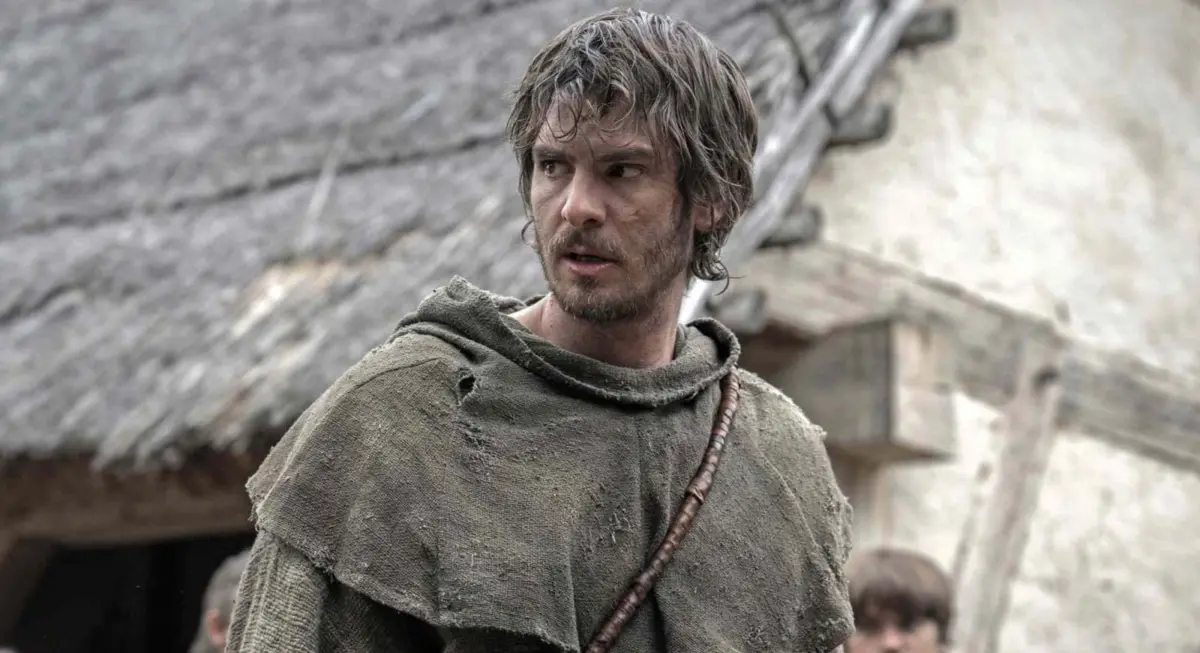
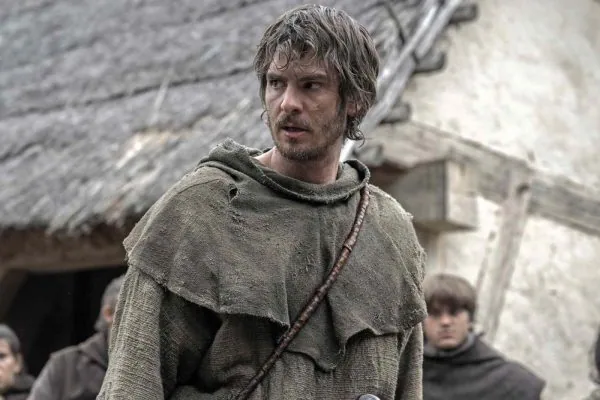
The film opens not in the grand stone halls of Westminster, but in the bleak, soot-stained countryside. Following a devastating plague that decimated the labor force, the surviving peasantry—typified by Andrew Garfield’s unnamed Ploughman—find themselves subjected to increasingly predatory poll taxes levied by a tone-deaf ruling class. Greengrass establishes the stakes immediately: in one of the film’s most jarring and effective early sequences, Garfield’s character delivers a brutal, unceremonious pummeling to a royal tax collector.
This act of localized violence serves as the match to dry tinder. The narrative moves swiftly, perhaps reflecting the sheer speed at which desperation hardens into revolution. Garfield’s Ploughman, haunted at night by the phantom voices of his lost family members, becomes an accidental symbol of resistance. Yet, he is far from a lone wolf. Across England, parallel factions are mobilizing.
As the movement gains traction, Greengrass orchestrates a massive logistical convergence of characters hailing from disparate walks of rural life. We are introduced to:
A radicalized priest (played with fiery zeal by Jamie Bell) who frames the rebellion through a lens of divine justice and moral imperative.
A hardened, pragmatic soldier (portrayed by Cosmo Jarvis) who understands the brutal realities of military engagement against professional royal forces.
A fierce, uncompromising fellow farmer named Alyce (brought to vivid life by Thomasin McKenzie), who rejects any possibility of compromise with the crown.
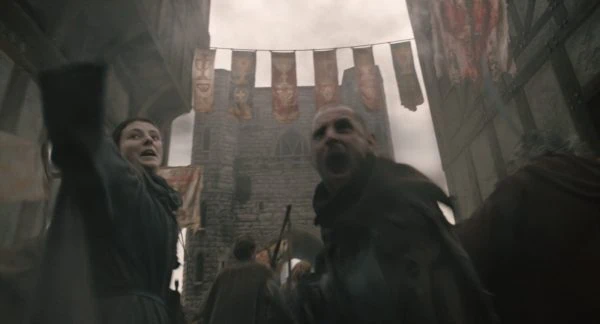
Cinematographer Pål Ulvik Rokseth faces a monumental challenge in capturing this movement: he must frame individual emotional beats within the suffocating, claustrophobic expanse of a massive, moving multitude. The cinematography deliberately emphasizes that while these actors anchor the story, the true protagonist of The Uprising is the collective mass of humanity itself—a breathing, marching organism born of shared trauma.
This sprawling coalition begins its historic, terrifying march toward London. Their demands are simple, radical, and urgent: the abolition of serfdom, fair wages, humane working conditions, and the complete dismantling of the King’s corrupt, nepotistic council.
Act III: The Inner Circle and the Boy King
Meanwhile, inside the glittering, insulated walls of the royal court, a starkly different conversation is taking place. King Richard II—played with a quietly manipulative, sniveling, yet utterly commanding genius by Woody Norman—surrounds himself with a sycophantic council of yes-men who treat governance like a game of courtly chess.
Figures like the Countess (Katherine Waterston) harbor a naive hope that if young Richard were merely freed from his advisors, he would rule benevolently. Alyce and other hardened peasants, however, recognize this for the fantasy it is, arguing that systemic rot cannot be cured by changing a single figurehead.
The psychological chess match culminates in moments of unexpected emotional intimacy, notably when Richard and the Ploughman cross paths. In these quiet beats, the film grants its antagonist a chilling layer of depth, making it entirely plausible that desperate men could momentarily believe a monarch’s empty promises.
Supporting Context & Metrics: Production Scale and Design
Behind the sweeping vistas and chaotic battle sequences lies a meticulously coordinated international production. The Uprising is a masterclass in historical world-building, relying heavily on practical design choices to amplify its themes of class warfare.
Costume Design as Class Warfare
One of the most praised aspects of the film’s technical execution is the costume design spearheaded by Tóth András Dániel and Godena-Juhász Attila. The wardrobe serves as a silent narrator throughout the runtime:
The Elite: Adorned in lavish, hyper-saturated fabrics, intricate headpieces, and pristine silks that catch the candlelight, emphasizing their detachment from earthly suffering.
The Peasantry: Clad in ransacked, mud-stained, desaturated garbs that look and feel heavy, damp, and thoroughly abused by the elements.
This sharp visual stratification reinforces the economic chasm that the peasants are marching to close.
Violence and Unsparing Realism
Greengrass refuses to romanticize warfare. Once the march reaches its boiling point and physical conflict erupts, The Uprising pivots into unsparing, visceral violence. Execution scenes—including unflinching depictions of medieval beheadings—are handled with documentary-style coldness. This forces the Ploughman and his companions to reckon with the moral cost of their crusade. Does righteous anger justify absolute brutality? Where is the line drawn between liberation and savagery? These questions linger long after the smoke clears.
The Controversial Finale
A notable talking point among critics is the film’s climactic transition. In its final moments, the narrative unexpectedly leans into proto-Robin Hood iconography. Complete with war-face paint and a dramatic tactical shift, the ending feels somewhat detached from the historical specificity of the 1381 revolt. Some industry analysts have suggested this coda may have been added late in post-production to provide commercial brand recognition—a choice that caused whiplash for audiences drawn in by the film’s otherwise grim, grounded tone. Nevertheless, Andrew Garfield commits to the transition with total sincerity, ensuring the emotional payoff remains intact despite the structural pivot.
Official Statements and Critical Reception
Upon its festival circuit rollout and subsequent theatrical release, The Uprising generated significant cultural discourse, drawing polarized yet passionate responses from critics worldwide.
Industry insiders and reviewers have widely praised Paul Greengrass for refusing to sand down the edges of historical civil disobedience. In a statement regarding his approach to the material, Greengrass noted:
"History is not a museum exhibit frozen behind glass; it is a living blueprint of human struggle. The people of 1381 were facing an existential crisis brought on by disease and economic exploitation. Their impulse to stand up, to say ‘enough,’ is timeless. We didn’t want to make a polite period piece; we wanted to capture the sheer, chaotic heartbeat of a people demanding their humanity back."
Lead actor Andrew Garfield spoke candidly about stepping into the mud of fourteenth-century England:
"Playing a man who has lost everything—his family, his livelihood, his quiet life—and finding that inside that grief is a terrifying capacity for action was transformative. We aren’t just looking at history here; we’re looking at the eternal friction between those who hold the keys to the kingdom and those who build its walls with their bare hands."
Critical consensus has largely lauded the film’s technical prowess, powerhouse performances—particularly from Garfield and young breakout Woody Norman—and its unmistakable contemporary resonance. Reviewers have drawn direct parallels between the medieval peasantry’s fury and modern populist movements, likening the march on London to a fourteenth-century equivalent of modern civil disobedience events, albeit fueled by the horrors of the plague rather than modern digital anxieties.
Future Outlook: Legacy and Cultural Impact
As The Uprising finishes its theatrical run and prepares for its home media and streaming distributions, its long-term cultural footprint is already coming into focus.
A New Benchmark for Historical Drama: By infusing classical history with his signature journalistic, urgent filmmaking style, Greengrass has set a new standard for how historical conflict can be adapted for contemporary audiences without diluting its historical roots.
Awards Season Contender: Industry prognosticators are pointing to Garfield and Norman as strong contenders for major acting accolades, citing the psychological depth and physical commitment they brought to their respective ideological trenches.
Sparking Modern Discourse: Beyond its box office performance, the film has successfully reignited public conversations about wealth inequality, labor rights, and the ethical boundaries of protest.
The Uprising ultimately transcends its historical confines. It stands as a savage, unflinching reminder that whenever power concentrates at the top while the foundation rots, the cry of "no kings" will inevitably ring out from the soil.








Belum ada komentar. Jadilah yang pertama berkomentar!