

Executive Overview
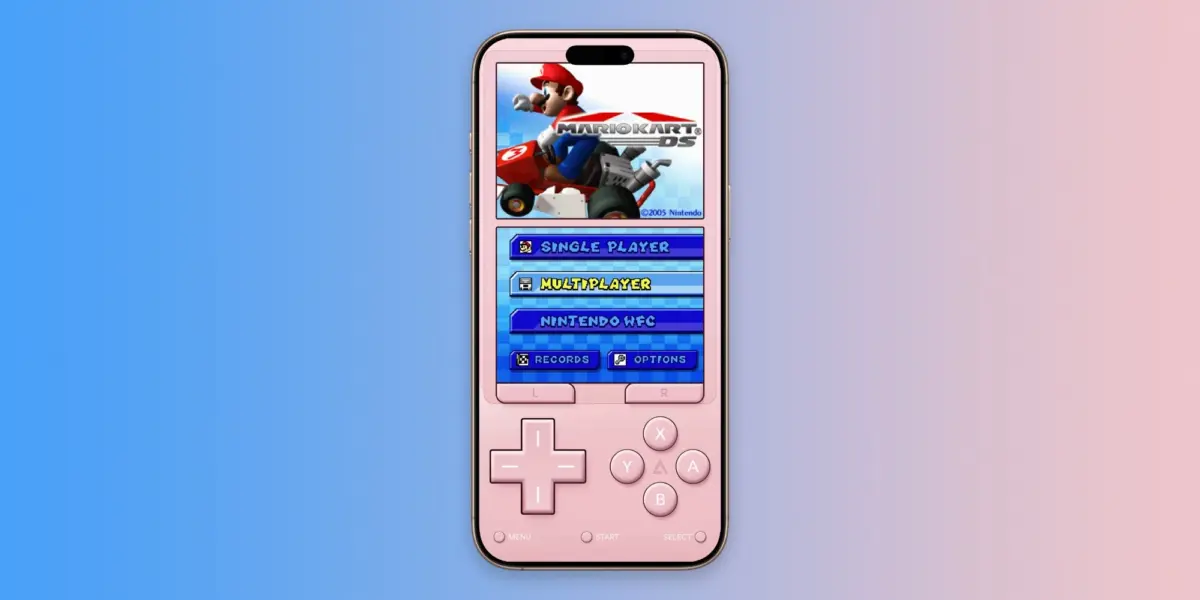
The landscape of mobile retro gaming has experienced a seismic shift with the official release of Delta version 1.7. Long recognized as the premier multi-system game emulator for iOS, Delta has broken new ground by introducing native support for online multiplayer Nintendo DS games. Announced via the platform’s official Bluesky channel, this milestone update bridges a decade-long gap left by Nintendo’s discontinuation of official network infrastructure, allowing modern iPhone and iPad users to once again experience classic multiplayer titles together over the internet.
Beyond the headline-grabbing multiplayer integration, Delta 1.7 is far from a single-feature patch. The development team has engineered a comprehensive overhaul that touches nearly every corner of the application. Nintendo 64 (N64) emulation has been fundamentally rewritten to offer higher-fidelity graphics, resolution upscaling capabilities, and support for custom community texture packs. Furthermore, the update introduces quality-of-life enhancements, including streamlined screenshot capture tools and critical stability bug fixes.
Available immediately via AltStore PAL for users within the European Union—and rolling out concurrently on the global Apple App Store—Delta remains completely free to download. This release not only cements Delta’s dominance in the iOS emulation ecosystem following Apple’s historic App Store policy revisions in 2024, but it also serves as a masterclass in community-driven software preservation. By leveraging resurrected community servers without demanding complex user configurations or DNS tampering, Delta 1.7 successfully democratizes retro multiplayer for millions of mobile gamers worldwide.
Detailed Chronology: From App Store Banishment to Multiplayer Triumph
To fully understand the weight of the Delta 1.7 release, one must examine the tumultuous timeline of iOS emulation, the technical hurdles of the Nintendo DS network, and the step-by-step evolution that brought this feature to fruition.
The Long Road to iOS Emulation
For years, running retro video game emulators natively on Apple’s iOS ecosystem was an uphill battle. Developers were forced to rely on enterprise developer certificates, complex sideloading tools, or jailbreaking to bring applications like Riley Testut’s Delta (and its predecessor, GBA4iOS) to users. Despite these restrictions, Delta built a fiercely loyal following due to its meticulously designed user interface, haptic feedback integration, controller support, and flawless emulation across classic Nintendo systems, including the Game Boy line, the Nintendo Entertainment System (NES), Super Nintendo (SNES), Nintendo 64, and the Nintendo DS.
The 2024 App Store Policy Shift
The paradigm shifted in April 2024 when Apple updated its App Store Review Guidelines to officially permit retro game emulator apps on the platform globally. Capitalizing on this regulatory pivot—prompted largely by antitrust pressures in the European Union and worldwide—Delta made its official debut on the Apple App Store. Within days, it rocketed to the top of the download charts, validating years of independent development and proving that mainstream iOS users hungered for authentic retro gaming experiences.
The 2014 Nintendo WFC Shutdown and the Rise of Alt-Servers
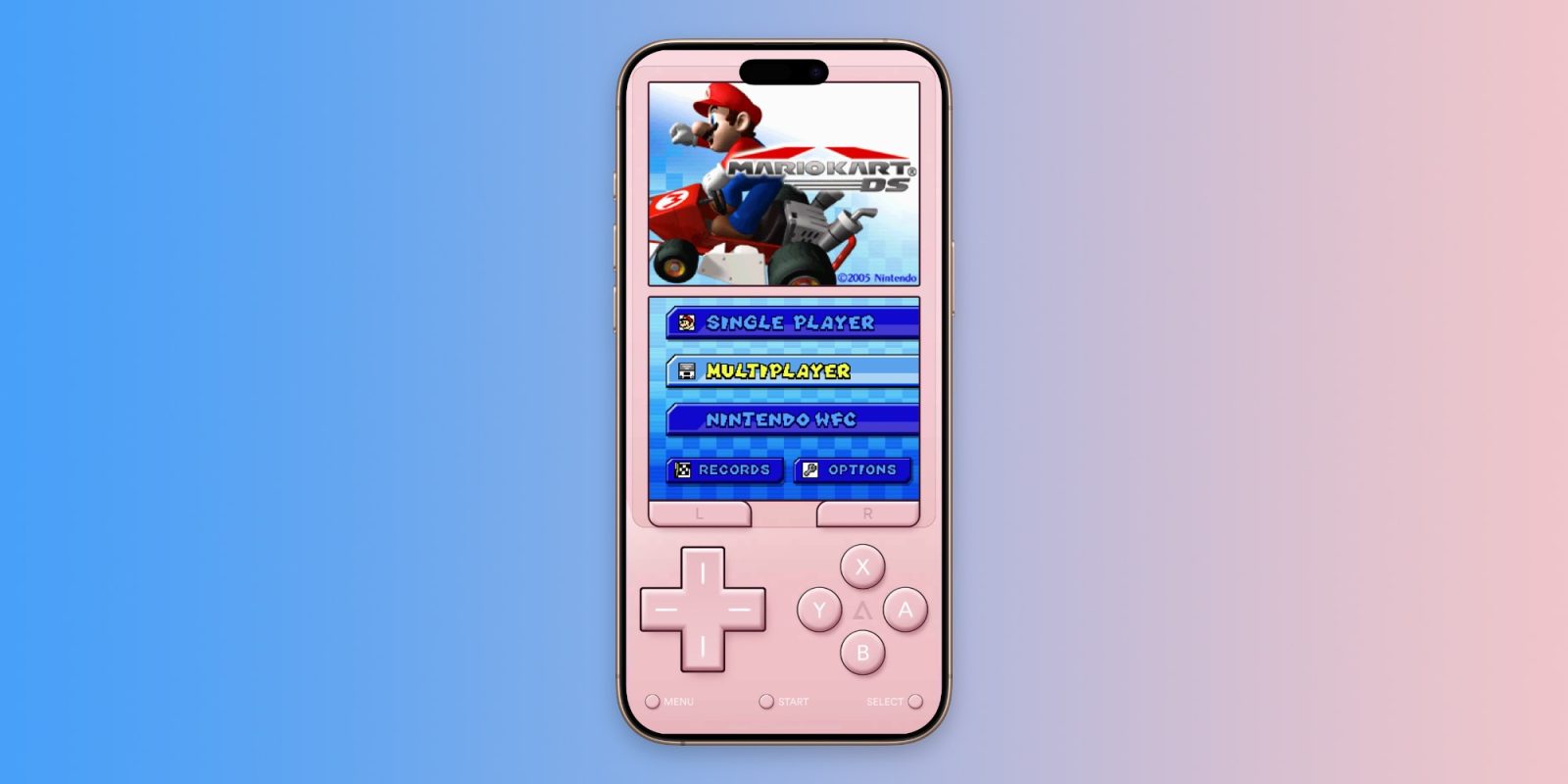
To appreciate the engineering challenge solved in Delta 1.7, we must look back to May 2014. That was the year Nintendo officially terminated the Nintendo Wi-Fi Connection (WFC) service, effectively severing online multiplayer functionality for all Nintendo DS and Wii titles. Games like Mario Kart DS, Pokémon Diamond and Pearl, and Animal Crossing: Wild World were stripped of their defining social components.
In the years following the shutdown, the emulation and homebrew communities refused to let these features die. Projects like Wiimmfi and other alternative private servers were built from the ground up to mimic Nintendo’s original networking protocols. However, utilizing these servers historically required tedious technical workarounds—such as manually altering Wi-Fi network DNS settings on the host device to route traffic through community-controlled proxy servers. For average users, this barrier to entry was often too high.
The Genesis of Delta 1.7
Entering late 2024 and early 2025, the Delta development team focused its sights on bridging this usability gap. By integrating community-hosted Nintendo Wi-Fi Connection server options directly into the emulator’s core settings menu, developers eliminated the need for external DNS manipulation. Announced via Bluesky in March 2025, Delta 1.7 successfully transitioned from closed beta testing to a public rollout, forever changing how mobile users interact with dual-screen classics.
Supporting Context & Metrics: Under the Hood of Delta 1.7
The implementation of online multiplayer is a monumental achievement, but the technical suite accompanying Delta 1.7 deserves equal scrutiny. Let us break down the key features, architectural adjustments, and supported ecosystems defining this release.
Seamless Online Multiplayer Configuration
The standout feature of Delta 1.7 is its simplicity. Historically, connecting an emulator to a private server required specialized knowledge of networking ports and DNS routing. Delta 1.7 abstracts this complexity entirely:
- In-App Server Selection: Users simply navigate to the Delta settings menu, locate the newly added Nintendo DS networking tab, and select their preferred alternative WFC server from a curated list.
- Zero System-Level Tweaks: There is no longer any need to mess with iPhone Wi-Fi configurations, meaning users can switch between standard home internet browsing and online DS matchmaking without reconfiguring their network profiles.
The Library of Supported Titles
Because Delta relies on alternative WFC servers, support is naturally tethered to games that originally featured online multiplayer infrastructure. According to historical indices, dozens of iconic titles are instantly revitalized. Notable examples include:
- Mario Kart DS: Arguably the most anticipated title for this update, allowing up to eight players to race across classic and retro tracks wirelessly over the internet.
- Pokémon Core Series (Generation IV): Enabling global trading and battling for titles like Pokémon Diamond, Pearl, Platinum, HeartGold, and SoulSilver.
- Animal Crossing: Wild World: Re-enabling town visits, item exchanges, and messaging between distant players.
- Metroid Prime Hunters, Advance Wars: Days of Ruin, and Castlevania: Portrait of Ruin: Bringing tactical and action-heavy multiplayer back to life.
N64 Emulation Upgrades and Visual Overhauls
While the Nintendo DS updates dominate the conversation, Nintendo 64 emulation received a massive technical injection in version 1.7. Emulating the N64 has always been notoriously difficult due to its unique Silicon Graphics (SGI) architecture. Delta 1.7 introduces:
- Resolution Upscaling: Users are no longer locked to the native 240p resolution of the original hardware. Gamers can now scale N64 graphics dynamically to match modern high-density iPhone and iPad Retina displays.
- Custom Texture Pack Support: Similar to high-end desktop emulators (such as Project64 or Mupen64Plus), Delta now allows users to import community-made HD texture packs, drastically modernizing the visual fidelity of classics like Super Mario 64, The Legend of Zelda: Ocarina of Time, and GoldenEye 007.
- Quick Screenshots & Bug Fixes: A dedicated, instant screenshot capture tool has been integrated into the overlay menu, alongside comprehensive stability patches addressing memory leaks and audio stutter during heavy emulation loads.
Distribution Platforms: AltStore PAL vs. Apple App Store
Delta 1.7 highlights the shifting distribution landscape for iOS software:

- AltStore PAL: Launched in response to the European Union’s Digital Markets Act (DMA), AltStore PAL serves as an alternative marketplace for EU users, allowing developers to bypass standard Apple App Store fees and restrictions. Delta 1.7 debuted here first.
- Global App Store: Concurrent with the EU rollout, the update is pushing through Apple’s global review pipelines to reach iPhone and iPad users worldwide via the standard, free App Store listing.
Official Statements and Community Reception
The release of Delta 1.7 has generated widespread acclaim across social media platforms, tech journalism outlets, and developer forums.
In their official announcement on Bluesky, the Delta development team highlighted the philosophical motivations behind the update:
"With Delta 1.7, we aren’t just giving you a way to play games—we are restoring communities. Nintendo DS online multiplayer defined an era of portable gaming. Thanks to the tireless work of alternative server creators over the past decade, we can finally bring those lobbies back to life right on your iPhone, with zero DNS headaches."
Early beta testers and prominent emulation preservationists have similarly praised the implementation. Tech analysts note that Delta’s user-first design philosophy continues to set the benchmark for how emulation should be presented to mainstream consumers—balancing deep technical capabilities with an interface that requires virtually no technical literacy to operate.
Furthermore, the retro gaming community has expressed profound gratitude toward the operators of alternative servers like Wiimmfi. Without their decade-long preservation efforts keeping the backend infrastructure alive in the shadows, Delta’s front-end integration would not have been possible.
Future Outlook: What’s Next for Delta and iOS Emulation?
As Delta solidifies its place as a staple application on millions of iOS devices, the horizon for mobile emulation looks brighter than ever. Version 1.7 represents a turning point, but it also opens the door to speculative and highly anticipated future developments.
Expanding Multiplayer Horizons
Now that Nintendo DS online multiplayer infrastructure has been successfully integrated into Delta’s user interface, enthusiasts are naturally asking: What’s next? While technical barriers vary significantly across different system architectures, the successful utilization of alternative servers for the DS hints at the theoretical potential for online features in other retro systems if community demand and server availability align.

The Hardware Synergy: Controllers and iPad Optimization
With N64 upscaling and online multiplayer now standard, the hardware ecosystem surrounding iOS gaming is evolving in tandem. The rise of sophisticated Bluetooth controllers—such as the Backbone One, Razer Kishi, and official PlayStation/Xbox controllers—combined with iPadOS support, turns Apple devices into fully fledged retro gaming powerhouses. Future updates are expected to lean even further into advanced controller mapping and multi-screen layout customization, especially for iPad users utilizing external displays via Stage Manager.
Preserving Digital History
Beyond entertainment, Delta 1.7 plays a critical role in the broader conversation of digital preservation. Video games are notoriously fragile artifacts; hardware degrades, server datacenters are decommissioned, and proprietary software becomes obsolete. By making it effortless for everyday users to access, experience, and share classic software across modern mobile hardware, Delta acts as a living museum.
In conclusion, Delta version 1.7 is much more than a routine software update. It is a triumphant synthesis of modern mobile engineering, community-driven preservation, and user-centric design. Whether you are reliving the frantic blue-shell chaos of Mario Kart DS over Wi-Fi, trading rare pocket monsters across global servers, or experiencing a crisp, upscaled adventure in Super Mario 64, Delta has fundamentally elevated what it means to carry a retro arcade in your pocket.
Delta 1.7 is available now for free download via AltStore PAL in the European Union and is rolling out globally on the Apple App Store.






Belum ada komentar. Jadilah yang pertama berkomentar!