

Executive Overview
For decades, human interaction with computing technology has been constrained by a remarkably rigid set of physical tools: the QWERTY keyboard, the mouse click, and, more recently, the smooth glass surfaces of our mobile phones. We have forced our cognition to adapt to flat displays, translating complex thoughts and desires into discrete mechanical actions. But a quiet revolution is underway in the realm of neurotechnology, threatening to render screens obsolete.
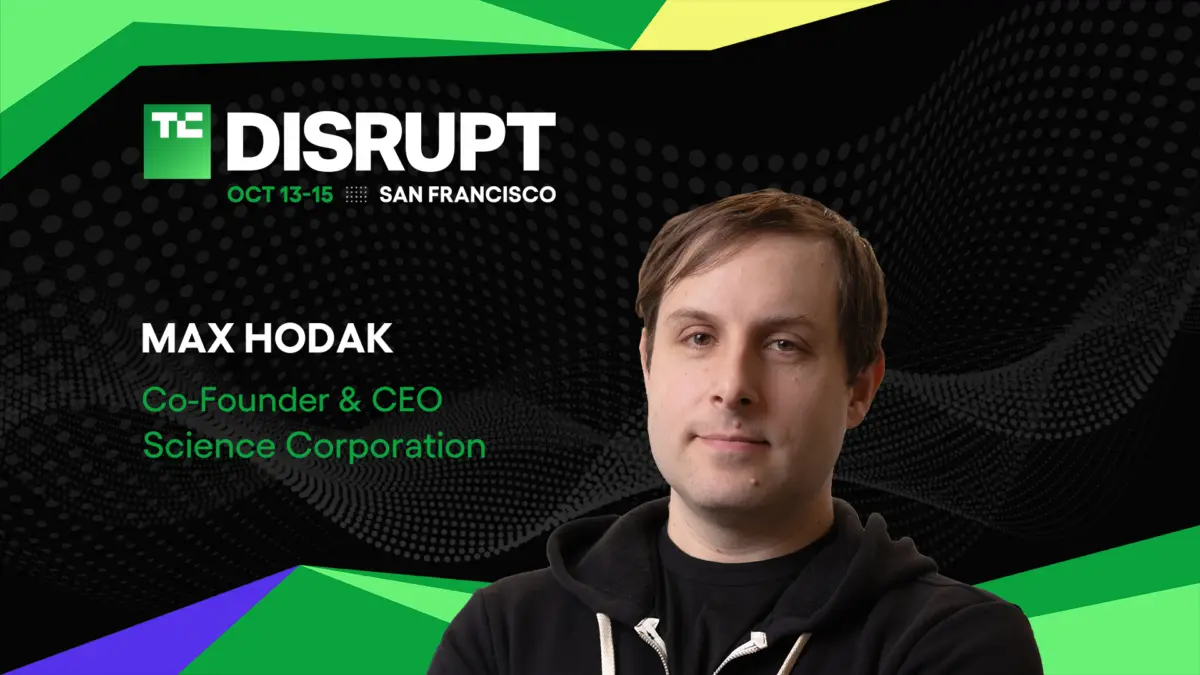
At the vanguard of this movement is Max Hodak, co-founder of Neuralink and current CEO of Science Corporation. Hodak has spent the past several months aggressively advancing a radically different vision of the future—one where technology adapts directly to us through seamless brain-computer interfaces (BCIs). Science Corp has recently enlisted a top neurobiologist to spearhead the first U.S. human trials for its proprietary biohybrid BCI system, a major milestone that bridges the gap between science fiction and clinical reality.
Hodak is set to take center stage at TechCrunch Disrupt 2026, held at Moscone West in San Francisco from October 13–15. Addressing a crowd of over 10,000 founders, investors, and tech leaders during his "Beyond Screens" keynote, Hodak will unpack the groundbreaking discoveries his team has made and lay out his blueprint for a post-screen society. As the tech industry turns its focus toward sustainable artificial intelligence and ambient computing across six specialized industry stages, Hodak’s insights offer a tantalizing glimpse into an era where the ultimate computing interface is biology itself.
Detailed Chronology: From Early Code to Biohybrid Brains
Max Hodak’s trajectory reads less like a traditional corporate CV and more like a lifelong pursuit of upgrading the human operational system. His fascination with computing began early; he was writing code by the time he was six years old. This foundational tinkering eventually led him to the Duke Pratt School of Engineering, where he studied biomedical engineering. During his time at Duke, Hodak embedded himself in the world-renowned brain-computer interface laboratory of Miguel Nicolelis—an experience that permanently shaped his worldview regarding the porous boundary between wetware and hardware.
The Entrepreneurial Genesis
Hodak’s early career combined life sciences with automation. He co-founded Transcriptic, a pioneering robotic cloud laboratory designed to streamline life science research through automated experimentation. However, his defining moment on the global stage arrived in 2016, when he co-founded Neuralink alongside Elon Musk and a team of elite neuroscientists and engineers. As its initial president, Hodak played a pivotal role in operationalizing the company, steering it out of academic obscurity and thrusting the concept of implantable brain technology firmly into the public imagination.
The Birth of Science Corporation
In 2021, seeking a distinct path focused on translational medical applications and versatile neural engineering, Hodak departed Neuralink to found Science Corporation. While other players in the BCI space focused heavily on high-bandwidth digital communication, Science Corp carved out a distinct niche: developing advanced neural technologies explicitly aimed at restoring lost physiological functions, specifically targeting vision, cognition, and mobility.
Rather than waiting for speculative future breakthroughs, Science Corp achieved tangible, real-world clinical validation with its PRIMA implant. Designed for individuals suffering from severe vision loss—such as those with geographic atrophy caused by dry age-related macular degeneration (AMD)—the PRIMA system utilizes a pair of custom glasses equipped with a discreet camera. This camera captures the surrounding visual scene and projects it via an invisible infrared beam onto a microscopic microchip surgically implanted beneath the retina. The chip then stimulates surviving retinal cells, effectively restoring patterned central vision.
The company’s momentum accelerated dramatically following a successful $230 million Series C funding round, which valued Science Corp at a staggering $1.5 billion. Buoyed by this capital, Hodak and his team have expanded their clinical horizons beyond ophthalmology, preparing for human trials that could soon deploy brain-implanted sensors capable of repairing damaged neural tissue, providing early warnings for neurological events like epileptic seizures, and potentially mitigating the debilitating motor symptoms associated with Parkinson’s disease.
Supporting Context & Metrics: The BCI Landscape at TechCrunch Disrupt 2026
The convergence of neurotechnology and artificial intelligence represents one of the most capital-efficient and high-impact frontiers in modern venture capital. TechCrunch Disrupt 2026 arrives at a critical inflection point for the industry. Spanning October 13–15 at San Francisco’s Moscone West, the event brings together more than 10,000 startup founders, venture capitalists, and ecosystem architects across more than 250 interactive sessions.
The AI and Neurotech Nexus
While artificial intelligence continues to dominate headlines, this year’s Disrupt programming places a deliberate, strategic emphasis on sustainable AI companies and infrastructure. The dialogue has shifted away from mere software generation toward hardware-software integration—a domain where companies like Science Corporation operate.

BCIs and AI share a symbiotic relationship. As neural sensors record increasingly granular electrical activity from millions of neurons simultaneously, raw biological data requires massive computational power to decode. Advanced machine learning models are indispensable for translating noisy neural spikes into actionable digital commands or restorative sensory signals. Conversely, as Hodak will argue on the Disrupt stage, neural interfaces may ultimately become the most natural and efficient mechanism for humans to manage and direct increasingly autonomous AI agents.
Key Financial and Operational Metrics
- Event Scale: Over 10,000 attendees, featuring 250+ educational and strategic sessions across six dedicated industry stages.
- Science Corp Valuation: Valued at $1.5 billion following a robust $230 million Series C funding round.
- Clinical Milestone: The deployment of the PRIMA retinal prosthesis, which has successfully restored functional eyesight to legally blind patients.
- Upcoming Trials: The initiation of the first U.S. human trials for Science Corp’s biohybrid brain-computer interface, led by a top-tier neurobiologist.
Official Statements and Industry Perspective
The transition from external input devices to direct neural interfaces raises profound philosophical, technical, and regulatory questions. Speaking ahead of his keynote session, "Beyond Screens," Hodak has consistently emphasized that the limitations of modern computing are fundamentally human-centric rather than machine-centric.
"When you imagine working with a computer, you likely think of keyboards, clicks, or typing on your phone," Hodak notes, framing the current paradigm as an evolutionary bottleneck. "The next era of technology will not be built upon better glass or faster processors, but upon an interface that adapts to us—creating entirely new ways of engaging with machines from the inside out."
Industry analysts view Science Corp’s methodical approach—balancing commercial medical devices like PRIMA with exploratory biohybrid BCI research—as a masterclass in risk mitigation. Unlike competitors who chase flashy, consumer-facing telepathic typing demos, Science Corp has maintained an unyielding focus on clinical utility, addressing urgent medical needs while quietly building the infrastructure for general-purpose neural augmentation.
Future Outlook: Navigating the Post-Screen Horizon
As we look toward the latter half of the decade, the implications of Hodak’s work extend far beyond the operating room. If Science Corp’s upcoming human trials yield successful results, the boundary between human physiology and digital architecture will begin to blur in earnest.
Near-Term Clinical Impact
In the immediate future, biohybrid BCIs and micro-chip implants offer life-changing remediation for neurological disorders. Patients suffering from paralysis, degenerative blindness, and severe neurodegenerative conditions like Parkinson’s disease stand to regain autonomy. The commercialization and regulatory approval pathways paved by Science Corp will likely serve as the blueprint for the broader neurotech industry, setting safety, biocompatibility, and data security standards for decades to come.
Long-Term Societal Transformation
Looking further down the horizon, the normalization of medical BCIs will inevitably bleed into cognitive enhancement and ambient computing. As neural sensors become more refined, less invasive, and capable of bidirectional communication with the brain, the necessity for physical screens—and even traditional audio headsets—will wane.
Imagine navigating augmented reality environments guided purely by intent, or interacting with complex enterprise AI workflows at the speed of thought. While such concepts once belonged exclusively to the domain of cyberpunk fiction, leaders like Max Hodak are actively engineering the underlying reality.
For the founders, investors, and technologists gathering at TechCrunch Disrupt 2026, Hodak’s session is more than a visionary keynote; it is an urgent prompt to reevaluate product roadmaps, investment theses, and the very nature of human capability in a post-screen world.








Belum ada komentar. Jadilah yang pertama berkomentar!