

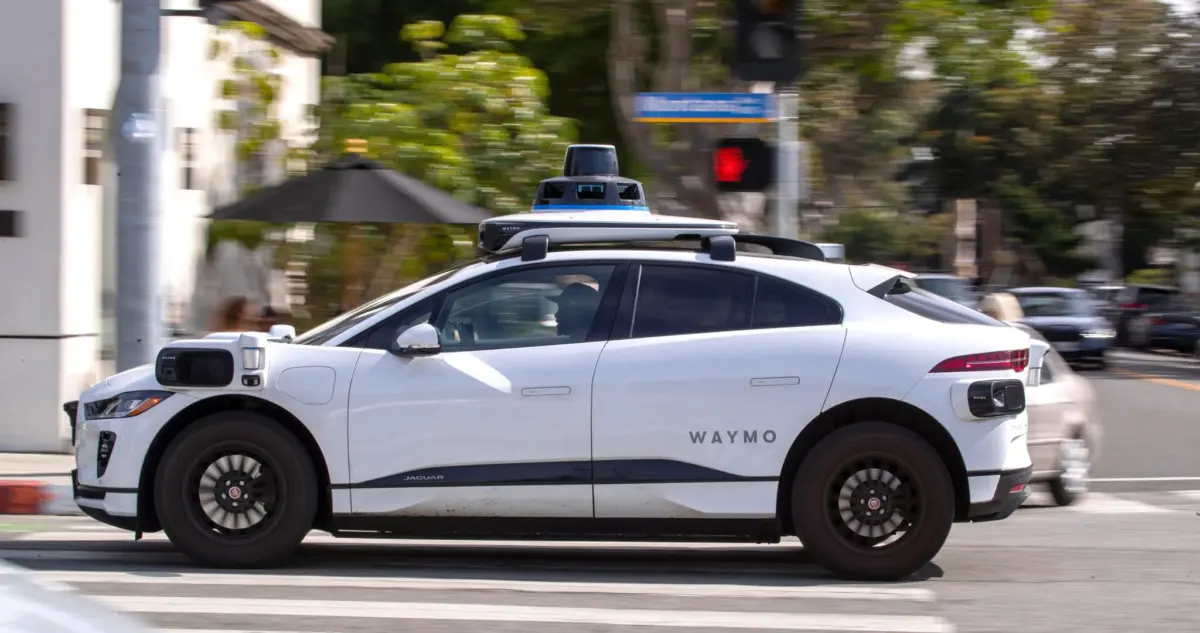
Welcome back to TechCrunch Mobility, your definitive hub for the future of transportation and, increasingly, the foundational role artificial intelligence plays within it. To get this delivered straight to your inbox, subscribe for free by clicking over to TechCrunch Mobility.
Executive Overview
The autonomous vehicle (AV) narrative has long been dominated by promises of a utopian future: a landscape where algorithmic perfection completely eliminates human error, gridlock melts away, and traffic fatalities are reduced to a statistical zero. Proponents of robotaxis and self-driving delivery networks frequently lean on this safety dividend to justify billions of dollars in capital expenditure and sweeping regulatory exemptions.
Yet, as the industry scales past its early research-and-development phase into commercial deployment, a troubling reality is emerging. The technological marvels powering our future streets are exacting a tangible physical toll on the human workforce tasked with nurturing them. Newly uncovered regulatory filings reveal that test drivers for major autonomous players are sustaining severe injuries—ranging from debilitating whiplash to months-long work absences—caused by the sudden, violent braking maneuvers of their robotized charges.
At the same time, the broader mobility ecosystem is experiencing an intense bifurcation. On one hand, mature logistics startups like Gatik are successfully crossing the chasm from experimental R&D labs to heavily capitalized commercial operations, underscored by massive new funding rounds and lucrative enterprise contracts with giants like PepsiCo. On the other hand, legacy automotive titans are facing mounting regulatory scrutiny over mechanical failures, and major players across the EV, ride-hailing, and private aviation sectors are navigating profound executive shakeups and strategic pivots.
In this edition, we unpack the hidden physical costs of autonomous vehicle testing, examine Gatik’s historic financial milestone, analyze a flurry of venture deals across drones and maritime transit, and offer vital clarifications on the silicon performance metrics touted by industry leaders like Waymo.
Detailed Chronology & Investigative Insights: The Hidden Toll of Autonomous Testing
While the public debate surrounding autonomous vehicles typically centers on pedestrian safety and passenger comfort, an equally critical frontier exists inside the driver’s seat during testing phases. Autonomous vehicle developers rely heavily on human safety operators to oversee algorithmic behavior, intervene when software falters, and log critical edge-case data.
Sprains, Pain, and Whiplash: Inside the OSHA Logs
In an exhaustive investigative report, TechCrunch senior reporter Sean O’Kane dug deep into data submitted to the Occupational Safety and Health Administration (OSHA). His findings paint a starkly different picture of robotaxi development than the sanitized press releases distributed by AV developers.
According to the federal data, test drivers working for Waymo and Zoox sustained more than two dozen injuries over the 2024 and 2025 reporting periods. These injuries were primarily triggered by aggressive, hard-braking events and sudden evasive maneuvers executed instantaneously by the autonomous vehicles. In several documented cases, human operators experienced severe whiplash, acute muscle strains, and spinal jarrings so intense that workers were sidelined from their jobs for months at a time.
The root cause of these injuries lies in the conservative, hyper-reactive nature of early-to-mid-stage autonomous driving systems. When an AV’s sensor suite—comprising LiDAR, radar, and cameras—detects a phantom hazard, or misinterprets the trajectory of a nearby cyclist, pedestrian, or debris, the software frequently initiates an immediate, maximum-effort stop to prevent a catastrophic collision. For a human driver anticipating the stop, bracing occurs naturally. For a test driver whose attention may be diverted toward diagnostic software, logging anomalous code, or simply relaxing limbs during a smooth stretch of highway, a sudden 0.8-g deceleration event acts like a physical assault on the body.
The Blind Spots of Federal Oversight
A critical takeaway from O’Kane’s investigation is the scope of the problem. While the OSHA data specifically highlights Waymo and Zoox, industry analysts point out that this is almost certainly a systemic issue plaguing the entire autonomous vehicle sector.

Why are only a handful of companies appearing in these severe injury logs? The answer lies in federal reporting exemptions. Many smaller AV developers, software startups, and stealth-mode operators either fall below OSHA’s mandatory employee headcount thresholds for detailed incident reporting or structure their testing operations through third-party contractors whose safety metrics are systematically decoupled from the parent tech company. As robotaxis continue to scale across dense urban environments, labor advocates and safety regulators are increasingly asking whether the human collateral damage of training autonomous neural networks is being adequately addressed.
For an in-depth look at the workers’ accounts, read Sean O’Kane’s full feature, Sprains, pain, and whiplash: Waymo and Zoox test drivers are getting hurt as robotaxis scale, which includes firsthand interviews with current and former safety operators.
Supporting Context & Metrics: Deals, Capital Flows, and Strategic Shifts
While the software stack attempts to master urban driving without injuring its handlers, the financial machinery backing the autonomous and alternative mobility space is operating at a breakneck pace.
Gatik Crosses the Rubicon: $200M and a PepsiCo Anchor
I have been closely covering Gatik, the pioneer of business-to-business autonomous box trucks, since 2019 when the startup emerged from "stealth" mode. Back then, the autonomous freight space was an entirely different beast. The venture capital hype cycle was chewing up and spitting out speculative AV startups left and right, and virtually no one appeared anywhere near commercializing their technology in a sustainable economic framework.
Gatik has not only beaten those odds; it has successfully bridged the chasm between experimental laboratory R&D and commercial-scale operations. Granted, its footprint remains intentionally localized and specialized compared to traditional human-driven national freight carriers. Gatik’s driverless box trucks primarily handle middle-mile logistics, moving high-volume retail inventory from centralized distribution centers directly to storefronts for enterprises like Walmart.
Now, backed by a massive $200 million in fresh Series E funding, Gatik is aggressively positioning itself for national scale. The funding round was co-led by the Qatar Investment Authority (QIA) and Koch Disruptive Technologies, with substantial participation from Millennium Management, ARK Invest, and Intact Private Capital.
While this represents Gatik’s largest single capital raise to date, industry veterans argue that its operational validation matters far more than the equity influx. In June, Gatik secured a multiyear commercial agreement with PepsiCo, forming the anchor of what is now an impressive $600 million in total contracted revenue. This combination of sovereign wealth backing, strategic industrial tech investment, and blue-chip commercial adoption places Gatik in a rare echelon of hardware-and-software startups that are actually generating meaningful cash flow.
Other Mobility Deals Making Waves
- Airbound (India): The autonomous drone startup secured $37 million in a Series A funding round led by Greenoaks, with strategic participation from DoorDash, angel investor Lachy Groom, Lightspeed Venture Partners, and Humba Ventures. Airbound is attempting to reinvent last-mile delivery using lightweight, rocket-inspired drone architectures designed to bypass ground traffic entirely.
- Arrive Logistics & Mubadala Capital: Alternative asset manager Mubadala Capital (the asset management arm of the Mubadala Investment Company) has reached a definitive agreement to acquire a majority equity interest in Arrive Logistics, a major tech-enabled truckload brokerage based in Austin, Texas.
- Regent Craft: The Rhode Island-based electric seaglider startup pulled in $120 million in Series B financing co-led by Mare Liberum and AE Ventures. Regent develops a specialized class of commercial watercraft known as wing-in-ground effect (WIG) vehicles, which skim just above the ocean’s surface. Additionally, Regent secured approximately $120 million in debt capital provided by Erebor Bank—an institution launched by Anduril Industries founder Palmer Luckey. Having recently completed a sprawling 255,000-square-foot manufacturing facility, Regent is clearly pivoting heavily toward defense sector applications, where deep-pocketed military contracts and strategic maritime partnerships offer a lucrative alternative to purely commercial transit.
- Vista Global Holding: According to reports from Bloomberg, the UAE-based private aviation group is actively exploring a European initial public offering (IPO) that could potentially value the firm and raise capital in excess of $1 billion, signaling renewed institutional appetite for high-end luxury and executive transit equities.
Official Statements and Industry Intelligence
The broader mobility landscape continues to be shaped by regulatory confrontations, executive departures, and sharp technical debates.
Regulatory Crackdowns and Executive Exits
- General Motors Under the Microscope: Federal safety regulators are tightening the screws on General Motors following a troubling accumulation of incidents. U.S. authorities have cataloged hundreds of operational anomalies, over 20 documented crashes or thermal events, and at least six personal injuries directly linked to persistent brake system failures across its burgeoning fleet of electric vehicles.
- Ford Energy Leadership Transition: Ford Motor Co. announced a strategic leadership handoff, naming Dave Carroll as the new president of its energy business division. Carroll, who brings extensive sector experience from his tenure at ENGIE North America, steps into the role to succeed long-standing Ford executive Lisa Drake.
- Rivian’s Financial Leadership Shakes Up: In structural executive news, Rivian CFO Claire McDonough has officially announced her resignation, effective at the end of October. McDonough’s tenure steered the electric automaker through some of its most volatile yet historic milestones, including its high-profile public market debut. Her departure comes at another pivotal juncture for Rivian as the company takes on immense operational hurdles: scaling manufacturing lines for the upcoming mass-market R2 SUV platform while concurrently executing its high-stakes commercial robotaxi software integration deal with Uber.
- Uber Enhances Teen Safety: To combat parental anxiety regarding underage ride-hailing, Uber is rolling out a real-time live video streaming feature designed specifically for teen accounts. The tool enables parents to digitally monitor conditions inside the vehicle during transit.
- Waymo’s Global Ambitions and Sensor Philosophy: Autonomous heavyweight Waymo recently published a milestone retrospective outlining 10 core lessons learned over the course of racking up more than 200 million fully autonomous miles. Notably, its first lesson—emphasizing the absolute indispensability of redundant, multimodal sensor suites (LiDAR, radar, cameras)—sparked renewed debate within the tech community by directly challenging Tesla’s controversial camera-only vision approach. Furthermore, Waymo’s ambitions are increasingly global; the Alphabet subsidiary formally announced plans to bring its commercial robotaxi service to Munich, Germany, marking a significant European expansion step.
Future Outlook: Clarifying the Silicon Specs
A vital lesson in technical reporting arose this past week regarding hardware performance metrics and the perils of shorthand descriptions in semiconductor journalism.
Earlier in August, Waymo released detailed technical documentation concerning its proprietary custom silicon strategy—specifically highlighting a 5-nanometer Application-Specific Integrated Circuit (ASIC) engineered to ingest and preprocess the massive firehose of raw multi-sensor data before it ever hits the central computing brain of the self-driving stack.

In its official company blog post, Waymo stated:
“While these ASICs alone deliver over 1,000 TOPS of ML performance dedicated to front-end processing and ML models, we optimize across the full stack to maximize achieved performance, especially in the low-batch regimes we often operate.”
This phrasing led numerous industry analysts—myself included—to interpret the statement as asserting that a single custom ASIC package delivers upwards of 1,000 TOPS (Trillions of Operations Per Second) of machine learning inference performance, a figure comparable to next-generation automotive computing platforms like Nvidia’s Drive AGX Thor.
However, after being flagged by an attentive reader, I reached out directly to Waymo’s engineering communications team for an official clarification. A Waymo spokesperson set the record straight:
“It’s for the system, not a single chip.”
That distinction is profoundly important. While 1,000 TOPS represents the aggregate computational capacity of the vehicle’s entire multi-chip front-end processing architecture rather than a solitary piece of silicon, it underscores the staggering scale of computational power required to make autonomous vehicles function safely in complex real-world environments.
As we look toward the remainder of 2026, the transportation sector finds itself balancing breathtaking technical breakthroughs and capital infusions with sobering physical and regulatory realities. Whether it is protecting human safety operators from violent braking forces, scaling middle-mile electric logistics, or fine-tuning the microscopic silicon powering our autonomous future, the road ahead remains complex, expensive, and deeply human.
Got a confidential tip on the AV labor data, startup funding, or anything else happening in mobility? Reach out to Kirsten Korosec at [email protected] or via Signal at kkorosec.07, or contact Sean O’Kane directly at [email protected].
Disclaimer: When you purchase products or services through links embedded in our editorial articles, TechCrunch may earn a small affiliate commission. This commercial arrangement has zero influence over our independent journalistic coverage.







Belum ada komentar. Jadilah yang pertama berkomentar!